Festivals and celebrationsSouth AsiaHindu
Pongala
A harvest offering of sweet rice porridge prepared by millions of women in South India

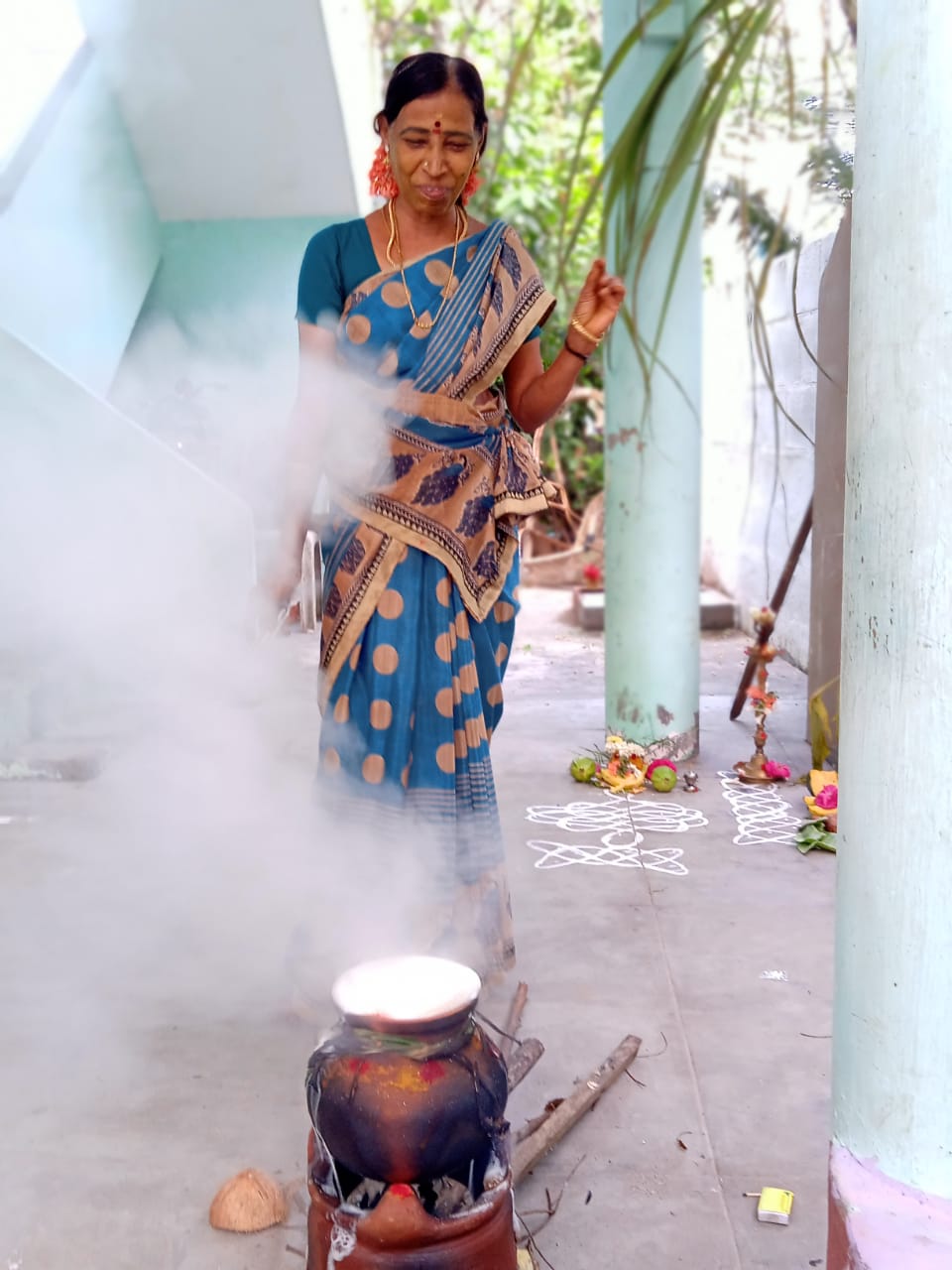
Pongala is a harvest tradition from Kerala and Tamil Nadu where millions of women assemble to prepare sweet rice porridge in earthen pots. Held annually, the festival honours the mother goddess with outdoor cooking that spans entire city streets.
When is Pongala marked?
Pongala is kept as part of Pongal, which runs from 14 to 17 January 2027.
Pongala is a South Indian harvest ritual celebrated in Kerala and Tamil Nadu. The observance brings together millions of women devotees who prepare a sweet dish of boiled rice in small earthen vessels on open streets. Translating literally as to boil over, the ceremony honors the mother goddess with an offering that welcomes the new harvest, fostering communal ties and seeking spiritual blessings.
Origins and lore
Pongala traces back over a millennium, with historical inscriptions linking it to Puthiyeedu, an ancient celebration marking the year's opening harvest under the Chola empire. The ritual venerates Devi, the regional mother goddess whose veneration arose from Kottave, a deity worshipped atop Aiyramala peak. In antiquity, neighbouring villagers congregated on this mountain for several days of communal cooking. Preparing food together pleased the deity and reinforced bonds among the villages. While ancient texts from the Sangam period describe historical war sacrifices called Kuruthi, the festival evolved into a peaceful culinary gathering, leaving ceremonies like Tookaam as symbolic echoes of older traditions.
The sacred gathering
The largest celebration takes place at the Attukal Bhagavathy Temple in Thiruvananthapuram, drawing millions of participants and uniting the city across different faiths. Devotees carry raw rice, jaggery, coconut and clay cookware to the surrounding neighbourhood. They assemble temporary hearths from masonry and timber across walkways, side streets and storefronts stretching kilometres from the shrine. The ceremony officially commences when the head priest ignites the central hearth using flame from the inner sanctuary. This sanctified fire travels outward from one person's burner to the next until cooking begins simultaneously across the entire area.
Ritual cooking
At the heart of the observance is the shared preparation of a rich, sweet porridge. Women tend their clay pots, boiling rice combined with sweet dark molasses, shredded coconut, nuts and raisins. Allowing the contents to overflow the rim of the pot is a crucial moment, representing divine favour and seasonal plenty. The prepared food is offered directly to the goddess to seek her grace and protection. While the Attukal shrine remains the most prominent venue, dozens of other regional shrines, including Vellayani Devi and Chakkulathukavu, host their own community offerings.
How Pongala is kept
Women gather across public streets surrounding the temple, setting up individual cooking stations with clay pots, timber and stone supports. After the head priest kindles the primary sacred hearth within the shrine grounds, the flame is shared sequentially along the rows of waiting devotees. Each woman simmers rice with jaggery, shredded coconut, raisins and nuts until the mixture bubbles over the vessel rim. Once cooked, the sweet porridge is dedicated to the mother goddess before devotees share the blessed food.
When and where
The festival takes place annually, with the massive gathering at the Attukal temple falling on a single day during March to celebrate the first harvest season.
Pongala is observed across Kerala and Tamil Nadu. Its epicentre is the Attukal Bhagavathy Temple in Thiruvananthapuram, with smaller observances held at numerous regional temples such as Karikkakom, Vellayani Devi and Chakkulathukavu.
What Pongala means
The name Pongala signifies boiling over, visualising abundant crops and divine generosity. Historically rooted in collective mountain meals that united scattered settlements, the contemporary ritual reflects communal solidarity among women devotees. Boiling rice until it spills over the pot's rim represents seeking the mother goddess's grace and celebrating seasonal fertility.
Days Pongala is marked
Questions people ask about Pongala
When is Pongala marked?
Pongala is kept as part of Pongal, which runs from 14 to 17 January 2027.
What is Pongala?
Pongala is a South Indian harvest tradition from Kerala and Tamil Nadu. Women come together in public spaces to boil sweet rice porridge in clay pots as a holy offering to the mother goddess.
Where and when does the main Pongala take place?
The largest gathering occurs annually in March at the Attukal Bhagavathy Temple in Thiruvananthapuram, Kerala, drawing millions of women devotees across the city.
What does the word Pongala mean?
The term translates to 'to boil over', describing the moment the sweet rice mixture spills over the edge of the pot, symbolising harvest abundance and divine blessing.
Who participates in the ritual?
The cooking ritual is predominantly observed by women devotees, though the festival in Thiruvananthapuram is embraced as a major civic celebration by residents across various religious backgrounds.
See also
 DiwaliA five-day festival of lights celebrated across India and its diaspora to mark the victory of light over darkness.
 HoliA spring festival of colours and bonfires that marks the end of winter and the triumph of good over evil.
 PongalA Tamil harvest festival honoring the sun and cattle with a boiling rice dish.
 OnamA ten-day harvest festival in Kerala celebrating the return of King Mahabali with feasts, flower carpets and boat races.
Good reading and sources
The facts on this page come from the Wikipedia article "Pongala", written by its contributors and used under the CC BY-SA 4.0 licence, and from its Wikidata record (CC0). EveryParampara rewrote the text in its own words, with AI assistance, and compares every page with the article to make sure no passage is copied. It may be reused under the same CC BY-SA 4.0 licence with a link back.
It may contain mistakes. Traditions differ from one family, village and community to the next, and the people who keep them know them best. If something is wrong, tell us. Last refreshed 2026-10-07.
More from India
All the traditions of India
🇮🇳 Ayodhya, India and 7 moreDiwaliदीपावली (Dīpāvalī)
A five-day festival of lights celebrated across India and its diaspora to mark the victory of light over darkness.Festival · Feasts and festival meals
🇮🇳 India and 4 morePongal
A Tamil harvest festival honoring the sun and cattle with a boiling rice dish.Festival · Feasts and festival meals
🇮🇳 Kochi, India and 5 moreOnamഓണം
A ten-day harvest festival in Kerala celebrating the return of King Mahabali with feasts, flower carpets and boat races.Festival · Feasts and festival meals
 🇮🇳 Prayagraj, India and 6 moreMakar Sankrantiमकरसङ्क्रान्ति (Makarasaṅkrānti)
A mid-winter harvest festival marking the sun's northward journey, celebrated across South and Southeast Asia with fairsFestival · Feasts and festival meals
🇮🇳 Prayagraj, India and 6 moreMakar Sankrantiमकरसङ्क्रान्ति (Makarasaṅkrānti)
A mid-winter harvest festival marking the sun's northward journey, celebrated across South and Southeast Asia with fairsFestival · Feasts and festival meals
The same idea elsewhere
Harvest and thanksgiving compared 🇮🇱 Jerusalem, IsraelPassoverפסח
A Jewish spring festival celebrating freedom from slavery with ritual mealsSpiritual · Dinner
🇮🇱 Jerusalem, IsraelPassoverפסח
A Jewish spring festival celebrating freedom from slavery with ritual mealsSpiritual · Dinner
 🇮🇱 Jerusalem, IsraelSukkotסוכות
A seven-day autumn Jewish festival of temporary booths, harvest prayers and hospitalitySpiritual
🇮🇱 Jerusalem, IsraelSukkotסוכות
A seven-day autumn Jewish festival of temporary booths, harvest prayers and hospitalitySpiritual
 🇵🇪 Cusco, Peru and 4 moreIntiinti (Quechua)
The Inca sun deity, honoured with temples, offerings and the June festival Inti RaymiSpiritual
🇵🇪 Cusco, Peru and 4 moreIntiinti (Quechua)
The Inca sun deity, honoured with temples, offerings and the June festival Inti RaymiSpiritual
 🇮🇪 Ireland and 2 moreJack-o'-lantern
A carved pumpkin lantern lit with a candle to brighten and protect Halloween nightsFolklore
🇮🇪 Ireland and 2 moreJack-o'-lantern
A carved pumpkin lantern lit with a candle to brighten and protect Halloween nightsFolklore