Festivals and celebrationsSouth AsiaHindu
Pushkar Fair
In its own language: Kartik Mela
An annual camel and livestock fair with lake pilgrimage rites in Rajasthan, India
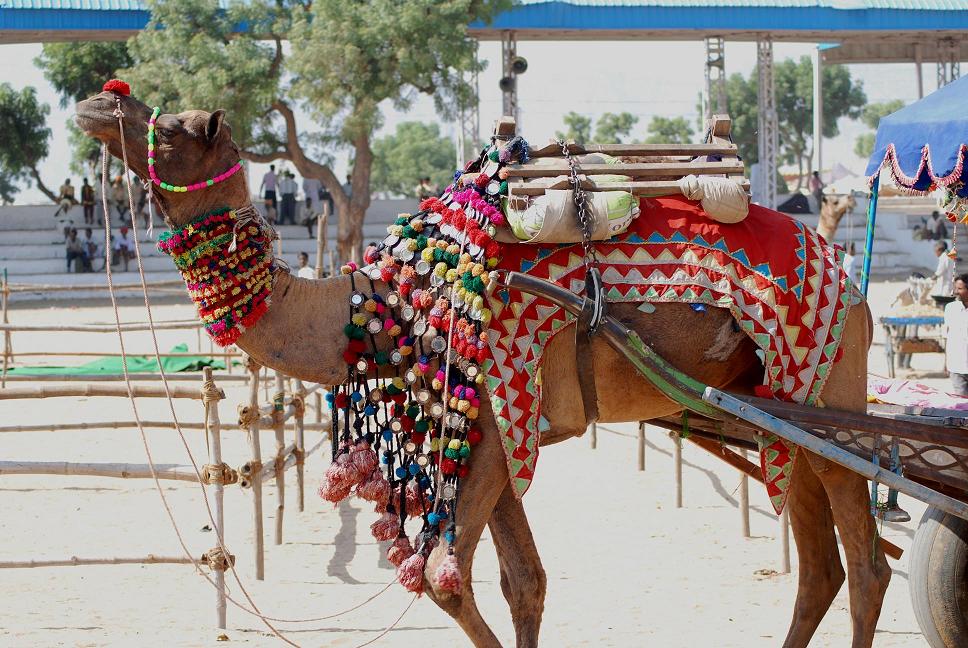
Pushkar Fair is an annual livestock gathering and cultural festival held by the holy lake of Pushkar in Rajasthan, India. Every autumn during the Hindu month of Kartik, farmers, pilgrims and visitors gather for animal trading, races, religious bathing and rural competitions.
When is Pushkar Fair kept?
Pushkar Fair is kept every year in late October or early November, concluding on Kartik Purnima.
The Pushkar Fair is an annual desert gathering held around Pushkar Lake in Rajasthan, India. Known as one of the country's largest livestock markets, it brings together camel herders, traders and Hindu pilgrims during the sacred month of Kartik. Alongside brisk animal trading and religious devotions, the multi-day event features folk entertainment, music, traditional sports and community contests.
Livestock trading and racing
Animal trading forms the core of the fair, with farmers bringing thousands of camels, horses, cattle, sheep and goats to the desert grounds. The festivities often open with energetic camel races. Owners also demonstrate the strength and agility of their animals through load-carrying displays, where handlers mount groups of camels in succession. These practical exchanges make the event a vital trading hub for rural communities across the region.
Pilgrimage and market stalls
Beyond livestock commerce, the gathering coincides with a significant Hindu pilgrimage season centered on Pushkar Lake. Hundreds of thousands of pilgrims travel to bathe along the lake's shores before the festival concludes on the full moon of Kartik Purnima. Around the waters and fairgrounds, visitors can explore stalls selling traditional textiles, fabrics, garments and bangles, ride giant ferris wheels, or take hot air balloon flights above the crowds.
Competitions and entertainment
The fairgrounds host an extensive array of public contests, sports and artistic performances throughout the week. Crowds gather to watch dance presentations, songs and musical shows, as well as rural sports like matka phod and tug-of-war tournaments between women's and men's teams. Celebratory community competitions, such as awards for the longest moustache and bridal costume displays, encourage lively participation from both local villagers and domestic or international visitors.
How Pushkar Fair is kept
The fair opens with camel races and livestock displays as farmers trade camels, horses and cattle on the sandy grounds. During the week, pilgrims visit Pushkar Lake for holy observances, families browse market stalls selling handicrafts and textiles, and spectators enjoy music, dances and ferris wheels. Daily festivities feature contests such as tug of war, matka phod and moustache competitions, reaching a peak during the final five days leading up to Kartik Purnima.
When and where
The fair takes place annually over several days during the Hindu month of Kartik, usually falling across late October and early November in the solar calendar. The most intensive activity occurs during the final five days, finishing on the full moon of Kartik Purnima.
The fair is held in the town of Pushkar, located on the western slopes of the Aravalli Range in the Ajmer district of Rajasthan, India. Activities center on the banks of Pushkar Lake and the surrounding desert plains.
What Pushkar Fair means
For farmers and herders, the fair is an essential seasonal marketplace to exchange animals and buy household goods. For Hindu worshippers, the event coincides with Kartik Purnima, making the waters of Pushkar Lake a sacred pilgrimage destination for purification and spiritual devotion.


Questions people ask about Pushkar Fair
When is Pushkar Fair kept?
Pushkar Fair is kept every year in late October or early November, concluding on Kartik Purnima.
What is the Pushkar Fair?
It is an annual multi-day festival and livestock market held in Pushkar, India, combining camel and cattle trading with Hindu pilgrimage rites, music, folk dances and rural games.
What activities happen at the fair?
Visitors watch camel races, livestock trading, folk music and dance performances. The event also features shopping at textile stalls, giant wheel rides, and contests such as tug-of-war, matka phod and moustache competitions.
Why do pilgrims travel to Pushkar for the fair?
The timing of the fair aligns with an important Hindu pilgrimage period, drawing thousands of devotees to visit and bathe at the sacred Pushkar Lake.
See also
 VijayadashamiA Hindu festival marking the end of Navaratri, celebrating the victory of good over evil across India and Nepal.
 Makar SankrantiA mid-winter harvest festival marking the sun's northward journey, celebrated across South and Southeast Asia with fairs
 Ratha YatraAn annual Hindu festival where deities travel through the streets in towering carriages
 Hola MohallaA three-day Sikh festival of martial arts, poetry, shared meals and grand processions
Good reading and sources
- Pushkar Fair on WikipediaEncyclopedia
- More photos on Wikimedia CommonsPhotos and video
- Wikidata recordOpen data
The facts on this page come from the Wikipedia article "Pushkar Fair", written by its contributors and used under the CC BY-SA 4.0 licence, and from its Wikidata record (CC0). EveryParampara rewrote the text in its own words, with AI assistance, and compares every page with the article to make sure no passage is copied. It may be reused under the same CC BY-SA 4.0 licence with a link back.
It may contain mistakes. Traditions differ from one family, village and community to the next, and the people who keep them know them best. If something is wrong, tell us. Last refreshed 2026-10-04.
More from India
All the traditions of India
🇮🇳 Mysuru, India and 2 moreVijayadashamiविजयदशमी (Vijayadaśamī)
A Hindu festival marking the end of Navaratri, celebrating the victory of good over evil across India and Nepal.Festival
🇮🇳 Prayagraj, India and 6 moreMakar Sankrantiमकरसङ्क्रान्ति (Makarasaṅkrānti)
A mid-winter harvest festival marking the sun's northward journey, celebrated across South and Southeast Asia with fairsFestival · Feasts and festival meals
🇮🇳 Puri, India and 4 moreRatha Yatra
An annual Hindu festival where deities travel through the streets in towering carriagesFestival
🇮🇳 Anandpur Sahib, IndiaHola Mohallaਹੋਲਾ-ਮਹੱਲਾ
A three-day Sikh festival of martial arts, poetry, shared meals and grand processionsFestival
The same idea elsewhere
Pilgrimage compared 🇺🇸 United States and 5 moreMother's Day
A worldwide annual celebration dedicated to mothers, maternal bonds and family careHome
🇺🇸 United States and 5 moreMother's Day
A worldwide annual celebration dedicated to mothers, maternal bonds and family careHome
 🇮🇱 Jerusalem, IsraelPassoverפסח
A Jewish spring festival celebrating freedom from slavery with ritual mealsSpiritual · Dinner
🇮🇱 Jerusalem, IsraelPassoverפסח
A Jewish spring festival celebrating freedom from slavery with ritual mealsSpiritual · Dinner
 🇵🇱 Poland and 5 moreChristmas Eve
The evening before Christmas, marked by church services, family meals, and gift preparations across Christian cultures.Festival · Dinner
🇵🇱 Poland and 5 moreChristmas Eve
The evening before Christmas, marked by church services, family meals, and gift preparations across Christian cultures.Festival · Dinner
 🇮🇱 Jerusalem, IsraelSukkotסוכות
A seven-day autumn Jewish festival of temporary booths, harvest prayers and hospitalitySpiritual
🇮🇱 Jerusalem, IsraelSukkotסוכות
A seven-day autumn Jewish festival of temporary booths, harvest prayers and hospitalitySpiritual