Festivals and celebrationsSouth AsiaHinduJain
Ratha Yatra
An annual Hindu festival where deities travel through the streets in towering carriages

Ratha Yatra is an annual Hindu chariot festival from India where devotees pull massive wooden carriages bearing temple deities through the streets. Celebrated across South Asia and worldwide, the procession usually begins in the lunar month of Ashadha and commemorates sacred journeys through song, music, and shared devotion.
When is Ratha Yatra kept?
Ratha Yatra is kept on annually for about a week in June or July, beginning on Ashadha Shukla Dvitiya.
Ratha Yatra is an annual festival in which sacred images are brought out from their temple sanctuaries and carried through the streets in large wooden carriages. Devotees gather in vast crowds to pull the thick ropes attached to each carriage, seeing this shared labour as an act of service. The tradition allows everyone, regardless of background, to see the deities outside the temple walls and accompany them on their symbolic journey.
Chariots and rituals
The festival takes its name from the Sanskrit words for chariot and journey. Large wooden structures, built to resemble temple towers, are mounted on wheels and decorated with cloth, flags, and carvings. Temple priests place the deities inside, accompanied by ceremonial objects. Hundreds or even thousands of worshippers grasp heavy ropes to draw the vehicles along a set route across the city. In Vaishnava thought, moving the carriage serves as a physical expression of loyalty and devotion to the divine. The procession typically moves from a primary shrine toward another temple, a sacred river, or the sea, before making a designated return journey days later.
Celebrations in Puri and Bengal
The most famous observance takes place in the coastal city of Puri in Odisha. There, three enormous chariots carry Jagannath, his brother Balabhadra, his sister Subhadra, and the divine weapon Sudarshana Chakra. In West Bengal, the town of Mahesh hosts one of the oldest known chariot processions, where festivities span an entire month alongside a major public fair. Devotees in Tarbha dress Jagannath in ten distinct costumes over consecutive days to honour different divine incarnations. Across the border in Dhamrai, Bangladesh, local worshippers maintain a historic carriage festival that remains a central pillar of community life despite historical disruption.
Early historical accounts
Processions involving mobile shrines have deep historical roots in South Asia. Medieval texts, including the Puranas, describe similar carriage journeys in honour of the Sun god, mother goddesses, and Vishnu. Around 400 CE, the Chinese traveller Fa-Hien observed four-wheeled, multi-storey bamboo cars covered in painted cloth being drawn through Indian cities, accompanied by musicians, monks, and medicinal charity houses. Later, thirteenth-century European visitors wrote accounts of the massive gatherings in Puri. Their dramatic descriptions of unstoppable carriages moving through the crowds eventually entered the English language as the word juggernaut.
Spread and modern observance
Ratha Yatra expanded across South Asia over several centuries. In the early nineteenth century, King Gambhir Singh of Manipur adopted the festival after witnessing it during an expedition through Sylhet, establishing the observance in his home state. While rooted in Vishnu devotion, similar carriage rituals honour Shiva, Jain Tirthankaras, and local folk deities. Since the late 1960s, global movements have introduced the tradition to major cities worldwide, including London, New York, and Sydney. In these modern gatherings, participants from diverse backgrounds pull decorated carriages through urban streets while singing hymns and sharing cultural meals.
How Ratha Yatra is kept
The observance begins when priests bring the consecrated deities out of the temple and install them inside massive wooden chariots. Devotees then take hold of long ropes connected to the carriages and pull them through public streets toward a destination temple. Crowds sing hymns, play instruments, and offer prayers along the route. After residing at the temporary shrine for several days, the deities are drawn back to their main sanctum in a concluding return journey.
When and where
The festival usually takes place in June or July. In the traditional calendar, it begins during the bright half of the month of Ashadha, on the second lunar day, and concludes about eight days later on the tenth lunar day.
Ratha Yatra is observed throughout India, particularly in Odisha, West Bengal, and Gujarat, as well as in Bangladesh and Nepal. It is also celebrated by Hindu diaspora communities in Singapore and over a hundred cities across Europe, the Americas, and Africa.
What Ratha Yatra means
Pulling the chariot ropes symbolises humble service and dedication to the divine. Bringing the deities out into the open streets allows every person in the community to receive their sight without temple barriers. The journey reflects hospitality, spiritual liberation, and the connection between temple sanctuaries and public civic spaces.


Questions people ask about Ratha Yatra
When is Ratha Yatra kept?
Ratha Yatra is kept on annually for about a week in June or July, beginning on Ashadha Shukla Dvitiya.
What is Ratha Yatra?
It is an annual festival where sacred temple images are placed on massive, wheeled wooden chariots and pulled through the streets by devotees.
Where is Ratha Yatra most prominently observed?
The largest and most famous celebration takes place in Puri, in the Indian state of Odisha. Significant events also occur in Ahmedabad, Mahesh, and Dhamrai in Bangladesh.
Why do people pull the chariot ropes?
In Vaishnava belief, pulling the ropes is an act of spiritual service. Devotees believe that assisting the chariot's journey brings divine favour and helps achieve spiritual liberation.
See also
 VijayadashamiA Hindu festival marking the end of Navaratri, celebrating the victory of good over evil across India and Nepal.
 Makar SankrantiA mid-winter harvest festival marking the sun's northward journey, celebrated across South and Southeast Asia with fairs
 Mother's DayA worldwide annual celebration dedicated to mothers, maternal bonds and family care
 Krishna JanmashtamiA Hindu festival celebrating the birth of Krishna with fasting, singing and night vigils
Good reading and sources
- Ratha Yatra on WikipediaEncyclopedia
- More photos on Wikimedia CommonsPhotos and video
- Wikidata recordOpen data
The facts on this page come from the Wikipedia article "Ratha Yatra", written by its contributors and used under the CC BY-SA 4.0 licence, and from its Wikidata record (CC0). EveryParampara rewrote the text in its own words, with AI assistance, and compares every page with the article to make sure no passage is copied. It may be reused under the same CC BY-SA 4.0 licence with a link back.
It may contain mistakes. Traditions differ from one family, village and community to the next, and the people who keep them know them best. If something is wrong, tell us. Last refreshed 2026-10-04.
More from India
All the traditions of India
🇮🇳 Mysuru, India and 2 moreVijayadashamiविजयदशमी (Vijayadaśamī)
A Hindu festival marking the end of Navaratri, celebrating the victory of good over evil across India and Nepal.Festival
🇮🇳 Prayagraj, India and 6 moreMakar Sankrantiमकरसङ्क्रान्ति (Makarasaṅkrānti)
A mid-winter harvest festival marking the sun's northward journey, celebrated across South and Southeast Asia with fairsFestival · Feasts and festival meals
 🇮🇳 Anandpur Sahib, IndiaHola Mohallaਹੋਲਾ-ਮਹੱਲਾ
A three-day Sikh festival of martial arts, poetry, shared meals and grand processionsFestival
🇮🇳 Anandpur Sahib, IndiaHola Mohallaਹੋਲਾ-ਮਹੱਲਾ
A three-day Sikh festival of martial arts, poetry, shared meals and grand processionsFestival
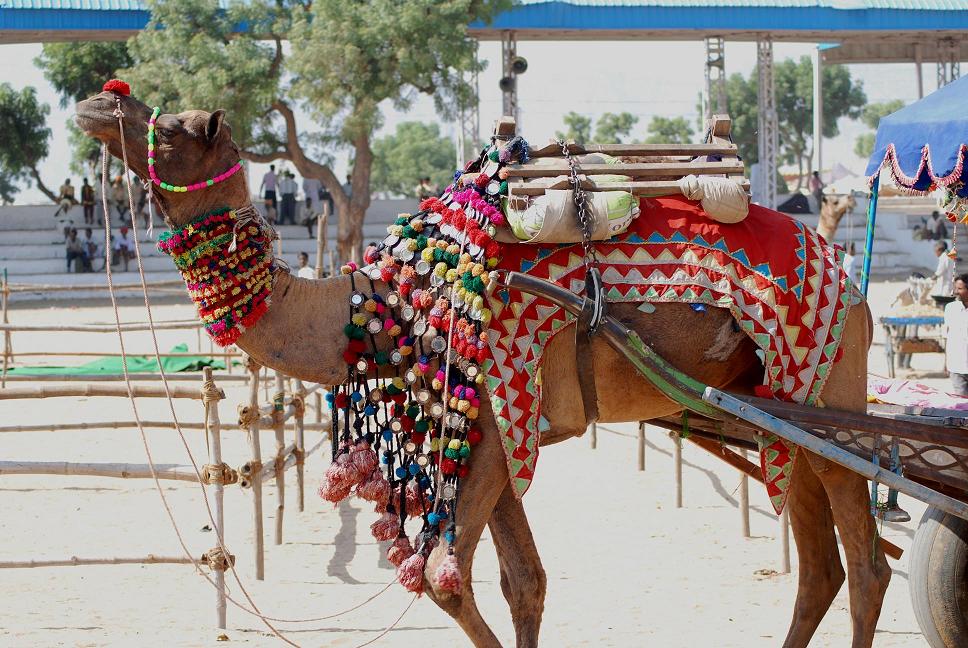 🇮🇳 Pushkar, IndiaPushkar FairKartik Mela
An annual camel and livestock fair with lake pilgrimage rites in Rajasthan, IndiaFestival
🇮🇳 Pushkar, IndiaPushkar FairKartik Mela
An annual camel and livestock fair with lake pilgrimage rites in Rajasthan, IndiaFestival
The same idea elsewhere
Pilgrimage compared
🇺🇸 United States and 5 moreMother's Day
A worldwide annual celebration dedicated to mothers, maternal bonds and family careHome
 🇮🇱 Jerusalem, IsraelPassoverפסח
A Jewish spring festival celebrating freedom from slavery with ritual mealsSpiritual · Dinner
🇮🇱 Jerusalem, IsraelPassoverפסח
A Jewish spring festival celebrating freedom from slavery with ritual mealsSpiritual · Dinner
 🇵🇱 Poland and 5 moreChristmas Eve
The evening before Christmas, marked by church services, family meals, and gift preparations across Christian cultures.Festival · Dinner
🇵🇱 Poland and 5 moreChristmas Eve
The evening before Christmas, marked by church services, family meals, and gift preparations across Christian cultures.Festival · Dinner
 🇮🇱 Jerusalem, IsraelSukkotסוכות
A seven-day autumn Jewish festival of temporary booths, harvest prayers and hospitalitySpiritual
🇮🇱 Jerusalem, IsraelSukkotסוכות
A seven-day autumn Jewish festival of temporary booths, harvest prayers and hospitalitySpiritual