Music, dance and storytellingSub-Saharan Africa
Sabar
A traditional Wolof and Serer drum played in Senegal and The Gambia, accompanying dance at weddings and festivals.

The sabar is a hand-and-stick drum central to the music of the Wolof and Serer peoples in Senegal and The Gambia. Crafted from local wood and goat skin, it drives the rhythm for communal dances at celebrations like weddings. Men typically play the instrument while women perform the accompanying movements.
When is Sabar kept?
Sabar is kept at weddings, festivals, and other community events.
The sabar is a vital musical instrument for the Wolof and Serer communities in West Africa. Played with one hand and a stick, it provides the driving beat for social gatherings. This tradition connects musicians and dancers through shared rhythm during important life events and public festivals.
What it is
The sabar functions as both a specific drum and the broader style of music performed on it. It serves as the rhythmic backbone for various cultural expressions, particularly dance. The ensemble often includes multiple drums, each tuned to produce distinct sounds that interlock to create complex patterns. This polyrhythmic structure allows for dynamic interaction between players.
How it is made
Artisans construct the sabar using wood from the dimb tree, native to the Senegambia region. Carvers, known as laobé, shape the body with precision. Griots then cover the frame with goat skin, securing it tightly using seven pegs, cord, and webbing called mes. The striking stick, or galan, is carved from tamarind wood, chosen for its durability and weight.
Who plays it
Men traditionally take on the role of playing the sabar drums. They sit together in an ensemble, coordinating their distinct parts to maintain the groove. Women respond to this rhythm by dancing. This division of labor creates a visual and auditory dialogue between the musicians providing the beat and the dancers expressing the movement.
Where it is kept
This tradition is strongest in Senegal, where it holds deep cultural significance. It is also practiced in neighboring regions such as The Gambia and Mauritania. The instrument remains a key element of local identity, passed down through generations of musicians who keep the rhythms alive at community gatherings.
How Sabar is kept
Men gather to play the sabar drums in an ensemble setting. Each drummer uses one hand and a wooden stick to strike different types of sabar, creating layered rhythms. Women dance to these beats, often at weddings and festivals. The performance relies on the coordination of multiple drummers and the responsive energy of the dancers.
When and where
It is performed at weddings, festivals, and other social events throughout the year. There is no single fixed date, but rather a continuous presence at community celebrations.
It originates in Senegal and is also found in The Gambia and Mauritania. The tradition is most prominent among the Wolof and Serer populations in these areas.
What Sabar means
The sabar represents community cohesion and joy. Its rhythms facilitate social bonding during rites of passage like weddings. The instrument connects participants to their heritage through shared musical experience.
Questions people ask about Sabar
When is Sabar kept?
Sabar is kept at weddings, festivals, and other community events.
What is the sabar?
The sabar is a traditional drum from Senegal, also played in The Gambia. It is used by the Wolof and Serer people to accompany dance at weddings and festivals.
How is the sabar played?
Players use one hand and a stick called a galan. Different types of sabar drums are used in an ensemble, each contributing a unique sound to the overall rhythm.
Who performs the sabar?
Men typically play the drums while women dance. The performance is a collaborative effort that brings the community together during celebrations.
See also
 KoraA 21-string West African harp-lute played by hereditary storytellers and bards
 Morris danceA rhythmic English folk dance performed in costume with bells, sticks and handkerchiefs
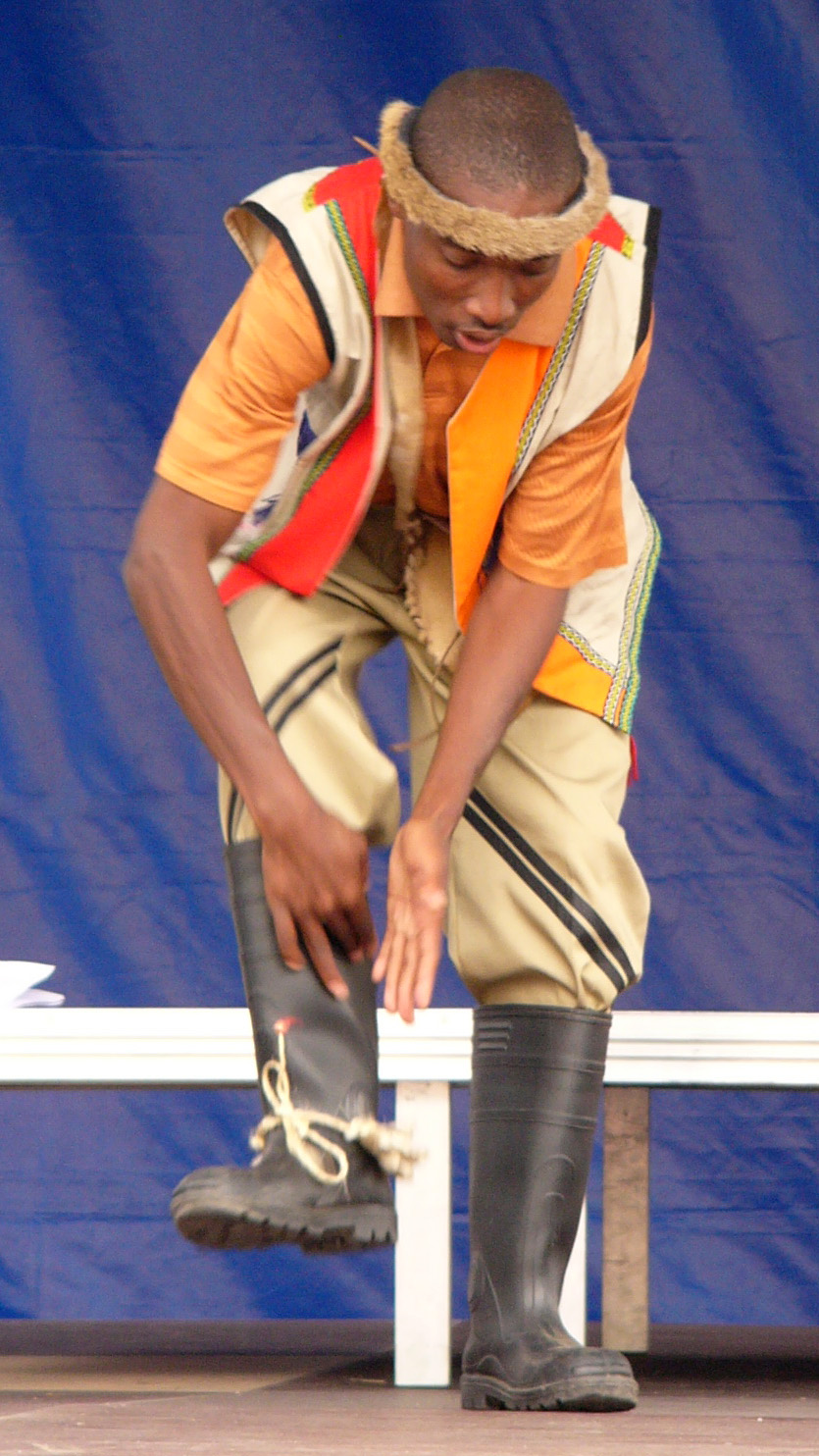 Gumboot danceA percussive South African dance born in the mines, performed in Wellington boots to communicate and celebrate.CuartetoAn upbeat partner dance and music tradition born in Córdoba, Argentina
Good reading and sources
The facts on this page come from the Wikipedia article "Sabar", written by its contributors and used under the CC BY-SA 4.0 licence, and from its Wikidata record (CC0). EveryParampara rewrote the text in its own words, with AI assistance, and compares every page with the article to make sure no passage is copied. It may be reused under the same CC BY-SA 4.0 licence with a link back.
It may contain mistakes. Traditions differ from one family, village and community to the next, and the people who keep them know them best. If something is wrong, tell us. Last refreshed 2026-10-05.
More from Senegal
All the traditions of Senegal
🇬🇲 Gambia and 4 moreKoraߞߐߙߊ
A 21-string West African harp-lute played by hereditary storytellers and bardsPerformance
 🇲🇱 Bamako, Mali and 5 moreGriotjeli, ߖߋ߬ߟߌ in N'Ko script
West Africa's hereditary keepers of spoken history, praise and musicPerformance
🇲🇱 Bamako, Mali and 5 moreGriotjeli, ߖߋ߬ߟߌ in N'Ko script
West Africa's hereditary keepers of spoken history, praise and musicPerformance
 🇸🇳 Dakar, Senegal and 1 moreSenegalese wrestlingLaamb (Wolof), Njom (Serer)
A striking folk wrestling sport from Senegal that blends combat with oral poetry and music.Game
🇸🇳 Dakar, Senegal and 1 moreSenegalese wrestlingLaamb (Wolof), Njom (Serer)
A striking folk wrestling sport from Senegal that blends combat with oral poetry and music.Game
 🇸🇳 Senegal and 1 moreKumpo
A palm-leaf figure of the Diola, danced at village festivals to urge good conductFolklore
🇸🇳 Senegal and 1 moreKumpo
A palm-leaf figure of the Diola, danced at village festivals to urge good conductFolklore
The same idea elsewhere
All of this kind 🇹🇷 Kayseri, Turkey and 4 moreHalay
A traditional line and circle folk dance kept across Turkey, Azerbaijan, Armenia, Iran, and Syria.Performance
🇧🇷 BrazilBaião
A syncopated folk rhythm and partnered dance from northeastern BrazilPerformance
🇹🇷 Kayseri, Turkey and 4 moreHalay
A traditional line and circle folk dance kept across Turkey, Azerbaijan, Armenia, Iran, and Syria.Performance
🇧🇷 BrazilBaião
A syncopated folk rhythm and partnered dance from northeastern BrazilPerformance
 🇺🇦 Kyiv, UkraineBanduraБандура
A Ukrainian plucked string instrument played to accompany epic songs and folk balladsPerformance
🇺🇦 Kyiv, UkraineBanduraБандура
A Ukrainian plucked string instrument played to accompany epic songs and folk balladsPerformance
 🇳🇿 Auckland, New ZealandPoi
A Māori performing art of swinging tethered weights in rhythmical patterns.Performance
🇳🇿 Auckland, New ZealandPoi
A Māori performing art of swinging tethered weights in rhythmical patterns.Performance