Royal, civic and national ceremonyNorth AmericaChristianSecular and civic
Saint-Jean-Baptiste Day
In its own language: Fête nationale du Québec
An annual civic and cultural celebration observed across Quebec every June 24

Saint-Jean-Baptiste Day is an annual civic celebration held across Quebec on June 24. Originating as a Christian summer feast, it evolved through the nineteenth and twentieth centuries into a broad public holiday marked by music, evening bonfires, and parades.
When is Saint-Jean-Baptiste Day in 2027?
Saint-Jean-Baptiste Day 2027 is on Thursday, 24 June 2027. Other years: 2026, Wednesday, 24 June 2026; 2028, Saturday, 24 June 2028.
Saint-Jean-Baptiste Day, known locally as la Saint-Jean or Quebec's Fête nationale, takes place every June 24. What began as a religious feast brought by early French settlers was reshaped during the nineteenth century into a patriotic gathering for French Canadians. Today, it stands as Quebec's official public holiday, bringing communities together for concerts, lively parades, speeches, and neighbourhood bonfires.
Early history and rebirth
French colonists brought the midsummer feast of Saint John to North America in the seventeenth century. Records note early observances in 1606 off Newfoundland and in 1636 along the Saint Lawrence River, where settlers fired cannons and lit a bonfire. The observance gained a fresh political dimension in Montreal in 1834. Inspired by local Saint Patrick's Day events, newspaper publisher Ludger Duvernay helped host an outdoor banquet for sixty guests. Attendees sang George-Étienne Cartier's song praising the land, offered patriotic toasts, and formed an association to keep the custom alive in following years.
Nineteenth century growth
After pausing during the late 1830s rebellions, the observance resumed with strong backing from the Catholic Church. Nighttime bonfires continued, and daytime parades took root across urban centres. Floats with allegorical displays joined Montreal processions in 1874. During an 1880 congress in Quebec City that gathered francophone delegates from across the continent, musicians first performed Calixa Lavallée's composition "Ô Canada", which later became Canada's national anthem. Pope Pius X named Saint John the Baptist the patron saint of French Canadians in 1908, and the provincial government established June 24 as an official holiday in 1925.
The modern public holiday
Quebec formalised the date as a paid provincial holiday in 1977 under Premier René Lévesque. Organisational duties shifted to cultural bodies such as the Mouvement national des Québécoises et des Québécois, leading to a largely secular celebration open to the wider public. Festivities often begin on the evening of June 23 with open-air concerts, flag waving, and bonfires. Parades, fireworks, and public speeches follow on June 24. While religious services still occur in churches, the day serves primarily as a civic occasion that highlights Quebec culture and music.
Politics and public life
During the 1960s, the holiday frequently reflected political tensions surrounding Quebec nationalism and sovereignty. Demonstrations targeted federal dignitaries during Montreal events in 1964 and 1968, sparking widely televised confrontations. Subsequent decades brought ongoing discussions over language and inclusion in official concert programmes. Government guidelines require stage performances to be presented in French, though recent events have expanded lineups to include regional anglophone acts, indigenous performers singing in Algonquin, and Creole musical groups.
How Saint-Jean-Baptiste Day is kept
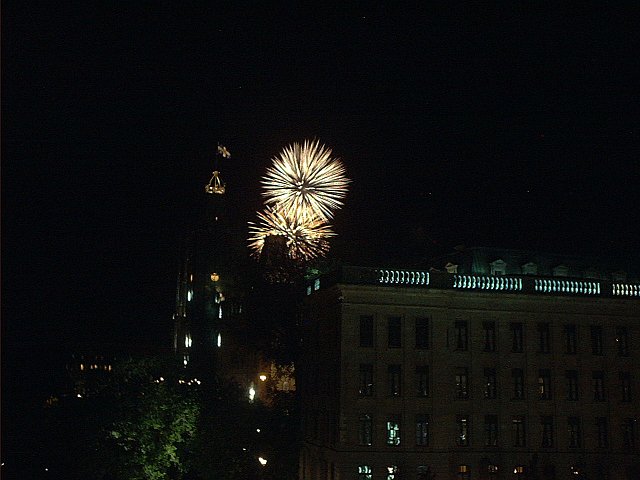
Celebrations start on the evening of June 23 and continue through the following day. People gather in parks and town squares for outdoor music concerts, speeches, and evening bonfires. Municipalities host parades featuring marching performers and decorated floats. Residents wave Quebec flags, attend firework displays, and share meals and drinks with neighbours. While Catholic parishes hold religious services, the broader public festivities focus on communal entertainment, local musical performances in French, and family activities in public spaces.
When and where
The holiday is observed annually on June 24, with many public gatherings, outdoor concerts, and bonfires starting the night before on June 23. It is fixed on the calendar to coincide with the traditional feast of Saint John the Baptist.
The holiday is officially celebrated throughout the province of Quebec in Canada. Major parades, rallies, and large public concerts take place in Montreal and Quebec City, while smaller towns host neighbourhood fires and community festivals.
What Saint-Jean-Baptiste Day means
Originally a Christian feast connected to ancient midsummer fires, the day shifted into an expression of French-Canadian identity and unity in the nineteenth century. In modern Quebec, it represents collective cultural pride, language preservation, and civic solidarity, symbolised by public gatherings, traditional bonfires, and the display of the provincial flag.


Days Saint-Jean-Baptiste Day is marked
Saint-Jean-Baptiste Day dates: 2026, 2027, 2028
| Year | Saint-Jean-Baptiste Day date |
|---|---|
| 2026 | Wednesday, 24 June 2026 |
| 2027 | Thursday, 24 June 2027 |
| 2028 | Saturday, 24 June 2028 |
Questions people ask about Saint-Jean-Baptiste Day
When is Saint-Jean-Baptiste Day in 2027?
Saint-Jean-Baptiste Day 2027 is on Thursday, 24 June 2027. Other years: 2026, Wednesday, 24 June 2026; 2028, Saturday, 24 June 2028.
What is Saint-Jean-Baptiste Day?
It is an annual public holiday in Quebec held on June 24. Originally a Christian summer feast, it became a patriotic gathering for French Canadians in the nineteenth century and is now a province-wide civic celebration.
How do people celebrate the day?
People attend public parades with floats, light evening bonfires, watch fireworks, and gather for outdoor concerts. Speeches and flag-waving are common, while Catholic churches continue to hold traditional religious services.
What is the historical origin of the observance in Canada?
French colonists marked the feast as early as 1606. In 1834, Ludger Duvernay organised a patriotic banquet in Montreal to unite French Canadians, establishing the tradition of annual public celebrations.
See also
 Bastille DayFrance's national day marking the storming of the Bastille and the unity of the people on 14 July.
 Canada DayA national holiday on July 1 that marks the 1867 union of Canadian colonies into a single dominion.
 Martin Luther King Jr. DayAn American federal holiday honouring the civil rights leader with service and remembrance
 HalloweenAn annual observance on 31 October marking the eve of All Saints' Day, rooted in Christian tradition and Celtic heritage
Good reading and sources
The facts on this page come from the Wikipedia article "Saint-Jean-Baptiste Day", written by its contributors and used under the CC BY-SA 4.0 licence, and from its Wikidata record (CC0). EveryParampara rewrote the text in its own words, with AI assistance, and compares every page with the article to make sure no passage is copied. It may be reused under the same CC BY-SA 4.0 licence with a link back.
It may contain mistakes. Traditions differ from one family, village and community to the next, and the people who keep them know them best. If something is wrong, tell us. Last refreshed 2026-10-04.
More from Canada
All the traditions of Canada 🇬🇧 United Kingdom and 5 moreBeating Retreat
A military ceremony of music and drill held at sunset to mark the end of a day or a festival.Ceremony
🇬🇧 United Kingdom and 5 moreBeating Retreat
A military ceremony of music and drill held at sunset to mark the end of a day or a festival.Ceremony
 🇪🇸 Spain and 5 moreArbor Day
An annual secular observance dedicated to planting and caring for trees around the worldCeremony
🇫🇷 Paris, France and 5 moreBastille DayFête nationale française
France's national day marking the storming of the Bastille and the unity of the people on 14 July.Ceremony
🇨🇦 Ottawa, CanadaCanada DayFête du Canada
A national holiday on July 1 that marks the 1867 union of Canadian colonies into a single dominion.Ceremony
🇪🇸 Spain and 5 moreArbor Day
An annual secular observance dedicated to planting and caring for trees around the worldCeremony
🇫🇷 Paris, France and 5 moreBastille DayFête nationale française
France's national day marking the storming of the Bastille and the unity of the people on 14 July.Ceremony
🇨🇦 Ottawa, CanadaCanada DayFête du Canada
A national holiday on July 1 that marks the 1867 union of Canadian colonies into a single dominion.Ceremony
The same idea elsewhere
All of this kind 🇵🇱 Auschwitz-Birkenau, Poland and 1 moreMarch of the LivingMarsz Żywych (Polish) · מצעד החיים (Hebrew)
An annual two-week journey to Poland ending in a silent walk from Auschwitz to BirkenauCeremony
🇵🇱 Auschwitz-Birkenau, Poland and 1 moreMarch of the LivingMarsz Żywych (Polish) · מצעד החיים (Hebrew)
An annual two-week journey to Poland ending in a silent walk from Auschwitz to BirkenauCeremony
 🇬🇷 Olympia, Greece and 1 moreOlympic torch relay
The ceremonial journey of the flame from Olympia to each host city of the Olympic GamesCeremony
🇬🇷 Olympia, Greece and 1 moreOlympic torch relay
The ceremonial journey of the flame from Olympia to each host city of the Olympic GamesCeremony
 🇮🇳 Kolkata, IndiaJana Gana Mana
India's national anthem, from a Bengali hymn of 1911, sung at civic occasionsCeremony
🇮🇳 Kolkata, IndiaJana Gana Mana
India's national anthem, from a Bengali hymn of 1911, sung at civic occasionsCeremony
 🇳🇴 Bergen, NorwayBuekorps
Youth marching groups of Bergen's neighbourhoods, with drums, banners and a May paradeCeremony
🇳🇴 Bergen, NorwayBuekorps
Youth marching groups of Bergen's neighbourhoods, with drums, banners and a May paradeCeremony