Festivals and celebrationsEast AsiaBuddhist
Sho Dun Festival
In its own language: ཞོ་སྟོན། (Tibetan), 雪頓節 (Chinese)
A summer festival in Lhasa where a monks' retreat ends with yogurt and all-day opera

Sho Dun, also called the Shoton or Yogurt Festival, is an annual Tibetan Buddhist festival at Norbulingka palace in Lhasa, Tibet. It falls in summer, over ten days in the fifth lunar month, and marks the end of the monks' month-long retreat with yogurt, open-air opera and theatre.
When is Sho Dun Festival kept?
Sho Dun Festival is kept on once a year in summer, over ten days in the fifth lunar month, usually around mid-August.
The Sho Dun Festival is an annual summer celebration held at Norbulingka, the Jewel Park palace in Lhasa, in the Tibet Autonomous Region. It is kept by Tibetan communities and named in English after its two Tibetan words: sho, yogurt, and dun, banquet. Monks end a month-long summer retreat, laypeople give them yogurt, and days of open-air opera follow.
What it is
Sho Dun is a festival of Tibetan Buddhist communities, kept each summer at Norbulingka, the park and palace in Lhasa whose name means Jewel Park, in the Tibet Autonomous Region. Tibetans observe it, and Bhutanese, Nepalese and Monpa people are named among those who keep it too. It is classed as Tibetan culture and Tibetan Buddhist practice, and it counts as a religious holiday rather than a civil one. Crowds gather in the park, yogurt is given and eaten, and stages fill with performers and audiences through the day.
Origins and history
The festival began in the 11th century, with a banquet that laypeople gave for monks. Yogurt was the food at its heart. That gift came at the close of a summer retreat, when monks stayed inside their monasteries for a month so they would not walk on the insects emerging in the warm season and kill them. Once the retreat ended, the monks could come out, and the yogurt banquet marked the day. Summer opera and other theatricals were added to the festivities later, and the occasion grew into a longer festival kept every year.
Opera and performance
Summer opera, called Lhamo, is the loudest part of Sho Dun. A performance runs all day, driven by cymbals, bells and drums. Recitatives cut sharply through the sung choruses. On stage there are hooded villains, devils who leap, and dancing girls in long silk sleeves. The operas are long and open-air, so audiences come and go through the hours. In the past, dancers came to Lhasa from all over Tibet. Today the Lhasa Singing and Dancing Troupe, which is run by the state, is the only company that performs.
Yogurt and the banquet
Yogurt is why the festival has its name. Laypeople gave it to monks, and that gift is remembered as the beginning of the whole occasion. The word dun means banquet, so the day is a shared meal as much as a religious observance. Visitors eat yogurt in the park, and in English the festival is often simply called the Yogurt Festival. The sources do not name any other dish, so the meal is best pictured as a large public feast rather than a set menu.
Today and change
Two things have shifted over time, according to the article. Dancers once came from every corner of Tibet; now a single state-run company performs. And the festival, once a local act of generosity in Lhasa, is now named as a holiday observed by several peoples, among them Bhutanese, Nepalese and Monpa communities, while a similar festival, Tshechu, is kept in Bhutan. It remains annual, dated by the lunar calendar, and centred on Norbulingka, which stays its main site.
How Sho Dun Festival is kept
Monks spend a month inside their monasteries during the summer, not walking out, so that the insects that appear in the warm months are not trodden on. When that retreat ends, laypeople give them yogurt, and the festival opens. Over the following days, up to the twenty-fourth of the lunar month, crowds come to Norbulingka in Lhasa. Stages are set up, and Lhamo opera companies perform through the day, with cymbals, bells and drums. People eat yogurt in the park. Today a state-run troupe gives the main performances.
When and where
It begins on the fifteenth day of the fifth lunar month and finishes on the twenty-fourth. In most years that falls around the middle of August. The date is set by the Tibetan lunar calendar, so the exact days move from year to year. It follows the monks' month-long summer retreat and marks its end.
Its home is Norbulingka, the Jewel Park palace in Lhasa, in the Tibet Autonomous Region of China. That is where the festival is held and where its performances take place. It is also kept by Tibetan communities more widely, and Bhutanese, Nepalese and Monpa people are named among those who observe it.
What Sho Dun Festival means
The yogurt carries the meaning. A simple food, given by ordinary people to monks who have spent a month indoors, turns a private discipline into a public gift. Keeping the retreat means not harming the small creatures that come with summer, and the banquet that ends it turns that care into something shared. The operas add another layer: stories of villains and devils played out in the open air, so that a religious observance also becomes a holiday for the whole city.

Questions people ask about Sho Dun Festival
When is Sho Dun Festival kept?
Sho Dun Festival is kept on once a year in summer, over ten days in the fifth lunar month, usually around mid-August.
What is the Sho Dun Festival?
It is an annual Tibetan Buddhist festival held in summer at Norbulingka, the Jewel Park palace in Lhasa, in the Tibet Autonomous Region. Its name joins two words: sho, yogurt, and dun, banquet. It began as a gift of yogurt from laypeople to monks.
Where is it held?
The festival is held at Norbulingka, which means Jewel Park, in Lhasa, in the Tibet Autonomous Region. Tibetans keep it, and Bhutanese, Nepalese and Monpa people are also named among those who observe it. Its operas take place in the park, in the open air.
What is Lhamo?
Lhamo is the Tibetan summer opera performed at the festival. A performance lasts all day, with cymbals, bells and drums, sharp recitatives and sung choruses. On stage are hooded villains, leaping devils and dancers in long silk sleeves. In the past, troupes came from all over Tibet.
Who performs today?
In earlier times, dancers travelled to Lhasa from every part of Tibet. Today the article names only the Lhasa Singing and Dancing Troupe, which is run by the state, as the company that performs the operas at the festival.
See also
 DiwaliA five-day festival of lights celebrated across India and its diaspora to mark the victory of light over darkness.
 NavaratriA nine-night Hindu festival honoring the goddess Durga and her nine forms through prayer, fasting, and dance.
 Rama NavamiA Hindu spring festival marking the birth of Rama with prayer, fasting and processions
 Karva ChauthA fasting festival kept by married women in North India and Nepal for the safety of their husbands.
Good reading and sources
The facts on this page come from the Wikipedia article "Sho Dun Festival", written by its contributors and used under the CC BY-SA 4.0 licence, and from its Wikidata record (CC0). EveryParampara rewrote the text in its own words, with AI assistance, and compares every page with the article to make sure no passage is copied. It may be reused under the same CC BY-SA 4.0 licence with a link back.
It may contain mistakes. Traditions differ from one family, village and community to the next, and the people who keep them know them best. If something is wrong, tell us. Last refreshed 2026-10-05.
More from China
All the traditions of China 🇮🇳 India and 4 moreWater lantern
Small lamps floated on water to honour the dead and ask for good fortuneFestival
🇮🇳 India and 4 moreWater lantern
Small lamps floated on water to honour the dead and ask for good fortuneFestival
 🇨🇳 China and 5 moreMid-Autumn Festival中秋節
An annual harvest festival celebrating family reunions, full moons and mooncakesFestival · Sweets given and shared
🇨🇳 China and 5 moreMid-Autumn Festival中秋節
An annual harvest festival celebrating family reunions, full moons and mooncakesFestival · Sweets given and shared
 🇷🇺 Kazan, Russia and 2 moreSabantuyСабан туе (Saban tuyı)
A summer festival of folk sports and feasting celebrated by Tatar, Bashkir, Chuvash, and Kazakh communities.Festival · Feasts and festival meals
🇷🇺 Kazan, Russia and 2 moreSabantuyСабан туе (Saban tuyı)
A summer festival of folk sports and feasting celebrated by Tatar, Bashkir, Chuvash, and Kazakh communities.Festival · Feasts and festival meals
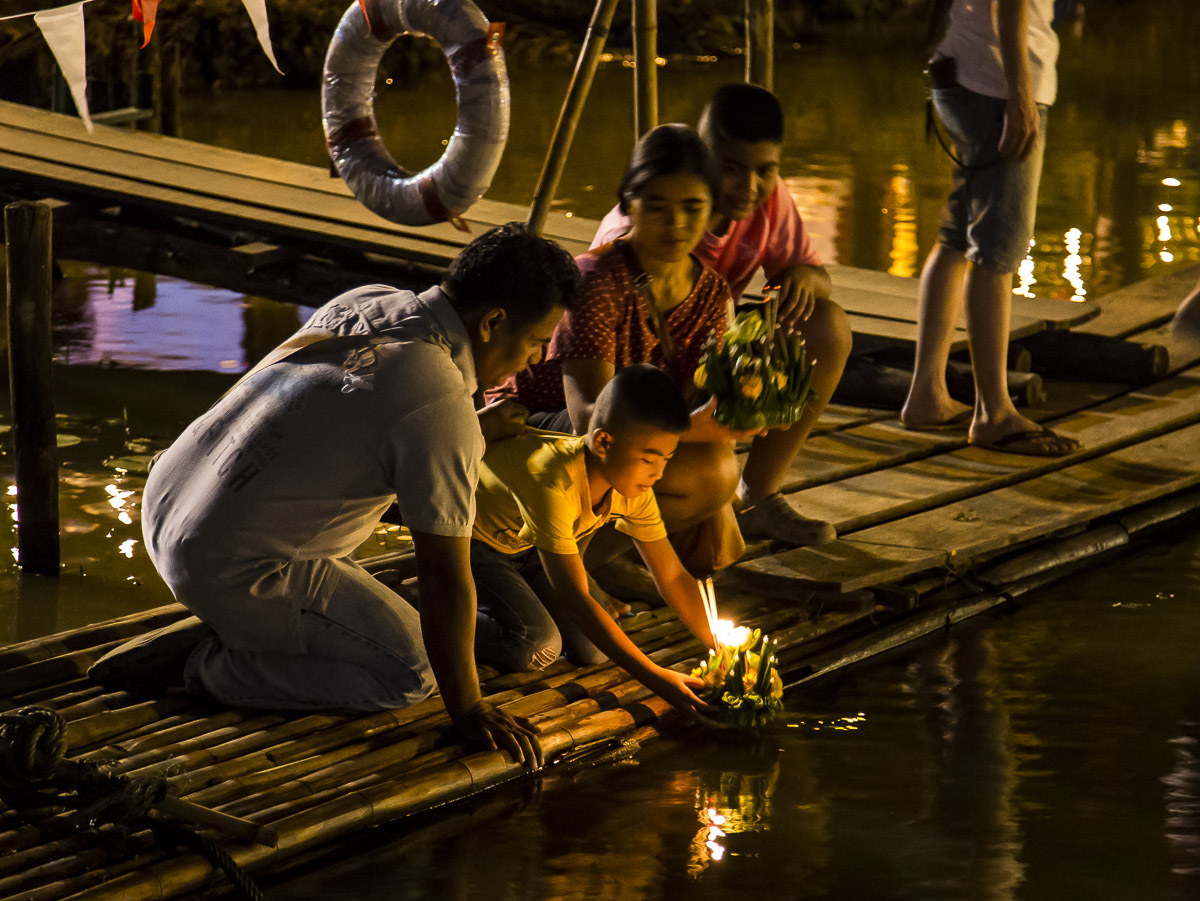 🇹🇭 Chiang Mai, Thailand and 5 moreLoy Krathongลอยกระทง
A Thai festival of floating leaf baskets on rivers to honor water and release negativity.Festival
🇹🇭 Chiang Mai, Thailand and 5 moreLoy Krathongลอยกระทง
A Thai festival of floating leaf baskets on rivers to honor water and release negativity.Festival
The same idea elsewhere
Fasting and feasting compared 🇮🇪 Ireland and 5 moreHalloween
An annual observance on 31 October marking the eve of All Saints' Day, rooted in Christian tradition and Celtic heritageFestival · Sweets given and shared
🇮🇪 Ireland and 5 moreHalloween
An annual observance on 31 October marking the eve of All Saints' Day, rooted in Christian tradition and Celtic heritageFestival · Sweets given and shared
 🇹🇷 Turkey and 5 moreEid al-Fitrعيد الفطر
The feast that ends Ramadan, opened with morning prayers, sweets and visits homeFestival · Feasts and festival meals
🇹🇷 Turkey and 5 moreEid al-Fitrعيد الفطر
The feast that ends Ramadan, opened with morning prayers, sweets and visits homeFestival · Feasts and festival meals
 🇦🇺 Australia and 5 moreGood Friday
A solemn Christian holy day commemorating the crucifixion and death of Jesus Christ.Spiritual · Fasting and breaking the fast
🇮🇳 Ayodhya, India and 7 moreDiwaliदीपावली (Dīpāvalī)
A five-day festival of lights celebrated across India and its diaspora to mark the victory of light over darkness.Festival · Feasts and festival meals
🇦🇺 Australia and 5 moreGood Friday
A solemn Christian holy day commemorating the crucifixion and death of Jesus Christ.Spiritual · Fasting and breaking the fast
🇮🇳 Ayodhya, India and 7 moreDiwaliदीपावली (Dīpāvalī)
A five-day festival of lights celebrated across India and its diaspora to mark the victory of light over darkness.Festival · Feasts and festival meals