Festivals and celebrationsEast AsiaShinto, Taoist and folk Chinese
Mid-Autumn Festival
In its own language: 中秋節
An annual harvest festival celebrating family reunions, full moons and mooncakes

The Mid-Autumn Festival is an annual autumn harvest holiday observed by Chinese communities and across East and Southeast Asia. Families gather on the fifteenth day of the eighth lunar month to admire the bright full moon, share round mooncakes, light decorative lanterns and give thanks for good fortune.
When is Mid-Autumn Festival in 2027?
Mid-Autumn Festival 2027 is on Wednesday, 15 September 2027. Other years: 2026, Friday, 25 September 2026; 2028, Tuesday, 3 October 2028.
The Mid-Autumn Festival is a major harvest celebration held across China and East Asia on the full moon of the eighth lunar month. Families come together in the evening to gaze at the bright sky, eat sweet mooncakes, and carry illuminated lanterns. Rooted in ancient moon worship and harvest gratitude, the day focuses on reunion, completeness, and prayers for health, fertility, and prosperity.
Origins and ancient lore
Harvest thanksgiving during the autumn moon began as early as the Shang dynasty, with rituals documented in ancient Zhou texts. Royal court members honored lunar deities, while popular celebration expanded during the Tang dynasty after palace festivities gained prominence. A central legend centers on the archer Hou Yi and his wife Chang'e. After Hou Yi saved the earth by shooting down surplus suns, he received an immortality elixir. Chang'e consumed the potion to protect it from a thief or to stop a cruel ruler, floating up to live on the moon. Sympathetic people began offering fruits, pastries, and burning incense to her every autumn.
Lanterns and evening gatherings
As night falls, people light lanterns of many shapes and sizes. Historically crafted to resemble natural forms or mythical creatures, lanterns carry wishes for fertility and guide paths toward good fortune. Children carry them through neighborhood streets, while communities hang them on towers or release them as sky lanterns. Many gatherings feature lantern riddles, where people write word puzzles on paper shades for friends to solve. In southern regions, celebrations also include energetic dragon and lion dances. Families set up outdoor tables under the clear night sky, offering prayers to lunar deities while enjoying the company of loved ones.
Sharing mooncakes
Mooncakes are the defining food of the holiday. These small, dense pastries are baked with fillings such as sweet-bean paste or lotus-seed paste. Because round shapes represent completeness and harmony in Chinese culture, cutting and sharing a mooncake symbolizes family unity. Traditionally, the oldest household member slices the pastry into portions so each relative receives a piece. Pastry makers sometimes create enormous presentation cakes decorated with images of the lunar palace or cassia trees, while some traditions stack thirteen cakes into a tower to represent the months of a full lunar calendar.
Meanings of the full moon
The festival centers on three core ideas: gathering, giving thanks, and praying for the future. The round moon at mid-autumn represents family members joining together after months apart. People give thanks for bountiful agricultural harvests and harmonious relationships. At the same time, participants pray for personal blessings, including marriage, healthy children, longevity, and future security. Ancient traditions linked lunar cycles to renewal and water, prompting women in particular to make evening offerings. Even as modern life changes how people live and work, the night remains a dedicated moment to pause and appreciate loved ones.
How Mid-Autumn Festival is kept
On the festival day, family members travel home to share a festive evening meal. When darkness arrives, they gather outdoors in yards or parks to admire the full moon. The head of the household divides round mooncakes into equal wedges for everyone present. Children hold lit lanterns, and participants attempt to solve riddles written on lantern frames. People burn incense at household altars to honor the moon goddess Chang'e, while southern communities often stage lion and dragon dances.
When and where
The festival occurs annually on the fifteenth day of the eighth lunisolar month in the traditional Chinese calendar. In the Gregorian calendar, this date shifts each year between 7 September and 8 October.
The observance is widespread across mainland China, Taiwan, Hong Kong, and Macau, where it is an official public holiday. Related lunar celebrations are held in Vietnam, Singapore, Malaysia, and other parts of East and Southeast Asia.
What Mid-Autumn Festival means
The round full moon and circular mooncakes represent wholeness, harmony, and the unbroken circle of family. Gathering beneath the autumn sky symbolizes unity and gratitude for the year's harvest. Offerings to Chang'e and the moon reflect hopes for rejuvenation, long life, and prosperity, while bright lanterns stand for light guiding people toward good fortune.


Days Mid-Autumn Festival is marked
Mid-Autumn Festival dates: 2026, 2027, 2028
| Year | Mid-Autumn Festival date |
|---|---|
| 2026 | Friday, 25 September 2026 |
| 2027 | Wednesday, 15 September 2027 |
| 2028 | Tuesday, 3 October 2028 |
Questions people ask about Mid-Autumn Festival
When is Mid-Autumn Festival in 2027?
Mid-Autumn Festival 2027 is on Wednesday, 15 September 2027. Other years: 2026, Friday, 25 September 2026; 2028, Tuesday, 3 October 2028.
What is the Mid-Autumn Festival?
It is a traditional harvest holiday observed in Chinese culture. Families gather to admire the bright autumn full moon, share sweet mooncakes, light decorative lanterns, and give thanks for the harvest.
Why do people eat mooncakes during this celebration?
Mooncakes are circular pastries that represent completeness and togetherness. Slicing and distributing pieces among relatives signifies family harmony and the joy of reunion.
Who is Chang'e and why is she honored?
Chang'e is the mythical Moon Goddess of Immortality. According to legend, she drank a magic potion and flew to the moon, prompting people to offer pastries and fruits in her memory.
See also
 Eid al-FitrThe feast that ends Ramadan, opened with morning prayers, sweets and visits home
 DiwaliA five-day festival of lights celebrated across India and its diaspora to mark the victory of light over darkness.
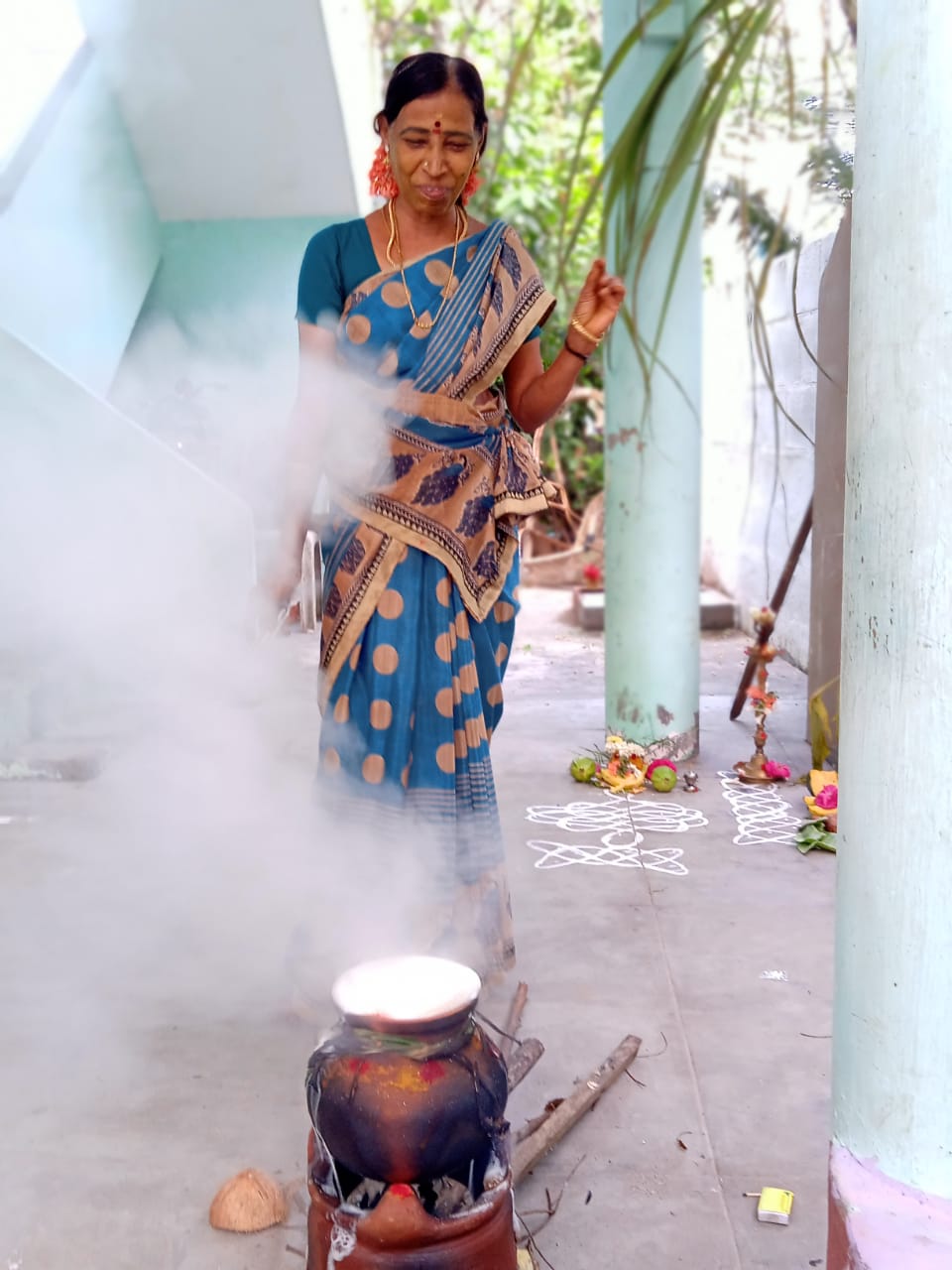 PongalThree or four days of boiling rice, garlanded cattle and thanks to the sun
 OnamA ten-day harvest festival in Kerala celebrating the return of King Mahabali with feasts, flower carpets and boat races.
Good reading and sources
- Encyclopaedia BritannicaArticle
- Mahabali comes callingThe Hindu, Article
- Mahabali comes callingThe Hindu, Article
- Mid-Autumn Festival on WikipediaEncyclopedia
- More photos on Wikimedia CommonsPhotos and video
- Wikidata recordOpen data
The facts on this page come from the Wikipedia article "Mid-Autumn Festival", written by its contributors and used under the CC BY-SA 4.0 licence, and from its Wikidata record (CC0). EveryParampara rewrote the text in its own words, with AI assistance, and compares every page with the article to make sure no passage is copied. It may be reused under the same CC BY-SA 4.0 licence with a link back.
It may contain mistakes. Traditions differ from one family, village and community to the next, and the people who keep them know them best. If something is wrong, tell us. Last refreshed 2026-10-07.
More from China
All the traditions of China 🇷🇺 Kazan, Russia and 2 moreSabantuyСабан туе (Saban tuyı)
A summer festival of folk sports and feasting celebrated by Tatar, Bashkir, Chuvash, and Kazakh communities.Festival · Feasts and festival meals
🇨🇳 Beijing, ChinaLaba Festival臘八節
A winter porridge festival marking the start of the Chinese New Year seasonFestival · Feasts and festival meals
🇷🇺 Kazan, Russia and 2 moreSabantuyСабан туе (Saban tuyı)
A summer festival of folk sports and feasting celebrated by Tatar, Bashkir, Chuvash, and Kazakh communities.Festival · Feasts and festival meals
🇨🇳 Beijing, ChinaLaba Festival臘八節
A winter porridge festival marking the start of the Chinese New Year seasonFestival · Feasts and festival meals
 🇨🇳 Dali, ChinaThird Month Fair三月街
A mountain-foot bazaar, festival, and sports gathering among the Bai in YunnanFestival
🇨🇳 Dali, ChinaThird Month Fair三月街
A mountain-foot bazaar, festival, and sports gathering among the Bai in YunnanFestival
 🇨🇳 ChinaTorch Festival火把节
A summer fire holiday celebrated by Yi and neighbouring communities in southwest ChinaFestival · Feasts and festival meals
🇨🇳 ChinaTorch Festival火把节
A summer fire holiday celebrated by Yi and neighbouring communities in southwest ChinaFestival · Feasts and festival meals
The same idea elsewhere
Harvest and thanksgiving compared 🇮🇱 Jerusalem, IsraelSukkotסוכות
A seven-day autumn Jewish festival of temporary booths, harvest prayers and hospitalitySpiritual
🇮🇱 Jerusalem, IsraelSukkotסוכות
A seven-day autumn Jewish festival of temporary booths, harvest prayers and hospitalitySpiritual
 🇺🇸 United StatesNalukataq
A spring whaling festival of the Iñupiat in Northern Alaska, featuring a blanket toss and communal feast.Festival · Feasts and festival meals
🇺🇸 United StatesNalukataq
A spring whaling festival of the Iñupiat in Northern Alaska, featuring a blanket toss and communal feast.Festival · Feasts and festival meals
 🇺🇸 United States and 1 moreBarn raising
A communal tradition where neighbours assemble to erect a farm barn in a few daysCraft · Lunch
🇺🇸 United States and 1 moreBarn raising
A communal tradition where neighbours assemble to erect a farm barn in a few daysCraft · Lunch
 🇮🇳 India and 1 moreLakshmi Pujaलक्ष्मीपूजा
A Hindu festival of lamps, prayers and offerings welcoming the goddess of prosperitySpiritual · Sweets given and shared
🇮🇳 India and 1 moreLakshmi Pujaलक्ष्मीपूजा
A Hindu festival of lamps, prayers and offerings welcoming the goddess of prosperitySpiritual · Sweets given and shared