Seasons, harvest and the calendarSouth AsiaBuddhistHindu
Sinhala New Year
In its own language: අලුත් අවුරුද්ද
The April solar New Year and harvest festival celebrated across Sri Lanka

Sinhala New Year, or Aluth Awurudda, is a traditional solar festival celebrated by the Sinhalese people of Sri Lanka in mid-April. Falling at the close of the harvest, it brings families together for temple visits, auspiciously timed home rituals, and shared festive dishes.
When is Sinhala New Year in 2027?
Sinhala New Year 2027 runs from 13 to 14 April 2027. Other years: 2026, 13 to 14 April 2026; 2028, 13 to 14 April 2028.
Sinhala New Year, known as Aluth Awurudda, is a major April holiday celebrated by the Sinhalese community in Sri Lanka. Marking the end of the agricultural harvest and the movement of the sun into Aries, the festival blends ancient solar traditions with Buddhist and Hindu practices. Families observe quiet hours for reflection and worship before greeting the new year with feasts, drums, and carefully timed domestic rituals.
A pause between years
The festival centres on the solar journey from the constellation of Pisces into Aries, occurring in the month of Bak. Unlike midnight calendar changes, this transition creates a neutral interval known as Nonagathaya. Lasting over twelve hours, this gap marks a complete pause in normal routine. Commerce, cooking, and everyday work halt across the country. Instead, people direct their attention toward spiritual reflection, visits to Buddhist and Hindu shrines, and quiet devotion. In many homes, people abstain from eating during this pause until the new year formally dawns at the exact midpoint of the sun's passage.
Auspicious moments
Every stage of welcoming the new year follows precise astrological timings announced nationwide. The approach of each moment is signalled by firecrackers and the rhythmic beats of the raban drum, played by local women. Families begin by cleansing themselves through an herbal oil bath. At the designated minute, the household hearth is lit to boil milk and cook kiribath, a traditional milk rice. Subsequent auspicious moments guide when people eat their first mouthfuls, perform their initial financial transactions, and start their work, creating a shared rhythm of renewal for the entire island.
Offerings and sweets
Because the festival aligns with the end of the paddy harvest, gratitude forms a central theme. The first portion of harvested grain is brought as an offering to venerated sacred shrines, such as Anuradhapura's Ruwanweli Maha Seya and the Temple of the Tooth. After solemn ceremonies finish, neighbourhoods come alive with outdoor games and gatherings. Families open their doors to share trays of treats, including golden oil cakes known as kavum, crisp kokis, fresh plantains, and warm milk rice, celebrating prosperity alongside the bright red blossoms of the yak erabadu tree.
How Sinhala New Year is kept
Celebrations begin with house cleaning and an herbal oil bath before entering Nonagathaya, a neutral window when all regular work and meals stop for temple visits. As astrologers announce each auspicious hour, firecrackers detonate and women play raban drums. Households collectively light their hearth fires, cook kiribath, share their first food, and complete their opening financial trades at the set minutes. Following these domestic rites, neighbours visit one another, children play traditional games, and families feast on festive sweets.
When and where
Aluth Awurudda occurs every year on 13 or 14 April in the month of Bak. The exact date and ceremonial hours are calculated using astrology to track the sun's crossing from the house of Pisces to Aries, alongside the sighting of the new moon.
The festival is observed throughout Sri Lanka in homes, village squares, and religious sanctuaries. Major offerings take place at significant pilgrimage sites, including Anuradhapura's Ruwanweli Maha Seya and the Temple of the Tooth Relic.
What Sinhala New Year means
Aluth Awurudda represents renewal, harvest thanksgiving, and collective harmony. Pausing normal life during the neutral period clears away the old year, while synchronized auspicious moments align the whole society toward a fresh start. Offerings of new rice honour spiritual institutions, and shared treats like kiribath invite abundance for the coming agricultural cycle.
On the table
- Kiribath
- Kavum
- Kokis
- Plantains


Sinhala New Year dates: 2026, 2027, 2028
| Year | Sinhala New Year date |
|---|---|
| 2026 | 13 to 14 April 2026 |
| 2027 | 13 to 14 April 2027 |
| 2028 | 13 to 14 April 2028 |
Questions people ask about Sinhala New Year
When is Sinhala New Year in 2027?
Sinhala New Year 2027 runs from 13 to 14 April 2027. Other years: 2026, 13 to 14 April 2026; 2028, 13 to 14 April 2028.
What is Sinhala New Year?
It is a Sri Lankan solar and harvest festival celebrated by the Sinhalese community in mid-April. It marks the sun's astrological transition from Pisces to Aries and welcomes the new year with sacred rites and family feasts.
What is the Nonagathaya neutral period?
Nonagathaya is a span of several hours between the old and new years when all commercial and household work stops. People spend this time visiting temples, praying, or playing traditional games rather than pursuing material tasks.
What traditional foods are served during the festival?
Families prepare kiribath, which is rice cooked in milk, alongside fresh plantains and festive sweet treats such as deep-fried kavum oil cakes and crisp, light kokis.
See also
 DiwaliA five-day festival of lights celebrated across India and its diaspora to mark the victory of light over darkness.
 VesakA day to honor the birth, awakening, and passing of the Buddha, kept by Buddhists across Asia.
 Ganesh ChaturthiA Hindu festival celebrating the arrival of Ganesha, marked by clay idols, sweets, and public processions.
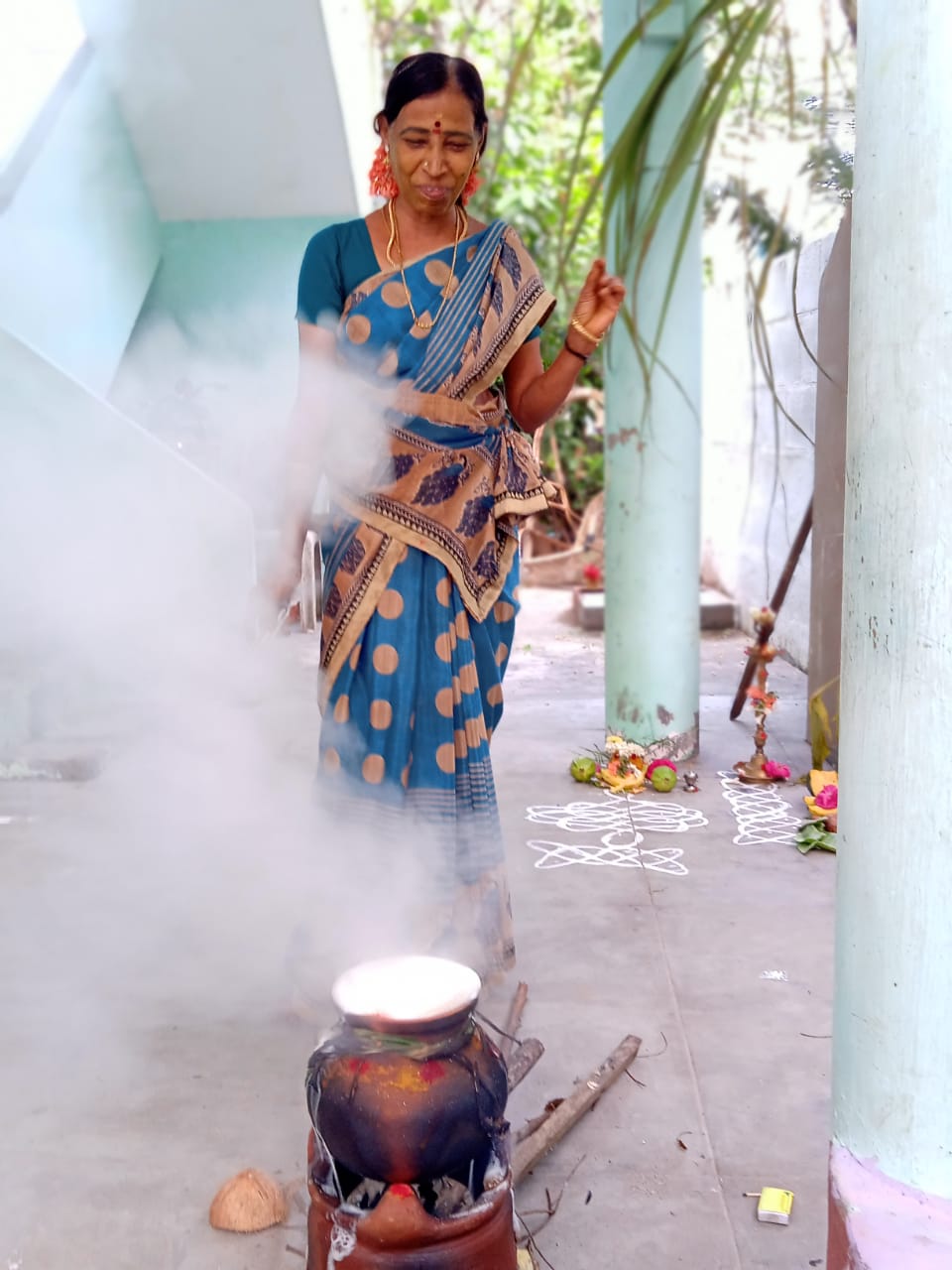 PongalThree or four days of boiling rice, garlanded cattle and thanks to the sun
Good reading and sources
The facts on this page come from the Wikipedia article "Sinhalese New Year", written by its contributors and used under the CC BY-SA 4.0 licence, and from its Wikidata record (CC0). EveryParampara rewrote the text in its own words, with AI assistance, and compares every page with the article to make sure no passage is copied. It may be reused under the same CC BY-SA 4.0 licence with a link back.
It may contain mistakes. Traditions differ from one family, village and community to the next, and the people who keep them know them best. If something is wrong, tell us. Last refreshed 2026-10-04.
More from Sri Lanka
All the traditions of Sri Lanka
🇮🇳 India and 5 morePongal
Three or four days of boiling rice, garlanded cattle and thanks to the sunSeasonal · Sweets given and shared
🇮🇳 Ayodhya, India and 7 moreDiwaliदीपावली (Dīpāvalī)
A five-day festival of lights celebrated across India and its diaspora to mark the victory of light over darkness.Festival · Feasts and festival meals
 🇮🇳 India and 5 morePretaप्रेत
Offerings and rites for spirits enduring deep hunger across Asian traditions.Spiritual
🇱🇰 Colombo, Sri Lanka and 5 moreVesakVisakha Bucha (Thailand), Visakha Bouxa (Laos), Full Moon Day of Kason (Myanmar)
A day to honor the birth, awakening, and passing of the Buddha, kept by Buddhists across Asia.Festival
🇮🇳 India and 5 morePretaप्रेत
Offerings and rites for spirits enduring deep hunger across Asian traditions.Spiritual
🇱🇰 Colombo, Sri Lanka and 5 moreVesakVisakha Bucha (Thailand), Visakha Bouxa (Laos), Full Moon Day of Kason (Myanmar)
A day to honor the birth, awakening, and passing of the Buddha, kept by Buddhists across Asia.Festival
The same idea elsewhere
New Year compared 🇷🇺 Russia and 2 moreMaslenitsaМасленица
A seven-day Eastern Slavic festival of pancakes and bonfires marking the end of winter before Lent.Festival · Breakfast
🇷🇺 Russia and 2 moreMaslenitsaМасленица
A seven-day Eastern Slavic festival of pancakes and bonfires marking the end of winter before Lent.Festival · Breakfast
 🇺🇸 United StatesGreen Corn CeremonyPuskita
A Southeastern harvest and new year ceremony of fasting, dancing and renewalSeasonal
🇩🇿 AlgeriaWezeeaوزيعة
A communal meat-sharing custom fostering rural solidarity across AlgeriaSpiritual · Feasts and festival meals
🇺🇸 United StatesGreen Corn CeremonyPuskita
A Southeastern harvest and new year ceremony of fasting, dancing and renewalSeasonal
🇩🇿 AlgeriaWezeeaوزيعة
A communal meat-sharing custom fostering rural solidarity across AlgeriaSpiritual · Feasts and festival meals
 🇮🇱 Jerusalem, IsraelYom Kippurיוֹם כִּפּוּר
The holiest day in Judaism, dedicated to fasting, prayer and atonementSpiritual · Fasting and breaking the fast
🇮🇱 Jerusalem, IsraelYom Kippurיוֹם כִּפּוּר
The holiest day in Judaism, dedicated to fasting, prayer and atonementSpiritual · Fasting and breaking the fast