Spiritual and religiousSouth AsiaHinduBuddhist
Preta
In its own language: प्रेत
Offerings and rites for spirits enduring deep hunger across Asian traditions.

In Hindu and Buddhist traditions across Asia, the preta is a deceased soul trapped in a state of intense hunger and thirst. Families and monastic communities perform offerings, feasts and year-long rites to soothe these wandering spirits and guide them toward a better rebirth.
When is Preta marked?
Preta is kept as part of Hungry Ghost Festival, which is on Monday, 16 August 2027.
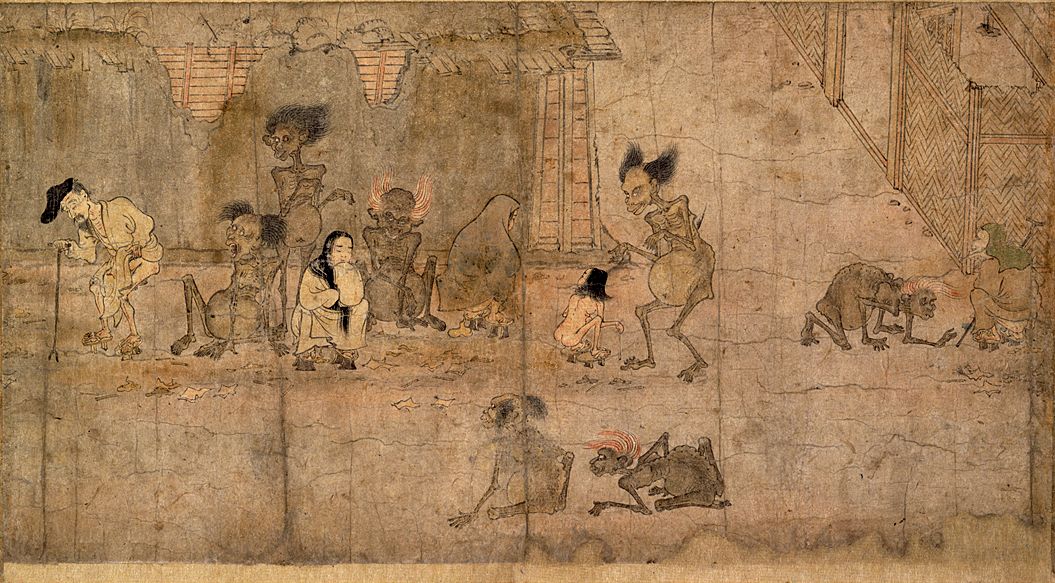
The preta, often called a hungry ghost, is a spirit enduring extreme physical longing in Hindu, Buddhist and East Asian folk beliefs. Born from past greed or unresolved death, these beings are thought to wander between worlds with swollen bellies and narrow throats that prevent eating. Living relatives and monastic communities perform regular rituals, food gifts and annual festivals to relieve their torment, helping the souls move safely onward into their next rebirth.
The suffering spirit
In ancient Sanskrit, the term preta described someone who had departed from earthly life. Over centuries, philosophical traditions refined this idea into a specific realm of existence where unfulfilled desires cause intense torment. Pretas are described as invisible beings with withered limbs, needle-like necks and enormous bellies. This form reflects their inner state: they possess huge appetites but cannot swallow or digest nourishment. In sacred cosmology, they inhabit deserts and desolate areas, perceiving fresh water as filth and watching edible food ignite into flames upon contact. Extreme weather torments them constantly, making the summer moonlight scorch and winter sunshine freeze.
Hindu funerary rites
Hindu theology teaches that a preta body holds only air and aether, lacking the heavier elements required for eating and digestion. Following a cremation, relatives conduct an exacting twelve-month cycle of rites to build a subtle body for the departed spirit and liberate it from distress. A small mound of clay inside the home represents the presence of the ghost. Mourners present cooked rice balls in three progressive groups of sixteen. The earliest portions assist in crafting a new spiritual form, while the middle portions soothe rising hunger. In the final stage, priests consume dedicated food to absorb and clear worldly misdeeds, freeing the soul for reincarnation.
Buddhist temple offerings
Buddhist monastic communities treat pretas with deep compassion rather than fear. Monks across Asia set aside small portions of grain, water, tea, fresh fruit, and incense before sitting down to their own daily meals. In Chinese Buddhist temples, evening liturgies feature the Mengshan food bestowal, where prayers and scripture are recited to grant spiritual nourishment to wandering spirits. Another key ceremony, the Yoga Flaming-Mouth ritual, directly addresses spirits whose mouths burn with hunger. By combining ritual chants, consecrated water, and sacred teachings, practitioners aim to ease physical agony and awaken each spirit's capacity to hear the Dharma and escape lower rebirths.
Festivals of remembrance
Beyond daily offerings, communities across East and Southeast Asia organise large annual festivals dedicated to hungry ghosts. In Chinese and Taoist traditions, families gather on the seventh lunar month's fifteenth day to share feasts and burn paper replicas of money, fine clothes, and houses. These paper gifts satisfy the earthly attachments that spirits retain from their previous lives. Similar observances take place in Cambodia, Thailand, Japan, and Tibet. Participants believe that feeding these neglected beings protects the community from mischief while generating spiritual merit. In exchange, families pray for ancestral blessings, peace in the household, and healthy crops for the coming harvest season.
How Preta is kept
Ritual customs for pretas vary by faith and region. In Hindu households, the chief mourner undertakes rigorous austerities, eating once a day and sleeping on the floor while offering rice balls over twelve months to build the spirit's rebirth body. Buddhist monks begin daily meals by placing portions of rice, water, and fruit on outdoor altars while chanting mantras. During seasonal ghost festivals, families set out communal tables laden with food, light incense, and burn paper money, paper clothing, and household goods at roadsides and temples to pacify hungry spirits and invite blessings from their forebears.
When and where
Rites for pretas occur throughout the year. Buddhist temples present daily offerings at morning and evening services. Hindu families conduct death rituals across a full twelve-month period following a cremation. Communal ghost festivals usually occur in late summer, notably on the fifteenth day of the seventh lunar month in Chinese and East Asian calendars.
Beliefs and customs surrounding pretas are widespread across South, East, and Southeast Asia. They form an active part of religious life in India, Sri Lanka, and Bangladesh, as well as in China, Taiwan, Japan, Vietnam, Cambodia, Thailand, Laos, Myanmar, Singapore, and Malaysia.
What Preta means
The grotesque form of the preta symbolises the destructive nature of unchecked greed, selfishness, and material craving during human life. Distended stomachs paired with thread-thin necks illustrate how excessive desire creates a thirst that can never be quenched physically. By performing charitable food rites and chanting prayers, the living practice selfless generosity, alleviate karmic suffering, and reaffirm moral duties toward departed family members and forgotten souls.

Days Preta is marked
Questions people ask about Preta
When is Preta marked?
Preta is kept as part of Hungry Ghost Festival, which is on Monday, 16 August 2027.
What is a preta?
A preta is a spirit described in Hindu, Buddhist, and East Asian traditions that suffers intense thirst and hunger. Often depicted with a swollen stomach and a tiny throat, it represents a person reborn into torment due to past greed, jealousy, or dishonesty.
Where is the belief in pretas observed?
Belief in pretas is kept across South, East, and Southeast Asia. Prominent observances and rituals take place in countries such as India, Sri Lanka, China, Taiwan, Japan, Cambodia, Thailand, Vietnam, and Malaysia, embedded in both monastic life and popular folk religion.
Why do families make offerings to pretas?
Offerings provide relief to suffering spirits who cannot nourish themselves. In Hindu traditions, rice balls help construct a new body for karmic rebirth. In Buddhist and Taoist customs, gifts of food and burned paper goods soothe ancestral spirits and bring protection to the living.
See also
 Qingming FestivalA spring custom of sweeping family graves and honouring ancestors across East Asia.
 Krishna JanmashtamiA Hindu festival celebrating the birth of Krishna with fasting, singing and night vigils
 Ghost FestivalA full-moon night in the seventh lunar month for feeding ghosts and guiding souls home
 Naga PanchamiA day of worship for serpent deities and cobras, observed by Hindus, Jains, and Buddhists across South Asia.
Good reading and sources
- Preta on WikipediaEncyclopedia
- More photos on Wikimedia CommonsPhotos and video
- Wikidata recordOpen data
The facts on this page come from the Wikipedia article "Preta", written by its contributors and used under the CC BY-SA 4.0 licence, and from its Wikidata record (CC0). EveryParampara rewrote the text in its own words, with AI assistance, and compares every page with the article to make sure no passage is copied. It may be reused under the same CC BY-SA 4.0 licence with a link back.
It may contain mistakes. Traditions differ from one family, village and community to the next, and the people who keep them know them best. If something is wrong, tell us. Last refreshed 2026-10-04.
More from India
All the traditions of India 🇮🇳 India and 1 moreAkhand Pathਅਖੰਡ ਪਾਠ
The unbroken, continuous reading of the entire Sikh scripture over two daysSpiritual
🇮🇳 India and 1 moreAkhand Pathਅਖੰਡ ਪਾਠ
The unbroken, continuous reading of the entire Sikh scripture over two daysSpiritual
 🇳🇵 Nepal and 1 moreTibetan prayer flagLung ta / Darchog
Colorful cloth banners printed with mantras, hung in high places to spread blessings on the wind.Spiritual
🇳🇵 Nepal and 1 moreTibetan prayer flagLung ta / Darchog
Colorful cloth banners printed with mantras, hung in high places to spread blessings on the wind.Spiritual
 🇮🇳 IndiaTheyyam
A sacred ritual dance and divine invocation from North Malabar in IndiaSpiritual
🇮🇳 IndiaTheyyam
A sacred ritual dance and divine invocation from North Malabar in IndiaSpiritual
 🇮🇳 India and 1 moreNazar battuनज़र बट्टू / نظر بٹو
A protective custom in South Asia using deliberate flaws or charms to deflect the evil eye.Spiritual
🇮🇳 India and 1 moreNazar battuनज़र बट्टू / نظر بٹو
A protective custom in South Asia using deliberate flaws or charms to deflect the evil eye.Spiritual
The same idea elsewhere
Remembering the ancestors compared 🇮🇪 Ireland and 5 moreHalloween
An annual observance on 31 October marking the eve of All Saints' Day, rooted in Christian tradition and Celtic heritageFestival · Sweets given and shared
🇮🇪 Ireland and 5 moreHalloween
An annual observance on 31 October marking the eve of All Saints' Day, rooted in Christian tradition and Celtic heritageFestival · Sweets given and shared
 🇲🇽 Mexico City, Mexico and 1 moreDay of the DeadDía de Muertos
A Mexican remembrance of deceased family and friends with altars, marigolds and feastsFestival · Sweets given and shared
🇲🇽 Mexico City, Mexico and 1 moreDay of the DeadDía de Muertos
A Mexican remembrance of deceased family and friends with altars, marigolds and feastsFestival · Sweets given and shared
 🇼🇸 Samoa and 1 moreʻIe tōga
Precious woven mats exchanged in Samoan ceremonies to honor family ties and chiefly status.Dress
🇼🇸 Samoa and 1 moreʻIe tōga
Precious woven mats exchanged in Samoan ceremonies to honor family ties and chiefly status.Dress
 🇹🇱 Timor-LesteUma Lulik
Sacred ancestral clan houses and ritual shrines in East TimorSpiritual
🇹🇱 Timor-LesteUma Lulik
Sacred ancestral clan houses and ritual shrines in East TimorSpiritual