Stalin tunic
In its own language: сталинка
The plain jacket Soviet officials adopted as a political uniform

The Stalin tunic is a simple jacket, known in Russian as the stalinka, that officials in the Soviet Union wore as a political uniform from the 1920s onwards. It grew out of an army tunic worn in the First World War and took on a softer collar, and after the Second World War officials in allied states wore it too.
When is Stalin tunic kept?
Stalin tunic is kept in official use through the middle decades of the 20th century.
Officials in the Soviet Union once wore a plain jacket called the Stalin tunic, or stalinka in Russian. It was not a garment for everyone: it marked out people who served the state, and it took its nickname from Joseph Stalin himself. Its soft collar and simple cut set it apart from the army tunic it came from, and its look travelled to Communist leaders in China, Vietnam and Korea.
A plain jacket
The stalinka was a tunic, which is to say a loose jacket reaching to the hip or lower. What separated it from the army tunic it grew out of was the collar: instead of standing stiff, it folded softly down. Its lines stayed plain. Two things are said to explain that plainness. Stalin would not wear anything more elaborate, and designers in the Soviet fashion trade adjusted the cut to give the leader a recognisable public image. Officials wore the jacket buttoned, often with trousers of the same cloth, and it read at once as the dress of someone in state service.
How it began
The garment did not appear from nowhere. It developed from the frenich (френч), the tunic of the Imperial Russian Army, which was first seen in the First World War. That tunic had a different collar, and the switch to one that folded down is what sets the later jacket apart. During the 1920s the style was taken up as a uniform for officials, and it held that role for decades. Once the Second World War ended, it was also worn by officials in the states tied to Moscow.
The officials who wore it
Those who wore the stalinka were not soldiers. They were civil servants of the Soviet state, and for them the jacket worked as a political uniform: it showed that the person wearing it held office. Officials in the allied states of eastern Europe adopted the same dress after the war, so the style became a marker of a particular kind of authority over a wide area. Being plain, it could be made and worn without fuss, and it fitted the world of formal photographs and official appearances.
Further afield
The look did not stay inside Soviet borders. Communist leaders in China, Vietnam and Korea wore a jacket of similar cut, and that garment is usually called the Mao suit. Whether the Stalin tunic was its direct ancestor or a close relative, the two are discussed together. Comparable plain collared jackets named alongside it include the Nehru jacket, the Jodhpuri and the safari jacket, and plainness is what these styles have in common.
How Stalin tunic is kept
The tunic belongs to men in government service, not to the population in general. It went on like any jacket, over a shirt, buttoned up or open at the throat, with the soft collar turned down. Because it worked as a uniform, it was worn for work, for meetings and for public occasions. Officials in allied states took up the same practice after the Second World War. Nothing ceremonial surrounded it: it was simply what a person in state service put on.
When and where
It was common among Soviet officials from the 1920s and stayed a recognised uniform for decades after that. Once the Second World War ended, the same dress appeared among officials in the states allied to Moscow. The garment had no single day or season of its own. It was working dress, worn whenever an official appeared in an official capacity.
The tunic belongs to the Soviet Union, where it served as the working dress of officials for decades. After the Second World War it was also worn by officials in the eastern European states tied to Moscow. Its influence reaches further east: Communist leaders in China, Vietnam and Korea wore plain collared jackets of a similar cut.
What Stalin tunic means
Wearing the Stalin tunic signalled office and loyalty rather than fashion. It was a political uniform, so the person inside it stood for the state, and the plainness carried its own message: no ornament, no display, just service. The name ties the garment to one man, Joseph Stalin, and that link is why the jacket is remembered as a piece of politics as much as a piece of clothing. In allied states it marked the same kind of authority.
Questions people ask about Stalin tunic
When is Stalin tunic kept?
Stalin tunic is kept in official use through the middle decades of the 20th century.
What is the Stalin tunic?
It is a plain jacket with a soft folded collar, called stalinka in Russian. Officials in the Soviet Union wore it as a political uniform for decades. Its name comes from Joseph Stalin, and its cut is simpler than that of the army tunic it developed from.
Where was it worn?
Mainly in the Soviet Union, where government officials used it as their working uniform. Officials in the satellite states of eastern Europe adopted it too after the Second World War. Its influence also reached Communist leaders in China, Vietnam and Korea.
How did it differ from the tunic it came from?
The earlier garment was the frenich, the tunic of the Imperial Russian Army worn in the First World War. The stalinka changed one visible thing: its collar was soft and turned down rather than standing up. Otherwise the two are close relatives.
Is the name an official one?
No. Stalinka is a colloquial Russian word, not a formal title and not a brand. It is built from Stalin's name and was used in everyday speech for the jacket. English texts usually call the garment the Stalin tunic.
See also
 RushnykA sacred embroidered cloth used in East Slavic rituals, weddings and daily life.
 Traditional tattooingThe ancient custom of marking the skin for protection, healing, status and sacred rites
 GáktiA traditional coat worn by the Sámi people across northern Scandinavia and Russia, signaling origin and status through c
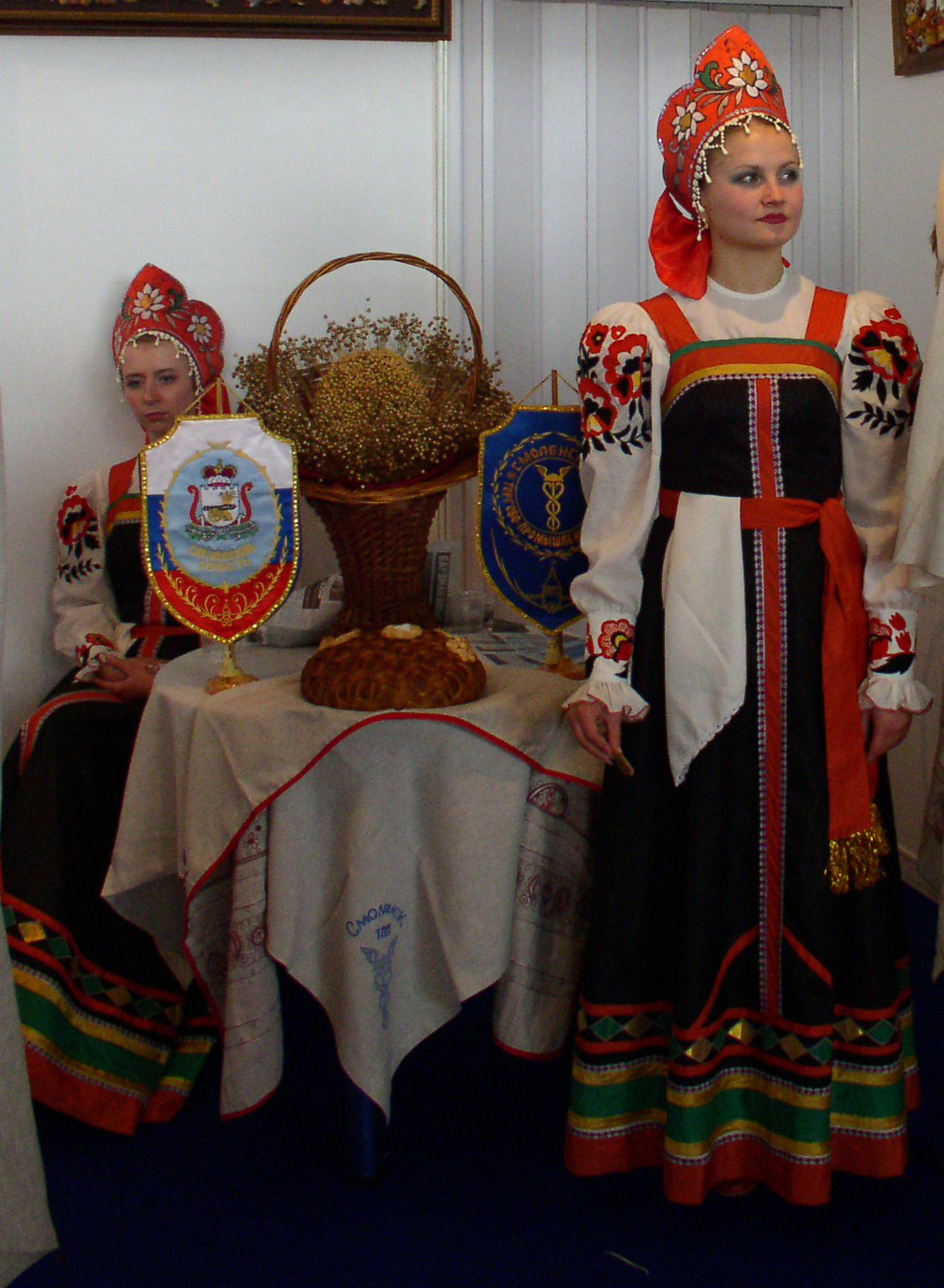 SarafanA long, flared Russian dress, the everyday wear of peasant women for centuries
Good reading and sources
The facts on this page come from the Wikipedia article "Stalin tunic", written by its contributors and used under the CC BY-SA 4.0 licence, and from its Wikidata record (CC0). EveryParampara rewrote the text in its own words, with AI assistance, and compares every page with the article to make sure no passage is copied. It may be reused under the same CC BY-SA 4.0 licence with a link back.
It may contain mistakes. Traditions differ from one family, village and community to the next, and the people who keep them know them best. If something is wrong, tell us. Last refreshed 2026-10-11.
More from Russia
All the traditions of Russia
🇺🇦 Ukraine and 2 moreRushnykрушник
A sacred embroidered cloth used in East Slavic rituals, weddings and daily life.Dress
🇳🇴 Norway and 3 moreGákti
A traditional coat worn by the Sámi people across northern Scandinavia and Russia, signaling origin and status through cDress
🇪🇬 Egypt and 5 moreTraditional tattooing
The ancient custom of marking the skin for protection, healing, status and sacred ritesDress
 🇹🇷 Turkey and 3 moreKalpak
A tall cap of Turkic peoples, thick for winter and wide and light for summerDress
🇹🇷 Turkey and 3 moreKalpak
A tall cap of Turkic peoples, thick for winter and wide and light for summerDress
The same idea elsewhere
All of this kind 🇮🇳 Paithan, IndiaPaithani
A handwoven silk sari from Maharashtra, with a squared border and a peacock palluDress
🇮🇳 Paithan, IndiaPaithani
A handwoven silk sari from Maharashtra, with a squared border and a peacock palluDress
 🇮🇱 Israel and 1 moreTzitzitצִיצִית
Knotted ritual fringes worn on a four-cornered garment, a reminder of the commandmentsDress
🇮🇱 Israel and 1 moreTzitzitצִיצִית
Knotted ritual fringes worn on a four-cornered garment, a reminder of the commandmentsDress
 🇼🇸 Samoa and 1 moreʻIe tōga
Precious woven mats exchanged in Samoan ceremonies to honor family ties and chiefly status.Dress
🇼🇸 Samoa and 1 moreʻIe tōga
Precious woven mats exchanged in Samoan ceremonies to honor family ties and chiefly status.Dress
 🇱🇸 LesothoMokorotlo
A conical straw hat that serves as the national symbol of Lesotho and a key element of Basotho traditional dress.Dress
🇱🇸 LesothoMokorotlo
A conical straw hat that serves as the national symbol of Lesotho and a key element of Basotho traditional dress.Dress