Royal, civic and national ceremonyEuropeSecular and civic
Swan Upping
An annual five-day royal census and health check of swans along the River Thames

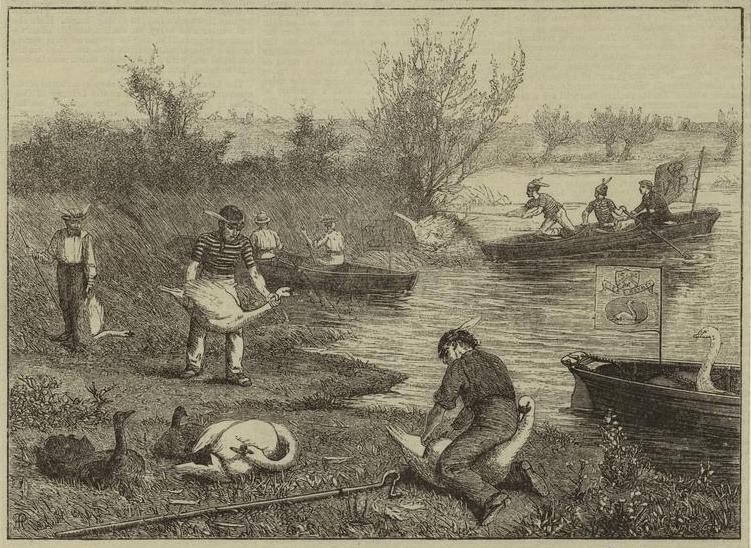
Swan Upping is a centuries-old English ceremony that takes place each summer along the River Thames. Teams in traditional skiffs count, examine, and ring mute swans to monitor bird welfare and maintain historic ownership rights shared between the British monarch and two historic trade guilds.
When is Swan Upping kept?
Swan Upping is kept on annually in the third week of July.
Swan Upping is an annual English custom dating back to the twelfth century. Every summer, rowers travel along the River Thames to locate mute swans, examine their physical condition, and record young cygnets. The ritual preserves an ancient royal prerogative while serving as a modern wildlife census, ensuring the river's swan population remains healthy and protected through careful monitoring and veterinary checks.
origins and royal rights
Since the twelfth century, the English monarch has held the legal right to claim all unmarked mute swans swimming in open waterways. In earlier eras, the sovereign occasionally shared these privileges with landowners and select institutions. Today, only two London guilds, the Vintners and the Dyers, retain these ancient entitlements alongside the monarch, who bears the historic title of Seigneur of the Swans. While the ceremony once focused entirely on dividing bird ownership among these three parties, its primary role today centres on conservation, counting the swan population, and monitoring bird welfare.
the river voyage
The event spans five consecutive days, taking crews upstream in wooden rowing skiffs from Sunbury toward Abingdon. The royal team wears scarlet tunics featuring the reigning monarch's cypher, while oarsmen from the Company of Watermen and Lightermen row the official Marker of the Swans. When adult swans and their broods are sighted, the rowers surround the birds and carefully lift them from the water. Each cygnet is weighed, measured, and checked for injuries before being returned safely to the river with its family.
tracking and ringing
Young birds are assigned ownership based on the lineage of their parents. Historically, officials carved small cuts into the beaks of birds to identify them, creating a single notch for the Dyers or two notches across the bill for the Vintners. This ancient practice inspired the historic tavern name The Swan with Two Necks. In modern times, harmless metal bands have replaced bill marks entirely. Crown birds receive an identification ring registered with the British Trust for Ornithology, while guild swans receive a corresponding band on the opposite leg.
How Swan Upping is kept
Officials and crews set out in rowing skiffs across a five-day route along the Thames. Spotting swan families along the riverbanks, rowers carefully corral the birds and lift them aboard. Handlers assess each cygnet, measuring its size, checking its weight, and looking for signs of disease or injury. Based on the mother and father, each young swan is assigned to the monarch or one of the two participating guilds. Handlers then attach lightweight tracking bands to the birds' legs before releasing the entire brood back into the water.
When and where
The ceremony happens annually during the third week of July. It runs across five consecutive days as the rowing crews travel upstream along their designated route.
Swan Upping takes place in England on the River Thames. The rowing expedition travels upstream, covering the stretch of water between Sunbury and Abingdon.
What Swan Upping means
The custom represents the continuous link between the Crown and English wildlife heritage. By upholding the monarch's ancient role as Seigneur of the Swans, the ceremony maintains centuries of civic and royal tradition while transforming medieval ownership rights into a practical commitment to river stewardship and bird health.



Questions people ask about Swan Upping
When is Swan Upping kept?
Swan Upping is kept on annually in the third week of July.
What is Swan Upping?
Swan Upping is a five-day English ceremony where officials row along the River Thames to round up, inspect, ring, and release mute swans. It combines an ancient ownership tradition with modern wildlife conservation.
Who owns the swans on the Thames?
Under historic law, the British monarch owns all unmarked mute swans on open water. Today, the Crown shares ownership of Thames swans equally with two London trade guilds, the Vintners and the Dyers.
How are the swans marked today?
Rather than cutting marks into beaks as was done in past centuries, handlers now fit lightweight rings around the birds' legs. These bands are linked to the British Trust for Ornithology registry.
See also
 Trooping the ColourThe annual British military parade marking the official birthday of the monarch.
 Waitangi DayNew Zealand's national day remembering the 1840 founding agreement.
 Saint David's DayThe national feast day of Wales, marked with parades, poetry contests and daffodils
 Damba festivalA Ghanaian celebration of royal authority, ancestral memory, music and dance
Good reading and sources
- Windsor Swan Upping ceremony cancelled due to floodingBBC, Article
- Swan upping: Royal cygnet numbers drop by 40% in a yearBBC, Article
- Windsor Swan Upping ceremony cancelled due to floodingBBC, Article
- Swan upping: Royal cygnet numbers drop by 40% in a yearBBC, Article
- Swan upping on WikipediaEncyclopedia
- More photos on Wikimedia CommonsPhotos and video
- Wikidata recordOpen data
The facts on this page come from the Wikipedia article "Swan upping", written by its contributors and used under the CC BY-SA 4.0 licence, and from its Wikidata record (CC0). EveryParampara rewrote the text in its own words, with AI assistance, and compares every page with the article to make sure no passage is copied. It may be reused under the same CC BY-SA 4.0 licence with a link back.
It may contain mistakes. Traditions differ from one family, village and community to the next, and the people who keep them know them best. If something is wrong, tell us. Last refreshed 2026-10-04.
More from the United Kingdom
All the traditions of the United Kingdom
🇬🇧 London, United KingdomTrooping the Colour
The annual British military parade marking the official birthday of the monarch.Ceremony
🇳🇿 Waitangi, New Zealand and 2 moreWaitangi DayTe Rā o Waitangi
New Zealand's national day remembering the 1840 founding agreement.Ceremony · Breakfast
 🇬🇧 United Kingdom and 5 moreKing's Official Birthday
A day when Commonwealth realms mark the monarch's birthday, seldom the real dateCeremony
🇬🇧 United Kingdom and 5 moreKing's Official Birthday
A day when Commonwealth realms mark the monarch's birthday, seldom the real dateCeremony
 🇬🇧 United Kingdom and 5 moreBeating Retreat
A military ceremony of music and drill held at sunset to mark the end of a day or a festival.Ceremony
🇬🇧 United Kingdom and 5 moreBeating Retreat
A military ceremony of music and drill held at sunset to mark the end of a day or a festival.Ceremony
The same idea elsewhere
Royalty and coronation compared 🇮🇱 IsraelRosh Hashanahרֹאשׁ הַשָּׁנָה
The Jewish New Year marked by shofar horn blasts, prayer and sweet foodsSpiritual
🇹🇭 ThailandThai solar calendarปฏิทินสุริยคติไทย
The official solar calendar of Thailand, numbered in the Buddhist EraSeasonal
🇮🇱 IsraelRosh Hashanahרֹאשׁ הַשָּׁנָה
The Jewish New Year marked by shofar horn blasts, prayer and sweet foodsSpiritual
🇹🇭 ThailandThai solar calendarปฏิทินสุริยคติไทย
The official solar calendar of Thailand, numbered in the Buddhist EraSeasonal
 🇵🇪 Cusco, Peru and 4 moreIntiinti (Quechua)
The Inca sun deity, honoured with temples, offerings and the June festival Inti RaymiSpiritual
🇵🇪 Cusco, Peru and 4 moreIntiinti (Quechua)
The Inca sun deity, honoured with temples, offerings and the June festival Inti RaymiSpiritual
 🇺🇸 United StatesTalking stick
A carved staff that shows who may speak at a Northwest Coast gatheringCeremony
🇺🇸 United StatesTalking stick
A carved staff that shows who may speak at a Northwest Coast gatheringCeremony