Seasons, harvest and the calendarSoutheast AsiaBuddhistSecular and civic
Thai solar calendar
In its own language: ปฏิทินสุริยคติไทย
The official solar calendar of Thailand, numbered in the Buddhist Era
The Thai solar calendar is the official timekeeping system of Thailand, adopted in 1888 under King Chulalongkorn. It combines the solar month structure of the Gregorian calendar with Buddhist Era year numbering, running 543 years ahead of the Western Common Era.
When is Thai solar calendar marked?
Thai solar calendar is kept as part of Songkran, which runs from 13 to 15 April 2027.
The Thai solar calendar is the official civil calendar of Thailand. Introduced in the late nineteenth century by King Chulalongkorn, it follows the solar structure of the Gregorian calendar while numbering years according to the Buddhist Era. In this system, dates run 543 years ahead of the Western Common Era. It governs daily civic life across the nation, while traditional lunar reckonings continue alongside it for spiritual occasions.
Origins and royal reforms
Siam historically relied on both a sacred calendar and a popular lunar calendar linked to Burmese counting. In 1888, King Chulalongkorn, or Rama V, adopted a solar framework to serve as the legal civil calendar. The king initially established the Rattanakosin Era in 1889, counting years from the founding of Bangkok and the Chakri dynasty in 1782. Decades later, King Vajiravudh transitioned the official count to the Buddhist Era, establishing 1 April as the opening of each civil year. In 1940, Prime Minister Phibunsongkhram aligned the start of the year with the international date of 1 January, giving that transitional year only nine months.
Months and naming patterns
Each month receives a name drawn from Hindu astrology and Sanskrit terms for the zodiac. The endings of these names instantly tell a reader how many days the month contains. Months with thirty-one days conclude with the suffix akhom, rooted in a word meaning arrival. Thirty-day months finish with ayon, which shares a similar meaning of arrival. February ends with aphan, derived from a Sanskrit term for being bound or fettered. When a leap year requires an extra day, this leap day is called Athikasurathin, combining ancient words for addition and solar movement.
The Buddhist Era count
The year numbering in Thailand operates on the Buddhist Era, which places its starting point at the passing of Gautama Buddha in 543 BC. Because of this baseline, subtracting 543 from the Thai year produces the Common Era equivalent. This numbering system appears on official government paperwork, street signage, banking documents and newspapers. While practical and widely understood within the country, the large number difference can create historical mix-ups or digital software errors, such as computer applications reading the advanced year as an expired license date.
New year observances
Thailand marks the turn of the year at multiple points on the calendar. The official civic year starts on 1 January, which is observed as a national public holiday. In mid-April, the nation celebrates Songkran, the traditional solar new year that occurs when the sun enters the sign of Aries. Songkran is also a public holiday and marks the transition to the next Chinese zodiac animal in traditional Thai reckoning. Meanwhile, Thai Chinese communities follow their own lunar calendar to determine the exact date of Chinese New Year.
How Thai solar calendar is kept
Thai citizens, businesses and state institutions use the solar calendar for everyday scheduling, administration and record keeping. The calendar year opens on 1 January with modern civic celebrations. Throughout the months, daily life proceeds according to twelve solar months named after zodiac signs. In April, people celebrate Songkran from 13 to 15 April as the traditional new year, marking the zodiac animal transition. Religious festivals continue to be scheduled alongside this system using lunar calculations.
When and where
The solar calendar runs continuously through twelve months, starting on 1 January. The year count increases on New Year's Day. Key holiday dates include 1 January for the civil year and 13 to 15 April for Songkran, the traditional solar new year fixed to the sun's entry into Aries.
This calendar is used across all provinces of Thailand as the official national standard. It is observed in government administration, education, business and daily public life, alongside traditional lunar dates used in local temples.
What Thai solar calendar means
The calendar combines Buddhist spiritual heritage with modern statecraft. Counting years from the passing of Gautama Buddha anchors civic time in Buddhist devotion. At the same time, Sanskrit names based on Hindu astrology link each month to astrological transitions, creating a continuity between ancient cosmology and modern administration.
Days Thai solar calendar is marked
Questions people ask about Thai solar calendar
When is Thai solar calendar marked?
Thai solar calendar is kept as part of Songkran, which runs from 13 to 15 April 2027.
What is the Thai solar calendar?
It is Thailand's official civil calendar, adopted in 1888 by King Chulalongkorn. It uses twelve solar months based on the Gregorian calendar while numbering years according to the Buddhist Era, 543 years ahead of the Western calendar.
How do you convert a Thai Buddhist Era year to the Western calendar?
To convert a modern Thai year to the Common Era, you subtract 543. For dates between 1 January and 31 March prior to 1941, you subtract 542, because the start of the year was adjusted in 1940.
Why do Thai month names have different endings?
The suffixes indicate month length in Sanskrit terminology. Months ending in akhom have 31 days, those ending in ayon have 30 days, and February ends in aphan, which means bound or fettered.
See also
 VesakA day to honor the birth, awakening, and passing of the Buddha, kept by Buddhists across Asia.
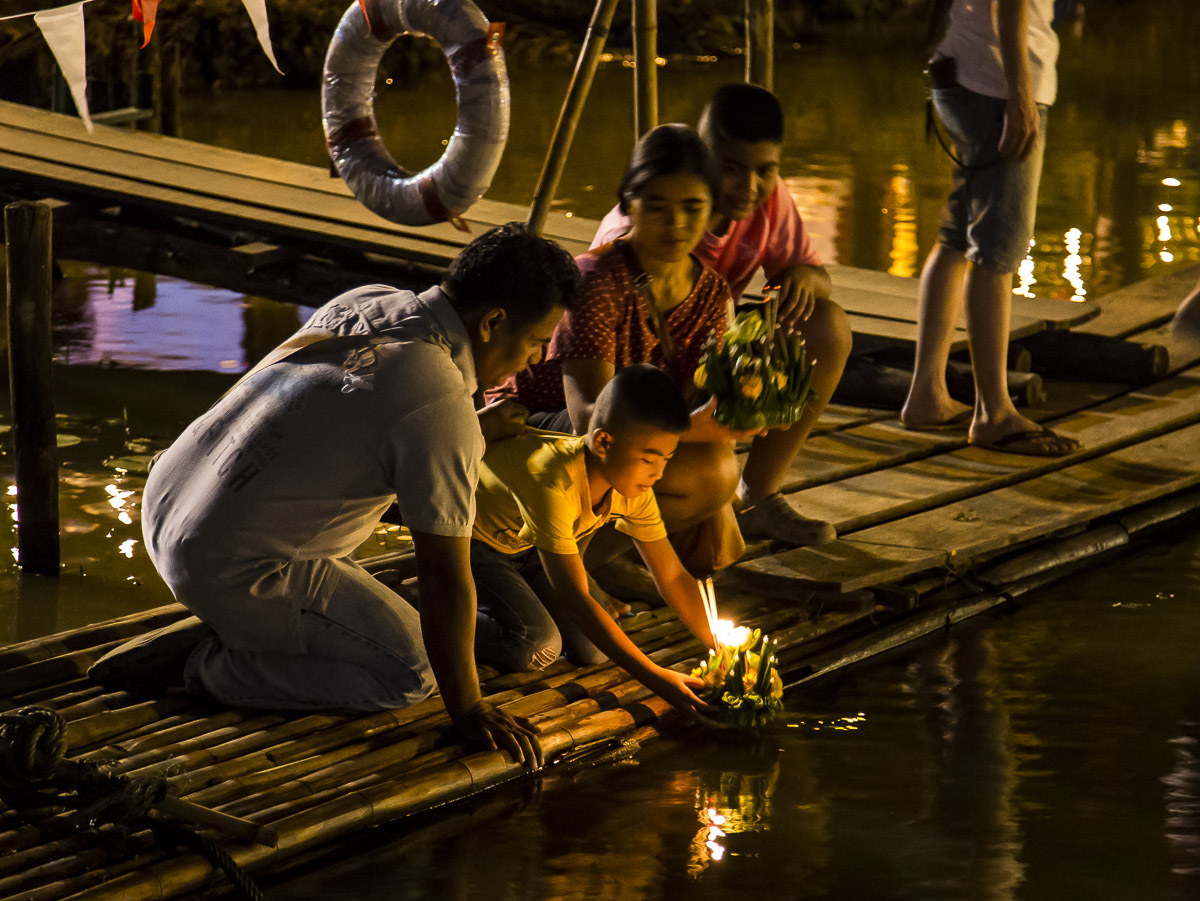 Loy KrathongA Thai festival of floating leaf baskets on rivers to honor water and release negativity.
 KathinaA Buddhist season of offering new robes and gifts to monks after the rains retreat
 Royal Ploughing CeremonyA royal agricultural rite opening the rice season across mainland Southeast Asia
Good reading and sources
- Thai solar calendar on WikipediaEncyclopedia
- More photos on Wikimedia CommonsPhotos and video
- Wikidata recordOpen data
The facts on this page come from the Wikipedia article "Thai solar calendar", written by its contributors and used under the CC BY-SA 4.0 licence, and from its Wikidata record (CC0). EveryParampara rewrote the text in its own words, with AI assistance, and compares every page with the article to make sure no passage is copied. It may be reused under the same CC BY-SA 4.0 licence with a link back.
It may contain mistakes. Traditions differ from one family, village and community to the next, and the people who keep them know them best. If something is wrong, tell us. Last refreshed 2026-10-04.
More from Thailand
All the traditions of Thailand 🇹🇭 Bangkok, ThailandSongkranสงกรานต์
The Thai solar New Year marked by temple rites, elder blessings and water throwingSeasonal
🇹🇭 Bangkok, ThailandSongkranสงกรานต์
The Thai solar New Year marked by temple rites, elder blessings and water throwingSeasonal
 🇨🇳 China and 5 moreDouble Ninth Festival重陽節
An autumn festival of mountain walks, chrysanthemum wine and ancestor remembranceSeasonal · Tea-time and snacking customs
🇨🇳 China and 5 moreDouble Ninth Festival重陽節
An autumn festival of mountain walks, chrysanthemum wine and ancestor remembranceSeasonal · Tea-time and snacking customs
 🇱🇦 Laos and 1 moreBaciບາສີ (Lao)
A Lao rite that calls the soul home and ties a thread on the wrist for good luckSpiritual
🇱🇦 Laos and 1 moreBaciບາສີ (Lao)
A Lao rite that calls the soul home and ties a thread on the wrist for good luckSpiritual
 🇹🇭 Bangkok, ThailandCoronation of the Thai monarchพระราชพิธีบรมราชาภิเษก
A consecration ceremony blending Hindu and Buddhist rites to formally install the King of Thailand.Ceremony
🇹🇭 Bangkok, ThailandCoronation of the Thai monarchพระราชพิธีบรมราชาภิเษก
A consecration ceremony blending Hindu and Buddhist rites to formally install the King of Thailand.Ceremony
The same idea elsewhere
New Year compared 🇮🇱 IsraelRosh Hashanahרֹאשׁ הַשָּׁנָה
The Jewish New Year marked by shofar horn blasts, prayer and sweet foodsSpiritual
🇮🇱 IsraelRosh Hashanahרֹאשׁ הַשָּׁנָה
The Jewish New Year marked by shofar horn blasts, prayer and sweet foodsSpiritual
 🇧🇹 Thimphu, BhutanArchery in Bhutanམདའ (da)
Bhutan's national sport, played with bamboo bows at targets 145 metres awayGame
🇧🇹 Thimphu, BhutanArchery in Bhutanམདའ (da)
Bhutan's national sport, played with bamboo bows at targets 145 metres awayGame
 🇮🇷 Iran and 3 morePahlevani and zurkhaneh ritualsآیین پهلوانی و زورخانهای
A traditional Iranian martial art blending calisthenics, wrestling, music and ethicsGame
🇮🇷 Iran and 3 morePahlevani and zurkhaneh ritualsآیین پهلوانی و زورخانهای
A traditional Iranian martial art blending calisthenics, wrestling, music and ethicsGame
 🇸🇿 Ludzidzini, EswatiniIncwala
The national kingship and first-fruits ritual of Eswatini, held at the summer solsticeCeremony · Feasts and festival meals
🇸🇿 Ludzidzini, EswatiniIncwala
The national kingship and first-fruits ritual of Eswatini, held at the summer solsticeCeremony · Feasts and festival meals