Music, dance and storytellingLatin America and the Caribbean
Tango
A social partner dance of the Río de la Plata, improvised step by step

Tango is a social partner dance that Argentina and Uruguay share. It appeared during the 1880s in the Río de la Plata region and grew from port neighbourhoods where milonga, habanera and candombe met. Dancers now keep many styles of it around the world, and UNESCO listed it in 2009.
When is Tango kept?
Tango is kept on all year, in social dancing and in touring stage shows.
Tango is a partner dance that people dance socially. It belongs to Argentina and Uruguay, and its first home was the Río de la Plata region, where it appeared during the 1880s. From the port quarters it spread across the world in the 1900s. Dancers today work in many styles, from the close-embrace milonguero hold to open stage tango, and UNESCO recognises it as intangible heritage.
What it is
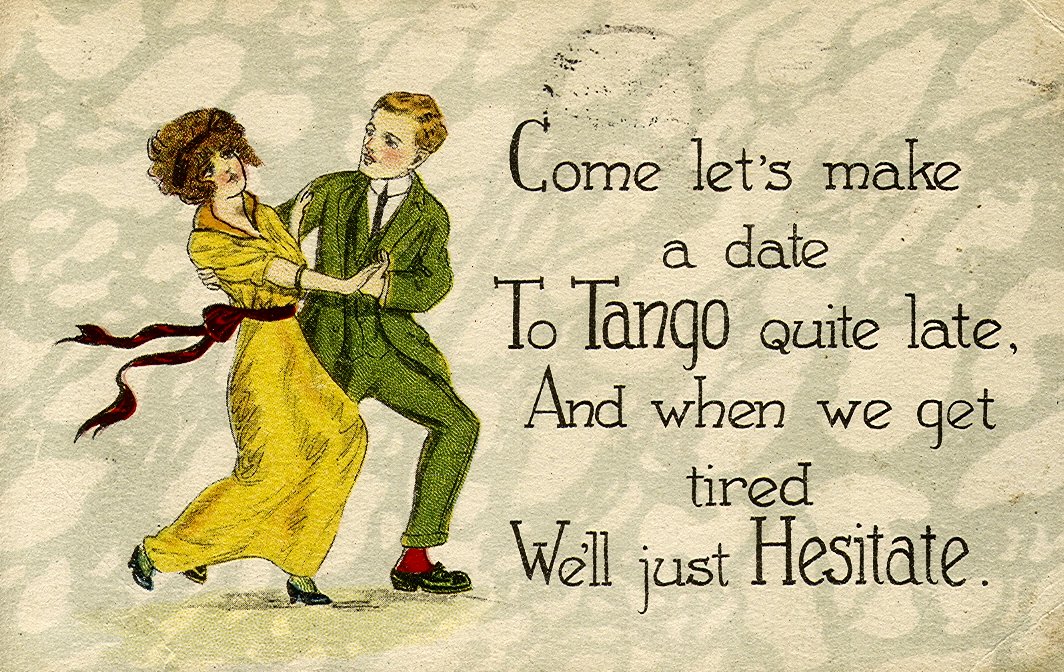
Tango is danced by two people, one leading and one following. The pair may hold each other at a distance, in an open embrace, or stay close, chest against chest in the Argentine way, or with contact around the hips and upper thighs as American and International dancers do. The steps are improvised rather than fixed, so the dance changes with the room, the crowd and even the cut of a dancer's clothes. It is a social dance first: people meet to dance it, and the same figures reappear on stage in touring shows, where the hold opens and the footwork gains lifts, kicks and drops.
Origins and history
Tango formed among poor people in the port quarters of Buenos Aires and Montevideo. Three strands came together there: the Argentine milonga, the Spanish-Cuban habanera and the candombe celebrations of formerly enslaved Africans. Musicians played in the bars and brothels of the docks, hired by the owners to entertain customers. Colonial records show authorities trying to stop such gatherings as early as 1789, and a Montevideo ruling of 1807 banned them outright. What began as one dance among many moved through theatres and street barrel organs into wider society, helped by the thousands of European immigrants arriving at the time.
How it travelled
Orchestras and dancers from Buenos Aires took the tango to Europe in the early 1900s. Paris caught it first, and London, Berlin and other capitals followed. In 1913 it reached New York and Finland as well. Many people found it shocking: to conservative eyes it looked openly sexual, and the blend of African, Native American and European elements was unfamiliar. Paris barred the teachers who had brought the dance there. Americans of that period often used the word for fast dances in two-four or four-four rhythm, calling them North American tango to set them apart from the Argentine kind.
Styles and music
There is no single tango. Styles grew in different places and decades, shaped partly by how crowded a hall was. Milonguero, also called apilado, is danced in a close hold with small steps and syncopated footwork, following the packed downtown clubs of the 1950s. Dancers from suburban family clubs such as Villa Urquiza, Devoto and Avellaneda take longer, more elegant steps and build complicated figures, opening the embrace briefly to finish them. Tango nuevo, taken up by younger dancers, keeps the hold loose. Music ranges from classic tango to tango vals, milonga, electronic tango and non-tango music used for tango dancing.
Today and meaning
Tango became a point of national pride in Argentina, above all under the first Perón government, and Mariano Mores helped bring it back in the 1950s. Uruguay and Argentina submitted a joint request to UNESCO, which added the dance to its Intangible Cultural Heritage list on 31 August 2009. Tango had survived lean years before: it slipped during the Depression that began in 1929 and again under military rule, when public gatherings were banned and men practising together counted as one. A revival came in the late 1980s, with help from figures such as Osvaldo Peredo.
How Tango is kept
People dance in pairs, one leading and one following. The hold can be open, with space between the bodies, or closed. Steps are improvised rather than fixed in advance, and live bands or recordings supply the music. Dancers choose among styles: milonguero with its small syncopated steps, the longer strides of the suburban family clubs, or the looser tango nuevo hold. Teachers pass the dance on, social dancers keep it going in clubs, and touring stage companies perform it for audiences, sometimes adding lifts, kicks and drops.
When and where
Tango has no single day. It is danced throughout the year, at social gatherings and in theatres. Its history holds dates that matter to those who follow it: it appeared in the 1880s, reached Europe in the early 1900s, and joined the UNESCO Intangible Cultural Heritage list on 31 August 2009.
It belongs to the Río de la Plata, the river border between Argentina and Uruguay, and is strongest in Buenos Aires and Montevideo. Neighbourhoods of Buenos Aires each have their own tango histories, among them La Boca, San Telmo and Boedo. Dancers also keep the tradition in Paris, London, Berlin, New York and Finland.
What Tango means
For Argentina and Uruguay, tango stands for a shared and mixed inheritance. Its music and steps carry African, European and Native American threads at once, and the argument about which of them weighed most has run for more than a century. Dancers often describe the embrace as the heart of it: two people listening closely without words. The UNESCO listing made that inheritance official and joint, something the two countries claim together rather than apart.



Questions people ask about Tango
When is Tango kept?
Tango is kept on all year, in social dancing and in touring stage shows.
What is tango?
It is a partner and social dance from the Río de la Plata, the border river of Argentina and Uruguay. One dancer leads, the other follows, and the steps are improvised rather than fixed. It exists in many styles, danced in clubs and on stage, and UNESCO listed it in 2009.
Where does it come from?
From the port areas of Buenos Aires and Montevideo, where people from Africa, Europe and the Americas lived side by side. Argentine milonga, Spanish-Cuban habanera and Uruguayan candombe all fed into it. Argentina and Uruguay each treat it as their own and put it forward jointly for UNESCO recognition.
How is it danced?
The pair may use an open hold, with space between them, or a close one. Steps are improvised to the music. Milonguero style keeps the hold tight with small syncopated steps, suburban club dancers take longer strides and build complex figures, and tango nuevo uses a looser hold.
Where is it danced today?
In Argentina and Uruguay above all, and wherever dancers have taken it since. Buenos Aires neighbourhoods such as La Boca, San Telmo and Boedo have long tango histories. Paris, London, Berlin, New York and Finland were early stops, and touring stage shows carry it to audiences elsewhere.
See also
 KizombaA close, slow couple dance from Angola, named after a Kimbundu word for party
 ForróMusic, dance and party from Brazil's Northeast, with accordion, triangle and zabumba drumBaiãoA syncopated folk rhythm and partnered dance from northeastern Brazil
 CuecaA courtship dance of Chile and the Andes where partners trace circles with handkerchiefs to mimic a rooster and hen.
Good reading and sources
- Tango on WikipediaEncyclopedia
- More photos on Wikimedia CommonsPhotos and video
- Wikidata recordOpen data
The facts on this page come from the Wikipedia article "Tango", written by its contributors and used under the CC BY-SA 4.0 licence, and from its Wikidata record (CC0). EveryParampara rewrote the text in its own words, with AI assistance, and compares every page with the article to make sure no passage is copied. It may be reused under the same CC BY-SA 4.0 licence with a link back.
It may contain mistakes. Traditions differ from one family, village and community to the next, and the people who keep them know them best. If something is wrong, tell us. Last refreshed 2026-10-05.
More from Uruguay
All the traditions of Uruguay 🇺🇾 Montevideo, Uruguay and 3 moreMurga
A lively Carnival musical theatre of chorus, percussion and social satirePerformance
🇺🇾 Montevideo, Uruguay and 3 moreMurga
A lively Carnival musical theatre of chorus, percussion and social satirePerformance
 🇺🇾 Montevideo, Uruguay and 4 morePayada
Improvised ten-line verses traded by guitar-playing payadores in the Río de la PlataPerformance
🇺🇾 Montevideo, UruguayNostalgia NightNoche de la Nostalgia
Uruguay's nationwide retro music and dance celebration held every 24 AugustFestival
🇺🇾 Montevideo, Uruguay and 4 morePayada
Improvised ten-line verses traded by guitar-playing payadores in the Río de la PlataPerformance
🇺🇾 Montevideo, UruguayNostalgia NightNoche de la Nostalgia
Uruguay's nationwide retro music and dance celebration held every 24 AugustFestival
 🇦🇲 Yerevan, Armenia and 6 moreArmenian Genocide Remembrance DayՄեծ Եղեռնի զոհերի հիշատակի օր
An annual day of mourning and remembrance for the victims of the 1915 Armenian Genocide.Spiritual
🇦🇲 Yerevan, Armenia and 6 moreArmenian Genocide Remembrance DayՄեծ Եղեռնի զոհերի հիշատակի օր
An annual day of mourning and remembrance for the victims of the 1915 Armenian Genocide.Spiritual
The same idea elsewhere
All of this kind 🇹🇷 Kayseri, Turkey and 4 moreHalay
A traditional line and circle folk dance kept across Turkey, Azerbaijan, Armenia, Iran, and Syria.Performance
🇹🇷 Kayseri, Turkey and 4 moreHalay
A traditional line and circle folk dance kept across Turkey, Azerbaijan, Armenia, Iran, and Syria.Performance
 🇳🇿 Auckland, New ZealandPoi
A Māori performing art of swinging tethered weights in rhythmical patterns.Performance
🇳🇿 Auckland, New ZealandPoi
A Māori performing art of swinging tethered weights in rhythmical patterns.Performance
 🇺🇦 Kyiv, UkraineBanduraБандура
A Ukrainian plucked string instrument played to accompany epic songs and folk balladsPerformance
🇺🇦 Kyiv, UkraineBanduraБандура
A Ukrainian plucked string instrument played to accompany epic songs and folk balladsPerformance
 🇵🇭 Philippines and 1 morePangalay
A traditional fingernail dance of the Tausūg and Bajau peoples in the Sulu Archipelago and Sabah.Performance
🇵🇭 Philippines and 1 morePangalay
A traditional fingernail dance of the Tausūg and Bajau peoples in the Sulu Archipelago and Sabah.Performance