🇫🇮 Traditions of Finland
33 traditions from Finland, best known first, across 3 cities and towns.
Finnish traditions grow from a close bond with northern nature, cold winters, and an ideal of self-reliance. Life centers on the sauna, quiet time at lakeside cottages, and foraged wild foods. Deeply held egalitarian values and distinct regional cultures shape everyday life across the country.
In Finland, everyday life is shaped by the northern climate and a deep attachment to the countryside. Most people live in towns today, but many keep strong ties to rural life through lakeside summer cottages and trips into the woods. Traditions balance ancient customs, such as taking a sauna and gathering forest berries, with an emphasis on social equality and practical independence. Influences from Sweden and Russia blend with indigenous roots to create a distinct way of living.
Nature and cottage life
Finns maintain a strong emotional tie to the land and forest. Although widespread movement into cities happened relatively recently, the ideal of self-sufficiency remains influential. Many families spend their leisure time at rural summer cottages, where life slows down and connects back to the elements. Forest foraging and seasonal fishing continue old habits of gathering sustenance directly from the wild. The sauna remains a central fixture of domestic life and personal hygiene, representing an indigenous custom that spans across generations. A shared principle of public access to nature, known as everyman's right, allows people to roam freely through countryside landscapes.
The traditional table
Finnish cooking reflects a cold climate where crops once faced difficult growing seasons. For centuries, households depended on hardy root vegetables like turnips, which were later replaced by potatoes. Whole grains such as barley, oats, and dark unsweetened rye form the backbone of the table. Long slow baking in an oven produces hearty stews and vegetable bakes, including cabbage casseroles known as kaalilaatikko. Forests provide wild bilberries, lingonberries, sea buckthorn, and cloudberries, while dairy items like buttermilk accompany daily meals. When fresh goods were limited during long winters, people relied on cured meat, preserved fish, and simple seasonings like salt.
Nordic and eastern flavours
Finnish food shares close roots with neighbouring culinary traditions while keeping its own character. From Sweden come dishes such as cured salmon, pyttipannu hash, and the potato casserole known as janssoninkiusaus. Unlike Swedish bread, however, Finnish rye bread is typically unsweetened and slightly tart. Eastern neighbours have contributed meat pastries called lihapiirakka, thickened fruit desserts known as kiisseli, and various sausages, or makkara, which remain one of the most widely eaten meats. Dishes carried across the country by evacuees from Karelia after the Continuation War helped spread regional tastes into wider national domestic cooking.
Language and distinct communities
Finland is home to several recognised linguistic and cultural groups. The majority speak Finnish, a Uralic language with historical dialect groups called heimo. Swedish-speaking Finns maintain their own newspapers, political representation, and coastal traditions within the broader society. In the northern Lapland region, the indigenous Sami people preserve distinct languages alongside ancestral occupations like reindeer herding, trapping, and fishing. The Finnish Roma, who arrived centuries ago, historically specialized in horse trading, crafts, and fortune-telling. In the southeast, Karelian culture provided the foundational poetry that was collected to form the national epic, the Kalevala.
National identity and equality
Modern Finnish society rests on a legacy of broad social equality and early adoption of universal suffrage. During the nineteenth century, national Romanticism helped form a shared identity that crossed linguistic boundaries, uniting both Finnish and Swedish speakers under the Fennoman ideal of distinct nationhood. This cultural momentum culminated in full independence declared on the sixth of December in 1917, following periods under Swedish rule and Russian imperial authority. Today, egalitarian principles guide everyday social interactions, work culture, and legal frameworks, supporting an environment where practical cooperation and personal autonomy are regarded as essential community standards.
The facts in this overview come from the Wikipedia article "Culture of Finland", written by its contributors and used under the CC BY-SA 4.0 licence. EveryParampara rewrote the text in its own words, with AI assistance, and compares every page with the article to make sure no passage is copied. It may be reused under the same CC BY-SA 4.0 licence with a link back.
The table in Finland
Foods and drinks by the moment they belong to.
Cities, towns and villages of Finland
 🇺🇸 United States and 4 moreFriday the 13th
A Western folk superstition regarding the unluckiness of a Friday falling on the 13th.Folklore
🇺🇸 United States and 4 moreFriday the 13th
A Western folk superstition regarding the unluckiness of a Friday falling on the 13th.Folklore
 🇫🇮 Finland and 1 moreFinnish saunasauna
A weekly bathing ritual of steam and heat, central to Finnish life and wellbeing.Home
🇫🇮 Finland and 1 moreFinnish saunasauna
A weekly bathing ritual of steam and heat, central to Finnish life and wellbeing.Home
 🇳🇴 Norway and 3 moreGákti
A traditional coat worn by the Sámi people across northern Scandinavia and Russia, signaling origin and status through cDress
🇳🇴 Norway and 3 moreGákti
A traditional coat worn by the Sámi people across northern Scandinavia and Russia, signaling origin and status through cDress
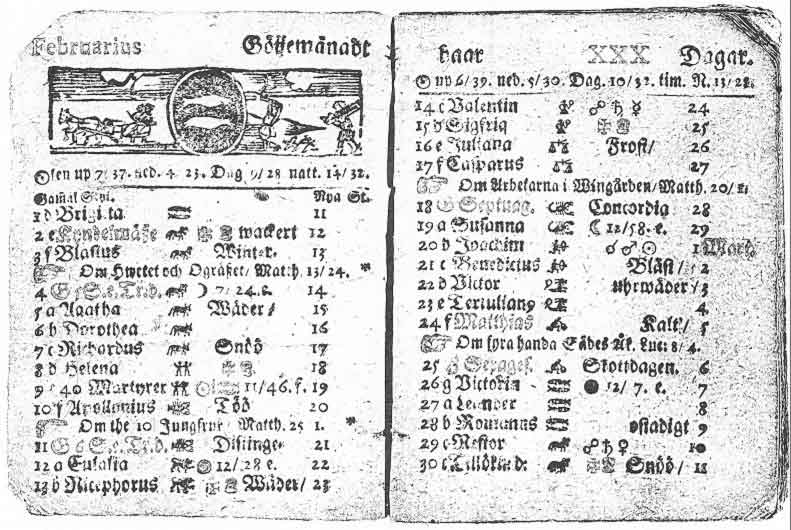 🇬🇷 Greece and 5 moreName day
A calendar tradition where people celebrate the feast day of the saint after whom they are named.Festival
🇬🇷 Greece and 5 moreName day
A calendar tradition where people celebrate the feast day of the saint after whom they are named.Festival
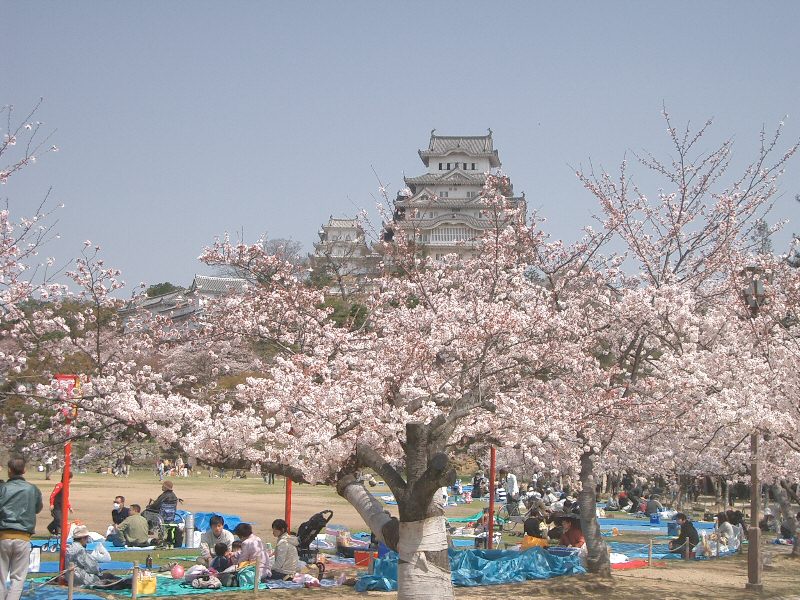 🇯🇵 Kyoto, Japan and 4 moreHanami花見
A Japanese spring custom of gathering under blooming cherry trees to eat, drink, and celebrate the fleeting beauty of thFestival · Lunch
🇯🇵 Kyoto, Japan and 4 moreHanami花見
A Japanese spring custom of gathering under blooming cherry trees to eat, drink, and celebrate the fleeting beauty of thFestival · Lunch
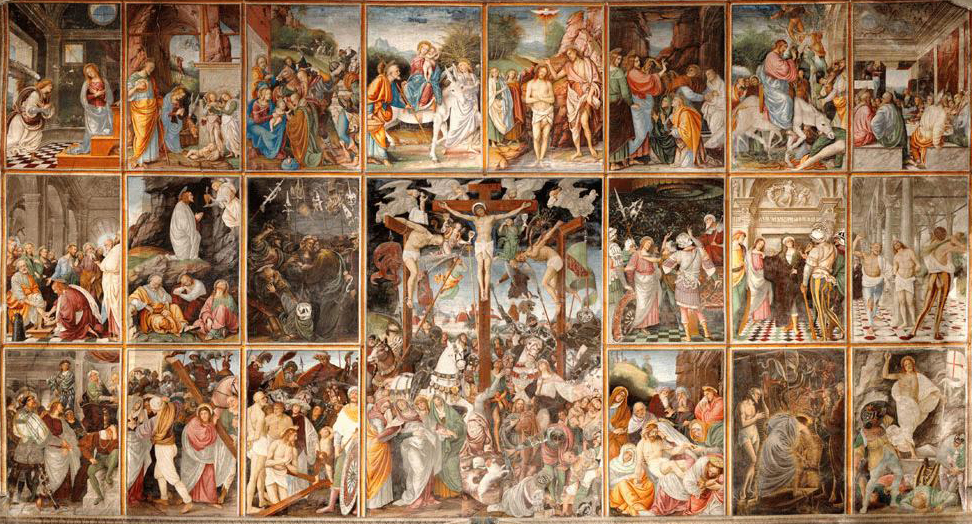 🇮🇱 Jerusalem, Israel and 5 morePresentation of Jesus at the TempleIn praesentatione Domini
A February feast of candles and welcome, kept forty days after ChristmasSpiritual
🇮🇱 Jerusalem, Israel and 5 morePresentation of Jesus at the TempleIn praesentatione Domini
A February feast of candles and welcome, kept forty days after ChristmasSpiritual
 🇩🇪 Germany and 5 moreAdvent calendarAdventskalender
A daily countdown to Christmas using doors, images, or small gifts.Festival
🇩🇪 Germany and 5 moreAdvent calendarAdventskalender
A daily countdown to Christmas using doors, images, or small gifts.Festival
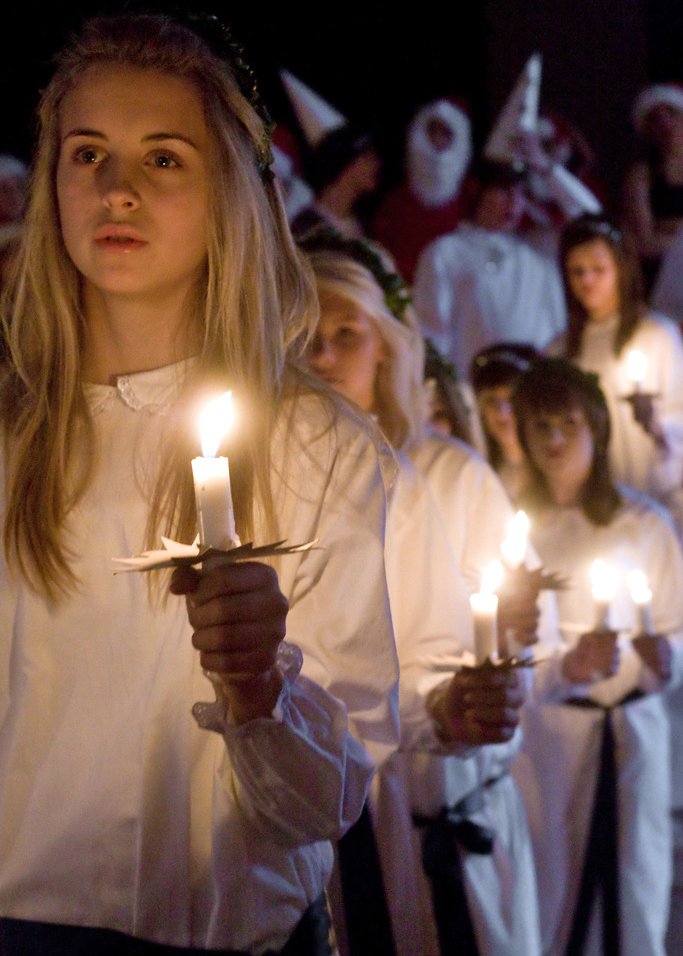 🇸🇪 Stockholm, Sweden and 4 moreSaint Lucy's Day
A December festival of light and song held across Scandinavia and Italy to honour a Christian martyr.Festival · Breakfast
🇳🇴 Norway and 2 moreJoik
A Sámi song that evokes a person, animal or place instead of telling about themPerformance
🇸🇪 Stockholm, Sweden and 4 moreSaint Lucy's Day
A December festival of light and song held across Scandinavia and Italy to honour a Christian martyr.Festival · Breakfast
🇳🇴 Norway and 2 moreJoik
A Sámi song that evokes a person, animal or place instead of telling about themPerformance
 🇫🇮 Helsinki, FinlandIndependence Day of FinlandSuomen itsenäisyyspäivä
Finland's national day on 6 December, marked with window candles and a presidential ballCeremony
🇫🇮 Helsinki, FinlandIndependence Day of FinlandSuomen itsenäisyyspäivä
Finland's national day on 6 December, marked with window candles and a presidential ballCeremony
 🇸🇪 Gävle, Sweden and 1 moreYule goatJulbocken
A straw goat of northern Christmas, once a harvest spirit, now a tree ornamentFestival
🇸🇪 Gävle, Sweden and 1 moreYule goatJulbocken
A straw goat of northern Christmas, once a harvest spirit, now a tree ornamentFestival
 🇩🇰 Copenhagen, Denmark and 4 moreRisalamande
A chilled Danish Christmas rice dessert with cream, chopped almonds and cherry sauceTable custom · Sweets given and shared
🇩🇰 Copenhagen, Denmark and 4 moreRisalamande
A chilled Danish Christmas rice dessert with cream, chopped almonds and cherry sauceTable custom · Sweets given and shared
 🇫🇮 Finland and 5 moreMolybdomancy
Pouring molten lead or tin into water, then reading the shape as an omenFolklore
🇫🇮 Finland and 5 moreMolybdomancy
Pouring molten lead or tin into water, then reading the shape as an omenFolklore
 🇺🇾 Uruguay and 3 moreTango
A social partner dance of the Río de la Plata, improvised step by stepPerformance
🇺🇾 Uruguay and 3 moreTango
A social partner dance of the Río de la Plata, improvised step by stepPerformance
 🇸🇪 Stockholm, Sweden and 2 moreSmorgasbordsmörgåsbord
A Swedish table of hot and cold dishes where guests serve themselvesTable custom · Lunch
🇸🇪 Stockholm, Sweden and 2 moreSmorgasbordsmörgåsbord
A Swedish table of hot and cold dishes where guests serve themselvesTable custom · Lunch
 🇬🇧 United Kingdom and 5 moreChristmas dinner
The festive family meal of Christmas Eve or Christmas Day, with roast meats and puddingsTable custom · Dinner
🇬🇧 United Kingdom and 5 moreChristmas dinner
The festive family meal of Christmas Eve or Christmas Day, with roast meats and puddingsTable custom · Dinner
 🇬🇧 United Kingdom and 4 moreSaffron bun
A golden, spiced yeast roll flavoured with saffron, baked for festive and holy daysTable custom · Tea-time and snacking customs
🇬🇧 United Kingdom and 4 moreSaffron bun
A golden, spiced yeast roll flavoured with saffron, baked for festive and holy daysTable custom · Tea-time and snacking customs
 🇫🇮 Helsinki, FinlandKalevala DayKalevalan päivä
A Finnish national flag day celebrating the country's epic poetry and living artsCeremony
🇫🇮 Helsinki, FinlandKalevala DayKalevalan päivä
A Finnish national flag day celebrating the country's epic poetry and living artsCeremony
 🇫🇮 FinlandChristmas in Finlandjoulu
A quiet midwinter festival of saunas, grave candles and table casseroles across FinlandSeasonal · Dinner
🇫🇮 FinlandChristmas in Finlandjoulu
A quiet midwinter festival of saunas, grave candles and table casseroles across FinlandSeasonal · Dinner
 🇸🇪 Sweden and 2 moreGlögg
A spiced, warm winter wine served across Nordic countries around ChristmasTable custom · Tea, coffee and drinking ceremonies
🇸🇪 Sweden and 2 moreGlögg
A spiced, warm winter wine served across Nordic countries around ChristmasTable custom · Tea, coffee and drinking ceremonies
 🇸🇪 Sweden and 3 moreCrayfish partykräftskiva
Boiled crayfish, snaps and paper lanterns at a late-summer party in Sweden and FinlandTable custom · Feasts and festival meals
🇸🇪 Sweden and 3 moreCrayfish partykräftskiva
Boiled crayfish, snaps and paper lanterns at a late-summer party in Sweden and FinlandTable custom · Feasts and festival meals
 🇩🇪 Germany and 5 morePolterabend
Guests smash porcelain the night before a wedding to wish the couple luckRite of passage
🇩🇪 Germany and 5 morePolterabend
Guests smash porcelain the night before a wedding to wish the couple luckRite of passage
 🇩🇰 Denmark and 3 moreNissenisse (Danish, Norwegian); tomte (Swedish); tonttu (Finnish)
A small farm spirit of Nordic folklore, given porridge at midwinterFolklore
🇩🇰 Denmark and 3 moreNissenisse (Danish, Norwegian); tomte (Swedish); tonttu (Finnish)
A small farm spirit of Nordic folklore, given porridge at midwinterFolklore
 🇷🇺 Russia and 5 moreUshankaушанка
An ear-flapped fur hat from Russia, tied up or under the chin against the coldDress
🇷🇺 Russia and 5 moreUshankaушанка
An ear-flapped fur hat from Russia, tied up or under the chin against the coldDress
 🇮🇹 Italy and 5 moreEasterΠάσχα
The day Christians mark the resurrection, kept with vigils, feasts and eggsSpiritual · Feasts and festival meals
🇮🇹 Italy and 5 moreEasterΠάσχα
The day Christians mark the resurrection, kept with vigils, feasts and eggsSpiritual · Feasts and festival meals
 🇺🇸 United States and 5 moreMarriage proposal
A ritual where one partner asks another to marry them, marking the start of engagement.Rite of passage
🇺🇸 United States and 5 moreMarriage proposal
A ritual where one partner asks another to marry them, marking the start of engagement.Rite of passage
 🇨🇦 Canada and 5 moreBuy Nothing Day
An annual 24-hour pause on shopping to protest consumerism and overconsumptionCeremony
🇨🇦 Canada and 5 moreBuy Nothing Day
An annual 24-hour pause on shopping to protest consumerism and overconsumptionCeremony
 🇷🇺 Mordovia, Russia and 2 moreErzya Language DayЭрзянь келень чи
A yearly day for the Erzya language, held on 16 April, the birthday of Anatoli RyabovFestival
🇷🇺 Mordovia, Russia and 2 moreErzya Language DayЭрзянь келень чи
A yearly day for the Erzya language, held on 16 April, the birthday of Anatoli RyabovFestival
 🇪🇪 Tartu, Estonia and 5 moreEuropeade
An annual gathering of folk dancers, musicians and singers across EuropeFestival
🇪🇪 Tartu, Estonia and 5 moreEuropeade
An annual gathering of folk dancers, musicians and singers across EuropeFestival
 🇦🇲 Armenia and 5 moreFeast of the TransfigurationՊայծառակերպութիւն
A Christian holy day marking the revelation of Christ's divine glory on Mount TaborSpiritual · Feasts and festival meals
🇦🇲 Armenia and 5 moreFeast of the TransfigurationՊայծառակերպութիւն
A Christian holy day marking the revelation of Christ's divine glory on Mount TaborSpiritual · Feasts and festival meals
 🇸🇪 Stockholm, Sweden and 2 moreGustavus Adolphus DayGustav Adolfsdagen
A Swedish flag day on 6 November, marked with a pastry topped with the king's likenessCeremony · Sweets given and shared
🇸🇪 Stockholm, Sweden and 2 moreGustavus Adolphus DayGustav Adolfsdagen
A Swedish flag day on 6 November, marked with a pastry topped with the king's likenessCeremony · Sweets given and shared
 🇩🇪 Germany and 5 moreSecular coming-of-age ceremony
A non-religious rite of passage for adolescents in Europe and North America, marking the transition to adulthood throughRite of passage
🇸🇪 Sweden and 2 moreSaint Knut's DayTjugondag Knut
A Nordic holiday marking the twentieth and final day of Christmas each JanuarySeasonal · Sweets given and shared
🇩🇪 Germany and 5 moreSecular coming-of-age ceremony
A non-religious rite of passage for adolescents in Europe and North America, marking the transition to adulthood throughRite of passage
🇸🇪 Sweden and 2 moreSaint Knut's DayTjugondag Knut
A Nordic holiday marking the twentieth and final day of Christmas each JanuarySeasonal · Sweets given and shared
Photo credits on this page
The small pictures above come from Wikimedia Commons under free licences. Some are cropped to fit.
- Friday the 13th: Leonardo da Vinci, Public domain, source
- Presentation of Jesus at the Temple: Gaudenzio Ferrari, Public domain, source
- Saint Lucy's Day: Fredrik Magnusson, CC BY 2.0, source
- Hanami: Unknown author, CC BY-SA 3.0, source
- Advent calendar: Andrea Schaufler, CC BY 2.5, source
- Independence Day of Finland: Wikimedia Commons: LPfi, CC BY-SA 3.0, source
- Gákti: Thorguds, Public domain, source
- Risalamande: Lorie Shaull, CC BY-SA 4.0, source
- Saffron bun: Nenniu, CC BY-SA 4.0, source
- Kalevala Day: Vladimir Menkov, CC BY-SA 3.0, source
- Christmas in Finland: Uploaded by Sigketill, CC BY-SA 3.0, source
- Glögg: Mr.choppers, CC BY-SA 3.0, source
- Christmas dinner: Austin McGee, CC BY-SA 2.0, source
- Yule goat: John Bauer, Public domain, source
- Molybdomancy: Micha L. Rieser, Attribution, source
- Finnish sauna: Eric Koch for Anefo, CC0, source
- Name day: Sendker, Public domain, source
- Smorgasbord: Jordan Klein, CC BY 2.0, source
- Tango: carlos luque, CC BY 2.5, source
- Crayfish party: Holger.Ellgaard, CC BY-SA 4.0, source
- Polterabend: 4028mdk09, CC BY-SA 3.0, source
- Nisse: AlphaZeta, CC0, source
- Ushanka: Eugene Zelenko, CC BY-SA 4.0, source
- Easter: Piero della Francesca, Public domain, source
- Erzya Language Day: Erzianj jurnalist, CC BY-SA 3.0, source
- Gustavus Adolphus Day: Jacob Truedson Demitz for Ristesson, Public domain, source
- Marriage proposal: Victorgrigas, CC BY-SA 3.0, source
- Europeade: Niklas Lydeen, CC BY 3.0, source
- Buy Nothing Day: Brave New Films, CC BY 2.0, source
- Feast of the Transfiguration: Unknown artist, Public domain, source
- Secular coming-of-age ceremony: Karsten Davideit, CC BY-SA 3.0 de, source