Music, dance and storytellingOceania
Tauʻolunga
A Tongan dance of hand gestures and steady eyes, performed by young women at weddings
The tauʻolunga is a traditional dance of Tonga, most often performed by single young women and especially shown off on a wedding day. It grew from an older Tongan group dance and the Samoan taualuga, and is danced at special occasions across Tonga, with hand gestures, a smiling face and a costume of mat, cloth and flowers.
When is Tauʻolunga kept?
Tauʻolunga is kept at weddings and other special occasions, with no fixed date.
The tauʻolunga is a traditional dance of Tonga, kept mostly by young unmarried women and often performed at weddings. Dancers tell a song's meaning with their hands while their eyes stay on the audience. Costumes of woven mat, cloth and flowers, oiled skin and the gift of money notes are all part of the occasion.
What it is
It is a dance for young unmarried women, and it is the moment when a girl can be seen at her best. A group of up to about ten dancers is common, though one girl may dance alone. Older women take part in a limited way, clapping the rhythm of the music; this role has its own name, the tuʻulafale. The dance may be given at any special occasion, and it is compared with the Hawaiian hula and the Tahitian ʻaparima.
Hands, head and eyes
Meaning is carried by the hands: a series of gestures sets out the words of the chosen song. Many gestures, called haka, are fixed and named, and only experienced dancers read them easily. The head follows the hands through the important movements, and otherwise looks at the audience. Small nods fall on one beat (teki) or two (kalo), and the dancer smiles throughout. Hands and wrists turn in many of the haka, a feature of Tongan dance that is not found elsewhere in Polynesia. The legs do less: knees together and bent (taulalo), small steps or a turn, and no shaking of the hips.
Money and the fakapale
A tauʻolunga usually opens with the girl dancing alone. Then parents, cousins, other family members or friends come to her, press money notes onto her oiled skin and stay to clap with the older women in the tuʻulafale. This prizemoney is called the fakapale. It rewards the dancer herself, except when the dance is given for a fundraising or another special purpose, in which case the money commonly goes to the person the occasion honours. A man may dance too, though this is rare; if he does, he copies the girl's movements in an exaggerated way so that her beauty stands out more.
Dress and adornment
The costume, or teunga, has a name for each of its parts. A girl may wear a wrap-around dress of ngatu cloth with traditional designs, a kie mat woven from pandanus leaves, cloth covered with leaves, grass or shells, shiny decorated cloth, or a grass skirt. It hangs from just above the breasts to the knee, leaving the arms and legs bare, and showing her legs is part of the point of the dance. A belt of leaves and fragrant flowers (kafa) sits at her waist, with wristlets and anklets (vesa) sometimes added. A tekiteki, a small crown of feathers or light plant material, sits on her head. At her neck may be a black ribbon with a white cowry shell (puleʻoto). Oil makes the bare skin shine.
Origins and change
Much of the tauʻolunga's technique comes from the old Tongan ula, in which young daughters of chiefs made a sequence of fine postures to a plain, steady song. The dance took its separate form after the Samoan taualuga arrived in the early nineteenth century and was taken up in Tongan aristocratic circles, especially those linked to the Tuʻi Kanokupolu lines. For a time the gestures followed Samoan style, with finger and hand figures. In 1950 Queen Sālote added Tongan wrist flourishes and the leg transitions of the lakalaka to her song "Manu ʻo Palataisi" (Bird of Paradise), and this shaped the tauʻolunga as it is danced now.
How Tauʻolunga is kept
A girl or a small group of girls, up to about ten, takes the floor. One dancer may begin alone. Family and friends then come up, place money notes on the dancer's oiled skin, and join the older women who clap the rhythm in the role of tuʻulafale. Throughout, the dancer keeps her eyes on the audience and her face smiling, and the meaning of the song is shown in her hands rather than her feet. It is given at weddings and other special occasions.
When and where
The tauʻolunga has no fixed date. It is kept for special occasions, and the day it is named with most often is a wedding, when a young woman dances to be seen at her best. It can also be given at a fundraising or another gathering, by one dancer or by a group of up to ten.
The dance belongs to Tonga, where it is a traditional form kept by Tongan families and communities. Its older material comes from the Tongan ula, and the Samoan taualuga, brought to Tonga in the early nineteenth century, gave it its separate shape. Tongan aristocratic circles, particularly those connected with the Tuʻi Kanokupolu lineages, were where it was first taken up.
What Tauʻolunga means
For the girl who dances, the tauʻolunga is a moment of display: her beauty, her grace and her skill with the hands are offered to the people watching, and money pressed on her skin is open recognition of them. The steady gaze at the audience, the smile she keeps throughout, the head that turns with the hands and the bare legs below a long wrap all carry meaning for a Tongan audience. The dance also honours the person the occasion is for, who commonly receives the money.
Questions people ask about Tauʻolunga
When is Tauʻolunga kept?
Tauʻolunga is kept at weddings and other special occasions, with no fixed date.
What is the tauʻolunga?
It is a traditional dance of Tonga. Young unmarried women usually perform it, either alone or in a group of up to ten, and the meaning of a chosen song is shown through set hand movements while the head and eyes follow along.
Where does it come from?
Tonga is its home. Its technique draws on the old Tongan ula, a group dance of chiefly daughters, and on the Samoan taualuga, which reached Tongan aristocratic circles in the early nineteenth century. In 1950 Queen Sālote shaped the modern form.
What does a dancer wear?
A costume (teunga) of wrap-around cloth or mat, often of ngatu or woven pandanus, with a belt of leaves and flowers (kafa) at the waist. Some wear wristlets and anklets, a small head crown of feathers (tekiteki) and a black ribbon with a white cowry shell. Oil makes the skin shine, and natural materials are preferred.
Can men dance it?
It is rare for a man to dance the tauʻolunga, and rarer still for a married woman or an older woman, though it is not impossible. A man who joins in may copy the girl's movements in an exaggerated way, which makes her beauty stand out more by comparison.
See also
 ʻIe tōgaPrecious woven mats exchanged in Samoan ceremonies to honor family ties and chiefly status.
 HoronLine dances of Turkey's eastern Black Sea coast, danced with shaking shoulders
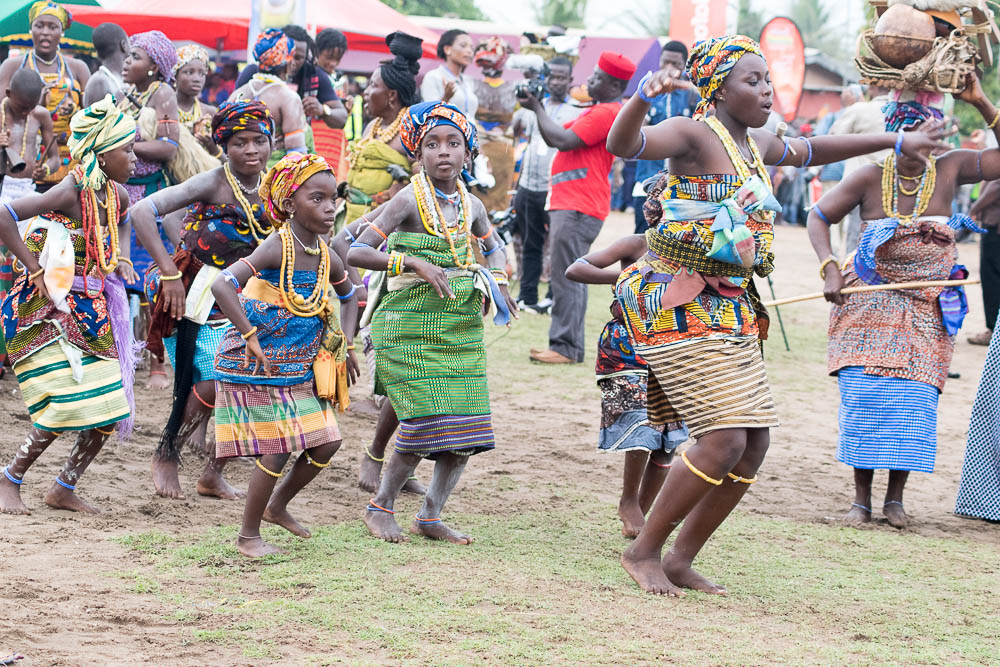 AgbadzaAn Ewe music and dance, born of war songs and kept for funerals, weddings and festivals
 KizombaA close, slow couple dance from Angola, named after a Kimbundu word for party
Good reading and sources
The facts on this page come from the Wikipedia article "Tauʻolunga", written by its contributors and used under the CC BY-SA 4.0 licence, and from its Wikidata record (CC0). EveryParampara rewrote the text in its own words, with AI assistance, and compares every page with the article to make sure no passage is copied. It may be reused under the same CC BY-SA 4.0 licence with a link back.
It may contain mistakes. Traditions differ from one family, village and community to the next, and the people who keep them know them best. If something is wrong, tell us. Last refreshed 2026-10-05.
More from Tonga
All the traditions of Tonga
🇼🇸 Samoa and 1 moreʻIe tōga
Precious woven mats exchanged in Samoan ceremonies to honor family ties and chiefly status.Dress
 🇹🇴 Tonga and 1 moreTaʻovala
A waist mat worn in Tonga for weddings, funerals and formal daysDress
🇼🇸 Samoa and 3 moreWhite SundayLotu Tamaiti
A Samoan holiday honoring children with church services, white clothing, and family gatherings on the second Sunday of OFestival · Dinner
🇹🇴 Tonga and 1 moreTaʻovala
A waist mat worn in Tonga for weddings, funerals and formal daysDress
🇼🇸 Samoa and 3 moreWhite SundayLotu Tamaiti
A Samoan holiday honoring children with church services, white clothing, and family gatherings on the second Sunday of OFestival · Dinner
The same idea elsewhere
Weddings compared 🇹🇱 Timor-LesteUma Lulik
Sacred ancestral clan houses and ritual shrines in East TimorSpiritual
🇺🇬 UgandaKwanjula
A formal marriage introduction ritual of the Baganda people in Uganda, where families meet to exchange gifts and seek blRite of passage
🇹🇱 Timor-LesteUma Lulik
Sacred ancestral clan houses and ritual shrines in East TimorSpiritual
🇺🇬 UgandaKwanjula
A formal marriage introduction ritual of the Baganda people in Uganda, where families meet to exchange gifts and seek blRite of passage
 🇮🇩 Indonesia and 2 moreKenduri
A communal prayer meal and gathering shared across Indonesia, Malaysia and BruneiSpiritual · Feasts and festival meals
🇮🇩 Indonesia and 2 moreKenduri
A communal prayer meal and gathering shared across Indonesia, Malaysia and BruneiSpiritual · Feasts and festival meals
 🇳🇪 In-Gall, NigerCure Salée
A yearly gathering of Tuareg and Wodaabe nomads in In-Gall to mark the end of the rainy season.Festival
🇳🇪 In-Gall, NigerCure Salée
A yearly gathering of Tuareg and Wodaabe nomads in In-Gall to mark the end of the rainy season.Festival