Music, dance and storytellingSub-Saharan AfricaIndigenous and traditional
Agbadza
An Ewe music and dance, born of war songs and kept for funerals, weddings and festivals
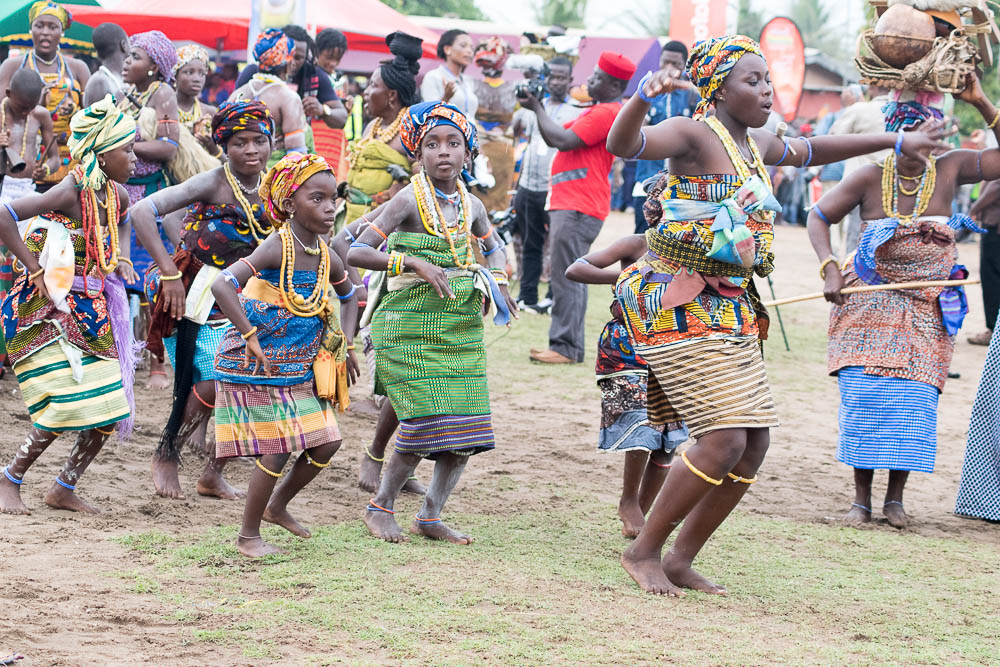
An Ewe music and dance from West Africa, Agbadza began as a war dance called Atrikpui and turned into a recreational form around the 1920s. It is performed at funerals, weddings, parties and the Hogbetsotso Festival, with drums, bells, rattles and call-and-response singing.
When is Agbadza kept?
Agbadza is kept at funerals, weddings, parties and the Hogbetsotso Festival, and at other gatherings that call for an Ewe emblem.
Agbadza is a music and dance tradition of the Ewe people, kept today for funerals, weddings, parties and the Hogbetsotso Festival. It grew out of an older war dance called Atrikpui. Drummers, singers and dancers work together: bells and drums set the pulse, a lead singer calls, a crowd answers, and anyone who wishes may join in.
What it is
Agbadza is a music and dance form of the Ewe people of West Africa. A single performance joins drumming, singing, bells, rattles and movement, and the parts follow a set order. It is not a show put on for onlookers. People take to the floor as they wish, and the gathered crowd answers the lead singer. The dance is also called the chicken dance, after the bird-like steps the dancers use. Today it is the most widely played of all Ewe dances.
From war to celebration
Ewe memory holds long stretches of war and oppression before communities settled, and the dance grew out of that setting. Songs and dances were used to prepare and encourage fighters, and from this came an older dance, Atrikpui. Its singers and poets took up battle, heroism, cowardice, migration, conquest and death. When a period of peace came in the 1920s, the Ewe turned some of those old songs to entertainment instead. Atrikpui became Agbadza, no longer a war dance but a joyful one.
Five movements
A full performance moves through five stages. Banyinyi opens it: a short prayer addressed to the gods and the ancestors. Vutsortsor, the main dance, comes next, full of energy. Adzo follows, quieter, and at this point only the master drummer plays, with the bell and the rattle alongside. Hatsatsa brings historical songs, carried by the bell and the Atoke, an iron bell shaped like a banana. The performance closes with Vutsortsor again, and this last round can go on for hours.
Drums and bells
The ensemble is built around several instruments. The bell, the Gankogui, sounds a repeated phrase that sets the tempo and acts as a timeline the others follow. Sogo, the lead drum, tells the other drums what to play and signals dancers to begin, speaking through drum language. Kidi, the second drum, answers back, in conversation with Sogo. Kagan is a support drum with a steady rhythm that works against the bell to make a melody. The beaded rattle, Axatse, tracks the timeline, and handclaps add another layer.
Song and welcome
Much of the singing works by call and response, a pattern found widely in West African music. The lead voice calls a line, the crowd answers it, and towards the end everyone joins in together. The words carry the occasion. The dance itself is open to all comers, which sets it apart from other Ewe dances that may be limited by age, religion or gender. Because other peoples know this music as Ewe, Agbadza is chosen whenever an event needs an Ewe emblem.
How Agbadza is kept
An Agbadza performance brings together drummers, singers, bell players, rattlers and dancers, and anyone present may join. It opens with Banyinyi, a brief prayer offered to the gods and ancestors. The main dance, Vutsortsor, follows. Adzo comes next, quieter, with only the master drummer playing, backed by the bell and the rattle. Historical songs, Hatsatsa, are then sung with the bell and the iron Atoke. Vutsortsor returns for a final round that may last for hours.
When and where
Agbadza has no single fixed date. It is danced at funerals, weddings and parties, and it holds a central place at Hogbetsotso, the festival of the Anlo Ewe. The day is chosen by the family or community holding the event, so performances fall at any time of year.
The dance belongs first to the Ewe, and it is strongest in Ghana's Volta Region, where the Anlo Ewe keep it and where Hogbetsotso is held. Ewe people in Togo and Benin dance it as well. Other ethnic groups know the music as Ewe, and that is part of why it is played when a gathering wants to show Ewe identity.
What Agbadza means
For the Ewe, Agbadza carries identity. Other peoples know this music as Ewe music, so playing it marks who the community is. Its older songs remember battles, migration, courage and loss, and the opening prayer turns the gathering towards the gods and the ancestors. Because the dance belongs to everyone present, funerals and weddings use it to hold a whole community together rather than a chosen few.

Questions people ask about Agbadza
When is Agbadza kept?
Agbadza is kept at funerals, weddings, parties and the Hogbetsotso Festival, and at other gatherings that call for an Ewe emblem.
What is Agbadza?
It is an Ewe music and dance from West Africa. It began as a war dance called Atrikpui and became a recreational dance, and it is now the best known of all Ewe dances. Drummers, singers and dancers perform it together.
Who may take part?
Anyone. Other Ewe dances are sometimes limited to people of a particular age, religion or gender, but Agbadza is open to all who wish to dance. That openness is one reason it turns up at so many gatherings.
What are its five movements?
Banyinyi, a short prayer to the gods and ancestors, opens the performance. Vutsortsor is the main dance. Adzo is calmer, with the master drummer playing alongside the bell and rattle. Hatsatsa brings historical songs. Then Vutsortsor returns, sometimes for hours.
Why is it called the chicken dance?
Because of the bird-like movements the dancers make, the dance has picked up that nickname. It is not the name the Ewe use for it. Agbadza is the name of the music and the dance itself.
See also
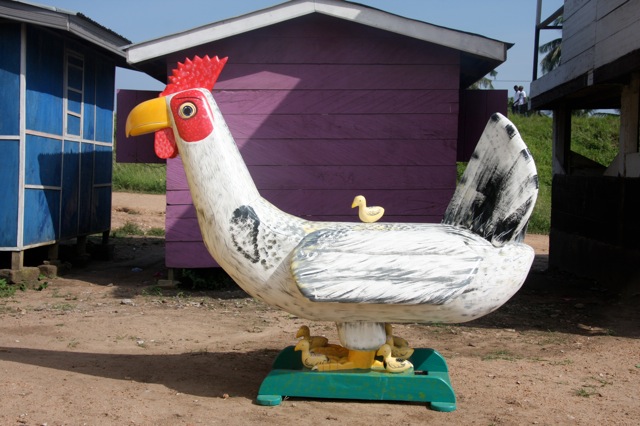 Fantasy coffinsCustom hand-carved burial caskets shaped as animals, tools and symbols in southern Ghana
 GeledeA Yoruba masked dance festival honoring the spiritual power of mothers and social harmony.
 Damba festivalA Ghanaian celebration of royal authority, ancestral memory, music and dance
 HomowoA harvest festival of the Ga people in Ghana to remember surviving famine
Good reading and sources
The facts on this page come from the Wikipedia article "Agbadza", written by its contributors and used under the CC BY-SA 4.0 licence, and from its Wikidata record (CC0). EveryParampara rewrote the text in its own words, with AI assistance, and compares every page with the article to make sure no passage is copied. It may be reused under the same CC BY-SA 4.0 licence with a link back.
It may contain mistakes. Traditions differ from one family, village and community to the next, and the people who keep them know them best. If something is wrong, tell us. Last refreshed 2026-10-05.
More from Ghana
All the traditions of Ghana 🇦🇴 Luanda, Angola and 4 moreKizomba
A close, slow couple dance from Angola, named after a Kimbundu word for partyPerformance
🇦🇴 Luanda, Angola and 4 moreKizomba
A close, slow couple dance from Angola, named after a Kimbundu word for partyPerformance
 🇬🇭 GhanaAdowa
A Ghanaian Akan dance where hands and feet carry the mood of the occasionPerformance
🇬🇭 GhanaAdowa
A Ghanaian Akan dance where hands and feet carry the mood of the occasionPerformance
 🇬🇭 Ghana and 2 moreEwe drumming
The drum ensembles of the Ewe people, with iron bells, rattles and talking drumsPerformance
🇬🇭 Ghana and 2 moreEwe drumming
The drum ensembles of the Ewe people, with iron bells, rattles and talking drumsPerformance
 🇬🇭 Accra, GhanaChale Wote Street Art Festival
An annual street art festival in Accra featuring murals, theater, and music.Performance
🇬🇭 Accra, GhanaChale Wote Street Art Festival
An annual street art festival in Accra featuring murals, theater, and music.Performance
The same idea elsewhere
Weddings compared 🇹🇱 Timor-LesteUma Lulik
Sacred ancestral clan houses and ritual shrines in East TimorSpiritual
🇹🇱 Timor-LesteUma Lulik
Sacred ancestral clan houses and ritual shrines in East TimorSpiritual
 🇳🇿 Auckland, New ZealandWharenui
A Māori carved communal meeting house at the centre of tribal life in New ZealandHome
🇳🇿 Auckland, New ZealandWharenui
A Māori carved communal meeting house at the centre of tribal life in New ZealandHome
 🇼🇸 Samoa and 1 moreʻIe tōga
Precious woven mats exchanged in Samoan ceremonies to honor family ties and chiefly status.Dress
🇼🇸 Samoa and 1 moreʻIe tōga
Precious woven mats exchanged in Samoan ceremonies to honor family ties and chiefly status.Dress
 🇹🇻 TuvaluMusic of Tuvalu
Rhythmic storytelling dances and choral singing from the Polynesian atolls of TuvaluPerformance
🇹🇻 TuvaluMusic of Tuvalu
Rhythmic storytelling dances and choral singing from the Polynesian atolls of TuvaluPerformance