Festivals and celebrationsEast AsiaIndigenous and traditional
Torch Festival
In its own language: 火把节
A summer fire holiday celebrated by Yi and neighbouring communities in southwest China

The Torch Festival is a summer celebration held by the Yi and other regional groups across southwestern China, typically in August. Families light torches to sweep away misfortune from homes and crops, coming together for music, wrestling, dancing and shared beef feasts around open bonfires.
When is Torch Festival kept?
Torch Festival is kept on annually in August, during the sixth month of the Yi calendar.
The Torch Festival is a major holiday observed by the Yi and other ethnic groups in southwestern China. Centred around fire, the event marks a time to honour deities, ward off harmful spirits, and invite a bountiful crop. Families carry glowing torches through fields and homes before assembling for nighttime bonfires filled with traditional music, singing, dances, and athletic contests.
Stories and historical roots
Accounts of the holiday trace its meaning to agricultural protection and ancient calendars. One popular tale honours the legendary wrestler Atilabia, who saved crops by burning pine torches to banish a devastating swarm of locusts. Scholars also link the event to an ancient ten-month solar calendar kept by Yi and Bai communities, where Star Returning observances in winter and summer served as New Year milestones. Across generations, the central purpose has remained consistent: presenting offerings to higher powers, clearing out bad fortune, and praying for fertile fields. Similar torch rituals were also practiced in central and eastern China during the Song, Ming, and Qing dynasties.
Carrying fire and bonfires
Preparations often start weeks ahead as people harvest wormwood or pine to craft torches, commonly making three per person. In areas like Liangshan, wormwood is regarded as a powerful shield against negative influences. When the holiday arrives, individuals illuminate every dark corner of their dwellings and march across agricultural land with lit torches to cast out misfortune. Village torch processions culminate in large outdoor bonfires. Community members gather around the flames to sing, dance through the night, and play traditional instruments, including the plucked four-string yueqin and three-string sanxian.
Feasts and sporting games
Beyond fire ceremonies, the occasion calls for thorough house cleaning, wearing fine clothes, and sharing festive meals. Cattle and food offerings are presented to spirits, and eating beef is considered an omen of good fortune for the coming year. Noodles and fresh fruits are also shared among households. Daytime gatherings feature energetic sporting competitions. Crowds gather to watch horse races, traditional wrestling matches, and bullfights. In Liangshan, modern celebrations organised by local authorities have grown into multi-day civic holidays that incorporate dance performances, beauty pageants, and tourism.
How Torch Festival is kept
Households prepare by crafting three torches per person from wormwood or pine. During the observance, people clean their homes, dress in their finest clothes, and hold burning torches to brighten indoor corners and nearby fields. Torchlight processions move across the countryside to banish misfortune and protect crops. In the evening, communities assemble around communal bonfires to dance and play string instruments until morning. Daytime events include cattle sacrifices, beef meals, horse races, wrestling bouts, and bullfights.
When and where
The celebration is held late in the sixth month of the traditional Yi lunar calendar, falling around August in the solar Gregorian calendar. In ancient times, it marked the summer Star Returning period, representing a seasonal New Year.
The festival is widespread across southwest China, especially in the Liangshan Yi Autonomous Prefecture of Sichuan province. It is kept by Yi, Bai, Hani, Naxi, Lahu, and Pumi communities.
What Torch Festival means
Fire represents light, warmth, and purification. By sweeping torches through domestic rooms and farm plots, people seek to dispel pests, sickness, and malevolent ghosts while inviting good luck and an abundant harvest. The rituals also honour mythic defenders like Atilabia and reinforce shared community ties through collective nighttime dancing and sports.
Questions people ask about Torch Festival
When is Torch Festival kept?
Torch Festival is kept on annually in August, during the sixth month of the Yi calendar.
What is the Torch Festival?
The Torch Festival is a traditional holiday celebrated in southwestern China, primarily by the Yi people. Participants light torches, hold processions around homes and fields, gather around massive bonfires, and enjoy music, dancing, wrestling, and communal feasts.
Why do people light torches during the festival?
Carrying lit torches around houses and farmland is believed to dispel evil spirits, drive away agricultural pests, and ensure a prosperous harvest. It also commemorates the folk hero Atilabia, who fought locust swarms with burning pine.
Which ethnic groups celebrate this festival?
While most famous among the Yi people, the festival is also observed by other ethnic groups in southwest China, including the Bai, Hani, Lahu, Naxi, and Pumi communities.
See also
 NowruzThe Iranian new year at the March equinox, kept with fire, greenery and picnics
 Mid-Autumn FestivalAn annual harvest festival celebrating family reunions, full moons and mooncakes
 SabantuyA summer festival of folk sports and feasting celebrated by Tatar, Bashkir, Chuvash, and Kazakh communities.
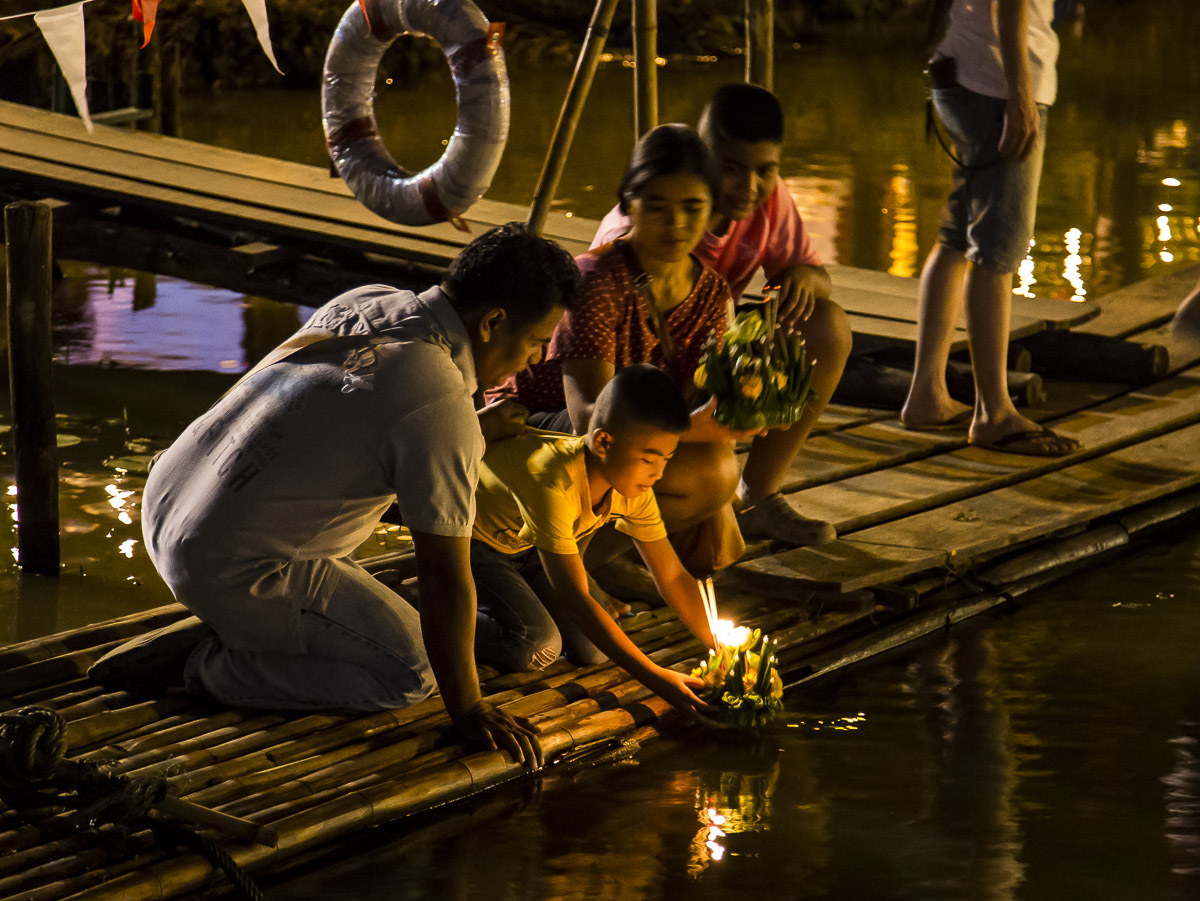 Loy KrathongA Thai festival of floating leaf baskets on rivers to honor water and release negativity.
Good reading and sources
- Torch Festival on WikipediaEncyclopedia
- More photos on Wikimedia CommonsPhotos and video
- Wikidata recordOpen data
The facts on this page come from the Wikipedia article "Torch Festival", written by its contributors and used under the CC BY-SA 4.0 licence, and from its Wikidata record (CC0). EveryParampara rewrote the text in its own words, with AI assistance, and compares every page with the article to make sure no passage is copied. It may be reused under the same CC BY-SA 4.0 licence with a link back.
It may contain mistakes. Traditions differ from one family, village and community to the next, and the people who keep them know them best. If something is wrong, tell us. Last refreshed 2026-10-04.
More from China
All the traditions of China 🇮🇳 India and 4 moreWater lantern
Small lamps floated on water to honour the dead and ask for good fortuneFestival
🇨🇳 China and 5 moreMid-Autumn Festival中秋節
An annual harvest festival celebrating family reunions, full moons and mooncakesFestival · Sweets given and shared
🇷🇺 Kazan, Russia and 2 moreSabantuyСабан туе (Saban tuyı)
A summer festival of folk sports and feasting celebrated by Tatar, Bashkir, Chuvash, and Kazakh communities.Festival · Feasts and festival meals
🇹🇭 Chiang Mai, Thailand and 5 moreLoy Krathongลอยกระทง
A Thai festival of floating leaf baskets on rivers to honor water and release negativity.Festival
🇮🇳 India and 4 moreWater lantern
Small lamps floated on water to honour the dead and ask for good fortuneFestival
🇨🇳 China and 5 moreMid-Autumn Festival中秋節
An annual harvest festival celebrating family reunions, full moons and mooncakesFestival · Sweets given and shared
🇷🇺 Kazan, Russia and 2 moreSabantuyСабан туе (Saban tuyı)
A summer festival of folk sports and feasting celebrated by Tatar, Bashkir, Chuvash, and Kazakh communities.Festival · Feasts and festival meals
🇹🇭 Chiang Mai, Thailand and 5 moreLoy Krathongลอยกระทง
A Thai festival of floating leaf baskets on rivers to honor water and release negativity.Festival
The same idea elsewhere
Harvest and thanksgiving compared 🇵🇪 Cusco, PeruQoyllur Rit'iQuyllurit'i
An Andean mountain pilgrimage uniting indigenous star lore and Catholic devotionSpiritual
🇵🇪 Cusco, PeruQoyllur Rit'iQuyllurit'i
An Andean mountain pilgrimage uniting indigenous star lore and Catholic devotionSpiritual
 🇺🇦 Chernivtsi, Ukraine and 3 moreMalankaМаланка
A Ukrainian folk celebration of masked mummers, feasting and New Year blessingsFestival · Feasts and festival meals
🇺🇦 Chernivtsi, Ukraine and 3 moreMalankaМаланка
A Ukrainian folk celebration of masked mummers, feasting and New Year blessingsFestival · Feasts and festival meals
 🇧🇬 Bulgaria and 4 moreKukeriкукери (kukeri)
Masked and belled figures who tour Bulgarian villages at New Year to drive off harmSpiritual
🇧🇬 Bulgaria and 4 moreKukeriкукери (kukeri)
Masked and belled figures who tour Bulgarian villages at New Year to drive off harmSpiritual
 🇺🇸 United StatesGreen Corn CeremonyPuskita
A Southeastern harvest and new year ceremony of fasting, dancing and renewalSeasonal
🇺🇸 United StatesGreen Corn CeremonyPuskita
A Southeastern harvest and new year ceremony of fasting, dancing and renewalSeasonal