Spiritual and religiousLatin America and the CaribbeanIndigenous and traditionalChristian
Qoyllur Rit'i
In its own language: Quyllurit'i
An Andean mountain pilgrimage uniting indigenous star lore and Catholic devotion

Qoyllur Rit'i is an annual mountain pilgrimage and festival held in Peru's Sinakara Valley by Quechua and Aymara communities. Taking place under the full moon in late May or June, it marks the return of the Pleiades constellation and honors the Lord of Quyllurit'i with glacier vigils, costumed dances and dawn prayers.
When is Qoyllur Rit'i in 2027?
Qoyllur Rit'i 2027 runs from 21 to 24 May 2027. The date follows the moon or a local calendar, so it can move by a day. Other years: 2026, 29 May to 1 June 2026; 2028, 9 to 12 June 2028.
Qoyllur Rit'i is a massive annual pilgrimage to the high Sinakara Valley in the Peruvian Andes. Held under the winter full moon, the gathering blends indigenous Quechua and Aymara cosmology with Catholic veneration. Thousands of pilgrims journey to the sanctuary to welcome the return of the Pleiades constellation, greet the rising sun, and pay homage to a sacred painted rock known as the Lord of Quyllurit'i through music, ritual and dance.
The stars and the seasons
Long before Christian traditions arrived, Andean societies tracked lunar and solar movements to guide their farming cycles. The festival coincides with the return of the Pleiades star cluster, which Quechua speakers call Qullqa, meaning storehouse. The stars vanish from the southern sky in April during rainy periods and reappear around June. For local communities, this celestial return marks the start of the harvest, an era of plenty, and the indigenous New Year at the winter solstice. The disappearance and reappearance of Qullqa also carries symbolic weight, showing how human existence moves through disorder and confusion before returning to stability, balance and communal order.
Story of the mountain sanctuary
According to Catholic tradition recorded by church chroniclers, the observance originated in the late eighteenth century. A young indigenous herder named Mariano Mayta encountered a mestizo boy named Manuel on Mount Qullqipunku. Under Manuel's care, the family's alpacas flourished. When authorities investigated Manuel's fine clothing in 1783, church officials tried to touch him, but he transformed into a bush holding an image of the crucified Christ. Mariano collapsed in grief and was buried under a rock. Church leaders subsequently painted Christ on that boulder, which became the shrine of the Lord of Quyllurit'i. Today, a lay brotherhood oversees the shrine and manages the festival preparations.
Dancers and their roles
Pilgrims arrive from two broad regions: farming Quechua communities from Paucartambo and pastoral Aymara herders from Quispicanchis. Delegations bring musicians and dancers who portray four distinct figures. The ch'unchu, the most numerous performers, wear feathered crowns and carry wooden staffs to depict forest dwellers from the Amazon. Qhapaq qulla dancers wear knitted masks, wool slings and llama skins to represent high-altitude Aymara traders. Ukukus dress in shaggy dark coats and masks, embodying mythical bear tricksters who playfully banter while maintaining crowd discipline. Elderly figures known as machulas wear long coats and masks, leaning on walking sticks to evoke the ancient ancestors of the high Andes.
Glacier vigils and sunrise
During the festival, ukukus ascend the glaciers of Mount Qullqipunku to keep an overnight vigil. In past years, they cut blocks of glacier ice to carry down on their backs. Pilgrims melted this ice, using the water as healing medicine and consecrated holy water for town chapels. Because the glacier is retreating, climbers no longer harvest the ice. The high point of the gathering occurs after the return of the Pleiades. On the morning following the full moon, tens of thousands of pilgrims drop to their knees to greet the first light of dawn breaking over the mountain peaks.
How Qoyllur Rit'i is kept
Pilgrims travel to the Sinakara Valley from agricultural and herding villages across southern Peru. The festival opens with processions carrying sacred images, including the Lord of Quyllurit'i from Mahuayani and Our Lady of Fatima. Troupe dancers perform day and night in four traditional styles around the shrine. Ukukus ascend the freezing glacier for an overnight vigil. The gathering culminates at dawn following the full moon, when thousands kneel together on the mountain slopes to receive the first rays of the rising sun before returning to their villages.
When and where
The festival takes place every year in late May or early June. Its dates are set by the lunar calendar, timed to coincide with the full moon one week before the Catholic feast of Corpus Christi. The timing matches the return of the Pleiades constellation and the approach of the winter solstice.
The pilgrimage centers on the Sinakara Valley at the base of Mount Qullqipunku, in the high southern Andes of Peru's Cusco Region. Devotees gather at the mountain sanctuary, located over 4,500 meters above sea level, walking along mountain roads from nearby towns such as Mahuayani.
What Qoyllur Rit'i means
For indigenous participants, the festival honors the cycle of cosmic renewal. The reappearance of the Pleiades signals the return of order after chaos and promises a bountiful harvest. Kneeling to greet the sun celebrates life-giving warmth at the coldest point of the year. For Catholic pilgrims, the sanctuary represents a miraculous manifestation of Christ in the wilderness, uniting Andean geography with Christian faith and healing.


Days Qoyllur Rit'i is marked
Qoyllur Rit'i dates: 2026, 2027, 2028
| Year | Qoyllur Rit'i date |
|---|---|
| 2026 | 29 May to 1 June 2026 |
| 2027 | 21 to 24 May 2027 |
| 2028 | 9 to 12 June 2028 |
This date follows the moon or a local calendar and can move by a day, so check with a local source nearer the time.
Questions people ask about Qoyllur Rit'i
When is Qoyllur Rit'i in 2027?
Qoyllur Rit'i 2027 runs from 21 to 24 May 2027. The date follows the moon or a local calendar, so it can move by a day. Other years: 2026, 29 May to 1 June 2026; 2028, 9 to 12 June 2028.
What is Qoyllur Rit'i?
Qoyllur Rit'i is an Andean pilgrimage and festival held in the Cusco Region of Peru. It brings together thousands of Quechua and Aymara pilgrims to honor both the return of the Pleiades constellation and an image of Christ painted on a mountain boulder.
Who are the ukukus and what is their role?
Ukukus are costumed figures representing mythical bear creatures. Dressed in dark, shaggy coats and masks, they maintain order among pilgrims, play comedic trickster roles, and climb the glacier for an overnight vigil on the mountain.
Why was glacier ice carried down during the pilgrimage?
Traditionally, ukukus harvested ice blocks from the glacier because the melted water was believed to possess medicinal properties and was used as holy water in community churches. This custom was discontinued to protect the melting glacier.
See also
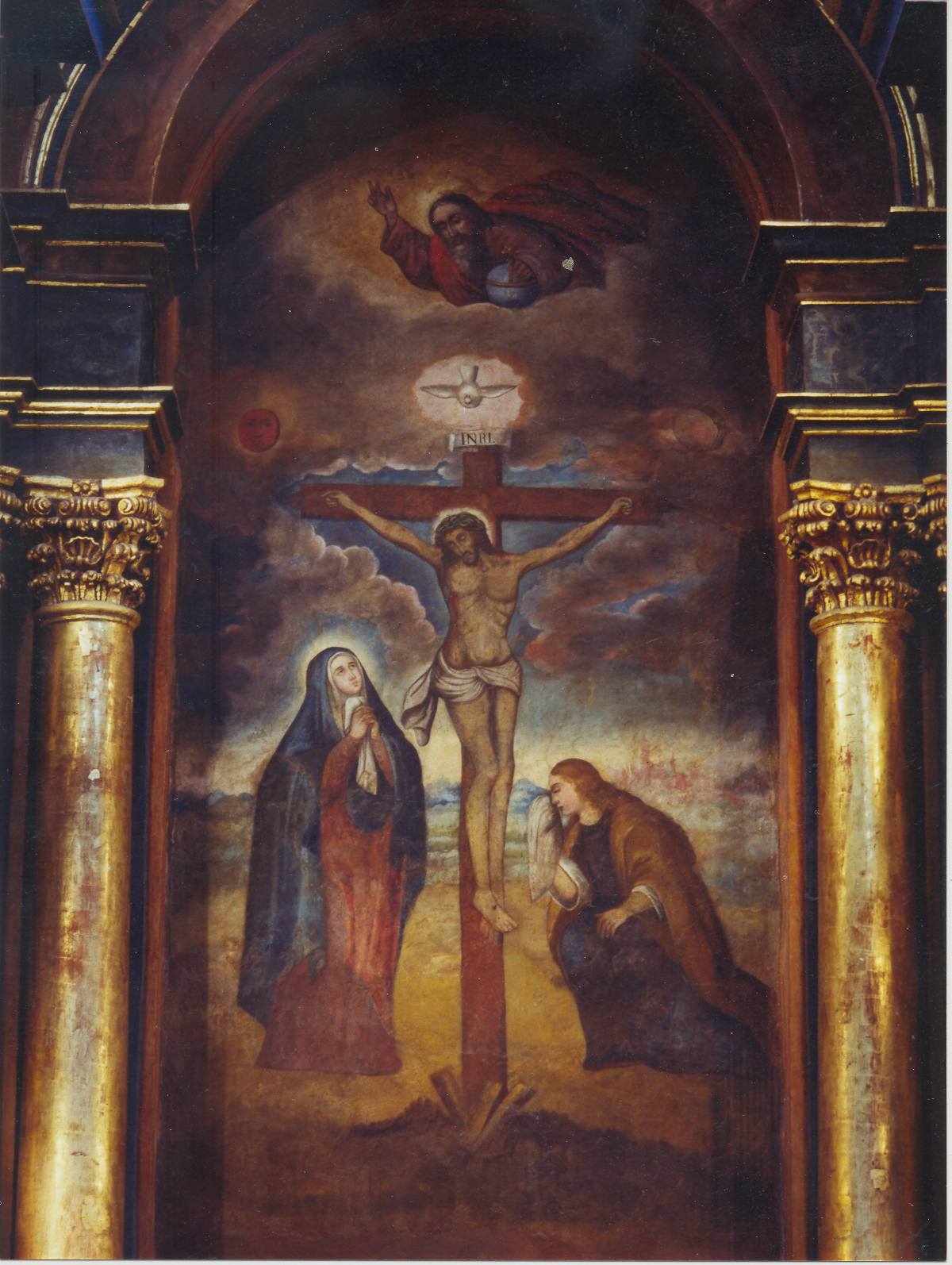 Lord of MiraclesAn October Catholic festival in Lima honouring a miraculous mural of Christ
 Inti RaymiA major Andean festival honoring the sun god Inti and marking the winter solstice in Cusco.
 PassoverA Jewish spring festival celebrating freedom from slavery with ritual meals
 Yom KippurThe holiest day in Judaism, dedicated to fasting, prayer and atonement
Good reading and sources
- Quyllurit'i on WikipediaEncyclopedia
- More photos on Wikimedia CommonsPhotos and video
- Wikidata recordOpen data
The facts on this page come from the Wikipedia article "Quyllurit'i", written by its contributors and used under the CC BY-SA 4.0 licence, and from its Wikidata record (CC0). EveryParampara rewrote the text in its own words, with AI assistance, and compares every page with the article to make sure no passage is copied. It may be reused under the same CC BY-SA 4.0 licence with a link back.
It may contain mistakes. Traditions differ from one family, village and community to the next, and the people who keep them know them best. If something is wrong, tell us. Last refreshed 2026-10-04.
More from Peru
All the traditions of Peru 🇵🇪 Cusco, Peru and 4 moreIntiinti (Quechua)
The Inca sun deity, honoured with temples, offerings and the June festival Inti RaymiSpiritual
🇵🇪 Lima, PeruLord of MiraclesSeñor de los Milagros
An October Catholic festival in Lima honouring a miraculous mural of ChristSpiritual · Sweets given and shared
🇵🇪 Cusco, Peru and 4 moreIntiinti (Quechua)
The Inca sun deity, honoured with temples, offerings and the June festival Inti RaymiSpiritual
🇵🇪 Lima, PeruLord of MiraclesSeñor de los Milagros
An October Catholic festival in Lima honouring a miraculous mural of ChristSpiritual · Sweets given and shared
 🇪🇸 Valencia, Spain and 5 moreFeast of Corpus ChristiCorpus Domini
A Christian feast celebrating the presence of Christ in the bread and wine of the EucharistSpiritual
🇪🇸 Spain and 5 moreCompadre
A ritual kinship made at a child's baptism, binding parents and godparents for lifeSpiritual
🇪🇸 Valencia, Spain and 5 moreFeast of Corpus ChristiCorpus Domini
A Christian feast celebrating the presence of Christ in the bread and wine of the EucharistSpiritual
🇪🇸 Spain and 5 moreCompadre
A ritual kinship made at a child's baptism, binding parents and godparents for lifeSpiritual
The same idea elsewhere
Pilgrimage compared 🇺🇦 Chernivtsi, Ukraine and 3 moreMalankaМаланка
A Ukrainian folk celebration of masked mummers, feasting and New Year blessingsFestival · Feasts and festival meals
🇺🇦 Chernivtsi, Ukraine and 3 moreMalankaМаланка
A Ukrainian folk celebration of masked mummers, feasting and New Year blessingsFestival · Feasts and festival meals
 🇨🇳 Shanghai, China and 1 moreJiaozi餃子
Crescent Chinese dumplings filled with meat or vegetables, eaten for fortune and feastsTable custom · Breakfast
🇨🇳 Shanghai, China and 1 moreJiaozi餃子
Crescent Chinese dumplings filled with meat or vegetables, eaten for fortune and feastsTable custom · Breakfast
 🇮🇳 Prayagraj, India and 6 moreMakar Sankrantiमकरसङ्क्रान्ति (Makarasaṅkrānti)
A mid-winter harvest festival marking the sun's northward journey, celebrated across South and Southeast Asia with fairsFestival · Feasts and festival meals
🇮🇳 Prayagraj, India and 6 moreMakar Sankrantiमकरसङ्क्रान्ति (Makarasaṅkrānti)
A mid-winter harvest festival marking the sun's northward journey, celebrated across South and Southeast Asia with fairsFestival · Feasts and festival meals
 🇬🇧 United Kingdom and 5 moreYule log
A log kept burning on the hearth through the twelve days of Christmas, for luckSeasonal
🇬🇧 United Kingdom and 5 moreYule log
A log kept burning on the hearth through the twelve days of Christmas, for luckSeasonal