Kukeri
In its own language: кукери (kukeri)
Masked and belled figures who tour Bulgarian villages at New Year to drive off harm

Kukeri are costumed men in Bulgaria who go from house to house at New Year and before Lent, wearing animal masks and heavy bells. People keep the custom to drive off harmful spirits and to ask for a good harvest, health and luck in the year ahead.
When is Kukeri kept?
Kukeri is kept around New Year, and again in the period before Lent, with house visits made at night.
Kukeri are men in Bulgaria who dress in animal masks, shaggy hides and belts of heavy bells, then move through their villages at New Year and in the weeks before Lent. Their noise and appearance are meant to drive off harmful spirits, and the visit is believed to bring the village a good harvest, health and happiness for the coming year.
What kukeri are
The kukeri are men from Bulgarian villages, dressed so that little of the body shows. Wooden masks carved with animal faces, sometimes carrying two faces on one mask, sit over the head. A belt holds bells big enough to be heard right across a square, and hides and cloth complete the outfit. Each district keeps its own version of the dress and the steps, yet the shape of the custom holds across the country. The point is noise and strangeness: a masked figure ringing with bells is not someone you would take for a neighbour.
Origins and debate
Writers in the nineteenth century argued that the kukeri carried a Thracian past forward from before Christianity, and some tied them to a cult of Dionysus. Bulgarian nationalists and folklorists favoured that reading, since it linked local custom to the classical world. Later research has set the idea aside. The custom is now placed inside a wider Balkan practice of mumming, meaning disguised groups who go about in play, a form found in many places that took its shape in the early modern period. Greek, Slavic, Albanian and Turkish elements all belong to that mix, according to this newer account.
Names and neighbours
Where the word kukeri comes from is not settled. One line of thought traces it to a Slavic root for an evil spirit, with an ending that turns it into the one who chases such spirits. Another points to a pre-Slavic deity called Kuk. A third turns to Latin words for a hood or for a container. Other places have their own names for the same kind of figure. Greek-speaking Thrace says Kalogeros, shortened to cuci. North Macedonia has babari or mechkari, the bear-man. In former Yugoslavia they are didi or didici, in Bulgaria also babushar, and in Pontic Anatolia momogeros.
A night procession
The troupe works after dark. Members call at homes, where the visit is taken as a blessing on the household, and they are gone before daylight comes. The route then leads to the open ground at the centre of the village, and there the dancing loosens into something loud and playful, with the bells doing much of the work. Neighbours come out to watch and to be amused. The same pattern repeats from one settlement to the next, though the details stay local.
Fertility and spring
Kuker also names a figure of fertility, and in Bulgaria and Serbia the word is spoken of in the plural. A springtime show follows a folk play. A man plays the part in a sheepskin or goatskin, a horned mask and a large wooden phallus. The performance includes sexual gesture, read as a sacred marriage, and a woman playing the wife, shown as pregnant, acts out the pains of labour. Ploughing and sowing then begin. Allegorical characters take part, among them an emperor and his court.
How Kukeri is kept
Men take the part of kukeri and put on the masks, hides and bells. They go out around New Year and again before Lent, moving as a group. At night they call at houses, then gather in the village square. There they dance hard and fast, and the bells supply the noise. Neighbours come to watch and be entertained. The rite is believed to clear harmful spirits and to secure the harvest, health and good fortune of the village for the year ahead. Step, mask and route differ by region.
When and where
The kukeri come out at two points in the year: around New Year, and in the stretch before Lent begins. Lent is fixed by the church calendar, so its opening moves from year to year. The visits to houses are made once darkness has fallen, and the dancing in the square follows.
The custom belongs to Bulgaria, and it is strongest in the villages, where masks and routes are local. Close relatives of it are kept elsewhere in the Balkans and in Greece. The sources also name the Pontus, Romania, North Macedonia, Serbia and the former Yugoslavia among the places with a matching figure.
What Kukeri means
For the people who keep it, the kukeri do two things at once. Their masks and bells push away the harmful spirits that threaten a village, and their coming draws in the opposite: a good harvest, health and happiness for the year ahead. The spring play carries a second meaning, joining fertility, marriage and the start of field work. Kuker is itself a divinity of fecundity, so the noise and the comedy sit inside a serious request that land and household should prosper.


Questions people ask about Kukeri
When is Kukeri kept?
Kukeri is kept around New Year, and again in the period before Lent, with house visits made at night.
What are the kukeri?
They are men in Bulgaria who wear animal masks, hides and belts of heavy bells and perform a ritual at New Year and before Lent. Their appearance and the sound of the bells are meant to drive off harmful spirits and to bring the village a good year.
Where is the custom kept?
In Bulgaria, above all in the villages. Related masked figures appear in Greece, Romania, North Macedonia, Serbia and other parts of the Balkans, and in the Pontus.
Are the kukeri an ancient rite?
Scholars of the nineteenth century thought so, tracing them to a Thracian cult from before Christianity. Modern scholarship disagrees. It treats the kukeri as part of a Balkan mumming tradition that formed in the early modern period.
Is the costume the same everywhere?
No. Masks and dress change from one region to another, and the performance changes with them, though the heart of the custom stays much the same.
See also
 Clean MondayThe Monday that opens Great Lent, kept with fasting, forgiveness and kite-flying
 Nativity FastA forty-day Christian period of abstinence and prayer observed in preparation for Christmas.
 Serbian ChristmasA three-day midwinter observance focused on oak logs, floor straw and family gatherings
 NazarA blue glass eye amulet worn and displayed to deflect the evil eye.
Good reading and sources
- Kukeri on WikipediaEncyclopedia
- More photos on Wikimedia CommonsPhotos and video
- Wikidata recordOpen data
The facts on this page come from the Wikipedia article "Kukeri", written by its contributors and used under the CC BY-SA 4.0 licence, and from its Wikidata record (CC0). EveryParampara rewrote the text in its own words, with AI assistance, and compares every page with the article to make sure no passage is copied. It may be reused under the same CC BY-SA 4.0 licence with a link back.
It may contain mistakes. Traditions differ from one family, village and community to the next, and the people who keep them know them best. If something is wrong, tell us. Last refreshed 2026-10-05.
More from Bulgaria
All the traditions of Bulgaria 🇵🇱 Poland and 5 moreZaduszkiZaduszki, Dzień Zaduszny
A Polish day of prayer for the dead on 2 November, kept with candles at the gravesSpiritual
🇵🇱 Poland and 5 moreZaduszkiZaduszki, Dzień Zaduszny
A Polish day of prayer for the dead on 2 November, kept with candles at the gravesSpiritual
 🇬🇧 United Kingdom and 5 moreSaint George's Day
A saint's feast on 23 April, kept by churches and patron nations from England to GeorgiaSpiritual
🇬🇧 United Kingdom and 5 moreSaint George's Day
A saint's feast on 23 April, kept by churches and patron nations from England to GeorgiaSpiritual
 🇷🇺 Russia and 5 moreRadonitsaРа́доница (Russian), Ра́даўніца (Belarusian)
A spring day when Orthodox families visit graves, share Easter food and greet the deadSpiritual · Feasts and festival meals
🇷🇺 Russia and 5 moreRadonitsaРа́доница (Russian), Ра́даўніца (Belarusian)
A spring day when Orthodox families visit graves, share Easter food and greet the deadSpiritual · Feasts and festival meals
 🇬🇷 Greece and 1 moreAnastenariaΑναστενάρια
A barefoot firewalking and dance rite honouring Saint Constantine and Saint HelenSpiritual
🇬🇷 Greece and 1 moreAnastenariaΑναστενάρια
A barefoot firewalking and dance rite honouring Saint Constantine and Saint HelenSpiritual
The same idea elsewhere
New Year compared 🇰🇷 Jeju, South KoreaGut굿
Sacred rites of song, dance, and spirit communion performed by Korean shamansSpiritual
🇰🇷 Jeju, South KoreaGut굿
Sacred rites of song, dance, and spirit communion performed by Korean shamansSpiritual
 🇧🇹 Bhutan and 4 moreLosarལོ་གསར་
The Tibetan Buddhist New Year festival of renewal, offerings, and family feastsSeasonal · Feasts and festival meals
🇧🇹 Bhutan and 4 moreLosarལོ་གསར་
The Tibetan Buddhist New Year festival of renewal, offerings, and family feastsSeasonal · Feasts and festival meals
 🇮🇳 India and 1 moreUgadiఉగాది
A South Indian New Year feast celebrating life with sweet, sour, and bitter tastesSeasonal
🇮🇳 India and 1 moreUgadiఉగాది
A South Indian New Year feast celebrating life with sweet, sour, and bitter tastesSeasonal
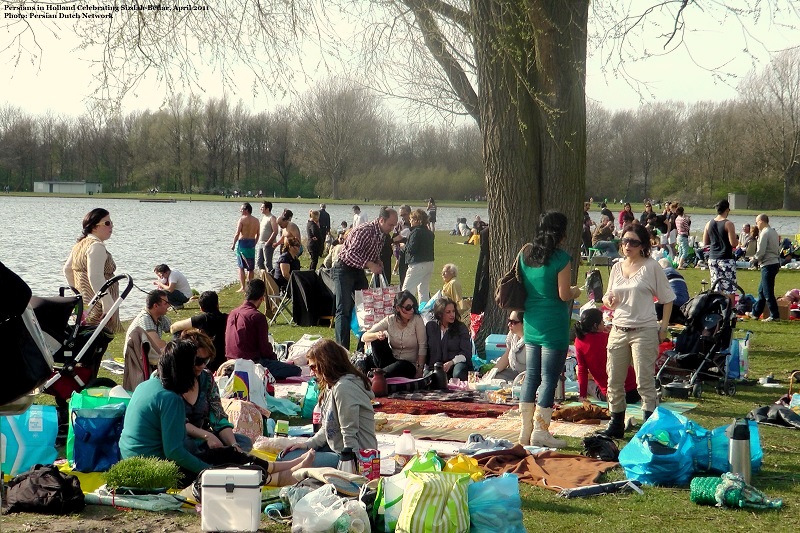 🇮🇷 Iran and 4 moreSizdah Bedarسیزدهبدر
An open-air picnic holiday concluding the Iranian New Year celebrationsFestival
🇮🇷 Iran and 4 moreSizdah Bedarسیزدهبدر
An open-air picnic holiday concluding the Iranian New Year celebrationsFestival