Music, dance and storytellingMiddle East
Turkish folk dance
Regional line and circle dances of Turkey, each with its own step and rhythm

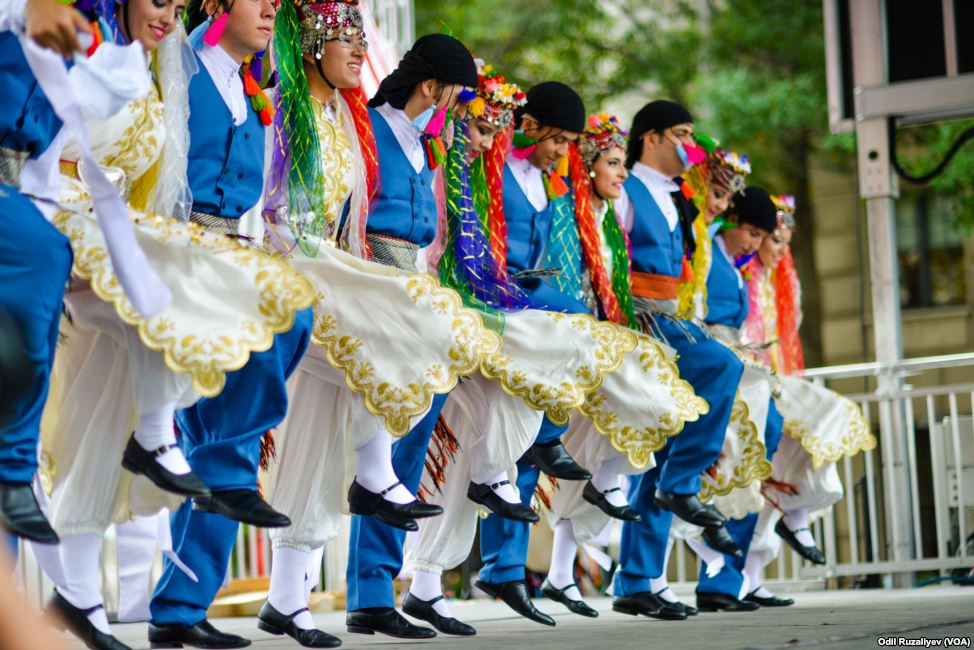
Turkish folk dances are the dances kept across Turkey, from the Aegean coast to the Black Sea. Most are line or circle dances done in groups, each region with its own steps, rhythms and instruments such as the davul drum and the zurna pipe.
Turkish folk dances are the dances of Turkey, and most of the best known are line or circle dances done in groups. Each region has its own forms: Bar in Erzurum, Halay across the centre, east and south-east, Horon along the Black Sea, Zeybek in the west, and spoon dances around Konya. Dancers follow the davul drum and the zurna pipe, and the steps carry the character of the place they come from.
What it is
Turkish folk dances are the dances of Turkey. Most of the best known are group dances in a line or in a circle. The country faces three seas and sits across old trade routes, and the sources describe its culture as complex and many-sided, which shows in how many dance forms there are. Almost every province has its own. Some are named after a region, some after a people or a trade, as with the butcher's dance of Istanbul, and some after an animal, as with the teke, or goat, dance of the Burdur and Fethiye area.
Regional dance forms
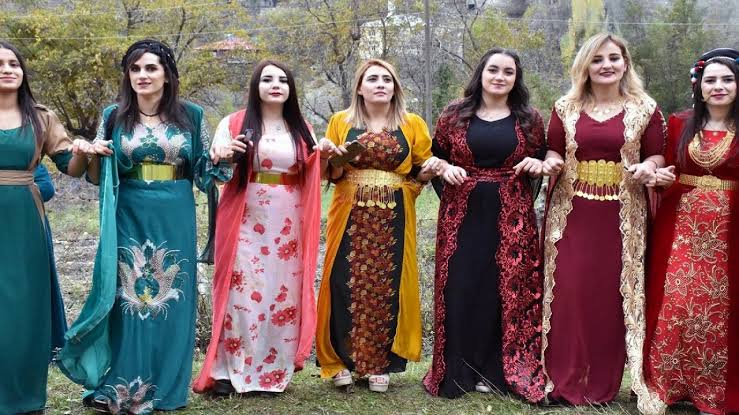
Bar belongs to eastern Anatolia, around Erzurum, Bayburt, Ağrı, Kars, Artvin and Erzincan. Groups dance it in the open, standing side by side with hands, shoulders and arms linked, and women and men have separate bars. Halay is a name for dances of the east, south-centre, centre and south-east. Horon is the Black Sea form, circular, with distinct short steps, and the sources trace it to the Laz culture of that coast. Zeybek, the western Anatolian dance of the Aegean, is done by one person, by two people, or by a group, and is called seymen further inland. The wooden spoon dances, kaşık oyunları, are found in the Mediterranean region and around Konya.
Music and rhythm
The davul, a drum, and the zurna, a shrill pipe, are the usual pair. Bar and Halay are danced to them, and Zeybek keeps a tradition of two drums and two zurnas, one of the zurnas holding a steady second tune under the melody. Rhythm matters: bar measures are mostly 5/8 and 9/8, horon is counted in 7/16 with 2/4, 5/8 and 9/16 also used, and spoon dances use 2/4 or 4/4. Halay can also be danced to the kaval, a shepherd's pipe, the sipsi and çığırtma reeds, the bağlama, or to sung folk songs.
Other dances
Karsilamas is danced face to face at a fast pace, also known as tsifteteli or çiftetelli, and the sources describe it as a kind of wedding music. Kasap havasi, the butcher's dance, is a modern dance of Istanbul and East Thrace, and the sources trace its origin to Byzantine butchers and to the Byzantine military. Samah uses the bağlama and bowed strings, has no rhythmic instrument, and is sometimes sung with none at all. Lezginka is performed in Kars and Ardahan, Kolbastı is common among teenagers, and Syrtos is a Greek circle dance found mainly in Pontus.
How Turkish folk dance is kept
Groups take part, not couples. Dancers stand in lines or in circles and link hands, shoulders or arms; Bar is done side by side with arms and shoulders joined. The davul drum and the zurna pipe set the pace, and the rhythm differs from form to form. Zeybek can be a solo, a pair or a group and moves between very slow and very fast tempos. Horon goes round in a circle on short steps. Samah may be sung with no instrument at all. Dancers wear costumes, and men and women often have separate forms, as with women's bars and men's bars.
When and where
There is no fixed date. These dances are not tied to one day of the year. The sources give no calendar for the tradition as a whole; they tie particular forms to particular places, and they describe karsilamas as a kind of music for weddings.
The dances are kept all over Turkey and are strongest where each form belongs: Bar in the eastern provinces around Erzurum and Bayburt, Halay in the central, southern, eastern and south-eastern parts, Horon along the eastern Black Sea coast and inland, Zeybek in western Anatolia, and spoon dances in the Mediterranean region and around Konya.
What Turkish folk dance means
The sources tie the character of these dances to the places they come from. Turkey faces three seas and sits on old trade routes, and its dances are described as varied for that reason. Bar dancers, the sources say, always dance with pride. Horon carries a Laz past: the sources call it a round dance of the Black Sea and note that it began as a Laz pagan dance.


Questions people ask about Turkish folk dance
What is Turkish folk dance?
It is the name for the folk dances of Turkey. Most of the best known forms are group dances in a line or in a circle. Different parts of the country have their own, such as Bar, Halay, Horon, Zeybek and the wooden spoon dances.
When and where is it kept?
There is no single date. The dances belong to Turkey's regions: Bar around Erzurum and Bayburt, Halay in the central, eastern and south-eastern provinces, Horon on the Black Sea coast, Zeybek in western Anatolia, and spoon dances around Konya.
What instruments go with the dances?
The davul drum and the zurna pipe are the usual pair, used for Bar, Halay and Zeybek. The sources also name the kaval, a shepherd's pipe, the sipsi and çığırtma reeds, the bağlama, the clarinet, and the small zurna called cura.
Where does horon come from?
The sources say horon takes its name from the Greek word choros, meaning dance, and comes from the Laz culture of the Black Sea area, where it was originally a Laz pagan dance. It is danced as a circle on short, distinct steps.
See also
 HoronLine dances of Turkey's eastern Black Sea coast, danced with shaking shoulders
 HalayA traditional line and circle folk dance kept across Turkey, Azerbaijan, Armenia, Iran, and Syria.
 GhazalA short rhyming poem of love and parting, recited and sung from Arabia to South Asia
 Georgian polyphonic singingSeveral voices at once, sung without instruments at Georgian feasts and weddings
Good reading and sources
- Turkish folk dance on WikipediaEncyclopedia
- More photos on Wikimedia CommonsPhotos and video
- Wikidata recordOpen data
The facts on this page come from the Wikipedia article "Turkish folk dance", written by its contributors and used under the CC BY-SA 4.0 licence, and from its Wikidata record (CC0). EveryParampara rewrote the text in its own words, with AI assistance, and compares every page with the article to make sure no passage is copied. It may be reused under the same CC BY-SA 4.0 licence with a link back.
It may contain mistakes. Traditions differ from one family, village and community to the next, and the people who keep them know them best. If something is wrong, tell us. Last refreshed 2026-10-05.
More from Turkey
All the traditions of Turkey
🇹🇷 Kayseri, Turkey and 4 moreHalay
A traditional line and circle folk dance kept across Turkey, Azerbaijan, Armenia, Iran, and Syria.Performance
🇬🇪 Tbilisi, Georgia and 4 moreGeorgian polyphonic singing
Several voices at once, sung without instruments at Georgian feasts and weddingsPerformance
🇮🇳 India and 5 moreGhazalغَزَل
A short rhyming poem of love and parting, recited and sung from Arabia to South AsiaPerformance
The same idea elsewhere
All of this kind 🇳🇿 Auckland, New ZealandPoi
A Māori performing art of swinging tethered weights in rhythmical patterns.Performance
🇧🇷 BrazilBaião
A syncopated folk rhythm and partnered dance from northeastern BrazilPerformance
🇳🇿 Auckland, New ZealandPoi
A Māori performing art of swinging tethered weights in rhythmical patterns.Performance
🇧🇷 BrazilBaião
A syncopated folk rhythm and partnered dance from northeastern BrazilPerformance
 🇺🇦 Kyiv, UkraineBanduraБандура
A Ukrainian plucked string instrument played to accompany epic songs and folk balladsPerformance
🇺🇦 Kyiv, UkraineBanduraБандура
A Ukrainian plucked string instrument played to accompany epic songs and folk balladsPerformance
 🇵🇭 Philippines and 1 morePangalay
A traditional fingernail dance of the Tausūg and Bajau peoples in the Sulu Archipelago and Sabah.Performance
🇵🇭 Philippines and 1 morePangalay
A traditional fingernail dance of the Tausūg and Bajau peoples in the Sulu Archipelago and Sabah.Performance