🇵🇱 Traditions of Poland
69 traditions from Poland, best known first, across 14 cities and towns.
Polish traditions are rooted in Roman Catholic faith and a deep respect for communal hospitality. The year is marked by solemn religious festivals, most notably the meatless Christmas Eve supper, while life cycles are celebrated with hearty, shared meals that emphasize family unity.
In Poland, daily life moves to the rhythm of the liturgical calendar and the seasons of the harvest. Families gather around large tables to share food that has been prepared with care, honoring both ancestral recipes and religious observances. Hospitality is a core value, extending warmth to guests and reinforcing community bonds through shared bread, soup, and song.
The year and its festivals
The calendar turns on Christian holy days, which shape social gatherings and dietary rules. Christmas Eve brings Wigilia, a solemn supper where families wait for the first star before sharing opłatek, a thin wafer symbolizing peace. This meal contains twelve dishes, often including fish and beetroot soup, reflecting the fast before Christmas. Easter features blessed baskets of food containing cakes and eggs, marking the resurrection. Fat Thursday precedes Lent, a time for eating pastries like pączki before the fasting period begins. These dates anchor the community's spiritual and social life.
Faith and ritual
Roman Catholicism forms the backbone of Polish identity and moral life. Churches stand at the center of towns and villages, serving as places for baptism, marriage, and funeral rites. The faithful observe saints' days with specific prayers and local customs. Religious processions mark important seasons, such as Corpus Christi, where streets are decorated with floral carpets. The Church also influences education and public holidays, preserving a sense of continuity despite political changes. Many people keep home altars or shrines, maintaining a personal connection to the divine throughout their homes.
Birth and marriage and death
Life events are marked by communal participation rather than private ceremony alone. Baptisms often include godparents who play a lasting role in the child's upbringing. Weddings typically blend church services with lively receptions featuring traditional dances and music. Funerals are somber affairs followed by a gathering where mourners share memories and food. These rites reinforce kinship ties and ensure that individuals remain connected to their lineage and community even after major transitions. The support network extends beyond immediate family to include neighbors and friends.
The table and what is eaten when
Meals are substantial affairs built on pork, potatoes, cabbage, and grains. Pierogi, dumplings filled with cheese or meat, appear frequently alongside bigos, a stew of sauerkraut and various meats. Soups like żurek and rosół start many dinners, served with fresh bread. Hospitality demands offering food and drink to any visitor. Kompot, a sweet fruit drink, accompanies meals or serves as a refreshment. Bread and salt are offered to guests as a sign of welcome. Festive tables expand to include herring, roast goose, and poppy seed cakes, reflecting abundance and generosity.
Music and dance
Folk music preserves regional identities through distinct instruments and melodies. The fiddle and accordion lead dances at village weddings and harvest festivals. Polonaise and mazurka styles influence national artistic expression, though folk variants vary by locality. Choirs sing hymns and secular songs during gatherings, keeping older tunes alive. Modern artists often draw from these rural roots, adapting traditional rhythms for contemporary audiences. Music serves as both entertainment and a means of preserving historical memory within communities.
The facts in this overview come from the Wikipedia article "Culture of Poland", written by its contributors and used under the CC BY-SA 4.0 licence. EveryParampara rewrote the text in its own words, with AI assistance, and compares every page with the article to make sure no passage is copied. It may be reused under the same CC BY-SA 4.0 licence with a link back.
The table in Poland
Foods and drinks by the moment they belong to.
 🇩🇪 Germany and 5 moreChristmas tree
A decorated evergreen or artificial tree placed indoors to mark the Christmas season.Festival
🇩🇪 Germany and 5 moreChristmas tree
A decorated evergreen or artificial tree placed indoors to mark the Christmas season.Festival
 🇵🇱 Poland and 5 moreChristmas Eve
The evening before Christmas, marked by church services, family meals, and gift preparations across Christian cultures.Festival · Dinner
🇵🇱 Poland and 5 moreChristmas Eve
The evening before Christmas, marked by church services, family meals, and gift preparations across Christian cultures.Festival · Dinner
 🇪🇸 Valencia, Spain and 5 moreFeast of Corpus ChristiCorpus Domini
A Christian feast celebrating the presence of Christ in the bread and wine of the EucharistSpiritual
🇪🇸 Valencia, Spain and 5 moreFeast of Corpus ChristiCorpus Domini
A Christian feast celebrating the presence of Christ in the bread and wine of the EucharistSpiritual
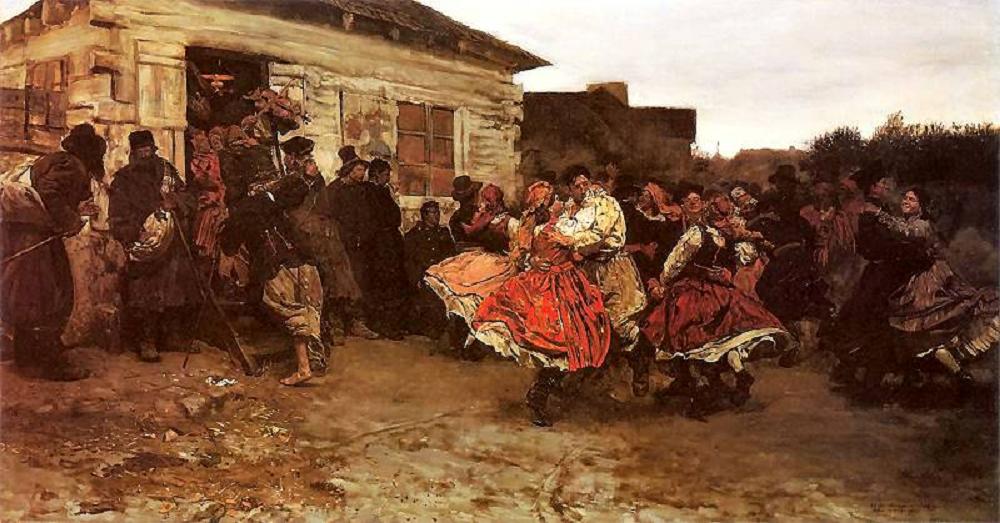 🇵🇱 Poland and 1 moreOberek
A rapid Polish spinning dance in triple metre with athletic lifts and jumpsPerformance
🇵🇱 Poland and 1 moreOberek
A rapid Polish spinning dance in triple metre with athletic lifts and jumpsPerformance
 🇪🇸 Santiago de Compostela, Spain and 7 moreCamino de SantiagoEl Camino de Santiago
A Christian walking pilgrimage across Europe to the shrine of Saint James in SpainSpiritual
🇪🇸 Santiago de Compostela, Spain and 7 moreCamino de SantiagoEl Camino de Santiago
A Christian walking pilgrimage across Europe to the shrine of Saint James in SpainSpiritual
 🇵🇱 Poland and 2 morePolonaisePolonez
A traditional Polish partner dance in triple metre, kept as a national custom and UNESCO heritage.Performance
🇵🇱 Poland and 2 morePolonaisePolonez
A traditional Polish partner dance in triple metre, kept as a national custom and UNESCO heritage.Performance
 🇵🇱 Kraków, PolandKrakowiak
A lively Polish folk dance from Kraków that became a popular ballroom style across Europe.Performance
🇵🇱 Kraków, PolandKrakowiak
A lively Polish folk dance from Kraków that became a popular ballroom style across Europe.Performance
 🇮🇱 Israel and 5 moreKaddishקַדִּישׁ
A Jewish hymn of sanctification recited during prayer services and mourning rituals.Spiritual
🇮🇱 Israel and 5 moreKaddishקַדִּישׁ
A Jewish hymn of sanctification recited during prayer services and mourning rituals.Spiritual
 🇭🇺 Hungary and 5 moreCsárdás
A Hungarian folk dance that moves from a slow start to a fast finish, kept in Hungary and neighboring regions.Performance
🇭🇺 Hungary and 5 moreCsárdás
A Hungarian folk dance that moves from a slow start to a fast finish, kept in Hungary and neighboring regions.Performance
 🇵🇱 Kraków, PolandSt. Mary's Trumpet CallHejnał mariacki
A five-note bugle call played hourly from the tower of St. Mary's Church in Kraków, Poland.Performance
🇵🇱 Kraków, PolandSt. Mary's Trumpet CallHejnał mariacki
A five-note bugle call played hourly from the tower of St. Mary's Church in Kraków, Poland.Performance
 🇵🇱 Auschwitz-Birkenau, Poland and 1 moreMarch of the LivingMarsz Żywych (Polish) · מצעד החיים (Hebrew)
An annual two-week journey to Poland ending in a silent walk from Auschwitz to BirkenauCeremony
🇵🇱 Auschwitz-Birkenau, Poland and 1 moreMarch of the LivingMarsz Żywych (Polish) · מצעד החיים (Hebrew)
An annual two-week journey to Poland ending in a silent walk from Auschwitz to BirkenauCeremony
 🇬🇧 United Kingdom and 5 moreChristmas carol
Festive songs and hymns sung during the Christmas season and door to doorPerformance
🇬🇧 United Kingdom and 5 moreChristmas carol
Festive songs and hymns sung during the Christmas season and door to doorPerformance
 🇬🇧 United Kingdom and 5 moreApril Fools' Day
An annual day of lighthearted pranks, hoaxes and teasing kept on the first of AprilFestival
🇬🇧 United Kingdom and 5 moreApril Fools' Day
An annual day of lighthearted pranks, hoaxes and teasing kept on the first of AprilFestival
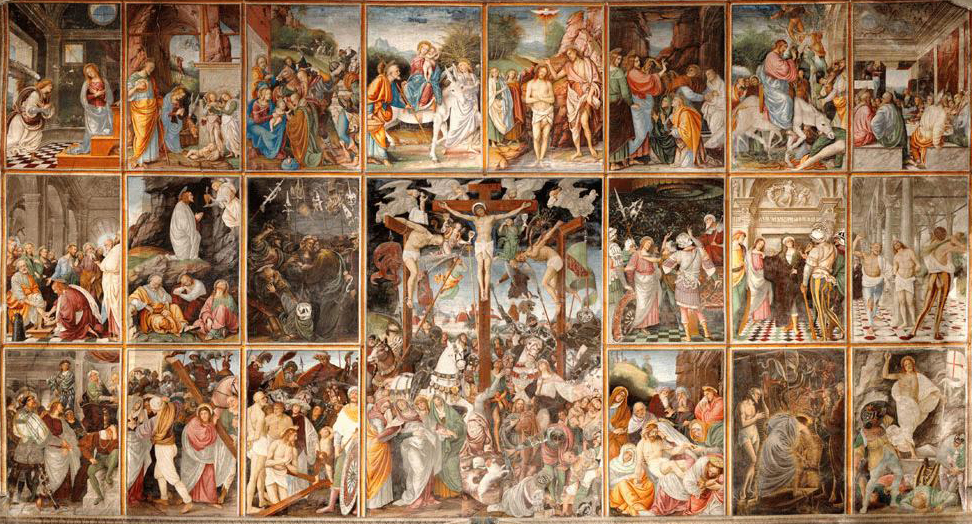 🇮🇱 Jerusalem, Israel and 5 morePresentation of Jesus at the TempleIn praesentatione Domini
A February feast of candles and welcome, kept forty days after ChristmasSpiritual
🇮🇱 Jerusalem, Israel and 5 morePresentation of Jesus at the TempleIn praesentatione Domini
A February feast of candles and welcome, kept forty days after ChristmasSpiritual
 🇺🇦 Ukraine and 5 moreKupala Night
A summer solstice folk festival marked by bonfires, water rituals and herbal gatherings across Eastern Europe.Festival
🇺🇦 Ukraine and 5 moreKupala Night
A summer solstice folk festival marked by bonfires, water rituals and herbal gatherings across Eastern Europe.Festival
 🇵🇱 Poland and 5 moreFat Thursday
A Thursday before Lent when doughnuts, grilled meat and Carnival take overFestival · Feasts and festival meals
🇵🇱 Poland and 5 moreFat Thursday
A Thursday before Lent when doughnuts, grilled meat and Carnival take overFestival · Feasts and festival meals
 🇧🇪 Belgium and 5 moreSaint Nicholas Day
The feast day of Saint Nicholas, kept in Advent with gifts, shoes and church servicesSpiritual
🇧🇪 Belgium and 5 moreSaint Nicholas Day
The feast day of Saint Nicholas, kept in Advent with gifts, shoes and church servicesSpiritual
 🇮🇪 Ireland and 5 moreSaint Stephen's Day
A Christian feast day celebrating the first martyr with feasts, rides and folk customs.Spiritual · Feasts and festival meals
🇮🇪 Ireland and 5 moreSaint Stephen's Day
A Christian feast day celebrating the first martyr with feasts, rides and folk customs.Spiritual · Feasts and festival meals
 🇺🇦 Kyiv, Ukraine and 7 morePysankaписанка
A wax-resist egg decorating tradition kept by Slavic communities for Easter and spring renewal.Festival
🇺🇦 Kyiv, Ukraine and 7 morePysankaписанка
A wax-resist egg decorating tradition kept by Slavic communities for Easter and spring renewal.Festival
 🇵🇱 Kraków, PolandKraków szopkaszopka krakowska
Elaborate Christmas cribs modelled on historic Polish architecture in KrakówCraft
🇵🇱 Kraków, PolandKraków szopkaszopka krakowska
Elaborate Christmas cribs modelled on historic Polish architecture in KrakówCraft
 🇧🇾 Belarus and 4 moreDziadyДзяды (Belarusian); Діди (Ukrainian); Dziady (Polish)
A Slavic tradition of feeding and welcoming the spirits of ancestors to ensure family fertility and peace.Spiritual
🇧🇾 Belarus and 4 moreDziadyДзяды (Belarusian); Діди (Ukrainian); Dziady (Polish)
A Slavic tradition of feeding and welcoming the spirits of ancestors to ensure family fertility and peace.Spiritual
 🇺🇦 Ukraine and 7 moreKoliadaКоляда
A traditional winter caroling and solstice festival kept across Slavic EuropeFestival
🇺🇦 Ukraine and 7 moreKoliadaКоляда
A traditional winter caroling and solstice festival kept across Slavic EuropeFestival
 🇺🇦 Ukraine and 1 moreDidukhдідух
A wheat sheaf kept at Christmas to honour ancestors and pray for a bountiful harvestHome
🇺🇦 Ukraine and 1 moreDidukhдідух
A wheat sheaf kept at Christmas to honour ancestors and pray for a bountiful harvestHome
 🇦🇹 Austria and 4 moreAlmabtrieb
An Alpine autumn custom of leading decorated cattle from high pastures to valley barnsSeasonal · Feasts and festival meals
🇦🇹 Austria and 4 moreAlmabtrieb
An Alpine autumn custom of leading decorated cattle from high pastures to valley barnsSeasonal · Feasts and festival meals
 🇺🇦 Kyiv, Ukraine and 1 moreUkrainian embroideryвишивка (vyshyvka)
A stitched folk art of Ukraine, worked into shirts, cloths and church furnishingsCraft
🇺🇦 Kyiv, Ukraine and 1 moreUkrainian embroideryвишивка (vyshyvka)
A stitched folk art of Ukraine, worked into shirts, cloths and church furnishingsCraft
 🇺🇦 Ukraine and 4 moreKorovaiкоровай (Ukrainian), каравай (Russian)
A round wedding bread of Eastern Europe, baked with songs and shared by all the guestsTable custom · Feasts and festival meals
🇺🇦 Ukraine and 4 moreKorovaiкоровай (Ukrainian), каравай (Russian)
A round wedding bread of Eastern Europe, baked with songs and shared by all the guestsTable custom · Feasts and festival meals
 🇮🇱 Israel and 5 moreChallahחַלָּה
A braided Jewish bread, blessed and shared at Shabbat and holiday tablesTable custom · Feasts and festival meals
🇮🇱 Israel and 5 moreChallahחַלָּה
A braided Jewish bread, blessed and shared at Shabbat and holiday tablesTable custom · Feasts and festival meals
 🇷🇺 Russia and 1 moreZakuskiзакуски
A laid-out table of cold small dishes that opens a Russian festive mealTable custom · Tea-time and snacking customs
🇷🇺 Russia and 1 moreZakuskiзакуски
A laid-out table of cold small dishes that opens a Russian festive mealTable custom · Tea-time and snacking customs
 🇩🇪 Aachen, Germany and 4 moreStraw bearStrohbär
A carnival figure wrapped in straw, paraded through German towns to mark the end of winter.Festival
🇷🇺 Russia and 5 moreBread and saltхлеб-соль
Bread and salt offered to a guest: a welcome kept from Russia to AlbaniaEtiquette
🇩🇪 Aachen, Germany and 4 moreStraw bearStrohbär
A carnival figure wrapped in straw, paraded through German towns to mark the end of winter.Festival
🇷🇺 Russia and 5 moreBread and saltхлеб-соль
Bread and salt offered to a guest: a welcome kept from Russia to AlbaniaEtiquette
 🇵🇱 Poland and 5 moreZaduszkiZaduszki, Dzień Zaduszny
A Polish day of prayer for the dead on 2 November, kept with candles at the gravesSpiritual
🇵🇱 Poland and 5 moreZaduszkiZaduszki, Dzień Zaduszny
A Polish day of prayer for the dead on 2 November, kept with candles at the gravesSpiritual
 🇵🇱 PolandWigilia
Poland's meatless Christmas Eve supper, begun when the first star appearsTable custom · Feasts and festival meals
🇵🇱 PolandWigilia
Poland's meatless Christmas Eve supper, begun when the first star appearsTable custom · Feasts and festival meals
 🇵🇱 Poland and 5 moreŚwięconka
The Polish Holy Saturday blessing of baskets filled with Easter morning foodSpiritual
🇵🇱 Poland and 5 moreŚwięconka
The Polish Holy Saturday blessing of baskets filled with Easter morning foodSpiritual
 🇹🇷 Istanbul, Turkey and 5 moreSimit
A sesame-encrusted ring bread sold by street vendors across Turkey and the former Ottoman lands.Table custom · Breakfast
🇹🇷 Istanbul, Turkey and 5 moreSimit
A sesame-encrusted ring bread sold by street vendors across Turkey and the former Ottoman lands.Table custom · Breakfast
 🇩🇪 Saalfeld, Germany and 5 moreEaster egg treeOstereierbaum
A German springtime custom of dressing living trees and branches with blown eggsFestival
🇩🇪 Saalfeld, Germany and 5 moreEaster egg treeOstereierbaum
A German springtime custom of dressing living trees and branches with blown eggsFestival
 🇱🇹 Vilnius, Lithuania and 3 moreSaint Casimir's FairKaziuko mugė
A spring craft market and folk celebration across the historic streets of VilniusCraft
🇱🇹 Vilnius, Lithuania and 3 moreSaint Casimir's FairKaziuko mugė
A spring craft market and folk celebration across the historic streets of VilniusCraft
 🇵🇱 Kraków, PolandLajkonikLajkoniki
An annual hobby-horse pageant through the streets of Kraków each JuneFestival
🇵🇱 Kraków, PolandLajkonikLajkoniki
An annual hobby-horse pageant through the streets of Kraków each JuneFestival
 🇺🇸 New York, United States and 5 moreKlezmerקלעזמער
An Ashkenazi Jewish instrumental tradition of lively dance tunes and ritual melodiesPerformance
🇺🇸 New York, United States and 5 moreKlezmerקלעזמער
An Ashkenazi Jewish instrumental tradition of lively dance tunes and ritual melodiesPerformance
 🇵🇱 PolandEaster in Poland
A spring holiday of family breakfasts, blessed baskets, decorated eggs, and water games.Festival · Breakfast
🇵🇱 PolandEaster in Poland
A spring holiday of family breakfasts, blessed baskets, decorated eggs, and water games.Festival · Breakfast
 🇮🇹 Naples, Italy and 5 moreNativity scene
A seasonal set of figures showing Jesus's birth, put up by Christians at ChristmasFestival
🇮🇹 Naples, Italy and 5 moreNativity scene
A seasonal set of figures showing Jesus's birth, put up by Christians at ChristmasFestival
 🇩🇪 Germany and 5 morePolterabend
Guests smash porcelain the night before a wedding to wish the couple luckRite of passage
🇩🇪 Germany and 5 morePolterabend
Guests smash porcelain the night before a wedding to wish the couple luckRite of passage
 🇦🇲 Yerevan, Armenia and 5 moreKhachkarխաչքար
A carved stone cross raised as a memorial, a grave marker and a prayer in stoneCraft
🇦🇲 Yerevan, Armenia and 5 moreKhachkarխաչքար
A carved stone cross raised as a memorial, a grave marker and a prayer in stoneCraft
 🇮🇹 Rome, Italy and 2 moreAssumption of Mary
A feast on 15 August, when Christians remember Mary taken up into heavenSpiritual
🇮🇹 Rome, Italy and 2 moreAssumption of Mary
A feast on 15 August, when Christians remember Mary taken up into heavenSpiritual
 🇮🇱 Jerusalem, Israel and 1 moreSimchat Torahשִׂמְחַת תּוֹרָה
The day Jewish communities finish the Torah reading and start it again, with dancingSpiritual · Feasts and festival meals
🇮🇱 Jerusalem, Israel and 1 moreSimchat Torahשִׂמְחַת תּוֹרָה
The day Jewish communities finish the Torah reading and start it again, with dancingSpiritual · Feasts and festival meals
 🇮🇱 Israel and 5 moreHoly SaturdaySabbatum Sanctum
The closing day of Holy Week, a Saturday of waiting, fasting and vigil before EasterSpiritual
🇮🇱 Israel and 5 moreHoly SaturdaySabbatum Sanctum
The closing day of Holy Week, a Saturday of waiting, fasting and vigil before EasterSpiritual
 🇫🇷 France and 5 moreVictory in Europe Day8 mai 1945
The day Nazi Germany's surrender was accepted, marking the end of the war in EuropeCeremony
🇫🇷 France and 5 moreVictory in Europe Day8 mai 1945
The day Nazi Germany's surrender was accepted, marking the end of the war in EuropeCeremony
 🇬🇧 St Andrews, United Kingdom and 7 moreSaint Andrew's DayLà Naomh Anndrais
The feast of Andrew the Apostle, kept on 30 November and Scotland's national daySpiritual
🇬🇧 St Andrews, United Kingdom and 7 moreSaint Andrew's DayLà Naomh Anndrais
The feast of Andrew the Apostle, kept on 30 November and Scotland's national daySpiritual
 🇵🇱 Warsaw, PolandNational Independence DayNarodowe Święto Niepodległości
Poland's national day on 11 November, marking the 1918 return of a sovereign Polish stateCeremony
🇵🇱 Warsaw, PolandNational Independence DayNarodowe Święto Niepodległości
Poland's national day on 11 November, marking the 1918 return of a sovereign Polish stateCeremony
Photo credits on this page
The small pictures above come from Wikimedia Commons under free licences. Some are cropped to fit.
- Presentation of Jesus at the Temple: Gaudenzio Ferrari, Public domain, source
- St. Mary's Trumpet Call: Jadwiga, CC BY-SA 3.0, source
- Shabbat meals: Yoninah, Public domain, source
- Christmas tree: Lechhansl, CC BY-SA 3.0, source
- Kupala Night: Ivan Sokolov, Public domain, source
- Pysanka: Lubap, CC BY-SA 4.0, source
- Saint Stephen's Day: Carlo Crivelli, Public domain, source
- Kraków szopka: user:cancre, CC BY-SA 2.5, source
- Dziady: Stanisław Bagieński, Public domain, source
- Koliada: Konstantin Trutovsky, Public domain, source
- Didukh: Bo&Ko, CC BY-SA 2.0, source
- Almabtrieb: Feel free to use my photos, but please mention me as the author and if, CC BY-SA 4.0, source
- March of the Living: No machine-readable author provided. Efka de~commonswiki assumed (base, CC BY 2.5, source
- Święconka: Błażej Benisz, CC BY-SA 2.5, source
- Simit: Unknown author, CC BY-SA 3.0, source
- Easter egg tree: Frank schubert, CC BY-SA 3.0, source
- Feast of Corpus Christi: Fennec ., Public domain, source
- Saint Casimir's Fair: Sirex at Lithuanian Wikipedia, Public domain, source
- Lajkonik: Igor123121, CC BY-SA 4.0, source
- Klezmer: Unknown artist identified as "M.D.", Public domain, source
- Easter in Poland: Silar, CC BY-SA 3.0, source
- Fat Thursday: Unknown author, Public domain, source
- Saint Nicholas Day: Chmee2, CC BY 3.0, source
- Christmas carol: Prathyush Thomas, GFDL 1.2, source
- April Fools' Day: Lars Andersen, Public domain, source
- Oberek: Józef Chełmoński, Public domain, source
- Camino de Santiago: stephenD, CC BY-SA 4.0, source
- Krakowiak: Władysław Bakałowicz, Public domain, source
- Kaddish: Jwh, CC BY-SA 3.0 lu, source
- Csárdás: Unknown author, Public domain, source
- Simchat Torah: No machine-readable author provided. Merlin assumed (based on copyrigh, CC BY 2.5, source
- Polonaise: Korneli Szlegel, Public domain, source
- Korovai: Olli Niemitalo, CC0, source
- Straw bear: Photo: Andreas Praefcke, CC BY 3.0, source
- Zaduszki: Ivan Mrkvička, CC BY-SA 4.0, source
- Wigilia: Przykuta, CC BY-SA 3.0, source
- Pre-Cana: Jebulon, CC0, source
- Nativity scene: Yvonne Bentele, CC BY-SA 4.0, source
- Zakuski: Timothy Post, CC BY-SA 2.0, source
- Polterabend: 4028mdk09, CC BY-SA 3.0, source
- Khachkar: Arantz, CC BY-SA 3.0, source
- Rushnyk: Pavlo Boyko, CC BY-SA 2.0, source
- Victory in Europe Day: Fotograaf Onbekend / Anefo, CC0, source
- Saint Andrew's Day: Henryk Siemiradzki, Public domain, source
- Holy Saturday: Anonymous Unknown author, Public domain, source
- National Independence Day: Patryk Matyjaszczyk, CC BY-SA 3.0, source
- Christmas Eve: Carl Larsson, Public domain, source