Vyshyvanka
In its own language: вишиванка (Ukrainian), вышыванка (Belarusian)
An embroidered shirt of Ukraine and Belarus, its patterns marking region and family

Vyshyvanka is a shirt decorated with hand embroidery, part of folk dress in Ukraine and Belarus. The patterns are read as signs of a wearer's home region, and a Vyshyvanka Day in May has been held since 2006 to bring wearers together.
When is Vyshyvanka kept?
Vyshyvanka is kept on all year, with Vyshyvanka Day on the third Thursday of May.
A vyshyvanka is a shirt covered in hand embroidery, worn as part of folk dress in Ukraine and Belarus. In Ukraine the patterns vary from one district to the next, and people say a practised eye can tell a wearer's home village from the stitching alone. Some wear it as a protective garment, others as a statement of who they are.
What it is
The word vyshyvanka comes into English from Ukrainian. It is built from вишивати (vyshyvaty), which means to embroider, plus the ending -нка (-nka). Belarusian has its own form of the same word, вышыванка, written vyšyvanka in Latin letters. The garment is a shirt, and embroidery is the central part of Ukrainian folk dress for men as well as women. Work of this kind is a craft in its own right, with different techniques suiting different local styles.
Ukrainian embroidery
Ukrainian stitching is regional. Colours, stitches and motifs differ from place to place, and it is said that a practised eye could once tell where someone came from just by looking at their clothes. Black, red and white are the base colours, with yellow, blue and green used alongside them. Threads were traditionally dyed from bark, leaves, flowers and berries. Embroidery of this kind is known in the region from the 5th century BCE, in Scythian art. Embroiderers are urged today to treat folk art as a source and to leave stitches and colours unchanged. Researchers have also set out mathematical ways of describing the patterns, using symmetry and the groups that classify borders and repeating designs.
Belarusian practice
In Belarus the vyshyvanka is treated as a national symbol, and both the government and its opponents claim it. In 2017 the foreign minister, Vladimir Makei, said the patterns had never encouraged violence or evil but promoted goodness and peace, and that they expressed the mentality and spirit of the Belarusian people. Belarusian embroidery is not organised by district the way Ukrainian work is. It follows national and personal history instead, and is often used to record information. Many people hold that the shirts keep evil spirits away. During the 2020-2021 protests the vyshyvanka became an emblem of the opposition, and the artist Rufina Bazlova made a website, Vyzhyvanka, whose name plays on the Belarusian word for to survive.
Vyshyvanka Day
The day began in 2006 at Chernivtsi National University, where a student, Lesia Voroniuk, started it. It has since grown into the International Day of the Vyshyvanka, kept on the third Thursday of May. The aim is to bring Ukrainians together wherever they live, whatever language they speak and whatever faith they follow. It works as a flash mob, and it is not tied to a public holiday or a feast day. People mark it by wearing a vyshyvanka, and officials from courts, councils and the national government sometimes join in.
Fashion and fame
The shirt has carried political meaning for a long time. Archduke Wilhelm of Austria, a Ukrainian nationalist, wore one so often that he was known as Vasyl Vyshyvanyi, Basil the Embroidered, and the city of Lviv named a square after him. More recently it moved into fashion. At Paris Fashion Week in 2015 the designer Vita Kin showed designs that kept the shirt's traditional shape but changed the embroidery, taking elements from the Ukrainian rushnyk and from home textiles. Vogue and Harper's Bazaar covered the work, and the shirt reached Cannes and the 2016 Summer Olympics.
How Vyshyvanka is kept
There is no set ritual for wearing a vyshyvanka. People put one on for weddings, holidays, church or everyday life, and in Ukraine the cut and stitching are often chosen to match the wearer's district. Since 2006 the third Thursday of May has been kept as Vyshyvanka Day. On that date people wear a vyshyvanka to work, to school or online, and join events arranged for the day. Town halls, courts and government offices take part, and the head of state may appear in one. The day is a flash mob rather than a public holiday, so nothing closes.
When and where
Vyshyvanka Day is held on the third Thursday of May each year, so the date shifts with the calendar. It was started in 2006 and has no link to any public holiday or feast day. The shirt itself is worn at any time of year.
The vyshyvanka belongs to Ukraine and Belarus, and Ukraine is where the tradition is strongest and most written about. Ukrainian settlers carried related dress into southern Russia from the 17th century. Wearers in other countries join Vyshyvanka Day, and the shirt has appeared at international events including the Cannes film festival and the 2016 Summer Olympics.
What Vyshyvanka means
Many wearers treat the vyshyvanka as a talisman. The shirt is said to guard the person who wears it and to tell a story, and the person who made it is protected too. A Ukrainian saying describes a fortunate person as one who was born wearing a vyshyvanka. Intention matters while stitching, and the geometric figures are read as carrying a letter, a word or a story. In Belarus people often say the patterns keep evil spirits away.


Questions people ask about Vyshyvanka
When is Vyshyvanka kept?
Vyshyvanka is kept on all year, with Vyshyvanka Day on the third Thursday of May.
What is a vyshyvanka?
It is a shirt covered in hand embroidery, worn as part of folk dress in Ukraine and Belarus. In Ukraine the stitching usually points to a wearer's home district, and many people treat the shirt as a protective garment as well as clothing.
Who wears it?
People in Ukraine and Belarus wear it, and Ukrainians abroad put one on for Vyshyvanka Day and for family occasions. In Ukraine both men and women wear vyshyvanky. Judges, council workers and government officials have joined the May celebration, and Queen Máxima of the Netherlands has worn one.
Is a vyshyvanka religious?
It is not tied to a single faith. Vyshyvanka Day is meant to bring Ukrainians together whatever their religion or language. The protective meaning people attach to the patterns is a folk belief, not a rule of any church.
Why do the patterns matter?
Patterns vary by district in Ukraine and are read as a record of where a person comes from. The colours follow local custom, and in the past threads were dyed from plants and berries. In Belarus the embroidery often follows family history and is used to record information.
See also
 ZaduszkiA Polish day of prayer for the dead on 2 November, kept with candles at the graves
 MalankaA Ukrainian folk celebration of masked mummers, feasting and New Year blessings
 Vyshyvanka DayAn annual day for wearing traditional Ukrainian embroidered shirts across the world
 Traditional tattooingThe ancient custom of marking the skin for protection, healing, status and sacred rites
Good reading and sources
- Vyshyvanka on WikipediaEncyclopedia
- More photos on Wikimedia CommonsPhotos and video
- Wikidata recordOpen data
The facts on this page come from the Wikipedia article "Vyshyvanka", written by its contributors and used under the CC BY-SA 4.0 licence, and from its Wikidata record (CC0). EveryParampara rewrote the text in its own words, with AI assistance, and compares every page with the article to make sure no passage is copied. It may be reused under the same CC BY-SA 4.0 licence with a link back.
It may contain mistakes. Traditions differ from one family, village and community to the next, and the people who keep them know them best. If something is wrong, tell us. Last refreshed 2026-10-05.
More from Ukraine
All the traditions of Ukraine
🇺🇦 Chernivtsi, Ukraine and 5 moreVyshyvanka DayДень вишиванки
An annual day for wearing traditional Ukrainian embroidered shirts across the worldDress
 🇺🇦 Ukraine and 2 moreRushnykрушник
A sacred embroidered cloth used in East Slavic rituals, weddings and daily life.Dress
🇺🇦 Ukraine and 2 moreRushnykрушник
A sacred embroidered cloth used in East Slavic rituals, weddings and daily life.Dress
 🇷🇺 Kazan, Russia and 2 moreValenkiва́ленки
Russian winter boots of felted wool, worn on dry snow and often paired with galoshesDress
🇺🇦 Chernivtsi, Ukraine and 3 moreMalankaМаланка
A Ukrainian folk celebration of masked mummers, feasting and New Year blessingsFestival · Feasts and festival meals
🇷🇺 Kazan, Russia and 2 moreValenkiва́ленки
Russian winter boots of felted wool, worn on dry snow and often paired with galoshesDress
🇺🇦 Chernivtsi, Ukraine and 3 moreMalankaМаланка
A Ukrainian folk celebration of masked mummers, feasting and New Year blessingsFestival · Feasts and festival meals
The same idea elsewhere
Healing, luck and protection compared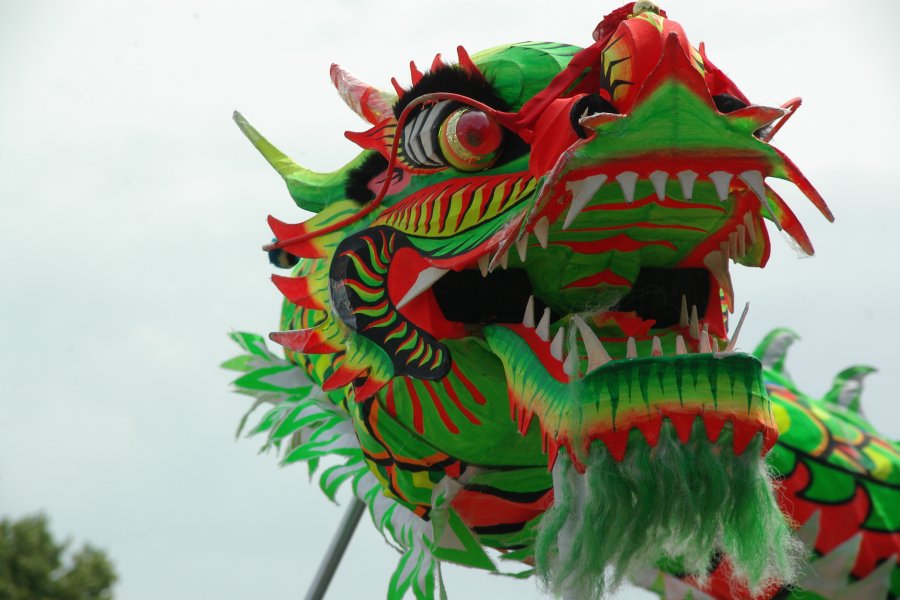 🇨🇳 China and 3 moreDragon dance舞龍 / 舞龙
A long dragon puppet on poles, danced by a team at Chinese New Year and other festivalsPerformance
🇨🇳 China and 3 moreDragon dance舞龍 / 舞龙
A long dragon puppet on poles, danced by a team at Chinese New Year and other festivalsPerformance
 🇺🇸 United States and 4 moreFriday the 13th
A Western folk superstition regarding the unluckiness of a Friday falling on the 13th.Folklore
🇺🇸 United States and 4 moreFriday the 13th
A Western folk superstition regarding the unluckiness of a Friday falling on the 13th.Folklore
 🇮🇳 India and 4 moreWater lantern
Small lamps floated on water to honour the dead and ask for good fortuneFestival
🇵🇬 Trobriand Islands, Papua New GuineaTrobriand cricket
Cricket as played in the Trobriand Islands, with chants, dances and a feastGame
🇮🇳 India and 4 moreWater lantern
Small lamps floated on water to honour the dead and ask for good fortuneFestival
🇵🇬 Trobriand Islands, Papua New GuineaTrobriand cricket
Cricket as played in the Trobriand Islands, with chants, dances and a feastGame