🇺🇦 Traditions of Ukraine
42 traditions from Ukraine, best known first, across 19 cities and towns.
Ukrainian traditions stem from deep agricultural roots, strong family ties, and Christian faiths intertwined with older Slavic customs. Handcrafted embroidery, decorated Easter eggs, and communal gatherings shape everyday life. The hearth centres on hearty dishes made from native grains and root vegetables, cooked slowly through multi-stage methods.
Ukraine maintains a strong connection to its peasant arts, sacred rituals, and fertile lands. Communities across the country keep festive customs alive through winter carols, spring crafts, and summer night assemblies. Traditional life moves according to church calendars and agricultural rhythms, where families gather around shared tables. From intricate needlework on linen garments to slow-cooked beet soups and stuffed dumplings, everyday practices reflect an enduring pride in local domestic craftsmanship and shared memory.
Festivals of the year
Many significant Ukrainian celebrations follow the old Julian calendar, which places dates like Christmas and New Year at different times from the Gregorian system. Festive seasons bring communities together in large social gatherings known as vechornytsi. During the winter holidays, groups participate in Malanka and koliaduvannia, the customary singing of carols. As winter turns toward spring, people mark Masnytsia or Masliana with shared food and festivities. In the height of summer, communities gather for Ivan Kupala Night, an event deeply tied to pre-Christian Slavic mythology. These public assemblies and seasonal rituals help preserve communal bonds across generations.
Faith and sacred rites
Religious life is central to Ukrainian identity, drawing primarily on Eastern Christian heritage. The Ukrainian Orthodox Church represents the largest religious body in the country. The Ukrainian Greek Catholic Church, the second largest communion, maintains Eastern Byzantine liturgical rites while staying in union with the Roman Catholic Church. Roman Catholicism is also practiced. These Christian beliefs exist alongside older Slavic cosmological concepts, shaping both daily domestic routines and major public holidays. Religious symbolism infuses sacred artwork, from illuminated Gospel manuscripts to ceremonial foods used in memorial services and blessings throughout the liturgical year.
Garments and embroidered dress
Traditional Ukrainian attire centres on the vyshyvanka, a distinctive embroidered shirt celebrated nationwide with a dedicated day in May. Artisans create these garments using complex weaving techniques, cutwork, and intricate needle patterns that vary across regions. Historically, women wore items such as the kozhushanka jacket, alongside floral head wreaths for unmarried girls and the ochipok cap for married women. Men wore wide trousers called sharovary, outer coats like the kozhukh, and traditional tunics such as the żupan or kontusz. These garments combine practical warmth with symbolic decorative designs passed down through family workshops.
Folk ornamentation and craft
Ukrainian craftspeople transform household objects into meaningful decorative art for special occasions. Detailed designs carry spiritual symbolism across several regional styles, such as Petrykivka, Kosiv, Bubnivka, and Opishnia painting. The best-known crafts include pysanky, which are intricately patterned Easter eggs, and vytynanky, traditional decorative paper cuts. Regional vernacular architecture also shows this focus on ornamentation, using local materials and ancient geometric patterns on buildings. Open-air institutions, such as the museum in Pereiaslav, preserve over a hundred historical structures and thousands of objects that showcase regional woodwork, plastering, and domestic design.
The domestic table
Rooted in the rich black soil known as chornozem, Ukrainian cuisine focuses on staple grains and garden vegetables. Rye and wheat hold sacred status, with bread serving as a central element of hospitality since medieval times. A defining feature of traditional cooking is its multi-step preparation, where ingredients are first boiled or fried before being baked or stewed. The national dish is red borscht, a hearty soup prepared with beetroots and vegetables. Other staple foods include varenyky, boiled dumplings filled with various ingredients, and holubtsi, which are stuffed cabbage rolls. Meals rely on cabbages, potatoes, mushrooms, and pickling to sustain households throughout the seasons.
The facts in this overview come from the Wikipedia article "Culture of Ukraine", written by its contributors and used under the CC BY-SA 4.0 licence. EveryParampara rewrote the text in its own words, with AI assistance, and compares every page with the article to make sure no passage is copied. It may be reused under the same CC BY-SA 4.0 licence with a link back.
The table in Ukraine
Foods and drinks by the moment they belong to.
 🇮🇹 Naples, Italy and 5 moreCaffè sospeso
An anonymous gift of a paid cup of coffee for a stranger in needTable custom · Tea, coffee and drinking ceremonies
🇮🇹 Naples, Italy and 5 moreCaffè sospeso
An anonymous gift of a paid cup of coffee for a stranger in needTable custom · Tea, coffee and drinking ceremonies
 🇺🇦 Ukraine and 2 moreRushnykрушник
A sacred embroidered cloth used in East Slavic rituals, weddings and daily life.Dress
🇺🇦 Ukraine and 2 moreRushnykрушник
A sacred embroidered cloth used in East Slavic rituals, weddings and daily life.Dress
 🇺🇦 Kyiv, UkraineBanduraБандура
A Ukrainian plucked string instrument played to accompany epic songs and folk balladsPerformance
🇺🇦 Kyiv, UkraineBanduraБандура
A Ukrainian plucked string instrument played to accompany epic songs and folk balladsPerformance
 🇺🇦 Ukraine and 1 moreBanushбануш
A Carpathian cornmeal porridge cooked with sour cream and savoury toppingsTable custom
🇺🇦 Ukraine and 1 moreBanushбануш
A Carpathian cornmeal porridge cooked with sour cream and savoury toppingsTable custom
 🇺🇦 Chernivtsi, Ukraine and 5 moreVyshyvanka DayДень вишиванки
An annual day for wearing traditional Ukrainian embroidered shirts across the worldDress
🇺🇦 Chernivtsi, Ukraine and 5 moreVyshyvanka DayДень вишиванки
An annual day for wearing traditional Ukrainian embroidered shirts across the worldDress
 🇷🇺 Russia and 2 moreMaslenitsaМасленица
A seven-day Eastern Slavic festival of pancakes and bonfires marking the end of winter before Lent.Festival · Breakfast
🇷🇺 Russia and 2 moreMaslenitsaМасленица
A seven-day Eastern Slavic festival of pancakes and bonfires marking the end of winter before Lent.Festival · Breakfast
 🇺🇦 Ukraine and 5 moreKupala Night
A summer solstice folk festival marked by bonfires, water rituals and herbal gatherings across Eastern Europe.Festival
🇺🇦 Ukraine and 5 moreKupala Night
A summer solstice folk festival marked by bonfires, water rituals and herbal gatherings across Eastern Europe.Festival
 🇧🇪 Belgium and 5 moreSaint Nicholas Day
The feast day of Saint Nicholas, kept in Advent with gifts, shoes and church servicesSpiritual
🇧🇪 Belgium and 5 moreSaint Nicholas Day
The feast day of Saint Nicholas, kept in Advent with gifts, shoes and church servicesSpiritual
 🇺🇦 Kyiv, Ukraine and 7 morePysankaписанка
A wax-resist egg decorating tradition kept by Slavic communities for Easter and spring renewal.Festival
🇺🇦 Kyiv, Ukraine and 7 morePysankaписанка
A wax-resist egg decorating tradition kept by Slavic communities for Easter and spring renewal.Festival
 🇺🇦 Kyiv, UkraineChristmas in UkraineРіздво (Rizdvo)
A Ukrainian Christmas celebration with a twelve-dish vegan supper on Christmas Eve and observance on January 6 or DecembFestival · Supper
🇺🇦 Kyiv, UkraineChristmas in UkraineРіздво (Rizdvo)
A Ukrainian Christmas celebration with a twelve-dish vegan supper on Christmas Eve and observance on January 6 or DecembFestival · Supper
 🇧🇾 Belarus and 4 moreDziadyДзяды (Belarusian); Діди (Ukrainian); Dziady (Polish)
A Slavic tradition of feeding and welcoming the spirits of ancestors to ensure family fertility and peace.Spiritual
🇧🇾 Belarus and 4 moreDziadyДзяды (Belarusian); Діди (Ukrainian); Dziady (Polish)
A Slavic tradition of feeding and welcoming the spirits of ancestors to ensure family fertility and peace.Spiritual
 🇺🇦 Ukraine and 7 moreKoliadaКоляда
A traditional winter caroling and solstice festival kept across Slavic EuropeFestival
🇺🇦 Ukraine and 7 moreKoliadaКоляда
A traditional winter caroling and solstice festival kept across Slavic EuropeFestival
 🇺🇦 Ukraine and 1 moreDidukhдідух
A wheat sheaf kept at Christmas to honour ancestors and pray for a bountiful harvestHome
🇺🇦 Ukraine and 1 moreDidukhдідух
A wheat sheaf kept at Christmas to honour ancestors and pray for a bountiful harvestHome
 🇮🇱 Jerusalem, Israel and 3 moreHanukkah menorah
A nine-branched lamp that gains one more flame on each of Hanukkah's eight nightsSpiritual
🇮🇱 Jerusalem, Israel and 3 moreHanukkah menorah
A nine-branched lamp that gains one more flame on each of Hanukkah's eight nightsSpiritual
 🇮🇱 Israel and 5 moreChallahחַלָּה
A braided Jewish bread, blessed and shared at Shabbat and holiday tablesTable custom · Feasts and festival meals
🇮🇱 Israel and 5 moreChallahחַלָּה
A braided Jewish bread, blessed and shared at Shabbat and holiday tablesTable custom · Feasts and festival meals
 🇷🇺 Russia and 2 moreKhorovodхоровод
A Slavic circle dance with singing, danced with linked hands or little fingersPerformance
🇷🇺 Russia and 2 moreKhorovodхоровод
A Slavic circle dance with singing, danced with linked hands or little fingersPerformance
 🇧🇬 Bulgaria and 4 moreBabindenБабинден
A Bulgarian feast honoring midwives and new mothers with rituals of bathing, feasting, and blessing.Festival · Feasts and festival meals
🇧🇬 Bulgaria and 4 moreBabindenБабинден
A Bulgarian feast honoring midwives and new mothers with rituals of bathing, feasting, and blessing.Festival · Feasts and festival meals
 🇺🇦 Chernivtsi, Ukraine and 1 moreVyshyvankaвишиванка (Ukrainian), вышыванка (Belarusian)
An embroidered shirt of Ukraine and Belarus, its patterns marking region and familyDress
🇺🇦 Chernivtsi, Ukraine and 1 moreVyshyvankaвишиванка (Ukrainian), вышыванка (Belarusian)
An embroidered shirt of Ukraine and Belarus, its patterns marking region and familyDress
 🇺🇦 Ukraine and 4 moreKorovaiкоровай (Ukrainian), каравай (Russian)
A round wedding bread of Eastern Europe, baked with songs and shared by all the guestsTable custom · Feasts and festival meals
🇺🇦 Ukraine and 4 moreKorovaiкоровай (Ukrainian), каравай (Russian)
A round wedding bread of Eastern Europe, baked with songs and shared by all the guestsTable custom · Feasts and festival meals
 🇧🇬 Bulgaria and 3 moreBanitsaБаница
A layered Bulgarian cheese pastry baked for morning meals and holiday fortunesTable custom · Breakfast
🇧🇬 Bulgaria and 3 moreBanitsaБаница
A layered Bulgarian cheese pastry baked for morning meals and holiday fortunesTable custom · Breakfast
 🇩🇪 Saalfeld, Germany and 5 moreEaster egg treeOstereierbaum
A German springtime custom of dressing living trees and branches with blown eggsFestival
🇩🇪 Saalfeld, Germany and 5 moreEaster egg treeOstereierbaum
A German springtime custom of dressing living trees and branches with blown eggsFestival
 🇺🇦 Chernivtsi, Ukraine and 3 moreMalankaМаланка
A Ukrainian folk celebration of masked mummers, feasting and New Year blessingsFestival · Feasts and festival meals
🇺🇦 Chernivtsi, Ukraine and 3 moreMalankaМаланка
A Ukrainian folk celebration of masked mummers, feasting and New Year blessingsFestival · Feasts and festival meals
 🇷🇴 Romania and 2 morePlăcintă
A traditional thin, filled pastry baked across Romania, Moldova, and parts of Ukraine.Table custom · Sweets given and shared
🇷🇴 Romania and 2 morePlăcintă
A traditional thin, filled pastry baked across Romania, Moldova, and parts of Ukraine.Table custom · Sweets given and shared
 🇺🇸 New York, United States and 5 moreKlezmerקלעזמער
An Ashkenazi Jewish instrumental tradition of lively dance tunes and ritual melodiesPerformance
🇺🇸 New York, United States and 5 moreKlezmerקלעזמער
An Ashkenazi Jewish instrumental tradition of lively dance tunes and ritual melodiesPerformance
 🇺🇦 Kyiv, UkraineVertepвертеп
A two-tiered Ukrainian puppet theatre that mixes the nativity story with satirical comedy and folk music.Performance
🇺🇦 Kyiv, UkraineVertepвертеп
A two-tiered Ukrainian puppet theatre that mixes the nativity story with satirical comedy and folk music.Performance
 🇺🇦 UkraineTraditional Ukrainian wedding
A wedding spread over many days, with matchmaking, bread, wreaths and songRite of passage
🇺🇦 Kyiv, Ukraine and 1 moreUkrainian embroideryвишивка (vyshyvka)
A stitched folk art of Ukraine, worked into shirts, cloths and church furnishingsCraft
🇺🇦 UkraineTraditional Ukrainian wedding
A wedding spread over many days, with matchmaking, bread, wreaths and songRite of passage
🇺🇦 Kyiv, Ukraine and 1 moreUkrainian embroideryвишивка (vyshyvka)
A stitched folk art of Ukraine, worked into shirts, cloths and church furnishingsCraft
 🇷🇺 Kazan, Russia and 2 moreValenkiва́ленки
Russian winter boots of felted wool, worn on dry snow and often paired with galoshesDress
🇺🇦 Ukraine and 2 moreProgrammer's Day
A professional day for programmers, fixed to the 256th day of the yearCeremony
🇷🇺 Kazan, Russia and 2 moreValenkiва́ленки
Russian winter boots of felted wool, worn on dry snow and often paired with galoshesDress
🇺🇦 Ukraine and 2 moreProgrammer's Day
A professional day for programmers, fixed to the 256th day of the yearCeremony
 🇺🇦 Kyiv, UkraineIndependence Day of UkraineДень Незалежності України
Ukraine's national day, kept every 24 August with parades and flagsCeremony
🇺🇦 Kyiv, UkraineIndependence Day of UkraineДень Незалежності України
Ukraine's national day, kept every 24 August with parades and flagsCeremony
 🇺🇦 Ukraine and 2 moreIntercession of the TheotokosПокровъ
An Eastern Christian autumn feast honoring the protective veil of the Virgin MarySpiritual
🇺🇦 Ukraine and 2 moreIntercession of the TheotokosПокровъ
An Eastern Christian autumn feast honoring the protective veil of the Virgin MarySpiritual
 🇷🇺 Russia and 5 moreBeheading of John the Baptist
A Christian holy day of strict fasting that marks the death of John the BaptistSpiritual · Fasting and breaking the fast
🇷🇺 Russia and 5 moreBeheading of John the Baptist
A Christian holy day of strict fasting that marks the death of John the BaptistSpiritual · Fasting and breaking the fast
 🇷🇺 Russia and 5 moreYuri's Night
An annual global celebration on April 12 marking milestones in space explorationFestival
🇷🇺 Russia and 5 moreYuri's Night
An annual global celebration on April 12 marking milestones in space explorationFestival
 🇷🇺 Russia and 5 moreRadonitsaРа́доница (Russian), Ра́даўніца (Belarusian)
A spring day when Orthodox families visit graves, share Easter food and greet the deadSpiritual · Feasts and festival meals
🇷🇺 Russia and 5 moreRadonitsaРа́доница (Russian), Ра́даўніца (Belarusian)
A spring day when Orthodox families visit graves, share Easter food and greet the deadSpiritual · Feasts and festival meals
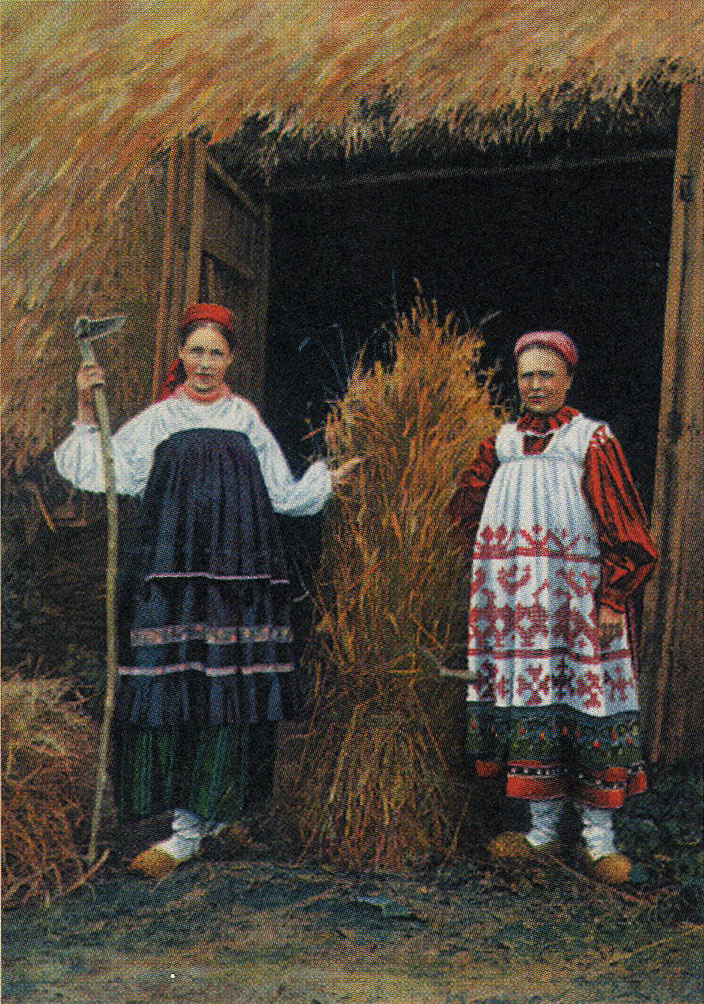 🇵🇱 Kraków, Poland and 5 moreDozhinkiDożynki
A Slavic harvest festival of the last sheaf, a woven wreath and a shared mealSeasonal
🇵🇱 Kraków, Poland and 5 moreDozhinkiDożynki
A Slavic harvest festival of the last sheaf, a woven wreath and a shared mealSeasonal
 🇧🇬 Bulgaria and 5 moreKoledariколядники
A Slavic winter caroling custom of visiting homes with songs, masks and blessingsFestival
🇧🇬 Bulgaria and 5 moreKoledariколядники
A Slavic winter caroling custom of visiting homes with songs, masks and blessingsFestival
 🇺🇦 Ukraine and 7 moreEgg decorating
Decorating eggs with dye, wax and carving, kept at Easter, Nowruz and springCraft
🇺🇦 Ukraine and 7 moreEgg decorating
Decorating eggs with dye, wax and carving, kept at Easter, Nowruz and springCraft
 🇺🇦 Ukraine and 7 moreVechornytsiвечорниці
Evening gatherings of Ukrainian youth, with songs, jokes, games and winter divinationSeasonal
🇺🇦 Ukraine and 7 moreVechornytsiвечорниці
Evening gatherings of Ukrainian youth, with songs, jokes, games and winter divinationSeasonal
 🇷🇴 Bucharest, Romania and 5 moreRomanian Language DayZiua Limbii Române
A single day, 31 August, given to the Romanian language in three countriesCeremony
🇷🇴 Bucharest, Romania and 5 moreRomanian Language DayZiua Limbii Române
A single day, 31 August, given to the Romanian language in three countriesCeremony
 🇵🇱 Poland and 6 morePolaznik
The first visitor to cross the threshold at Christmas, read as a sign of the year to comeFolklore
🇵🇱 Poland and 6 morePolaznik
The first visitor to cross the threshold at Christmas, read as a sign of the year to comeFolklore
 🇺🇦 Dnipro, UkraineCossack songs of the Dnipropetrovsk RegionКозацькі пісні Дніпропетровщини
Folk songs made by Cossacks, still sung in villages of the Dnipropetrovsk regionPerformance
🇺🇦 Dnipro, UkraineCossack songs of the Dnipropetrovsk RegionКозацькі пісні Дніпропетровщини
Folk songs made by Cossacks, still sung in villages of the Dnipropetrovsk regionPerformance
 🇷🇺 Russia and 5 moreRussian superstitions
Everyday omens, etiquette rules, and household rituals observed across RussiaFolklore
🇷🇺 Russia and 5 moreRussian superstitions
Everyday omens, etiquette rules, and household rituals observed across RussiaFolklore
Photo credits on this page
The small pictures above come from Wikimedia Commons under free licences. Some are cropped to fit.
- Bandura: Julianhayda, CC BY-SA 4.0, source
- Christmas in Ukraine: Halyna Kuchmanych, CC BY-SA 4.0, source
- Shabbat meals: Yoninah, Public domain, source
- Russian superstitions: Сергей Чеботарёв, CC BY-SA 4.0, source
- Kupala Night: Ivan Sokolov, Public domain, source
- Pysanka: Lubap, CC BY-SA 4.0, source
- Maslenitsa: Лобачев Владимир, CC BY-SA 4.0, source
- Dziady: Stanisław Bagieński, Public domain, source
- Koliada: Konstantin Trutovsky, Public domain, source
- Didukh: Bo&Ko, CC BY-SA 2.0, source
- Banitsa: Sheku80, CC BY-SA 3.0, source
- Easter egg tree: Frank schubert, CC BY-SA 3.0, source
- Malanka: Viktoriyasechkar, CC BY-SA 4.0, source
- Plăcintă: Unknown author, Public domain, source
- Banush: Trzewik, CC BY-SA 4.0, source
- Klezmer: Unknown artist identified as "M.D.", Public domain, source
- Vertep: Микола Василечко, CC BY-SA 4.0, source
- Saint Nicholas Day: Chmee2, CC BY 3.0, source
- Vyshyvanka Day: Vladimir Yaitskiy, CC BY-SA 2.0, source
- Caffè sospeso: Bex Walton, CC BY 2.0, source
- Rushnyk: Pavlo Boyko, CC BY-SA 2.0, source
- Korovai: Olli Niemitalo, CC0, source
- Babinden: Unknown author, Public domain, source
- Hanukkah menorah: Musée d'art et d'histoire du Judaïsme, CC BY-SA 4.0, source
- Cossack songs of the Dnipropetrovsk Region: Юрій Булка, CC BY 4.0, source
- Vyshyvanka: Vasily Andreevich Tropinin, Public domain, source
- Khorovod: Aleksey Stepanov, Public domain, source
- Traditional Ukrainian wedding: Пимоненко, Николай Корнильевич, Public domain, source
- Valenki: akk_rus, CC BY 2.0, source
- Independence Day of Ukraine: Official website of the President of Ukraine, CC BY 4.0, source
- Beheading of John the Baptist: Caravaggio, Public domain, source
- Radonitsa: Perohanych, CC BY-SA 3.0, source
- Dozhinki: Unknown author, Public domain, source
- Vechornytsi: Гейслер, Кристиан Готфрид Генрих, Public domain, source
- Egg decorating: L.Kenzel, CC BY 3.0, source
- Romanian Language Day: Razvan Socol, CC BY-SA 4.0, source
- Polaznik: Carlton Alfred Smith, Public domain, source
- Intercession of the Theotokos: SNCH, CC BY-SA 4.0, source
- Yuri's Night: Ryan Somma, CC BY 2.0, source
- Koledari: Mikhail Germashev, Public domain, source