Festivals and celebrationsNorth America
Wedding reception
The party after a wedding, where the couple greet guests over food, cake and dancing

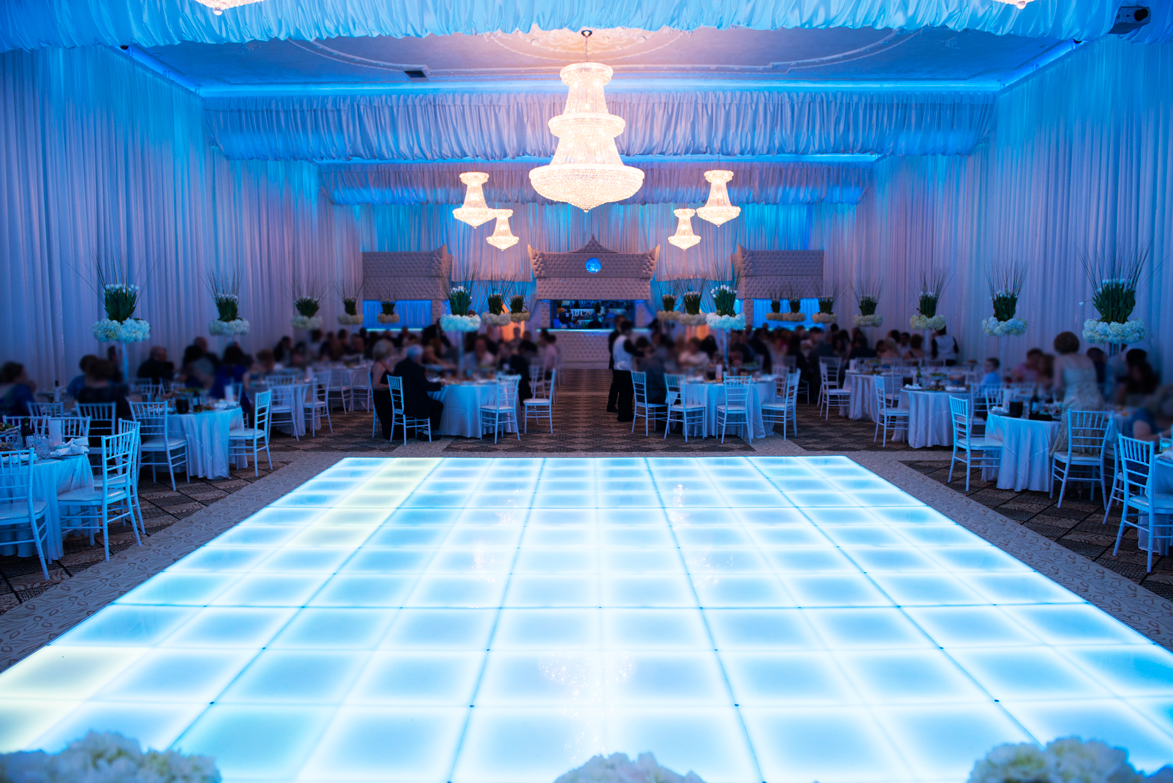
A party held after a marriage ceremony, at which a newly married couple receive their guests. It is found in most societies, and the couple decide everything: the setting, the meal and the entertainment, from a short round of cake and drinks to a dinner lasting long into the night.
When is Wedding reception kept?
Wedding reception is kept on straight after the marriage ceremony, most often in the evening with dinner.
A wedding reception is the party a couple hold after they have married. It is a way of thanking everyone who came to the ceremony and of meeting those guests as husband and wife, or as two people newly joined. The couple, or whoever hosts, decide the place, the food, the music and how long it lasts. In most societies some form of entertaining follows a wedding.
A party after the vows
Entertaining guests once a couple have married is a custom in most societies. The word reception carries the idea of receiving: the pair, now wed, meet the people who watched them marry. In earlier times families in Europe and North America held a wedding breakfast after a morning ceremony, or a ball when the wedding was in the evening. During the 1900s the reception took the place of both, and the name came to mean any gathering after a wedding, whether it was brunch, tea, dinner or a dance. Some cultures hold separate celebrations for the two families.
Where it is held
Until the years following the Second World War, most celebrations happened at the home of the bride's family and matched what that family could afford. A wealthy household might put on a grand ball; middle-income families held a lunch; working-class families served tea with cake and lemonade. Some families arranged mass weddings to share the expense. Dance halls appeared in the early 1900s and were hired when a home was too small. Today people use church or temple halls, restaurants, gardens, hired banquet rooms, hotel ballrooms, and venues run by firms that specialise in weddings and parties.
Food and cake
What is served follows the hour of the wedding and the habits of the place. It may be no more than a soft drink and a slice of cake, or a dinner of many courses, and the hosts' budget decides. Where a couple's faith or culture rules out alcohol and dancing, the party can centre on dessert. Local customs appear too: a croquembouche in France, or the cookie table that families in and around Pittsburgh fill. Cakes are usually stacked in tiers and iced in white. A couple may show a small decorated cake and serve plainer sheet cake, and in the southern United States a groom's cake, often chocolate, is shaped around his hobbies.
Greeting the guests
In a receiving line the couple, their hosts, and often their parents and attendants stand in an agreed order and meet every guest in turn. A guest gives a name to the first person in the line, who passes them along to the next. At least one host and the couple are expected to greet people; other members of the wedding party are not obliged, and since many couples now pay for their own party, it is common for the two of them to stand alone. Couples on the east and west coasts of the United States often choose a grand entrance instead, with an MC, band leader or disc jockey announcing the wedding party, sometimes in the order they walked in at the ceremony.
Toasts and dancing
Speeches wishing the couple well are made by members of the wedding party, before or after the meal. The speakers commonly include the maid of honor, the groom, the best man and the bride's father, though no list is fixed and toasts are optional. A photo montage of the pair growing up is a newer addition. Where there is dancing, the couple open it. Waltzes were once the usual choice; now pop songs, club styles or a rehearsed routine are common, with a disc jockey hired and a playlist agreed in advance. Guests traditionally join in soon after. A formal departure may end the evening.
How Wedding reception is kept
Guests arrive at a place the couple have chosen, usually straight after the ceremony. They are met either one by one at a receiving line or all together at a grand entrance announced by an MC or a disc jockey. Food follows, from cake and a drink up to a full dinner, and the couple cut the cake, feed each other a bite and may sip from linked arms. Speeches are made. The couple open the dancing, guests join in, and the evening ends when the newlyweds leave, sometimes through a shower of rice, seed or bubbles.
When and where
It follows the marriage ceremony, on the same day, and most receptions are held in the evening with dinner. Couples may instead choose a lunch, a late-morning brunch or an afternoon tea. The date is settled by the couple and their families along with the wedding itself.
The custom is found in most societies. It is strongly established in the United States and other Western countries, and in some cultures each family holds its own celebration. Venues run from a family home or garden to rented halls, restaurants and hotels, and church or temple rooms are used when the ceremony takes place there.
What Wedding reception means
The name says what the party is for: the couple receive the people who came to see them marry, and thank them. Guests in turn greet the pair, wish them well and share the first hours of their married life. Feeding each other cake looks back to an ancient Roman wedding rite. Throwing rice or seed carries a wish for plenty. Standing in a line to meet every guest is a way of honouring each one.



Questions people ask about Wedding reception
When is Wedding reception kept?
Wedding reception is kept on straight after the marriage ceremony, most often in the evening with dinner.
What is a wedding reception?
It is the party held after a marriage ceremony, offered as hospitality to everyone who came to the wedding. The couple, now married, greet those guests and thank them. It may be a short gathering with cake and a drink, or a long dinner with speeches and dancing.
Where do receptions take place?
Anywhere the couple can arrange. Homes and gardens are still used, as are restaurants, rented halls, church or temple rooms and hotel ballrooms. Firms also run venues built for weddings. Before the Second World War most were held at the bride's family home.
Who pays and who speaks?
The hosts cover the cost, and these days the hosts are often the couple themselves. Toasts may be given by the best man, the maid of honor, the groom or the bride's father, though no list is compulsory and speeches are optional.
What happens at the end?
The newlyweds leave first, since they are the guests of honour and the others are expected to stay until they go. Couples sometimes stage a formal exit and then slip back in quietly, so that guests feel free to leave. Rice, seed or bubbles may be thrown.
See also
 TamaladaA gathering where tamales are the main dish or a communal tamale-making party in Mexican and Hispanic cultures.
 NalukataqA spring whaling festival of the Iñupiat in Northern Alaska, featuring a blanket toss and communal feast.
 PicnicA meal taken outdoors in a park or scenic spot, often shared with friends and family.Garma Festival of Traditional CulturesA four-day cultural gathering in northeast Arnhem Land celebrating Yolngu traditions and fostering two-way learning.
Good reading and sources
- Wedding reception on WikipediaEncyclopedia
- More photos on Wikimedia CommonsPhotos and video
- Wikidata recordOpen data
The facts on this page come from the Wikipedia article "Wedding reception", written by its contributors and used under the CC BY-SA 4.0 licence, and from its Wikidata record (CC0). EveryParampara rewrote the text in its own words, with AI assistance, and compares every page with the article to make sure no passage is copied. It may be reused under the same CC BY-SA 4.0 licence with a link back.
It may contain mistakes. Traditions differ from one family, village and community to the next, and the people who keep them know them best. If something is wrong, tell us. Last refreshed 2026-10-05.
More from the United States
All the traditions of the United States
🇲🇽 Mexico and 1 moreTamalada
A gathering where tamales are the main dish or a communal tamale-making party in Mexican and Hispanic cultures.Festival · Lunch
🇺🇸 United StatesNalukataq
A spring whaling festival of the Iñupiat in Northern Alaska, featuring a blanket toss and communal feast.Festival · Feasts and festival meals
 🇨🇦 Canada and 1 morePotlatch
A ceremonial feast of gift-giving and wealth distribution among First Nations on the Northwest Coast.Festival · Feasts and festival meals
🇨🇦 Canada and 1 morePotlatch
A ceremonial feast of gift-giving and wealth distribution among First Nations on the Northwest Coast.Festival · Feasts and festival meals
 🇱🇻 Riga, Latvia and 4 moreJāņi
An annual Latvian summer solstice celebration of bonfires, singing and woven wreathsFestival
🇱🇻 Riga, Latvia and 4 moreJāņi
An annual Latvian summer solstice celebration of bonfires, singing and woven wreathsFestival
The same idea elsewhere
Weddings compared 🇳🇿 Auckland, New ZealandWharenui
A Māori carved communal meeting house at the centre of tribal life in New ZealandHome
🇳🇿 Auckland, New ZealandWharenui
A Māori carved communal meeting house at the centre of tribal life in New ZealandHome
 🇳🇪 In-Gall, NigerCure Salée
A yearly gathering of Tuareg and Wodaabe nomads in In-Gall to mark the end of the rainy season.Festival
🇳🇪 In-Gall, NigerCure Salée
A yearly gathering of Tuareg and Wodaabe nomads in In-Gall to mark the end of the rainy season.Festival
 🇮🇩 Indonesia and 2 moreKenduri
A communal prayer meal and gathering shared across Indonesia, Malaysia and BruneiSpiritual · Feasts and festival meals
🇮🇩 Indonesia and 2 moreKenduri
A communal prayer meal and gathering shared across Indonesia, Malaysia and BruneiSpiritual · Feasts and festival meals
 🇳🇿 New ZealandTivaevaetīvaevae
A traditional Polynesian art of artistic quilting made by women for gifts and ceremonies.Craft
🇳🇿 New ZealandTivaevaetīvaevae
A traditional Polynesian art of artistic quilting made by women for gifts and ceremonies.Craft