Games, sport and playNorth AmericaIndigenous and traditional
World Eskimo-Indian Olympics
An annual Arctic gathering of traditional survival games, athletics, and cultural arts

The World Eskimo-Indian Olympics is an annual four-day event in Fairbanks, Alaska, celebrating ancestral hunting and survival tests. Indigenous athletes from Alaska, Canada, and Greenland gather each July to contest traditional physical challenges, storytelling, and dance.
When is World Eskimo-Indian Olympics kept?
World Eskimo-Indian Olympics is kept every year in July, starting on the third Wednesday.
The World Eskimo-Indian Olympics brings circumpolar Indigenous athletes together every summer in Fairbanks, Alaska. Established to safeguard ancient survival knowledge and subsistence traditions, the four-day event showcases athletic feats derived from northern hunting life. Competitors test their stamina, balance, and pain tolerance in games passed down through generations, alongside storytelling, traditional dancing, and pageantry celebrating Native cultural wisdom.
Ancestral athletic contests
The games highlight tests of fortitude, balance, and strength developed from Arctic hunting practices. In the knuckle hop, also called the seal hop, participants support their weight on their toes and knuckles across the floor. In the blanket toss, or nalukataq, people bounce high above the crowd. Other trials include ear pulls, ear weight carrying, bench reaches, one-hand reaches, and multiple high kick variations such as the one-foot high kick and the two-foot akratcheak. Competitors also contend in stick pulls, the four-man carry, the greased pole walk, and seal skinning.
Beginnings and growth
The gathering began in 1961 along the Chena River in Fairbanks as the World Eskimo Olympics, sponsored by the local chamber of commerce. Participants initially arrived from six communities: Utqiagvik, Nome, Unalakleet, Tanana, Noorvik, and Fort Yukon. The newspaper Tundra Times took over organizing in 1970, adding Indian to the title to represent Athabascan and other participants. Women, initially excluded during the opening decade, soon began competing in challenging events like high kicks and ear pulls. In 1976, leadership transferred to an independent non-profit entity.
Cultural heritage and arts
Athletics make up only part of the gathering. Storytelling sessions and dance presentations allow northern communities to exchange shared lore and living arts. The Miss WEIO pageant assesses young women on their knowledge of heritage, elders, and customary life rather than appearance. To celebrate their visual heritage, organizers unveiled a fresh symbol in 2018 created by Aassanaaq Ossie Kairaiuak, a Yup'ik artist and performer with the group Pamyua. Through these varied expressions, the games foster pride across Inuit, Iñupiat, Yupik, and other Native American traditions.
Fairbanks as home
Fairbanks has remained the heart of the event since its inception. In 2007, organizers moved the festival south to Anchorage after leaders raised concerns about complacency in Fairbanks. However, the expenses of hosting in Anchorage proved excessive, prompting the general assembly to return to Fairbanks as its permanent base. The gathering marked its sixtieth anniversary at the Big Dipper Ice Arena in 2021, welcoming participants and spectators back to northern Alaska following the pandemic shutdown in 2020.
How World Eskimo-Indian Olympics is kept
The gathering opens over four days in mid-July. Competitors take the arena floor for rigorous physical tests that mirror Arctic life, from the seal hop and blanket toss to high kicks and ear pulls. While athletes test their endurance, artisans and performers present ancestral dances and share stories. A cultural pageant, Miss WEIO, assesses entrants on their traditional knowledge, and food events like maktak eating and seal skinning celebrate customary subsistence skills.
When and where
The games take place annually across four consecutive days, starting on the third Wednesday of July. The schedule follows summer gathering traditions in the far north.
Fairbanks, Alaska, serves as the permanent home of the games, which have been staged at sites including the Big Dipper Ice Arena and the banks of the Chena River.
What World Eskimo-Indian Olympics means
The contests represent the stamina, pain tolerance, and cooperation required to endure the harsh circumpolar climate. Rooted in hunting and everyday survival practices of Arctic peoples, these games honour the resourcefulness of ancestors who relied on immense physical capability and community cohesion to thrive in northern environments.


Questions people ask about World Eskimo-Indian Olympics
When is World Eskimo-Indian Olympics kept?
World Eskimo-Indian Olympics is kept every year in July, starting on the third Wednesday.
What is the World Eskimo-Indian Olympics?
It is an annual four-day multi-sport and cultural festival held in Fairbanks, Alaska. It preserves and honours circumpolar Indigenous survival skills, customary games, dance, and storytelling.
Who is eligible to take part in the competitions?
Contests are open to Native American athletes from the United States as well as Indigenous peoples from northern circumpolar areas, including Canada and Greenland.
What kinds of sports are featured?
The schedule features survival and hunting challenges such as high kicks, ear pulls, stick pulling, knuckle hopping, the blanket toss, seal skinning, and four-man carries.
See also
 Charro traditionThe equestrian skills, formal attire and rodeo arts of the Mexican horseman.
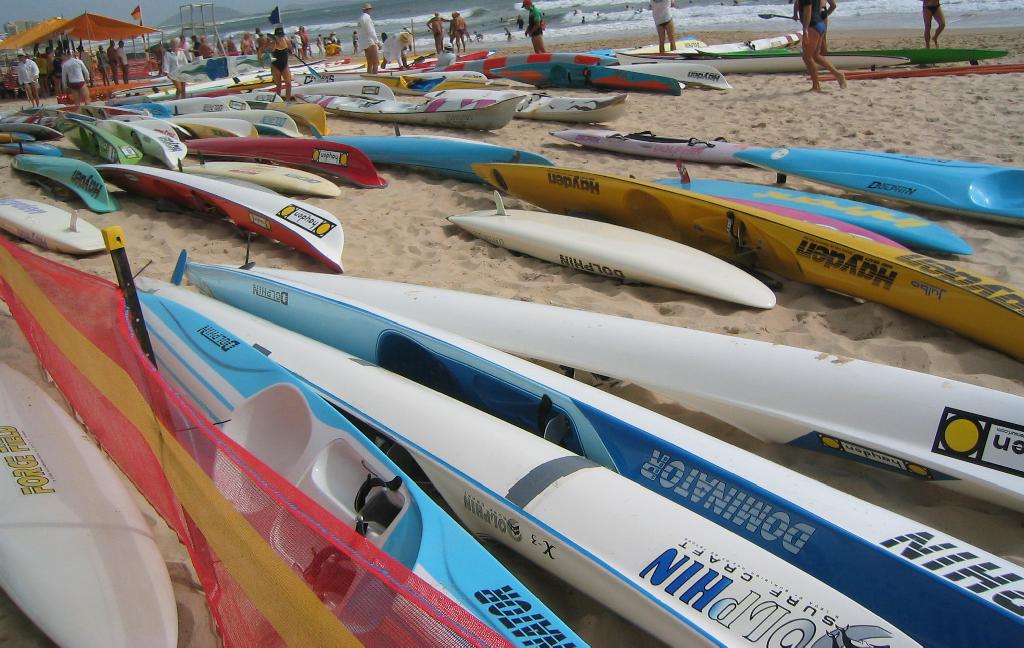 Surf lifesavingA volunteer beach rescue and ocean sports tradition originating on Australian coasts.
 Pub quizA weekly social trivia game played by teams at tables in pubs and bars
 KyūdōThe Japanese martial art of archery, practiced with an asymmetrical longbow
Good reading and sources
- World Eskimo Indian Olympics on WikipediaEncyclopedia
- More photos on Wikimedia CommonsPhotos and video
- Wikidata recordOpen data
The facts on this page come from the Wikipedia article "World Eskimo Indian Olympics", written by its contributors and used under the CC BY-SA 4.0 licence, and from its Wikidata record (CC0). EveryParampara rewrote the text in its own words, with AI assistance, and compares every page with the article to make sure no passage is copied. It may be reused under the same CC BY-SA 4.0 licence with a link back.
It may contain mistakes. Traditions differ from one family, village and community to the next, and the people who keep them know them best. If something is wrong, tell us. Last refreshed 2026-10-05.
More from the United States
All the traditions of the United States 🇮🇹 Naples, Italy and 5 moreGreasy pole
A slippery pole climbed, walked or crossed to win a prize at the top or the far endGame
🇬🇧 United Kingdom and 4 morePub quiz
A weekly social trivia game played by teams at tables in pubs and barsGame
🇮🇹 Naples, Italy and 5 moreGreasy pole
A slippery pole climbed, walked or crossed to win a prize at the top or the far endGame
🇬🇧 United Kingdom and 4 morePub quiz
A weekly social trivia game played by teams at tables in pubs and barsGame
 🇮🇱 Israel and 3 moreDreidelדרײדל (Yiddish); סביבון (Hebrew)
A four-sided top spun for small stakes, most often by Jewish families at HanukkahGame
🇲🇽 Mexico and 1 moreCharro traditionCharro
The equestrian skills, formal attire and rodeo arts of the Mexican horseman.Game
🇮🇱 Israel and 3 moreDreidelדרײדל (Yiddish); סביבון (Hebrew)
A four-sided top spun for small stakes, most often by Jewish families at HanukkahGame
🇲🇽 Mexico and 1 moreCharro traditionCharro
The equestrian skills, formal attire and rodeo arts of the Mexican horseman.Game
The same idea elsewhere
All of this kind 🇰🇬 Cholpon-Ata, Kyrgyzstan and 2 moreWorld Nomad GamesДүйнөлүк көчмөндөр оюндары
A two-yearly contest of Central Asian nomadic sports, first staged in Kyrgyzstan in 2014Game
🇰🇬 Cholpon-Ata, Kyrgyzstan and 2 moreWorld Nomad GamesДүйнөлүк көчмөндөр оюндары
A two-yearly contest of Central Asian nomadic sports, first staged in Kyrgyzstan in 2014Game
 🇨🇭 Aproz, Switzerland and 2 moreCombat de Reines
An annual Swiss pushing contest where Hérens cows compete for herd dominanceGame
🇨🇭 Aproz, Switzerland and 2 moreCombat de Reines
An annual Swiss pushing contest where Hérens cows compete for herd dominanceGame
 🇸🇪 Mora, SwedenVasaloppet
A 90 km cross-country ski race from Sälen to Mora, run every March since 1922Game
🇸🇪 Mora, SwedenVasaloppet
A 90 km cross-country ski race from Sälen to Mora, run every March since 1922Game
 🇮🇩 Bali, Indonesia and 3 morePencak silat
Indonesia's many schools of full-body fighting, with strikes, locks, throws and bladesGame
🇮🇩 Bali, Indonesia and 3 morePencak silat
Indonesia's many schools of full-body fighting, with strikes, locks, throws and bladesGame