Games, sport and playEuropeSecular and civic
Combat de Reines
An annual Swiss pushing contest where Hérens cows compete for herd dominance

Combat de Reines is an annual Swiss tradition from the canton of Valais where female Hérens cattle engage in natural pushing contests. Spectators gather across districts to watch the cows determine hierarchy, culminating in a yearly championship.
When is Combat de Reines kept?
Combat de Reines is kept on annually, with regional matches leading to a grand final at the end of the year.
Combat de Reines is a traditional Swiss cow-fighting tournament held across the Alpine canton of Valais. Rooted in the natural instinct of cows to establish herd dominance, the matches pit local Hérens cattle against each other in gentle pushing bouts. Thousands of spectators gather to watch the regional qualifying rounds and celebrate the crowning of the ultimate winner.
The nature of the bouts
The event relies on the natural instinct of female cattle to settle social rank within a herd. Handlers exclusively use the local Hérens breed, known for its temperament. Before any action begins, the animals have their horns blunted to prevent injury. The bouts are primarily tests of strength where two opponents lock heads and push against one another. Unlike traditional bullfights involving human participants, no people enter the combat. Individual pairings can continue for up to forty minutes. Occasionally, two matched animals simply decline to touch each other, choosing not to engage in any physical contest.
Tournament structure and finals
The competitive season spans several regional heats before reaching its climax. Seven local districts hold preliminary rounds to find their top qualifiers. The final gathering takes place at Aproz toward the close of the year, bringing together the six highest ranked cows from each district. Competitors are separated into six weight divisions to ensure fair match-ups. Inside the ring, any cow that retreats or turns away from an opponent is instantly knocked out. The contest continues in successive rounds until only one animal remains standing as the victor of her group.
Spectacle and regional popularity
The tournament has been held since the 1920s and has become a major regional event, attracting up to fifty thousand spectators in a single year. The ultimate champion is awarded the title of La Reine des Reines, or the queen of queens. Earning this crown causes the market value of the animal to rise sharply. While Valais is the main home of the tradition, related cattle tournaments also take place in nearby Alpine areas, including the Aosta Valley in Italy and the departments of Savoie and Haute-Savoie in France.
How Combat de Reines is kept
Handlers lead Hérens cattle with blunted horns into the arena to face one another in designated weight divisions. The cows test each other through strength and pushing to see which will yield. If a cow retreats or turns away, it is removed from the round. Some pairings decline to lock horns entirely. Matches proceed until only one unbeaten animal stands in the ring.
When and where
Qualifying rounds take place across the year in different local districts. The season concludes with a grand championship event staged near the end of the year.
The tradition takes place mainly in the Swiss canton of Valais, with the championship hosted in the village of Aproz. Similar cattle contests are also held in the Aosta Valley of Italy and the French regions of Savoie and Haute-Savoie.

Questions people ask about Combat de Reines
When is Combat de Reines kept?
Combat de Reines is kept on annually, with regional matches leading to a grand final at the end of the year.
What is Combat de Reines?
Combat de Reines is a traditional Swiss cow-fighting event held in the canton of Valais. Female cows of the Hérens breed push against one another to determine natural hierarchy without human combatants.
Do the cows get hurt during the matches?
The cows have their horns blunted prior to competing to reduce the risk of injury. The matches are pushing contests based on natural herd behaviour, and bouts end as soon as one animal backs away.
Where does the grand final take place?
The grand final is staged in Aproz, Switzerland, at the end of the year. It brings together the top six animals from seven regional districts across six separate weight classes.
What prize does the winning cow receive?
The overall winner earns the title of La Reine des Reines, meaning queen of queens. This victory causes the commercial value of the cow to rise dramatically.
See also
 Basque rural sportsStone lifting, wood chopping and oxen tests, born of Basque farm and fishing work
 SchwingenA traditional Swiss folk wrestling style fought in sawdust rings
 BullfightingA ritual contest between a bullfighter and a bull, kept in Spain and Latin America
 Calcio storico fiorentinoA fierce Renaissance ball game played on sand between four Florentine districts
Good reading and sources
- Combat de Reines on WikipediaEncyclopedia
- More photos on Wikimedia CommonsPhotos and video
- Wikidata recordOpen data
The facts on this page come from the Wikipedia article "Combat de Reines", written by its contributors and used under the CC BY-SA 4.0 licence, and from its Wikidata record (CC0). EveryParampara rewrote the text in its own words, with AI assistance, and compares every page with the article to make sure no passage is copied. It may be reused under the same CC BY-SA 4.0 licence with a link back.
It may contain mistakes. Traditions differ from one family, village and community to the next, and the people who keep them know them best. If something is wrong, tell us. Last refreshed 2026-10-05.
More from Switzerland
All the traditions of Switzerland
🇨🇭 SwitzerlandSchwingen
A traditional Swiss folk wrestling style fought in sawdust ringsGame
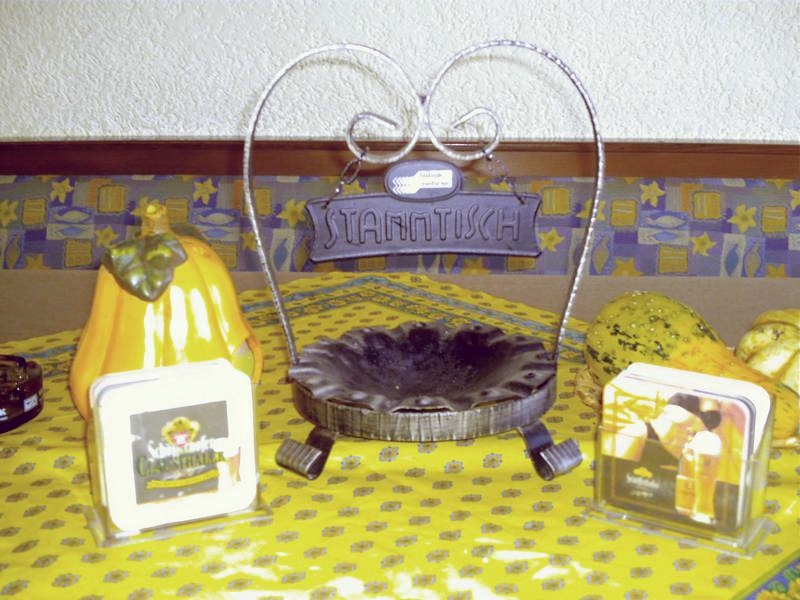 🇩🇪 Germany and 2 moreStammtisch
A weekly gathering of regulars at a reserved table in a pub or restaurant for conversation and community.Etiquette
🇩🇪 Germany and 2 moreStammtisch
A weekly gathering of regulars at a reserved table in a pub or restaurant for conversation and community.Etiquette
 🇻🇦 Vatican City and 1 morePontifical Swiss GuardPontificia Cohors Helvetica
The Swiss military corps charged with guarding the Pope and the Apostolic PalaceCeremony
🇻🇦 Vatican City and 1 morePontifical Swiss GuardPontificia Cohors Helvetica
The Swiss military corps charged with guarding the Pope and the Apostolic PalaceCeremony
 🇩🇪 Nuremberg, Germany and 5 moreChristmas marketWeihnachtsmarkt
A seasonal street market held during Advent in German-speaking regions and beyond, featuring stalls, food, and crafts.Festival · Tea, coffee and drinking ceremonies
🇩🇪 Nuremberg, Germany and 5 moreChristmas marketWeihnachtsmarkt
A seasonal street market held during Advent in German-speaking regions and beyond, featuring stalls, food, and crafts.Festival · Tea, coffee and drinking ceremonies
The same idea elsewhere
All of this kind 🇺🇸 Fairbanks, United States and 2 moreWorld Eskimo-Indian Olympics
An annual Arctic gathering of traditional survival games, athletics, and cultural artsGame
🇺🇸 Fairbanks, United States and 2 moreWorld Eskimo-Indian Olympics
An annual Arctic gathering of traditional survival games, athletics, and cultural artsGame
 🇲🇽 MexicoRarájipari
A traditional endurance running ball game of the Rarámuri people in northern MexicoGame
🇲🇽 MexicoRarájipari
A traditional endurance running ball game of the Rarámuri people in northern MexicoGame
 🇰🇬 Cholpon-Ata, Kyrgyzstan and 2 moreWorld Nomad GamesДүйнөлүк көчмөндөр оюндары
A two-yearly contest of Central Asian nomadic sports, first staged in Kyrgyzstan in 2014Game
🇰🇬 Cholpon-Ata, Kyrgyzstan and 2 moreWorld Nomad GamesДүйнөлүк көчмөндөр оюндары
A two-yearly contest of Central Asian nomadic sports, first staged in Kyrgyzstan in 2014Game
 🇲🇽 Veracruz, Mexico and 3 moreMesoamerican ballgameōllamalīztli
An ancient Mesoamerican ball game, struck with the hips on stone courtsGame
🇲🇽 Veracruz, Mexico and 3 moreMesoamerican ballgameōllamalīztli
An ancient Mesoamerican ball game, struck with the hips on stone courtsGame