Games, sport and playEast AsiaShinto, Taoist and folk ChineseBuddhist
Kyūdō
In its own language: 弓道
The Japanese martial art of archery, practiced with an asymmetrical longbow

Kyūdō is the traditional Japanese art of archery, practiced in dedicated training halls across Japan and worldwide. Rooted in samurai traditions, practitioners use an asymmetrical two-metre bow to cultivate precise technique, mental stillness, and moral character through ceremonial and sporting shooting.
When is Kyūdō marked?
Kyūdō is kept as part of Coming of Age Day, which is on Monday, 11 January 2027.
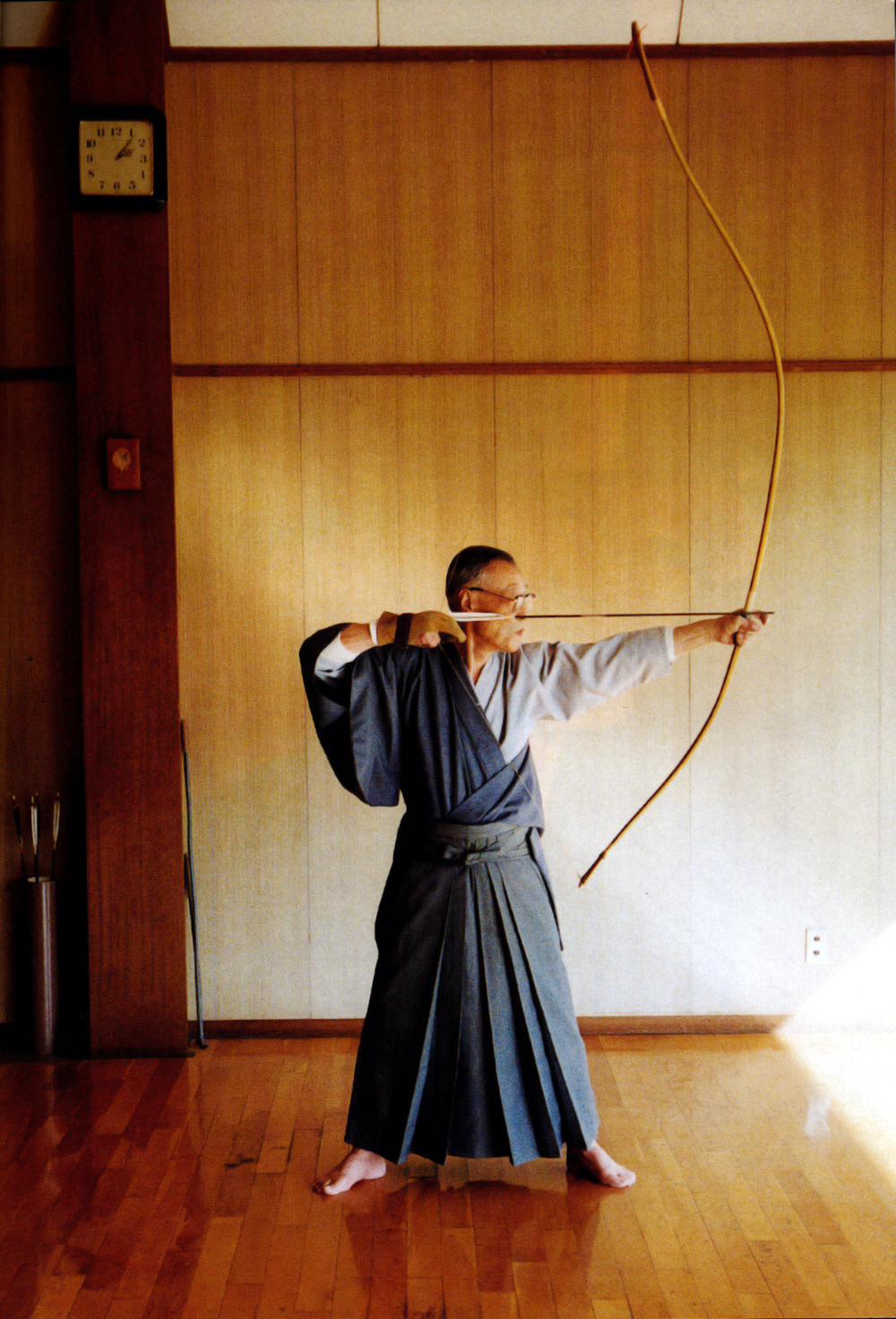
Kyūdō is the Japanese martial discipline of archery, practiced today by more than one hundred thousand archers worldwide. Descended from the military traditions of medieval samurai warriors, it centers on the use of an exceptionally long, asymmetrical bow. Archers cultivate rigorous discipline, physical posture, and mental calm, treating each shot not merely as a test of marksmanship, but as an expression of moral refinement, beauty, and truth.
Origins and evolution
Archery in Japan dates back to prehistoric times, with ancient bronze bells displaying the characteristic asymmetrical bow. Formal martial schools emerged in the twelfth century during the rise of the samurai warrior class. Although the arrival of matchlock firearms in 1543 diminished the tactical role of bows on battlefields, archery persisted as a martial and ceremonial discipline. During the peaceful Edo period, archers competed in public endurance contests at Sanjusangen-do temple. Following the Meiji Restoration, the samurai lost their traditional standing, and martial teachers opened training halls to the broader public. In 1919, the discipline adopted the name kyūdō, unifying various historical schools into standard modern practice.
The bow and the hall
The primary weapon of the archer is the yumi, a distinctive bow that exceeds two metres in length. Unlike symmetrical bows, its grip sits within the lower third of the stave. Archers practice inside a dedicated hall known as a kyūdōjō. This space features a high-ceilinged room with a wooden floor that opens along one side toward a grassy court. Shooters face an opposite pavilion called a matoba, which shelters a sand bank where targets are placed twenty-eight metres away. For short-range training, practitioners also use a tightly bound straw cylinder called a makiwara set only a bow length away.
Learning the steps
Training begins with static posture and movement drills, starting with simple rubber practice bands. Novices learn the eight fundamental shooting stages, known as hassetsu, before handling a bow without an arrow. Once instructors grant approval, students progress to wearing an archery glove and releasing arrows directly into a straw target at close range. Only after mastering these basics do archers advance to shooting at standard paper targets over full distances. Instruction balances three distinct methods: visual observation of master archers, deliberate study of technical principles, and regular physical repetition.
Philosophy and purpose
Different schools within kyūdō stress different aims, ranging from marksmanship and athletic competition to quiet meditation in motion. The national federation describes its ultimate goal as the harmony of truth, goodness, and beauty. Under this principle, when an archer shoots correctly with a virtuous attitude, elegance follows naturally. Archers seek an internal state free of distracting thoughts, where a natural release of the string results inevitably in a strike. While influenced historically by Shinto ceremonial etiquette and later connected in popular literature with Zen Buddhism, modern kyūdō remains a secular practice of self-cultivation.
How Kyūdō is kept
Archers gather in a dōjō, observing formal manners and standard ceremonial movements. A practitioner takes a stance, raises the two-metre yumi, and completes the eight sequential shooting steps. Drawing the asymmetrical bow with a specialized glove, the archer maintains bodily expansion until the string releases naturally. Shots are directed at a close straw cylinder during technical refinement, or across twenty-eight metres toward a paper target mounted in the sand bank. Practitioners participate in rank examinations, formal shooting ceremonies, and target competitions.
When and where
Kyūdō is practiced throughout the year in weekly training sessions, club practices, and grading examinations. Special events also follow the calendar, such as the annual Tōshiya archery gathering held on Coming of Age Day on January 15, where archers shoot over a sixty-metre range.
Kyūdō is centered in Japan, where it is taught in dedicated archery halls, school clubs, and university dojos. It is also practiced internationally, with organized training federations and groups active across North America and Europe, including the United States and Canada.
What Kyūdō means
In kyūdō, hitting the target is considered the natural outcome of correct inner attitude and exact posture rather than mere aim. The central concept of truth, goodness, and beauty reflects the belief that moral refinement and technical honesty create graceful form. Archers aim to reach a state of mental stillness without ego or stray thoughts, where the release of the arrow happens without deliberate force.


Days Kyūdō is marked
Questions people ask about Kyūdō
When is Kyūdō marked?
Kyūdō is kept as part of Coming of Age Day, which is on Monday, 11 January 2027.
What is kyūdō?
Kyūdō is a traditional Japanese martial art of archery derived from samurai combat systems. Over one hundred thousand practitioners shoot using an asymmetrical longbow, focusing on posture, mental stillness, and precise technique.
What equipment is used in kyūdō?
Archers use a yumi, an asymmetrical bow over two metres tall gripped in its lower third, along with arrows and an archery glove. Practice targets include a straw makiwara at close range and standard paper targets placed twenty-eight metres away.
Where is kyūdō practiced?
Archery takes place inside specialized halls called kyūdōjō, which feature an open wooden hall facing an outdoor grassy range and target shelter. While strongest in Japan, kyūdō groups also practice in countries like the United States and Canada.
Is kyūdō a religious ritual?
Kyūdō is not a religion, though it incorporates ceremonial elements from Shinto and has historical philosophical links with Zen Buddhism. In modern times, it is practiced as a martial sport and physical discipline for character development.
See also
 Traditional tattooingThe ancient custom of marking the skin for protection, healing, status and sacred rites
 Coming of Age DayA Japanese public holiday welcoming new adults with municipal rites and celebrations
 Sweet sixteenA North American coming-of-age celebration marking a sixteenth birthday
 Pub quizA weekly social trivia game played by teams at tables in pubs and bars
Good reading and sources
- Kyūdō on WikipediaEncyclopedia
- More photos on Wikimedia CommonsPhotos and video
- Wikidata recordOpen data
The facts on this page come from the Wikipedia article "Kyūdō", written by its contributors and used under the CC BY-SA 4.0 licence, and from its Wikidata record (CC0). EveryParampara rewrote the text in its own words, with AI assistance, and compares every page with the article to make sure no passage is copied. It may be reused under the same CC BY-SA 4.0 licence with a link back.
It may contain mistakes. Traditions differ from one family, village and community to the next, and the people who keep them know them best. If something is wrong, tell us. Last refreshed 2026-10-04.
More from Japan
All the traditions of Japan 🇯🇵 Ōmuta, JapanKarutaかるた
Japanese playing cards from the 16th century, still raced over poems each New YearGame
🇯🇵 Ōmuta, JapanKarutaかるた
Japanese playing cards from the 16th century, still raced over poems each New YearGame
 🇨🇳 China and 2 moreCuju蹴鞠
An ancient Chinese kicking game played without hands using a stuffed or air-filled ballGame
🇨🇳 China and 2 moreCuju蹴鞠
An ancient Chinese kicking game played without hands using a stuffed or air-filled ballGame
 🇯🇵 Kyoto, JapanKendo剣道
A Japanese martial art of swordsmanship using bamboo swords and protective armourGame
🇯🇵 Kyoto, JapanKendo剣道
A Japanese martial art of swordsmanship using bamboo swords and protective armourGame
 🇯🇵 JapanShogi将棋 (shōgi)
Japan's two-player strategy game, where captured pieces change sides and returnGame
🇯🇵 JapanShogi将棋 (shōgi)
Japan's two-player strategy game, where captured pieces change sides and returnGame
The same idea elsewhere
Coming of age compared 🇵🇬 Maprik, Papua New GuineaHaus Tambaran
A sacred house of the Sepik peoples, used for ancestor worship and male initiationSpiritual
🇪🇬 Egypt and 5 moreTraditional tattooing
The ancient custom of marking the skin for protection, healing, status and sacred ritesDress
🇵🇬 Maprik, Papua New GuineaHaus Tambaran
A sacred house of the Sepik peoples, used for ancestor worship and male initiationSpiritual
🇪🇬 Egypt and 5 moreTraditional tattooing
The ancient custom of marking the skin for protection, healing, status and sacred ritesDress
 🇼🇸 Samoa and 1 morePeʻa
The traditional Samoan rite of full-body tattooing for men, tapped by master artistsRite of passage
🇼🇸 Samoa and 1 morePeʻa
The traditional Samoan rite of full-body tattooing for men, tapped by master artistsRite of passage
 🇮🇱 IsraelTallitטלית
A four-cornered Jewish prayer shawl with ritual fringes worn during worshipSpiritual
🇮🇱 IsraelTallitטלית
A four-cornered Jewish prayer shawl with ritual fringes worn during worshipSpiritual