Anma
In its own language: 按摩
Japanese massage given through the clothes, long practised by blind therapists
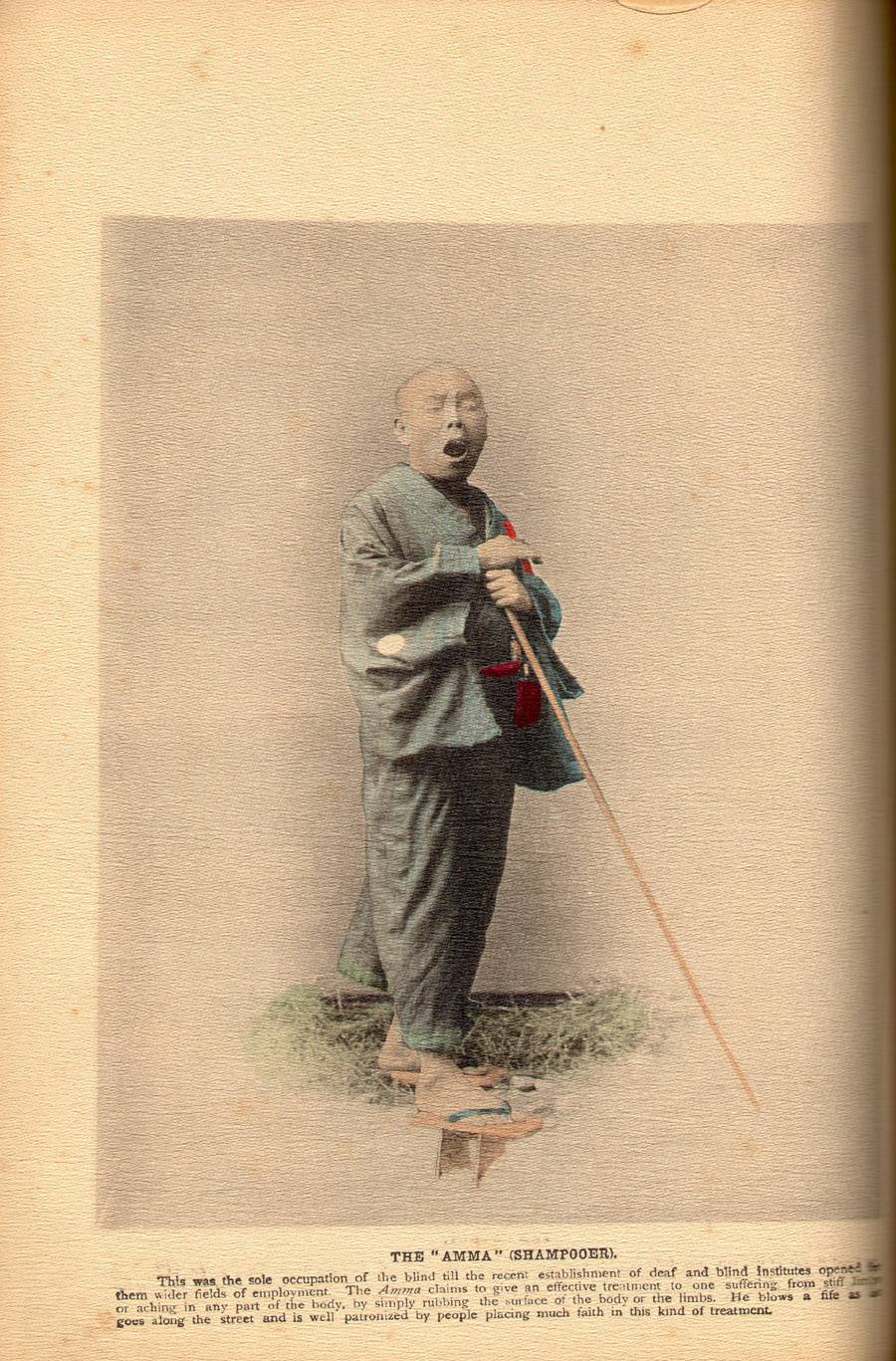
Anma is a Japanese massage tradition that traces its methods to Chinese Tui Na, which reached Japan in the Nara period. It grew into its own system in the 14th century, and for centuries it has been closely tied to blind practitioners, who still make up much of the profession today.
Anma is a form of Japanese massage whose techniques came from Chinese Tui Na and were shaped into a system of their own in Japan. Practitioners work along vital points and meridians with kneading, pressing and tapping, usually over the clothes. For hundreds of years the craft has belonged largely to blind people, and it is the ancestor of modern shiatsu.
What it is
Anma is a Japanese body therapy, and the same word can mean the person who gives it. It is not a single stroke but a set of them: the hands knead and rub, tap and shake, press and hold. Work is aimed at vital points and along the meridians of traditional East Asian medicine. Practitioners also use abdominal palpation, a method called anpuku. Anma has a reputation for vigour. Grips are meant to draw more blood into muscles and deep tissue, and knuckles are used for firm acupressure. Receivers stay dressed; the massage goes over their clothes. Modern shiatsu grew mostly out of anma, though anma is still given on its own.
Origins and history
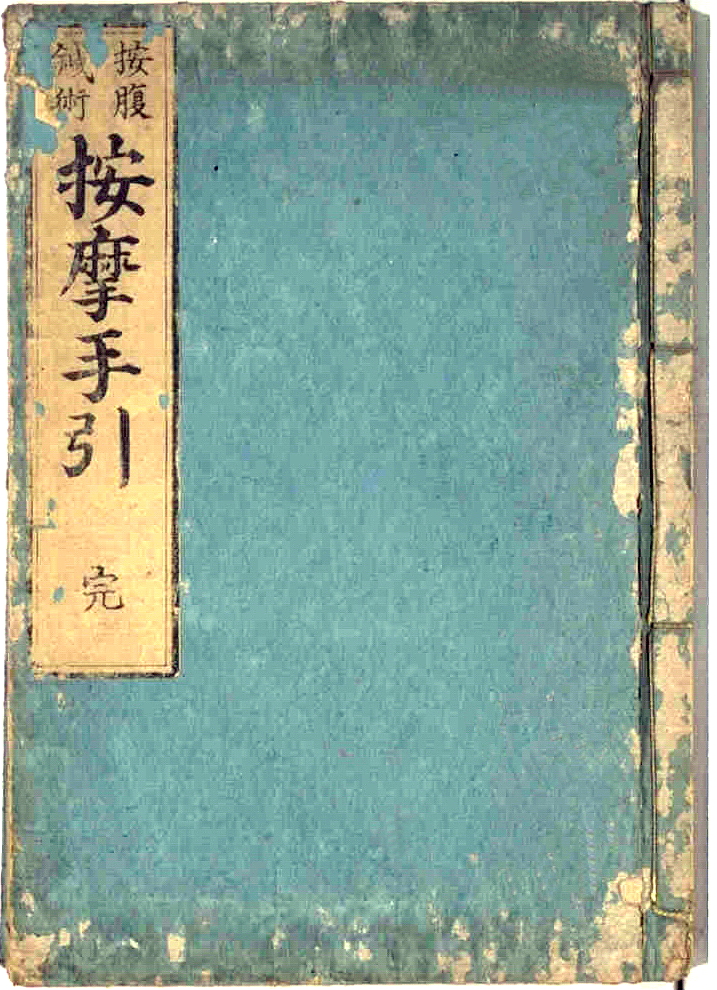
Anma is usually traced to China. Its techniques come from Tui Na, which reached Japan in the Nara period, between 710 and 793 CE, along with other strands of Chinese medicine, and were taught in hospitals run by the government. Writers give 1320 as the year anma became a system in its own right, crediting Akashi Kan Ichi. In the 1600s the acupuncturist Sugiyama Waichi helped spread it more widely, and the first manuals appeared, among them Fujibayashi Ryōhaku's Anma Tebiki, a practice manual. Fujibayashi's teaching line stands behind the anma of today. In the 1800s, linked in the public mind with city pleasure quarters, it was held in lower regard as a therapy. Western medicine, arriving in the Meiji period, weakened its place further.
Blind practitioners
Anma has long been a trade of blind people. Sugiyama Waichi was blind himself, and he set up medical schools where blind students learned the practice. Under the Tokugawa shoguns, rules reserved anma for blind practitioners and barred sighted people from it. That history gave Japanese culture its stock figure of the blind anma, a character that still turns up in films, often for comedy, and in the West most readers meet the idea through Zatoichi, the blind swordsman. Many blind Japanese still earn a living this way. After the Second World War, during the Allied occupation, General MacArthur's administration prohibited anma along with other traditional practices. The writer Helen Keller heard of the ban, appealed to the United States government, and it was lifted.
Today and change
Anma is still taught and given in Japan in its own right, separate from shiatsu, and it is widespread enough to be found in cities across the country. People who work in it are licensed, not by a national body, but through the authorities of the prefecture where they practise. Scholars at Tokyo Kyoiku University keep examining the practice to see what use it may have in medicine. Much of its method has been drawn into shiatsu and into Western styles of massage, and in the West it is far less familiar than shiatsu by name. The blind therapist, meanwhile, remains the figure most people picture when they hear the word.
How Anma is kept
A session is between one giver and one receiver. The receiver stays clothed, often in something loose. The therapist begins by reading the body: the abdomen is felt with the flat of the hand, a step called anpuku, and the shoulders and back are checked. Then comes the work itself, moving through the traditional strokes, kneading and grasping, pressing and stroking, tapping, shaking and vibrating, with knuckles used where firm acupressure is wanted. The work is aimed at vital points and along the meridians, and it is meant to move more blood into the muscles and deep tissue, and to leave the receiver looser than before.
When and where
Anma belongs to Japan, where it is still practised independently of shiatsu. Its methods first arrived in the country in the Nara period and were developed into a system here. Blind practitioners have carried it forward, from the schools Sugiyama set up to the blind men and women working in the trade today. Outside Japan it is known mainly through shiatsu and through the figure of the blind swordsman Zatoichi.
What Anma means
For those who keep it, anma is less a luxury than a way of earning a living and a form of care passed between hands. Its standing rests on touch: the therapist reads the body through the palms and fingers rather than through instruments. The long link with blind workers gives the practice a particular meaning in Japan, where it has stood for independence and skill for people shut out of other trades. In films and stories, the blind anma is a familiar figure, sometimes funny, sometimes formidable.
Questions people ask about Anma
What is anma?
Anma is a traditional Japanese form of massage, and the word is also used for the people who give it. Its techniques came from Chinese Tui Na. It works with kneading, pressing, tapping and shaking, along vital points and meridians, and it is usually given over the receiver's clothes.
Where is it practised?
In Japan, where it is still given separately from shiatsu. Its methods arrived from China in the Nara period and were shaped into a system here. Blind practitioners have been central to it for centuries, and many blind Japanese still work in the trade.
Is it the same as shiatsu?
No. Shiatsu grew largely out of anma and took over many of its techniques, but anma is still practised in its own right in Japan, with its own training and licensing. Anma is generally more vigorous, and it uses a fixed set of traditional strokes.
Do you undress for it?
No. Anma is given with the receiver dressed, so a loose shirt and trousers are enough. The therapist also feels the abdomen first with a flat hand, a traditional step called anpuku, before moving to the rest of the body.
Why is anma linked with blind people?
Sugiyama Waichi, who spread the practice in the seventeenth century, was blind and founded schools for blind students. Under the Tokugawa shoguns, anma was reserved for blind practitioners by decree. The link has lasted, and a large share of Japan's blind community has worked in the profession.
See also
 Maneki-nekoA lucky cat figurine, paw raised, kept by shop doors and in homes across Japan
 Yin and yangTwo opposite but complementary forces that Chinese thought sees in all things
 Daruma dollA round Japanese wishing doll: fill one eye to set a goal, the other to mark it done.
 Three CorpsesA Daoist belief in three inner parasites that cause illness and cut life short
Good reading and sources
The facts on this page come from the Wikipedia article "Anma", written by its contributors and used under the CC BY-SA 4.0 licence, and from its Wikidata record (CC0). EveryParampara rewrote the text in its own words, with AI assistance, and compares every page with the article to make sure no passage is copied. It may be reused under the same CC BY-SA 4.0 licence with a link back.
It may contain mistakes. Traditions differ from one family, village and community to the next, and the people who keep them know them best. If something is wrong, tell us. Last refreshed 2026-10-12.
More from Japan
All the traditions of Japan
🇯🇵 Takasaki, JapanDaruma doll達磨 (daruma)
A round Japanese wishing doll: fill one eye to set a goal, the other to mark it done.Folklore
🇯🇵 Tokyo, Japan and 2 moreManeki-neko招き猫
A lucky cat figurine, paw raised, kept by shop doors and in homes across JapanFolklore
 🇨🇳 China and 5 moreMoon rabbit月兔
A hare seen in the Moon's dark patches, pounding rice cakes or the elixir of lifeFolklore
🇨🇳 Luoyang, China and 1 moreYin and yang陰陽
Two opposite but complementary forces that Chinese thought sees in all thingsFolklore
🇨🇳 China and 5 moreMoon rabbit月兔
A hare seen in the Moon's dark patches, pounding rice cakes or the elixir of lifeFolklore
🇨🇳 Luoyang, China and 1 moreYin and yang陰陽
Two opposite but complementary forces that Chinese thought sees in all thingsFolklore
The same idea elsewhere
Healing, luck and protection compared 🇮🇹 Rome, Italy and 4 moreValentine's Day
A Christian feast day and cultural celebration of love kept on February 14 in many countries.Festival
🇮🇹 Rome, Italy and 4 moreValentine's Day
A Christian feast day and cultural celebration of love kept on February 14 in many countries.Festival
 🇩🇪 Germany and 5 moreChristmas tree
A decorated evergreen or artificial tree placed indoors to mark the Christmas season.Festival
🇩🇪 Germany and 5 moreChristmas tree
A decorated evergreen or artificial tree placed indoors to mark the Christmas season.Festival
 🇫🇷 France and 5 moreCandlemas
A Christian feast of candle blessings marking the end of the Christmas seasonSpiritual
🇫🇷 France and 5 moreCandlemas
A Christian feast of candle blessings marking the end of the Christmas seasonSpiritual
 🇺🇸 United States and 4 moreFriday the 13th
A Western folk superstition regarding the unluckiness of a Friday falling on the 13th.Folklore
🇺🇸 United States and 4 moreFriday the 13th
A Western folk superstition regarding the unluckiness of a Friday falling on the 13th.Folklore