Life-cycle ritesSouth AsiaHindu
Antyesti
In its own language: अन्त्येष्टि
The traditional Hindu funeral ceremony and final rite of passage

Antyesti is the final life-cycle rite of passage in Hinduism, typically performed within a day of death. Through cremation or burial, sacred recitations, and the immersion of ashes in holy waters, the ritual releases the soul and returns the body to the natural elements.
When is Antyesti kept?
Antyesti is kept on usually within a day of death.
Antyesti is the final rite of passage in Hindu life, marking the soul's transition after death. Derived from Sanskrit words meaning the last sacrifice, the ceremony traditionally returns the physical body to the five universal elements: air, water, fire, earth, and space. Most often conducted through cremation on a riverbank, it involves prayer, cleansing, and offerings to help the spirit journey peacefully forward.
Preparation and procession
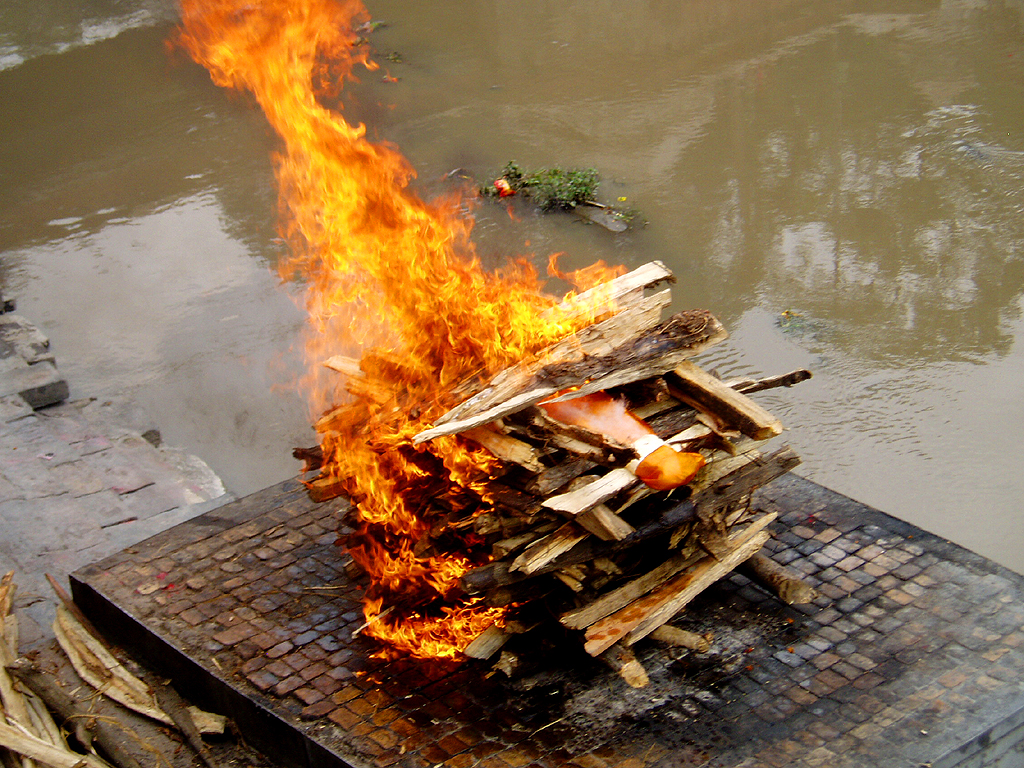
When a person dies, family members prepare the body quickly, as rituals typically conclude within twenty-four hours. Loved ones bathe the deceased and apply a forehead mark using sacred paste, ash, or coloured powder. Men and widows are traditionally wrapped in white sheets, while married women whose husbands survive are dressed in red. The big toes are tied together before bearers carry the body on a stretcher toward the cremation grounds, known as the shmashana, which are almost always situated near a river or open water.
The cremation ritual
At the pyre, the lead mourner, frequently the eldest son, cleanses himself before circling the timber. Offerings of ghee, along with rice or sesame seeds, are placed on the body. An earthen vessel of water is carried around the pyre and broken near the head. After lighting the wood, the mourners walk around the flames. The lead cremator carries out kapala kriya, using a stave to release the spirit from the skull. Following the ceremony, attendees bathe to remove ritual pollution, and the collected ashes are later consigned to holy rivers or seas.
Burial and sacred memorials
Cremation is standard, but certain Hindu groups bury their dead instead. Children, holy teachers, swamis, and sadhus are often interred rather than burned. In traditions such as Shaivite lineages or the Ayyavazhi community, deceased ascetics are placed in a seated meditative posture known as padmasana. Followers dig dedicated burial pits in the shamshana or within family fields, covering the body with earth or sacred sand. Over time, shrines known as samadhis are built over these burial places, turning them into revered pilgrimage stops.
Mourning and pilgrimage
In the days following the funeral, male relatives often shave their hair and facial beards. Families hold memorial gatherings on the tenth, eleventh, or twelfth day, sharing simple meals with neighbours and providing food to people in need. Families also journey to historic holy centres such as Haridwar, Varanasi, Gaya, or Nashik. There, priests perform post-funeral rites like shraddha, cast remaining ashes into holy waters, and update ancient genealogical records that document family lineages across many generations.
How Antyesti is kept
Following death, relatives wash the body, apply forehead markings, wrap it in white or red cloth, and carry it to riverside cremation grounds. The lead mourner bathes, offers ghee and grains, circles the pyre, and breaks a water pot. After the wood is set alight, mourners circle the fire, and the skull is ritually pierced to release the soul. Participants shower immediately afterward to cleanse themselves. In subsequent days, relatives shave their heads, share commemorative meals, feed the poor, and eventually scatter the cooled ashes in sacred waterways.
When and where
Antyesti takes place immediately after a person passes away, with initial funeral rites almost always carried out within a single day. Commemorative meals and concluding memorial rites follow on the tenth, eleventh, or twelfth day after the passing.
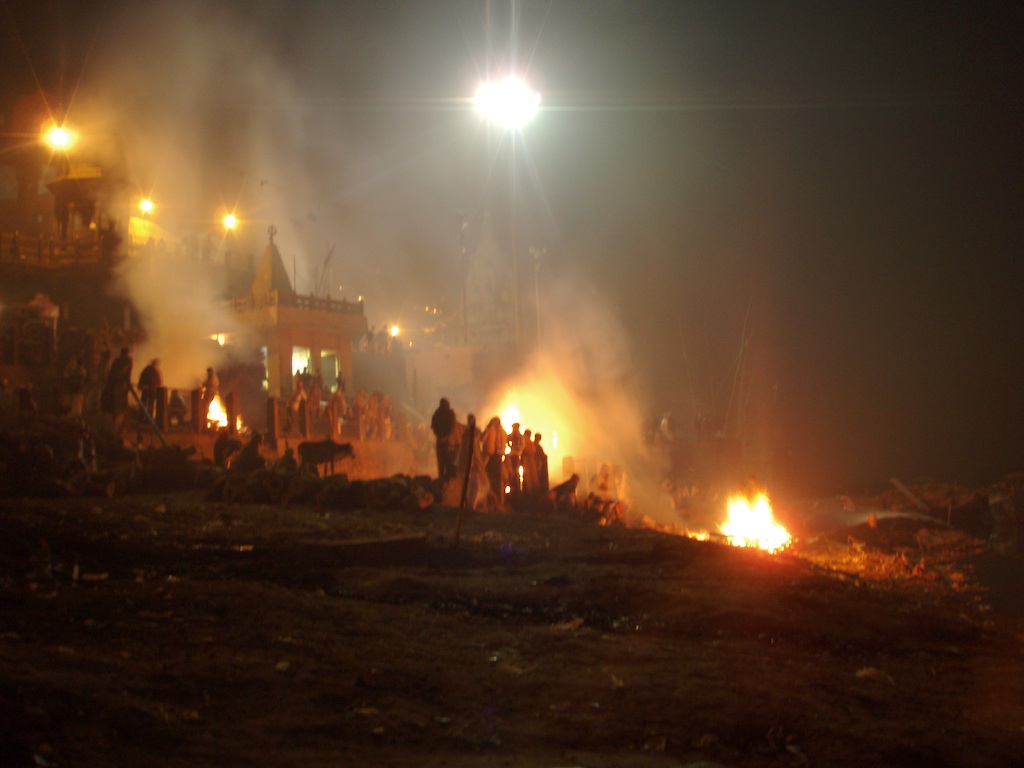
The custom is observed by Hindu communities globally, across India, Nepal, Trinidad and Tobago, and the United Kingdom. Cremations typically occur in cremation grounds beside rivers, with holy sites such as Varanasi, Haridwar, Gaya, and Puri serving as important centres for memorial rites.
What Antyesti means
Rooted in ancient Vedic texts like the Rigveda, the ceremony represents the ultimate sacrifice of the earthly self. Hindu thought views the body as a temporary vessel composed of five elements: earth, water, fire, air, and space. The funeral rites return these physical components to nature while freeing the immortal soul, or Atman, allowing it to depart peacefully on its spiritual journey.


Questions people ask about Antyesti
When is Antyesti kept?
Antyesti is kept on usually within a day of death.
What is Antyesti?
It is the traditional funeral rite in Hinduism, serving as the final life-cycle rite of passage that releases the immortal soul and returns the body to the five elements.
Are all Hindus cremated?
No. While cremation is the most common practice, small children, ascetic teachers, gurus, and sadhus are traditionally buried, often in a seated cross-legged posture.
What happens with the ashes after cremation?
Once the funeral pyre cools, family members collect the ashes and immerse them in a sacred river, sea, or designated holy pilgrimage sites like Haridwar and Varanasi.
See also
 Mother's DayA worldwide annual celebration dedicated to mothers, maternal bonds and family care
 DiwaliA five-day festival of lights celebrated across India and its diaspora to mark the victory of light over darkness.
 MawlidAn annual festival marking the birth of the Prophet Muhammad, marked by poetry, processions and feasts.
 HoliA spring festival of colours and bonfires that marks the end of winter and the triumph of good over evil.
Good reading and sources
- Antyesti on WikipediaEncyclopedia
- More photos on Wikimedia CommonsPhotos and video
- Wikidata recordOpen data
The facts on this page come from the Wikipedia article "Antyesti", written by its contributors and used under the CC BY-SA 4.0 licence, and from its Wikidata record (CC0). EveryParampara rewrote the text in its own words, with AI assistance, and compares every page with the article to make sure no passage is copied. It may be reused under the same CC BY-SA 4.0 licence with a link back.
It may contain mistakes. Traditions differ from one family, village and community to the next, and the people who keep them know them best. If something is wrong, tell us. Last refreshed 2026-10-04.
More from India
All the traditions of India 🇨🇳 China and 4 moreSky burialབྱ་གཏོར་ (bya gtor)
A Tibetan funeral in which the dead are laid out on a rock for vulturesRite of passage
🇨🇳 China and 4 moreSky burialབྱ་གཏོར་ (bya gtor)
A Tibetan funeral in which the dead are laid out on a rock for vulturesRite of passage
 🇮🇳 India and 2 moreFuneral
The ceremony a community holds when someone dies, from burial to cremationRite of passage
🇮🇳 India and 2 moreFuneral
The ceremony a community holds when someone dies, from burial to cremationRite of passage
 🇮🇳 India and 5 moreFirst haircut
A rite of passage marking a child's first shave or trim across many cultures and faiths.Rite of passage
🇮🇳 India and 5 moreFirst haircut
A rite of passage marking a child's first shave or trim across many cultures and faiths.Rite of passage
 🇮🇳 Haridwar, IndiaAntam Sanskarਅੰਤਮ ਸੰਸਕਾਰ (Antam Sanskar)
The final rites of passage in Sikhism, involving prayer, cremation, and the dispersal of ashes.Rite of passage
🇮🇳 Haridwar, IndiaAntam Sanskarਅੰਤਮ ਸੰਸਕਾਰ (Antam Sanskar)
The final rites of passage in Sikhism, involving prayer, cremation, and the dispersal of ashes.Rite of passage
The same idea elsewhere
Death and mourning compared 🇨🇳 ChinaKowtow叩頭
A traditional Chinese prostration of deep respect by kneeling and bowing to the groundEtiquette
🇨🇳 ChinaKowtow叩頭
A traditional Chinese prostration of deep respect by kneeling and bowing to the groundEtiquette
 🇮🇹 Italy and 5 moreTranslation of relicsTranslatio
The ceremonial transfer of holy remains or relics to a new church or shrineSpiritual
🇮🇹 Italy and 5 moreTranslation of relicsTranslatio
The ceremonial transfer of holy remains or relics to a new church or shrineSpiritual
 🇮🇱 Jerusalem, IsraelSukkotסוכות
A seven-day autumn Jewish festival of temporary booths, harvest prayers and hospitalitySpiritual
🇮🇱 Jerusalem, IsraelSukkotסוכות
A seven-day autumn Jewish festival of temporary booths, harvest prayers and hospitalitySpiritual
 🇲🇽 Mexico City, Mexico and 1 moreDay of the DeadDía de Muertos
A Mexican remembrance of deceased family and friends with altars, marigolds and feastsFestival · Sweets given and shared
🇲🇽 Mexico City, Mexico and 1 moreDay of the DeadDía de Muertos
A Mexican remembrance of deceased family and friends with altars, marigolds and feastsFestival · Sweets given and shared