🇹🇹 Traditions of Trinidad and Tobago
12 traditions from Trinidad and Tobago, best known first, across 4 cities and towns.
The traditions of Trinidad and Tobago are shaped by African, South Asian, and European influences across twin islands. Celebrations range from the street masquerades of Carnival and steelband music to sacred observances like Divali and Hosay. Shared tables feature dishes such as doubles, pelau, and callaloo.
The living culture of Trinidad and Tobago brings together African, Indian, European, Indigenous, and Chinese heritages across two distinct islands. Everyday life is marked by street festivals, brassy and acoustic musical inventions, and a cuisine built around root vegetables, flatbreads, and aromatic spices. Communities gather around street food carts at dawn, join together in massive masquerade bands, and observe sacred Hindu, Muslim, and Christian calendar rites with music and dedicated feasts throughout the year.
Carnival and masquerade
Carnival dominates the early months of the year, starting informally around Boxing Day with soca parties. The main event unfolds on Carnival Monday and Tuesday. It began in the eighteenth century among French colonists, but formerly enslaved Africans transformed it into a broad public expression. Before dawn on Monday, J'ouvert opens the celebration in darkness with mud and paint. By day, enormous costumed masquerade bands fill the streets, carrying on traditions once led by characters like the Midnight Robber and Jab Molassi.
Faith and holy days
Communities celebrate multiple religious observances across the calendar. The Hindu festival of Divali marks the victory of light over dark, accompanied by the national Divali Nagar fair. In spring, Hindus play Phagwah by throwing colours and staging musical pichakaree contests, while during Maha Shivratri, thousands spend the night in temples making liquid offerings called jhal to Lord Shiva. Shia Muslims commemorate Muharram through the Hosay festival, named for Husayn. At Christmas, Christian families gather for festive meals, sharing spiced sorrel drinks, rich black cakes, and cornmeal pastelles.
Rhythms and steel drums
Musical traditions on the islands blend African, South Asian, and European currents. Calypso grew alongside Carnival, serving as a witty tool of political commentary and social history. In the mid-twentieth century, musicians developed the steelband from earlier bamboo percussion groups, naming their drum ensembles after wartime films. Soca later combined calypso melodies with Indian instruments like the dholak and dhantal. Other homegrown styles include chutney soca, spoken-word rapso born during 1970s unrest, and parang, an acoustic folk music with Venezuelan and Spanish roots performed during the Christmas season.
The morning table
Mornings often begin with street food or fresh breads. Doubles are a beloved staple, consisting of two fried flatbreads filled with curried chickpeas and dressed with pepper sauces, kuchela pickle, or green seasonings. Families also prepare sada roti, an unleavened flour dough baked on a flat cast-iron skillet called a tawa. It is served with chokhas, which are roasted and mashed vegetables like eggplant, tomato, or potato. On coastlines, vendors sell fried bake stuffed with shark, while home cooks pair coconut bake with saltfish buljol or sip cups of homemade cocoa tea.
Pots and shared meals
Main meals draw from a diverse pantry of root vegetables, seafood, and slow-cooked meats. Pelau is a classic one-pot dish prepared by searing meat in caramelised sugar, then stewing it in coconut milk with rice and pigeon peas. Callaloo, a thick soup-like side of dasheen leaves, okra, coconut milk, and crab, commonly accompanies cornmeal coo coo. In Tobago, meals feature crab with dumplings alongside starchy root crops like cassava, eddoe, and dasheen, known locally as blue food. Local legend holds that anyone who eats the curried cascadura fish will always return to the island.
The facts in this overview come from the Wikipedia article "Culture of Trinidad and Tobago", written by its contributors and used under the CC BY-SA 4.0 licence. EveryParampara rewrote the text in its own words, with AI assistance, and compares every page with the article to make sure no passage is copied. It may be reused under the same CC BY-SA 4.0 licence with a link back.
The table in Trinidad and Tobago
Foods and drinks by the moment they belong to.
| Lunch | Sango Festival |
|---|---|
| Feasts and festival meals | Sango Festival |
| Fasting and breaking the fast | Hosay |
Cities, towns and villages of Trinidad and Tobago
 🇮🇳 Mathura, India and 5 moreHoliहोली (Hindi)
A spring festival of colours and bonfires that marks the end of winter and the triumph of good over evil.Festival
🇮🇳 Mathura, India and 5 moreHoliहोली (Hindi)
A spring festival of colours and bonfires that marks the end of winter and the triumph of good over evil.Festival
 🇹🇹 Trinidad and Tobago and 5 moreMoko Jumbie
A stilt-walking tradition from the Caribbean that blends African heritage with local carnival celebrations.Performance
🇹🇹 Trinidad and Tobago and 5 moreMoko Jumbie
A stilt-walking tradition from the Caribbean that blends African heritage with local carnival celebrations.Performance
 🇹🇹 Trinidad and Tobago and 3 moreSteelpan
A tuned percussion tradition forged from industrial steel containers in TrinidadPerformance
🇩🇲 Dominica and 4 moreBéléBèlè
A Caribbean drum, call-and-response song, and courtship dance traditionPerformance
🇹🇹 Chaguanas, Trinidad and Tobago and 1 moreDivali Nagar
An annual cultural exposition in Trinidad and Tobago celebrating Hindu traditions during the Diwali season.Festival
🇹🇹 Trinidad and Tobago and 3 moreSteelpan
A tuned percussion tradition forged from industrial steel containers in TrinidadPerformance
🇩🇲 Dominica and 4 moreBéléBèlè
A Caribbean drum, call-and-response song, and courtship dance traditionPerformance
🇹🇹 Chaguanas, Trinidad and Tobago and 1 moreDivali Nagar
An annual cultural exposition in Trinidad and Tobago celebrating Hindu traditions during the Diwali season.Festival
 🇮🇳 Ayodhya, India and 5 moreRama Navamiराम नवमी
A Hindu spring festival marking the birth of Rama with prayer, fasting and processionsFestival
🇮🇳 Ayodhya, India and 5 moreRama Navamiराम नवमी
A Hindu spring festival marking the birth of Rama with prayer, fasting and processionsFestival
 🇮🇳 Haridwar, India and 3 moreAntyestiअन्त्येष्टि
The traditional Hindu funeral ceremony and final rite of passageRite of passage
🇮🇳 Haridwar, India and 3 moreAntyestiअन्त्येष्टि
The traditional Hindu funeral ceremony and final rite of passageRite of passage
 🇳🇬 Oyo, Nigeria and 3 moreSango Festival
An annual Yoruba gathering in Nigeria honoring the deity of thunder and lightningFestival · Feasts and festival meals
🇳🇬 Oyo, Nigeria and 3 moreSango Festival
An annual Yoruba gathering in Nigeria honoring the deity of thunder and lightningFestival · Feasts and festival meals
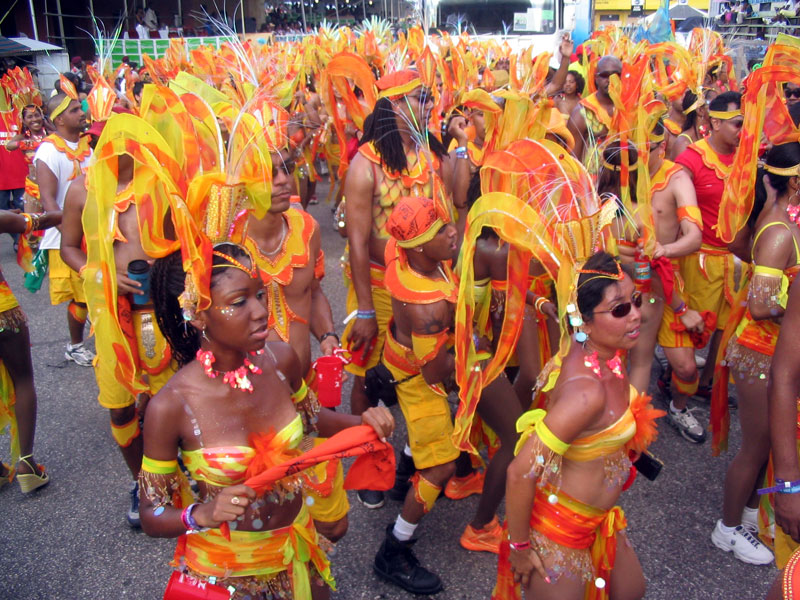 🇹🇹 Trinidad and TobagoTrinidad and Tobago Carnival
An annual festival of street parades, masquerade bands, steelpan music and danceFestival
🇹🇹 Trinidad and TobagoTrinidad and Tobago Carnival
An annual festival of street parades, masquerade bands, steelpan music and danceFestival
 🇮🇳 Varanasi, India and 5 moreRamlilaरामलीला
Open-air community plays staged across autumn nights, recounting the journey of Rama.Performance
🇹🇹 Port of Spain, Trinidad and TobagoCanboulay
An early Trinidadian celebration that shaped modern Carnival and calypso musicFestival
🇮🇳 Varanasi, India and 5 moreRamlilaरामलीला
Open-air community plays staged across autumn nights, recounting the journey of Rama.Performance
🇹🇹 Port of Spain, Trinidad and TobagoCanboulay
An early Trinidadian celebration that shaped modern Carnival and calypso musicFestival
 🇹🇹 Trinidad and Tobago and 3 moreHosay
An Indo-Caribbean Muharram commemoration with ornate floats, drumming and processionsSpiritual · Fasting and breaking the fast
🇹🇹 Trinidad and Tobago and 3 moreHosay
An Indo-Caribbean Muharram commemoration with ornate floats, drumming and processionsSpiritual · Fasting and breaking the fast
Photo credits on this page
The small pictures above come from Wikimedia Commons under free licences. Some are cropped to fit.
- Holi: Jitenderasingh, CC BY-SA 4.0, source
- Rama Navami: Adityamadhav83, CC BY-SA 3.0, source
- Antyesti: Unknown author, Public domain, source
- Sango Festival: Demola Ajayi, CC BY-SA 4.0, source
- Hosay: Julius Eduard Muller, CC BY-SA 3.0, source
- Trinidad and Tobago Carnival: Jean-Marc /Jo BeLo/Jhon-John, CC BY 2.0, source
- Ramlila: Ankit Gupta, CC BY-SA 3.0, source
- Steelpan: Shanel, CC BY-SA 3.0, source
- Moko Jumbie: COD Newsroom, CC BY 2.0, source