Festivals and celebrationsNorth AmericaChristianIndigenous and traditional
Day of the Dead
In its own language: Día de Muertos
A Mexican remembrance of deceased family and friends with altars, marigolds and feasts

The Day of the Dead is an annual Mexican tradition where families remember and welcome back departed loved ones. Marked on the first two days of November, people build home altars with favourite foods, decorate graves with marigolds, and share sweets and humorous verses.
When is Day of the Dead in 2026?
Day of the Dead 2026 runs from 1 to 2 November 2026. Other years: 2027, 1 to 2 November 2027; 2028, 1 to 2 November 2028.
The Day of the Dead is an annual custom observed across Mexico and by Mexican communities worldwide to honour deceased relatives and friends. Falling at the start of November during the Christian period of Allhallowtide, it brings households together to welcome the memory of departed souls. Rather than a sombre occasion, it is a warm gathering marked by storytelling, colourful altars, shared festival foods, and playful skeleton figures.
Home altars and offerings
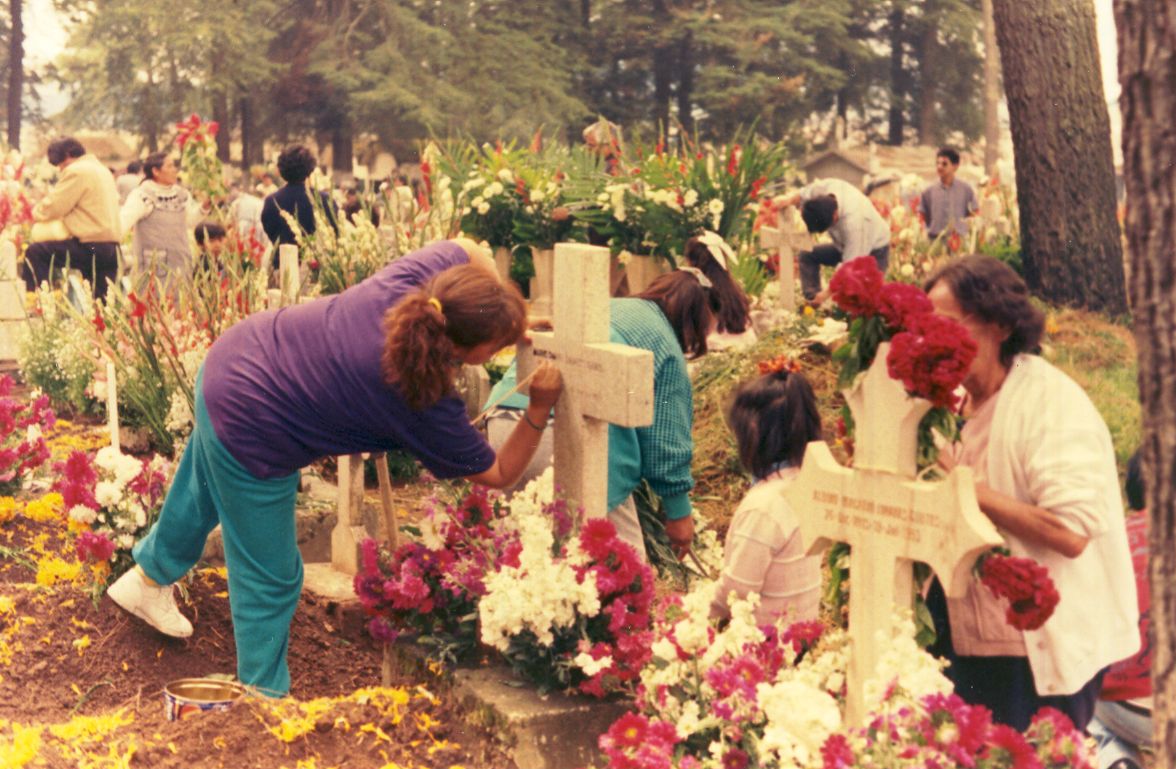
Families prepare for the occasion by constructing multi-tiered altars called ofrendas inside their homes. These displays are decorated with bright yellow marigold flowers, known as cempazúchitl, alongside sheets of cut paper and decorative sweets. Relatives place photographs of deceased loved ones upon the altar, surrounding them with gifts of their favourite dishes and beverages to refresh them after their journey. In addition to home displays, families visit burial sites to clean graves and lay out floral arrangements and offerings, creating spaces where the living can feel connected to those who came before.
Skulls and humorous verse
A distinctive element of the observance is the use of human skulls and skeletons, presented with humour rather than fear. People exchange sugar skulls inscribed with names as affectionate gifts between friends. Writers compose lighthearted, satirical poems known as calaveras literarias, which playfully imagine living acquaintances, politicians, or public figures meeting their end. The elegantly dressed skeleton figure, La Calavera Catrina, created by printmaker José Guadalupe Posada, has become a central visual emblem, reinforcing the notion that death treats everyone equally.
Debates over its roots
Scholars continue to debate the historical foundations of the holiday. Some point to Mesoamerican antiquity, noting that the Aztecs held dedicated ceremonies for the dead, such as Quecholli with food offerings, and reserved calendar months for departed children and adults. Others, including historians at Mexico's National Institute of Anthropology and History, argue the custom developed primarily from medieval European Catholic practices of Allhallowtide and Danse macabre allegories. During the twentieth century, the Mexican state actively promoted the holiday's indigenous identity to foster national unity, establishing it as a celebrated cultural symbol.
Cemetery vigils and modern events
In many communities, families hold overnight vigils at civil cemeteries, a practice that gained traction after nineteenth-century legal reforms moved burial plots outside church grounds. In recent years, public expressions have grown alongside domestic rites. Major cities stage elaborate public displays in museums, squares, and streets. Following the international interest sparked by modern cinema, Mexico City introduced an official street parade featuring elaborate costumes and floats, drawing hundreds of thousands of spectators and extending family rituals into large civic spectacles.
How Day of the Dead is kept
Leading up to the first days of November, families build decorative altars in their houses and assemble ofrendas containing food, drinks, and yellow marigolds. Relatives exchange decorated sugar skulls and write playful verses for living friends. Over the two days, households gather to share traditional sweet breads, recount amusing memories of the departed, and visit cemeteries to tend gravesites and hold night vigils. Public squares and cultural institutions host exhibitions, while large street parades take place in major urban centres.
When and where
The celebration takes place annually on November 1 and November 2, coinciding with All Saints' Day and All Souls' Day in the Catholic calendar. In some regions, local festivities may begin as early as October 31 or extend until November 6.
The holiday is observed throughout Mexico, where it is a national school holiday, as well as among people of Mexican descent globally. It has particularly visible public celebrations in Mexico City and strong community roots across rural and indigenous localities.
What Day of the Dead means
The holiday views death not as an end to be feared, but as a natural part of human existence. Skulls and skeletal figures serve as reminders of the temporary nature of life, while also mocking earthly pretension. Building altars and sharing stories keeps the memory of departed ancestors alive, renewing the spiritual bond between past and present generations within families and communities.



Days Day of the Dead is marked
Day of the Dead dates: 2026, 2027, 2028
| Year | Day of the Dead date |
|---|---|
| 2026 | 1 to 2 November 2026 |
| 2027 | 1 to 2 November 2027 |
| 2028 | 1 to 2 November 2028 |
Questions people ask about Day of the Dead
When is Day of the Dead in 2026?
Day of the Dead 2026 runs from 1 to 2 November 2026. Other years: 2027, 1 to 2 November 2027; 2028, 1 to 2 November 2028.
What is the Day of the Dead?
It is a Mexican holiday where family and friends gather to remember deceased loved ones. Celebrants build decorative home altars, share traditional foods, visit cemeteries, and exchange sugar skulls and humorous poems.
Where is the tradition kept?
It is observed throughout Mexico, where it is an official school holiday and inscribed on the UNESCO Intangible Cultural Heritage list, as well as by Mexican communities living in other countries.
What is an ofrenda?
An ofrenda is a home altar dedicated to departed relatives. It is decorated with bright marigolds, cut paper, photographs, and the deceased person's favourite foods and drinks.
See also
 HalloweenAn annual observance on 31 October marking the eve of All Saints' Day, rooted in Christian tradition and Celtic heritage
 Father's DayA day to honour fathers and fatherhood, kept on many different dates worldwide
 HanukkahAn eight-day Jewish festival marking the rededication of the Second Temple in Jerusalem and the miracle of a single day'
 Second lineA New Orleans parade where clubs march and a crowd dances along behind the band
Good reading and sources
- Day of the Dead on WikipediaEncyclopedia
- More photos on Wikimedia CommonsPhotos and video
- Wikidata recordOpen data
The facts on this page come from the Wikipedia article "Day of the Dead", written by its contributors and used under the CC BY-SA 4.0 licence, and from its Wikidata record (CC0). EveryParampara rewrote the text in its own words, with AI assistance, and compares every page with the article to make sure no passage is copied. It may be reused under the same CC BY-SA 4.0 licence with a link back.
It may contain mistakes. Traditions differ from one family, village and community to the next, and the people who keep them know them best. If something is wrong, tell us. Last refreshed 2026-10-06.
More from Mexico
All the traditions of Mexico
🇮🇪 Ireland and 5 moreHalloween
An annual observance on 31 October marking the eve of All Saints' Day, rooted in Christian tradition and Celtic heritageFestival · Sweets given and shared
 🇲🇽 Huamantla, Mexico and 4 moreSawdust carpettapete de aserrín
Colored sawdust designs laid on streets to greet religious processions in Latin America and beyond.Festival
🇲🇽 Huamantla, Mexico and 4 moreSawdust carpettapete de aserrín
Colored sawdust designs laid on streets to greet religious processions in Latin America and beyond.Festival
 🇲🇽 San Salvador Huixcolotla, Mexico and 1 morePapel picado
A Mexican folk art of cutting intricate designs into tissue paper for festive and spiritual displays.Festival
🇲🇽 San Salvador Huixcolotla, Mexico and 1 morePapel picado
A Mexican folk art of cutting intricate designs into tissue paper for festive and spiritual displays.Festival
 🇪🇸 Córdoba, Spain and 5 moreFiesta de las Cruces
A May festival where communities decorate crosses with flowers and crafts to celebrate faith and local heritage.Festival
🇪🇸 Córdoba, Spain and 5 moreFiesta de las Cruces
A May festival where communities decorate crosses with flowers and crafts to celebrate faith and local heritage.Festival
The same idea elsewhere
Remembering the ancestors compared 🇹🇱 Timor-LesteUma Lulik
Sacred ancestral clan houses and ritual shrines in East TimorSpiritual
🇹🇱 Timor-LesteUma Lulik
Sacred ancestral clan houses and ritual shrines in East TimorSpiritual
 🇳🇿 New Zealand and 2 moreMarae
A cleared, sacred gathering place at the heart of Māori and Polynesian community lifeSpiritual
🇳🇿 New Zealand and 2 moreMarae
A cleared, sacred gathering place at the heart of Māori and Polynesian community lifeSpiritual
 🇼🇸 Samoa and 1 moreʻIe tōga
Precious woven mats exchanged in Samoan ceremonies to honor family ties and chiefly status.Dress
🇼🇸 Samoa and 1 moreʻIe tōga
Precious woven mats exchanged in Samoan ceremonies to honor family ties and chiefly status.Dress
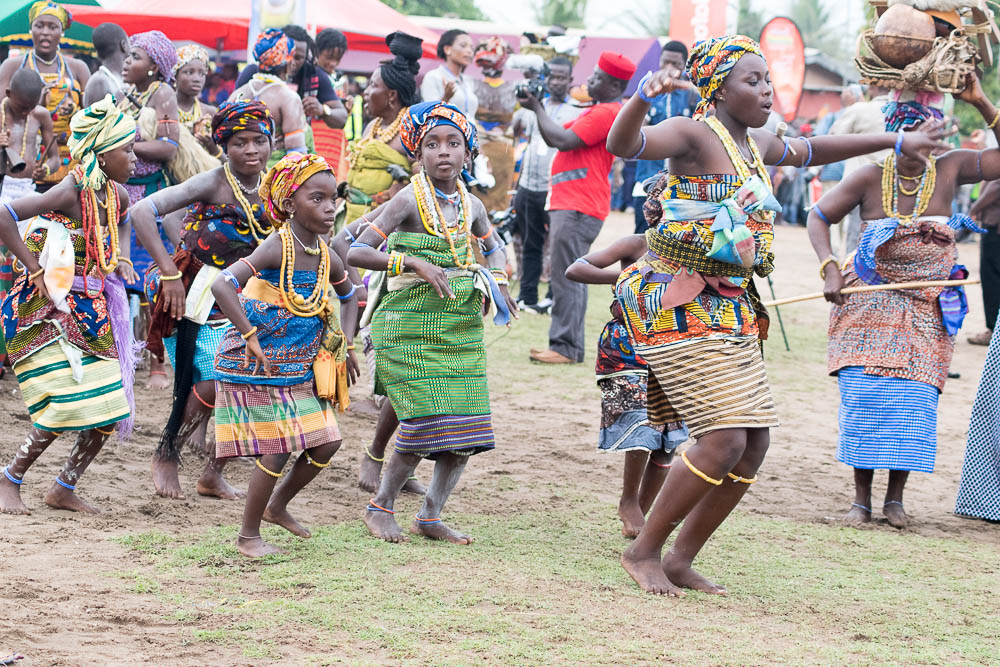 🇬🇭 Ghana and 2 moreAgbadza
An Ewe music and dance, born of war songs and kept for funerals, weddings and festivalsPerformance
🇬🇭 Ghana and 2 moreAgbadza
An Ewe music and dance, born of war songs and kept for funerals, weddings and festivalsPerformance