Music, dance and storytellingSub-Saharan Africa
Beni
A competitive dance with brass horns and drums, from the Swahili coast

A competitive dance and music style of East Africa, beni grew from Swahili towns along the Kenyan coast in the 1890s, when local cultural clubs vied with each other. Bands use horns, drums and percussion while dancers follow drill-like steps. It is played mainly for weddings and public celebrations, above all in Tanzania.
When is Beni kept?
Beni is kept at weddings and other joyful occasions, and as a street parade; there is no set date.
Beni is a dance and a band, kept in the towns of East Africa's coast. Its name comes from the English word band, and Mbeni is another spelling. Dancers borrow the ranks and steps of military drill and set them to horns and drums, and neighbourhood groups once competed at it. People hire beni groups for weddings and street parades, and the crowd is part of the performance.
What beni is
Beni is a dance and a band that play as one. Its name comes from the English word band, and Mbeni is a second spelling. The steps come out of military drill: dancers move in ranks and follow set patterns, while horns and drums carry the music. Writers on the subject call the dance beni ngoma. Neighbourhood groups used to compete, and the beat followed local ngoma rhythms rather than a European march. The crowd joins in, and rhythm and movement matter more than anything else.
Where it began
Brass bands were already part of colonial life in East Africa, played for German and British audiences and used by missionaries to teach European ways to young people, in Zanzibar among other places. Beni started in the 1890s, in Swahili towns along Kenya's coast, as part of the rivalry between neighbourhood cultural clubs. By about 1914 it had travelled to Tanga and Dar es Salaam. Accounts from Nyasaland, later Malawi, start around 1918.
Soldiers and strikes
During the First World War, askari soldiers danced beni. Prisoners of war danced it at the camp in Zomba, in Malawi, and detachments of the 2nd KAR brought it back to Nairobi. In 1935, dancers took part in passing messages during the Copperbelt strike in Northern Rhodesia. As the style passed from one community to another, foreign instruments were sometimes set aside for local ones: in Kenya, wooden wind instruments replaced western trumpets, and cross beats and polyrhythm took the place of march time.
Weddings and parades
In Zanzibar in the twentieth century, a beni band could march through the streets as a parade or stand in one place and play for a wedding. The style was never as popular there as it was along the Swahili coast. Weddings are still where beni is most often heard, and the dancing is the point: rhythm leads, and the guests take part rather than watch. Groups that play for a living keep a repertoire for joyful occasions, and the same band may be asked to play a street procession and a marriage.
Beni today
Today in Dar es Salaam, groups called Matarumbeta, meaning trumpets, take brass horns, percussion and big drums to weddings and other happy occasions. The old rivalry between neighbourhood clubs belongs to an earlier time, and the borrowing has not stopped: musicians still take up whatever popular music is around and play it through the ngoma rhythms of the coast. When a beni band appeared at the Sauti za Busara Festival in Zanzibar in 2009, it was described as an invented tradition put on for a tourist audience.
How Beni is kept
A beni group is made of players and dancers who work together. The band carries horns, drums and percussion; the dancers move in formed ranks, following steps drawn from military drill. A performance can be a procession through the streets or a set piece in one place. Bands competed in the past, each neighbourhood club against another, and the crowd took part. At a wedding, the group plays while guests dance, and rhythm sets the pace. In the East African towns of the twenty-first century, the same shape holds: hired players, drilled dancers, an audience on its feet.
When and where
Beni has no date of its own. It belongs to weddings and to public occasions, and in Zanzibar it has been danced both in the street and indoors at a wedding. In the 1890s it grew in coastal towns, and by about 1914 it had reached Tanga and Dar es Salaam.
It comes from the Kenyan coast and is strongest in Tanzania, at Dar es Salaam and Zanzibar, with Tanga also named in its early spread. Accounts of it reach Nyasaland, now Malawi, by about 1918, and Nairobi, where detachments of the 2nd KAR danced it after the First World War.
What Beni means
Beni took over the signs of colonial power, the drill, the uniforms and the ranks, and turned them into something its own dancers controlled. Two writers on music, Vander Biesen and De Beukelaer, read this borrowing as upinzani, a word they gloss as the habit of opposition. In the last years of colonial rule the dance gave young people a way to show their independence.

Questions people ask about Beni
When is Beni kept?
Beni is kept at weddings and other joyful occasions, and as a street parade; there is no set date.
What is beni?
Beni is a dance and a band style from East Africa. Its name comes from the English word band, and it is also written Mbeni. Dancers use steps taken from military drill, while the musicians play horns, drums and percussion. Groups have long been hired for weddings, where guests dance along.
Where did it start?
It started in the 1890s among Swahili townspeople on the coast of Kenya, where neighbourhood cultural clubs competed with one another. It reached Tanga and Dar es Salaam by about 1914, and there are accounts of it in Nyasaland, now Malawi, from around 1918.
How is it different from a European marching band?
The instruments were borrowed, the sound was not. Musicians took up western horns and then sometimes replaced them with local ones, such as wooden wind instruments in Kenya. March time gave way to African cross beats and polyrhythm, and the movements were changed to fit local dance.
What does upinzani mean here?
The writers Vander Biesen and De Beukelaer describe the way beni took over European marching band ways as an expression of upinzani, which they translate as the habit of opposition. The drill, uniforms and ranks of colonial power were copied and turned to the dancers' own use.
See also
 Tooth ablationA global custom of deliberately removing healthy teeth for social, ritual, or aesthetic reasons.
 KangaA colourful printed cotton wrap bearing proverbs, worn across East Africa
 HoronLine dances of Turkey's eastern Black Sea coast, danced with shaking shoulders
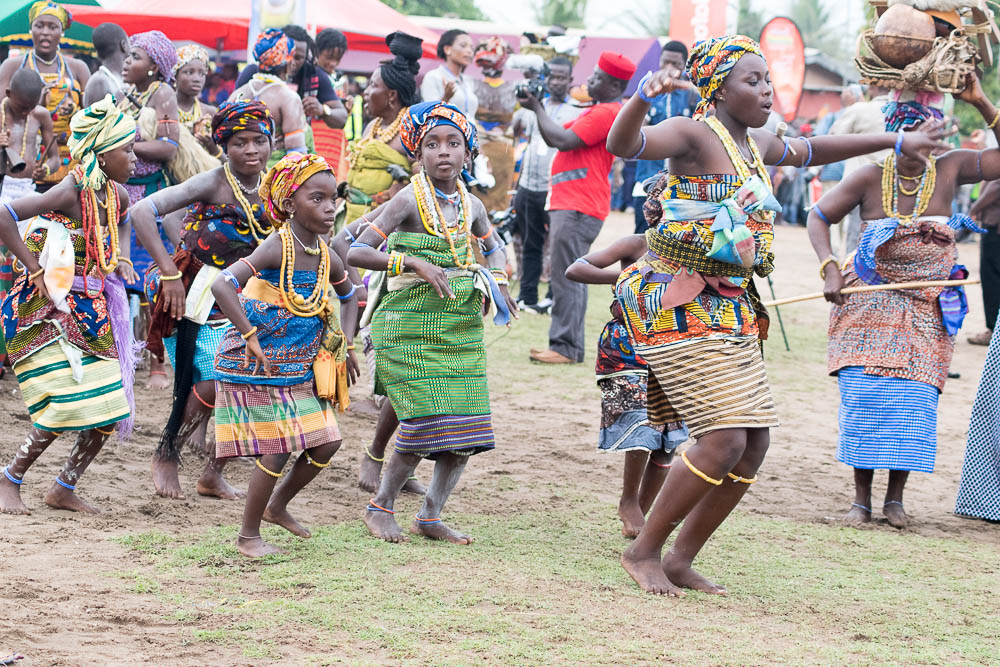 AgbadzaAn Ewe music and dance, born of war songs and kept for funerals, weddings and festivals
Good reading and sources
The facts on this page come from the Wikipedia article "Beni (music)", written by its contributors and used under the CC BY-SA 4.0 licence, and from its Wikidata record (CC0). EveryParampara rewrote the text in its own words, with AI assistance, and compares every page with the article to make sure no passage is copied. It may be reused under the same CC BY-SA 4.0 licence with a link back.
It may contain mistakes. Traditions differ from one family, village and community to the next, and the people who keep them know them best. If something is wrong, tell us. Last refreshed 2026-10-12.
More from Kenya
All the traditions of Kenya 🇨🇩 Democratic Republic of the Congo and 5 moreCongolese rumba
An African dance music and guitar tradition born along the Congo RiverPerformance
🇨🇩 Democratic Republic of the Congo and 5 moreCongolese rumba
An African dance music and guitar tradition born along the Congo RiverPerformance
 🇰🇪 Kenya and 1 moreAdumuEnkipaata
A Maasai warrior dance of high jumps from a circle, done at weddings and ritesPerformance
🇹🇿 Tanzania and 4 moreKanga
A colourful printed cotton wrap bearing proverbs, worn across East AfricaDress
🇿🇦 Cape Town, South Africa and 5 moreTooth ablation
A global custom of deliberately removing healthy teeth for social, ritual, or aesthetic reasons.Rite of passage
🇰🇪 Kenya and 1 moreAdumuEnkipaata
A Maasai warrior dance of high jumps from a circle, done at weddings and ritesPerformance
🇹🇿 Tanzania and 4 moreKanga
A colourful printed cotton wrap bearing proverbs, worn across East AfricaDress
🇿🇦 Cape Town, South Africa and 5 moreTooth ablation
A global custom of deliberately removing healthy teeth for social, ritual, or aesthetic reasons.Rite of passage
The same idea elsewhere
Weddings compared 🇹🇱 Timor-LesteUma Lulik
Sacred ancestral clan houses and ritual shrines in East TimorSpiritual
🇹🇱 Timor-LesteUma Lulik
Sacred ancestral clan houses and ritual shrines in East TimorSpiritual
 🇼🇸 Samoa and 1 moreʻIe tōga
Precious woven mats exchanged in Samoan ceremonies to honor family ties and chiefly status.Dress
🇼🇸 Samoa and 1 moreʻIe tōga
Precious woven mats exchanged in Samoan ceremonies to honor family ties and chiefly status.Dress
 🇮🇩 Indonesia and 2 moreKenduri
A communal prayer meal and gathering shared across Indonesia, Malaysia and BruneiSpiritual · Feasts and festival meals
🇹🇷 Samsun, TurkeyHoronχορόν
Line dances of Turkey's eastern Black Sea coast, danced with shaking shouldersPerformance
🇮🇩 Indonesia and 2 moreKenduri
A communal prayer meal and gathering shared across Indonesia, Malaysia and BruneiSpiritual · Feasts and festival meals
🇹🇷 Samsun, TurkeyHoronχορόν
Line dances of Turkey's eastern Black Sea coast, danced with shaking shouldersPerformance