Music, dance and storytellingOceania
Bush dance
An Australian social dance style, usually with a live bush band
Bush dance is an Australian style of social dancing, most often performed to music from a live bush band. Its figures come largely from the folk dances of the United Kingdom, Ireland and central Europe, brought to Australia by settlers, and it has been kept since in woolsheds, local halls and social clubs.
When is Bush dance kept?
Bush dance is kept on all through the year, with no fixed date.
Bush dance is a way of dancing together that grew in Australia out of older folk dances. A bush band usually plays for it, and dancers learn a shared set of patterns rather than one fixed routine. It is relaxed in manner, with the point being to be in the right place at the right time. It is still danced at balls, halls and social clubs.
What it is
Bush dance is a broad name for social dancing in Australia, especially when a bush band supplies the music. The figures are largely inherited from folk dancing in the United Kingdom, Ireland and central Europe, and they arrived with settlers and with people who came during the gold rushes. Two loose styles sit under the name. One is bush dance itself, which cares less about fussy footwork and more about everyone reaching the right place, and is danced in everyday clothes. The other is colonial dance, which asks for precise footwork, often uses period costume, and includes many dances found only in Australia.
Origins and history
From 1770, settlers arriving in Australia brought the dances of their home countries with them. During the gold rushes of the 1850s, miners added dances from Europe, some of which had travelled by way of the American goldfields. Through the pastoral years, roughly 1860 to 1950, dances were held in rural woolsheds and in local halls. Collectors and enthusiasts began recording and performing the old dances in the 1950s and 1960s, which helped keep them in use. From the 1970s bush dancing spread more widely again, and many social clubs started holding Bushy Balls regularly.
Formations and sets
Dances are often grouped by the shape the dancers make. Big circle dances put dancers in a ring or a horseshoe, with men and women alternating; Stockyards is one. Longways sets place three to eight couples in two facing lines, the top couple nearest the band on its left, as in the Galopede. Sicilian circle dances have couples facing one another at right angles to the direction the dance travels, often as a progressive figure, and Cottages is an example. Four couples on the sides of a square make a quadrille, such as the Colonial's Quadrille. Short lines of three also occur, as in the Dashing White Sergeant. Closed couples may dance in a ballroom hold arranged around the room.
Music and instruments
A bush band supplies the music, and most of its tunes are old ones from the United Kingdom and Ireland. Players who know the session repertoire of Britain, Ireland and the United States would recognise variations on many of them. Common rhythms are the reel, the jig, the march, the waltz and the hornpipe. Fiddle, piano, accordion, concertina, tin whistle, guitar and banjo all feature, along with a bush bass and percussion that can include the lagerphone. Amplified instruments such as the electric guitar and the electric bass have been used since the 1970s.
Today and change
Bush dance has something in common with American line dancing and square dancing: the dancers already know the figures and carry them out as a group, and partners often change during a dance. Some dances are taught or simply assumed, among them The Ninepins Quadrille, which The Bushwackers nicknamed The Drongo. In that dance a person left without a partner is set apart and lightly mocked by the others. The Heel-Toe Polka, also called the Brown Jug Polka, is a simpler progressive dance often used with children, in which partners slap their own knees and hands and then each other's hands.
How Bush dance is kept
A dance begins with everyone taking their places, whether in a circle, in two long lines or in a square. A bush band plays from the front, and in a longways set the top couple stands on the band's left. Dancers either know the figure already or are taught it as they go. Partners are often swapped partway through a dance. Progressive dances move couples around the room so that they meet new partners, and then the sets re-form for the next tune. Polished footwork is not the aim; being in the right place at the right moment is.
When and where
Bush dance is not tied to a season, a saint's day or a religious calendar. Dances take place across the year in woolsheds, local halls and clubs, and many social clubs hold Bushy Balls on a regular basis.
Bush dance belongs to Australia. It is strongest in country districts and rural towns, where dances were once held in woolsheds and in local halls, and it also continues in the cities through folk and social clubs. The figures come from the United Kingdom, Ireland and central Europe, and most tunes from the United Kingdom and Ireland.
What Bush dance means
For the people who keep it, bush dancing is a shared social pleasure rather than a performance for an audience. Its point is doing something together: the dancers know the figures, take their places, and the set works because each person plays a part. The dances also hold a thread of memory, since many came from the countries settlers left and were shaped by Australian halls and woolsheds. Collectors in the mid twentieth century thought them worth recording and passing on.
Questions people ask about Bush dance
When is Bush dance kept?
Bush dance is kept on all through the year, with no fixed date.
What is bush dance?
Bush dance is a style of social dancing from Australia, usually performed to live music from a bush band. Its figures are largely drawn from folk dances of the United Kingdom, Ireland and central Europe. Dancers care more about being in the right place than about intricate footwork.
What music does a bush band play?
Most of the tunes are older ones from the United Kingdom and Ireland. Reels, jigs, marches, waltzes and hornpipes are the usual rhythms. A band may include fiddle, piano, accordion, concertina, tin whistle, guitar, banjo, bush bass and percussion such as the lagerphone, and amplified instruments have appeared since the 1970s.
Do dancers need to know the steps?
Many figures are standard, and dancers are either taught them or expected to know them, much as in American square and line dancing. Partners often change during a dance. Some dances, such as the Heel-Toe Polka, are simple enough to use with children.
What shapes do the dances take?
Sets may form a single big circle or horseshoe, two long facing lines, couples at right angles to the line of travel in a Sicilian circle, short lines of three, or four couples on the sides of a square for a quadrille. Closed couples can also dance in a ballroom hold.
See also
 Irish traditional musicA living folk practice of dance tunes, airs, songs and communal pub sessions
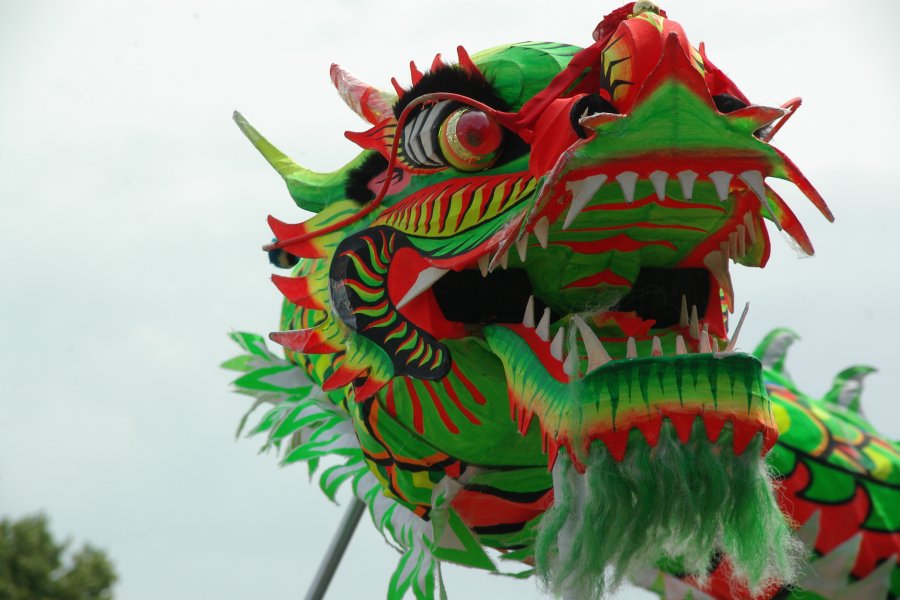 Dragon danceA long dragon puppet on poles, danced by a team at Chinese New Year and other festivals
 Morris danceA rhythmic English folk dance performed in costume with bells, sticks and handkerchiefs
 Irish stepdanceA percussive dance form with swift, intricate footwork and an upright torso
Good reading and sources
The facts on this page come from the Wikipedia article "Bush dance", written by its contributors and used under the CC BY-SA 4.0 licence, and from its Wikidata record (CC0). EveryParampara rewrote the text in its own words, with AI assistance, and compares every page with the article to make sure no passage is copied. It may be reused under the same CC BY-SA 4.0 licence with a link back.
It may contain mistakes. Traditions differ from one family, village and community to the next, and the people who keep them know them best. If something is wrong, tell us. Last refreshed 2026-10-05.
More from Australia
All the traditions of Australia
🇮🇪 Dublin, Ireland and 2 moreIrish traditional music
A living folk practice of dance tunes, airs, songs and communal pub sessionsPerformance
🇮🇪 Dublin, Ireland and 2 moreIrish stepdance
A percussive dance form with swift, intricate footwork and an upright torsoPerformance
🇬🇧 United Kingdom and 5 moreMorris dance
A rhythmic English folk dance performed in costume with bells, sticks and handkerchiefsPerformance
 🇼🇸 Samoa and 3 moreSiva Samoa
A graceful Samoan dance marked by subtle, expressive arm and hand movementsPerformance
🇼🇸 Samoa and 3 moreSiva Samoa
A graceful Samoan dance marked by subtle, expressive arm and hand movementsPerformance
The same idea elsewhere
All of this kind 🇹🇷 Kayseri, Turkey and 4 moreHalay
A traditional line and circle folk dance kept across Turkey, Azerbaijan, Armenia, Iran, and Syria.Performance
🇧🇷 BrazilBaião
A syncopated folk rhythm and partnered dance from northeastern BrazilPerformance
🇹🇷 Kayseri, Turkey and 4 moreHalay
A traditional line and circle folk dance kept across Turkey, Azerbaijan, Armenia, Iran, and Syria.Performance
🇧🇷 BrazilBaião
A syncopated folk rhythm and partnered dance from northeastern BrazilPerformance
 🇺🇦 Kyiv, UkraineBanduraБандура
A Ukrainian plucked string instrument played to accompany epic songs and folk balladsPerformance
🇺🇦 Kyiv, UkraineBanduraБандура
A Ukrainian plucked string instrument played to accompany epic songs and folk balladsPerformance
 🇵🇭 Philippines and 1 morePangalay
A traditional fingernail dance of the Tausūg and Bajau peoples in the Sulu Archipelago and Sabah.Performance
🇵🇭 Philippines and 1 morePangalay
A traditional fingernail dance of the Tausūg and Bajau peoples in the Sulu Archipelago and Sabah.Performance