Music, dance and storytellingEurope
Irish stepdance
A percussive dance form with swift, intricate footwork and an upright torso

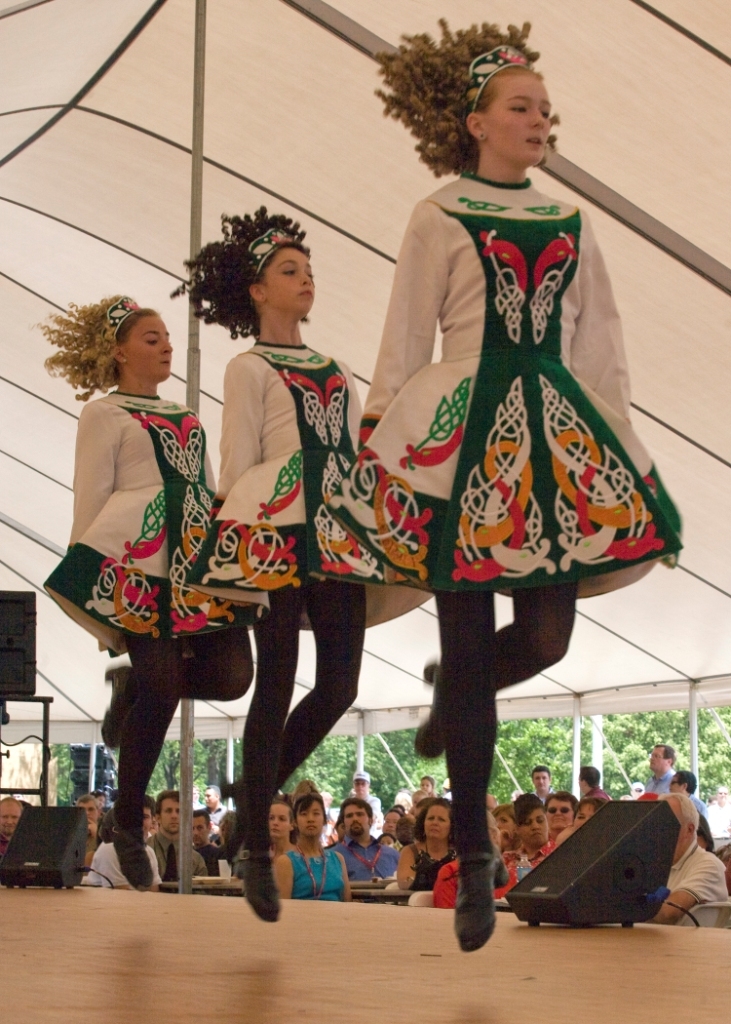
Irish stepdance is a traditional performance art from Ireland that highlights rapid foot movements while keeping the upper body motionless. Practised both by soloists and teams in community feiseanna and worldwide stage productions, it relies on specialised footwear to create intricate percussive patterns.
When is Irish stepdance kept?
Irish stepdance is kept at competitions, festivals and stage performances throughout the year.
Irish stepdance is a distinctive form of Irish dancing defined by precise, rapid footwork performed with a steady, upright torso. Developed across Ireland over several centuries and refined through structured schools, it is showcased in local and international competitions known as feiseanna as well as theatrical stage productions. Dancers use specialized soft and hard shoes to interpret reels, jigs, and traditional group choreographies.
Origins and standardisation
The roots of Irish dancing trace back to early social gatherings and the travelling dance masters of the eighteenth and nineteenth centuries. Regional traditions once differed widely, from the percussive low footwork of Munster to Ulster's heel work and Connemara's looser upper body. In 1893, the Gaelic League began cataloguing and promoting dance as part of an effort to preserve native customs. The organisation held its first formal feis in 1897 and later established An Coimisiún Le Rincí Gaelacha in 1927 to supervise rules, approve instructors, and standardise steps across competitive schools.
Footwear and musical forms
Performers switch between two varieties of footwear depending on the dance. Soft shoes, known as ghillies for women, resemble supple slippers and accompany lighter tempos such as reels in common time or graceful slip jigs in nine-eight time. Hard shoes contain reinforced tips and heels that strike the floor like tap shoes, creating rhythmic clicks and trebles. These hard shoes belong to hornpipes, treble jigs, and classic solo set dances like St. Patrick's Day or the Blackbird, where dancers follow longstanding historical choreography.
Costumes and presentation
Visual appearance plays a noticeable role in modern competitive stepdance. Early outfits were simple garments crafted at home or by local tailors and decorated with Celtic interlace patterns. In contemporary settings, solo competitors often wear brightly coloured outfits created to catch attention on stage. Female dancers commonly wear curled wigs or style their own hair into tight ringlets, pairing their outfits with ribbed white poodle socks. Male participants typically dance in dark trousers, neat hairstyles, and plain black socks.
Global stages and modern change
During the nineteenth and twentieth centuries, emigrants introduced stepdance to communities across North America and Australia, leading to early instruction in cities like Chicago and Philadelphia. The discipline gained widespread international awareness following the 1994 Eurovision interval performance Riverdance and subsequent theatrical shows like Lord of the Dance. These productions incorporated arm movements, theatrical staging, and mixed musical styles, encouraging new choreography while maintaining interest in traditional solo and céilí dances.
How Irish stepdance is kept
Participants train through dedicated dancing schools, learning standardised steps that progress from right to left leg sequences. Dancers take part in feiseanna, which are organised festivals featuring both solo categories and group céilí dances. During these events, soloists showcase either soft-shoe routines or hard-shoe percussive pieces before qualified examiners. In group formats, teams coordinate four to eight dancers to present classic figures, maintaining steady posture and syncopated floor taps.
When and where
Stepdance is practised throughout the year in classes, local festivals, and competitive championships. Major feiseanna take place across different seasons, while stage tours and cultural celebrations present performances on regular schedules.
Rooted across Ireland, the tradition thrives globally among diaspora communities. It maintains an active presence in the United States, Australia, and Britain, with major hubs in cities such as Dublin, New York, and Chicago.
What Irish stepdance means
Stepdance holds deep ties to Gaelic cultural revival and community identity. Supported by cultural revival movements at the close of the nineteenth century, the standardised dances celebrate Irish artistic expression, passing historical steps and musical patterns down through successive generations.
Questions people ask about Irish stepdance
When is Irish stepdance kept?
Irish stepdance is kept at competitions, festivals and stage performances throughout the year.
What is Irish stepdance?
Irish stepdance is a performance art originating in Ireland, known for intricate and rapid foot movements executed while keeping the upper body straight and still. It encompasses both solo routines and communal céilí group dances.
What is a feis?
A feis is a competitive Gaelic arts and culture festival where dancers perform in front of certified adjudicators. These events are held around the world and feature categories for various skill levels and age groups.
What kinds of shoes are used in Irish stepdance?
Dancers wear soft shoes without heels for nimble, leaping routines and rigid hard shoes with fibreglass or wooden tips to generate percussive rhythmic beats against the stage floor.
Where is Irish stepdance performed today?
While originating in Ireland, stepdance is widely practised across North America, Australia, and Europe. It is featured in feiseanna, community gatherings, dance academies, and international touring theatrical productions.
See also
 PlenaPuerto Rican folk songs and dance sharing community news with rhythmic frame drums
 Sean-nós singingAn unaccompanied, highly ornamented style of traditional Irish folk singing
 Morris danceA rhythmic English folk dance performed in costume with bells, sticks and handkerchiefs
 Irish traditional musicA living folk practice of dance tunes, airs, songs and communal pub sessions
Good reading and sources
The facts on this page come from the Wikipedia article "Irish stepdance", written by its contributors and used under the CC BY-SA 4.0 licence, and from its Wikidata record (CC0). EveryParampara rewrote the text in its own words, with AI assistance, and compares every page with the article to make sure no passage is copied. It may be reused under the same CC BY-SA 4.0 licence with a link back.
It may contain mistakes. Traditions differ from one family, village and community to the next, and the people who keep them know them best. If something is wrong, tell us. Last refreshed 2026-10-04.
More from Ireland
All the traditions of Ireland
🇮🇪 Dublin, Ireland and 2 moreIrish traditional music
A living folk practice of dance tunes, airs, songs and communal pub sessionsPerformance
 🇮🇪 Ireland and 5 moreFleadh CheoilFleadh Cheoil na hÉireann
An annual gathering of Irish traditional music and dance, featuring competitions, public sessions, and concerts across IPerformance
🇮🇪 Waterford, IrelandSean-nós singingSean-nós
An unaccompanied, highly ornamented style of traditional Irish folk singingPerformance
🇮🇪 Ros Muc, Ireland and 2 moreSean-nós dancedamhsa ar an sean nós
An improvised solo Irish dance: low footwork, free arms and a loud battering beatPerformance
🇮🇪 Ireland and 5 moreFleadh CheoilFleadh Cheoil na hÉireann
An annual gathering of Irish traditional music and dance, featuring competitions, public sessions, and concerts across IPerformance
🇮🇪 Waterford, IrelandSean-nós singingSean-nós
An unaccompanied, highly ornamented style of traditional Irish folk singingPerformance
🇮🇪 Ros Muc, Ireland and 2 moreSean-nós dancedamhsa ar an sean nós
An improvised solo Irish dance: low footwork, free arms and a loud battering beatPerformance
The same idea elsewhere
All of this kind 🇹🇷 Kayseri, Turkey and 4 moreHalay
A traditional line and circle folk dance kept across Turkey, Azerbaijan, Armenia, Iran, and Syria.Performance
🇹🇷 Kayseri, Turkey and 4 moreHalay
A traditional line and circle folk dance kept across Turkey, Azerbaijan, Armenia, Iran, and Syria.Performance
 🇳🇿 Auckland, New ZealandPoi
A Māori performing art of swinging tethered weights in rhythmical patterns.Performance
🇳🇿 Auckland, New ZealandPoi
A Māori performing art of swinging tethered weights in rhythmical patterns.Performance
 🇵🇭 Philippines and 1 morePangalay
A traditional fingernail dance of the Tausūg and Bajau peoples in the Sulu Archipelago and Sabah.Performance
🇵🇭 Philippines and 1 morePangalay
A traditional fingernail dance of the Tausūg and Bajau peoples in the Sulu Archipelago and Sabah.Performance