Life-cycle ritesNorth AmericaSecular and civic
Calling of an Engineer
In its own language: l'Engagement de l'ingénieur
A private Canadian rite where engineers pledge ethical duty and receive an iron ring
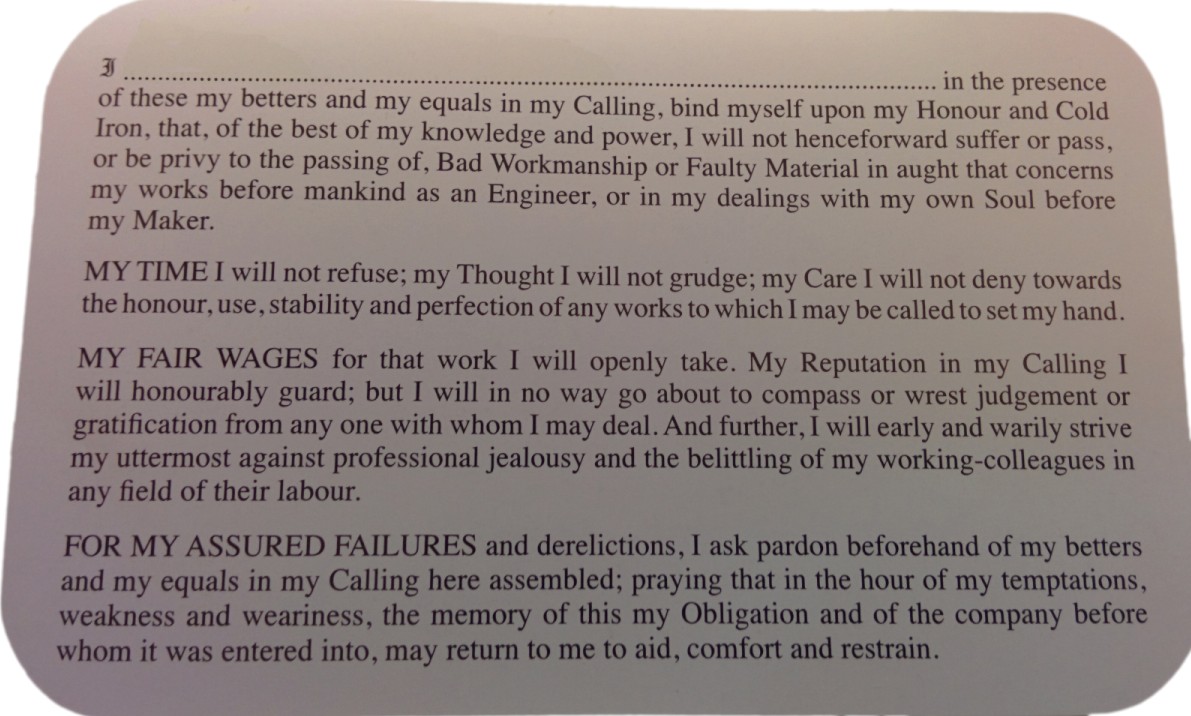
Created in Canada in the 1920s, this private rite marks the transition of university engineering graduates into their profession. Candidates recite a solemn ethical obligation authored by Rudyard Kipling before receiving an iron or stainless steel ring to wear on their working hand.
When is Calling of an Engineer kept?
Calling of an Engineer is kept around graduation from an engineering degree or upon professional qualification.
The Calling of an Engineer is a closed Canadian ceremony for newly qualified engineers and university graduates. Established in the 1920s, it focuses on professional integrity, craftsmanship, and public safety. Participants accept a solemn promise called the Obligation and receive a metal band worn on the pinky finger of their dominant hand. The custom reminds technical practitioners of the human responsibilities tied to their work.
Origins and history
In the early twentieth century, Canadian engineers sought a formal standard of conduct after structural failures, notably the collapse of the Quebec Bridge where seventy-five workers perished. H. E. T. Haultain, who taught engineering in Toronto, convinced the Engineering Institute of Canada to establish an ethical induction. He asked the author Rudyard Kipling to compose the text. Seven past presidents of the institute served as original trustees, forming the Corporation of the Seven Wardens. Their goal was straightforward: to awaken young graduates to the weight of their societal role while encouraging experienced colleagues to offer steady mentorship.
The ceremony and pledge
Inductions take place in private gatherings across twenty-eight regional chapters known as camps. Candidates gather without public fanfare, accompanied only by invited guests or previously obligated peers. Attendees do not swear a religious oath. Instead, each candidate makes a personal declaration to uphold high workmanship, shun shoddy materials, reject professional envy, and guard personal integrity. Long ago, gatherings featured lines from the biblical book of Second Esdras. Modern assemblies typically substitute Kipling's poem, the Hymn of Breaking Strain, to highlight endurance and human limits under stress.
The ring and its meaning
At the close of the gathering, an inductee receives a ring made of iron or stainless steel. The band rests on the pinky finger of whichever hand the engineer uses for work. In everyday life, the metal serves as an intimate reminder of humble service and high accountability. It touches drafting tables, keyboards, and blueprints, offering physical friction whenever designs are drawn. While the original group in Toronto still confers genuine iron rings, other regional branches supply stainless steel. The band is purely symbolic and carries no official license to practise engineering.
Privacy and tradition
Discretion has shaped this ritual since six engineers first gathered at the University Club of Montreal in April 1925. Philanthropist Harry F. McLean provided an early financial gift to sustain the wardens' administration. Today, participants are explicitly requested to keep ceremony proceedings away from journalists and public broadcasts. While the pledge text itself is available to read, the intimate shared experience remains quietly guarded within the engineering fraternity. This reserve preserves a spirit of fellowship across generations without turning a serious moral reflection into a public spectacle.
How Calling of an Engineer is kept
Candidates assemble in local chapters called camps, organized near Canadian universities. Only candidates, existing ring holders, and select guests may attend. During the session, inductees recite the Obligation, affirming that they will never overlook flawed materials or substandard craft. They also listen to readings, commonly Rudyard Kipling's Hymn of Breaking Strain. Senior engineers welcome the novices into the wider community of practice. Finally, each participant receives an iron or stainless steel band to fit the pinky finger of their working hand, concluding with a reminder to maintain quiet discretion about the proceedings.
When and where
Gatherings are scheduled locally by individual camps, typically timed around university graduation periods when engineering students finish their academic requirements. Experienced engineers who meet qualifying standards may also participate by arrangement.
The ceremony is held throughout Canada across twenty-eight regional camps. These chapters are closely tied to Canadian universities that grant engineering degrees, ranging from Montreal and Toronto across the provinces.
What Calling of an Engineer means
The ring embodies two opposing ideals: professional pride and personal humility. Resting on the outer edge of the writing hand, its metal rubs against work surfaces as a constant tactile check on human fallibility. The rite underscores that engineering mistakes carry grave human costs, urging graduates to honour safety and collegial respect over personal vanity.


Questions people ask about Calling of an Engineer
When is Calling of an Engineer kept?
Calling of an Engineer is kept around graduation from an engineering degree or upon professional qualification.
What is the Calling of an Engineer?
It is a private Canadian rite in which graduating students and qualified candidates commit to professional ethics and receive an iron or stainless steel ring.
Where does the ceremony take place?
Across Canada, twenty-eight regional branches called camps host separate ceremonies. These branches operate near degree-granting universities, including founding locations in Montreal and Toronto, serving local cohorts of candidates.
Is the Iron Ring a legal license to practice?
No. The ring is strictly an ethical symbol. Practising as a professional engineer in Canada requires formal registration, practical work experience, and examinations through designated governing associations.
Why is the ceremony kept private?
Tradition asks participants to avoid publicity and media interviews so the focus stays on personal duty rather than spectacle. The intent is to preserve mutual trust, solemn reflection, and quiet collegiality.
See also
 Line-crossing ceremonyA naval initiation rite marking a sailor's first voyage across the equator
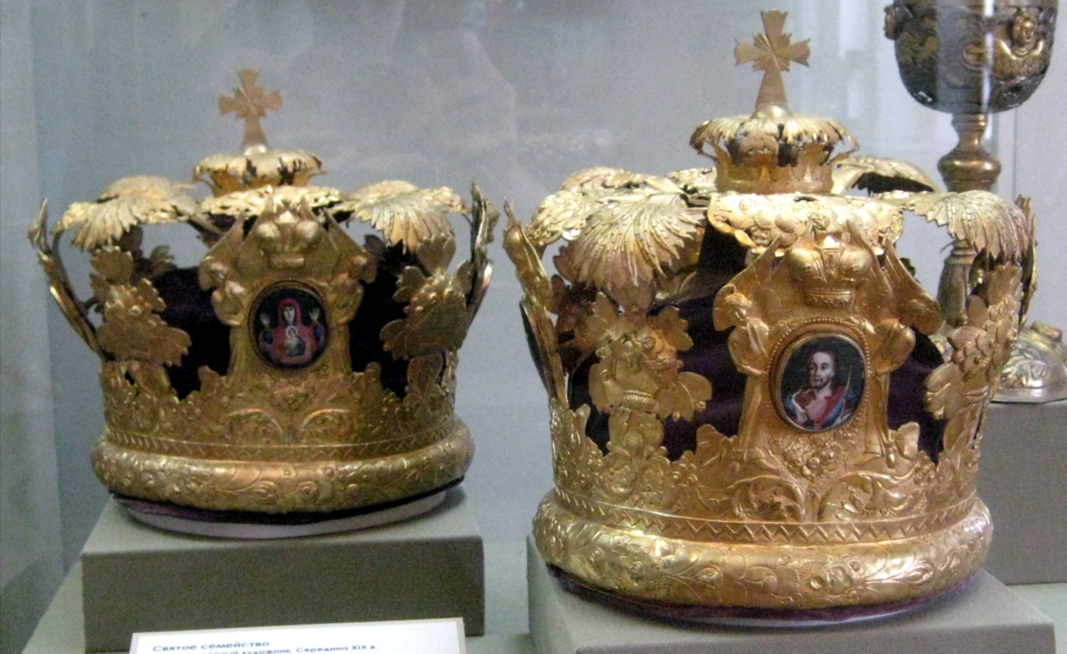 Mystery of CrowningA ritual where crowns are placed on the heads of the bride and groom during marriage in Eastern Christian churches.
 Sweet sixteenA North American coming-of-age celebration marking a sixteenth birthday
 Bridal showerA gift-giving party for a bride before her wedding, best known in North America
Good reading and sources
- Library of Congress CatalogLibrary of Congress, Article
- Library of Congress CatalogLibrary of Congress, Article
The facts on this page come from the Wikipedia article "Calling of an Engineer", written by its contributors and used under the CC BY-SA 4.0 licence, and from its Wikidata record (CC0). EveryParampara rewrote the text in its own words, with AI assistance, and compares every page with the article to make sure no passage is copied. It may be reused under the same CC BY-SA 4.0 licence with a link back.
It may contain mistakes. Traditions differ from one family, village and community to the next, and the people who keep them know them best. If something is wrong, tell us. Last refreshed 2026-10-07.
More from Canada
All the traditions of Canada
🇺🇸 United States and 4 moreBridal shower
A gift-giving party for a bride before her wedding, best known in North AmericaRite of passage
 🇺🇸 United States and 5 moreBachelor party
A send-off for a groom-to-be, kept in the days and weeks before a weddingRite of passage
🇺🇸 United States and 5 moreBachelor party
A send-off for a groom-to-be, kept in the days and weeks before a weddingRite of passage
 🇮🇱 Jerusalem, Israel and 5 moreBar and bat mitzvahבַּר מִצְוָה / בַּת מִצְוָה
A Jewish rite of passage marking when youth reach adulthood and take responsibility for their own actions.Rite of passage · Feasts and festival meals
🇺🇸 United States and 1 moreSweet sixteen
A North American coming-of-age celebration marking a sixteenth birthdayRite of passage
🇮🇱 Jerusalem, Israel and 5 moreBar and bat mitzvahבַּר מִצְוָה / בַּת מִצְוָה
A Jewish rite of passage marking when youth reach adulthood and take responsibility for their own actions.Rite of passage · Feasts and festival meals
🇺🇸 United States and 1 moreSweet sixteen
A North American coming-of-age celebration marking a sixteenth birthdayRite of passage
The same idea elsewhere
All of this kind 🇼🇸 Samoa and 1 morePeʻa
The traditional Samoan rite of full-body tattooing for men, tapped by master artistsRite of passage
🇺🇬 UgandaKwanjula
A formal marriage introduction ritual of the Baganda people in Uganda, where families meet to exchange gifts and seek blRite of passage
🇼🇸 Samoa and 1 morePeʻa
The traditional Samoan rite of full-body tattooing for men, tapped by master artistsRite of passage
🇺🇬 UgandaKwanjula
A formal marriage introduction ritual of the Baganda people in Uganda, where families meet to exchange gifts and seek blRite of passage
 🇨🇳 China and 5 morePostpartum confinement
A period of rest, nourishment, and seclusion for mothers after giving birth.Rite of passage
🇨🇳 China and 5 morePostpartum confinement
A period of rest, nourishment, and seclusion for mothers after giving birth.Rite of passage