Life-cycle ritesMiddle EastJewish
Bar and bat mitzvah
In its own language: בַּר מִצְוָה / בַּת מִצְוָה
A Jewish rite of passage marking when youth reach adulthood and take responsibility for their own actions.
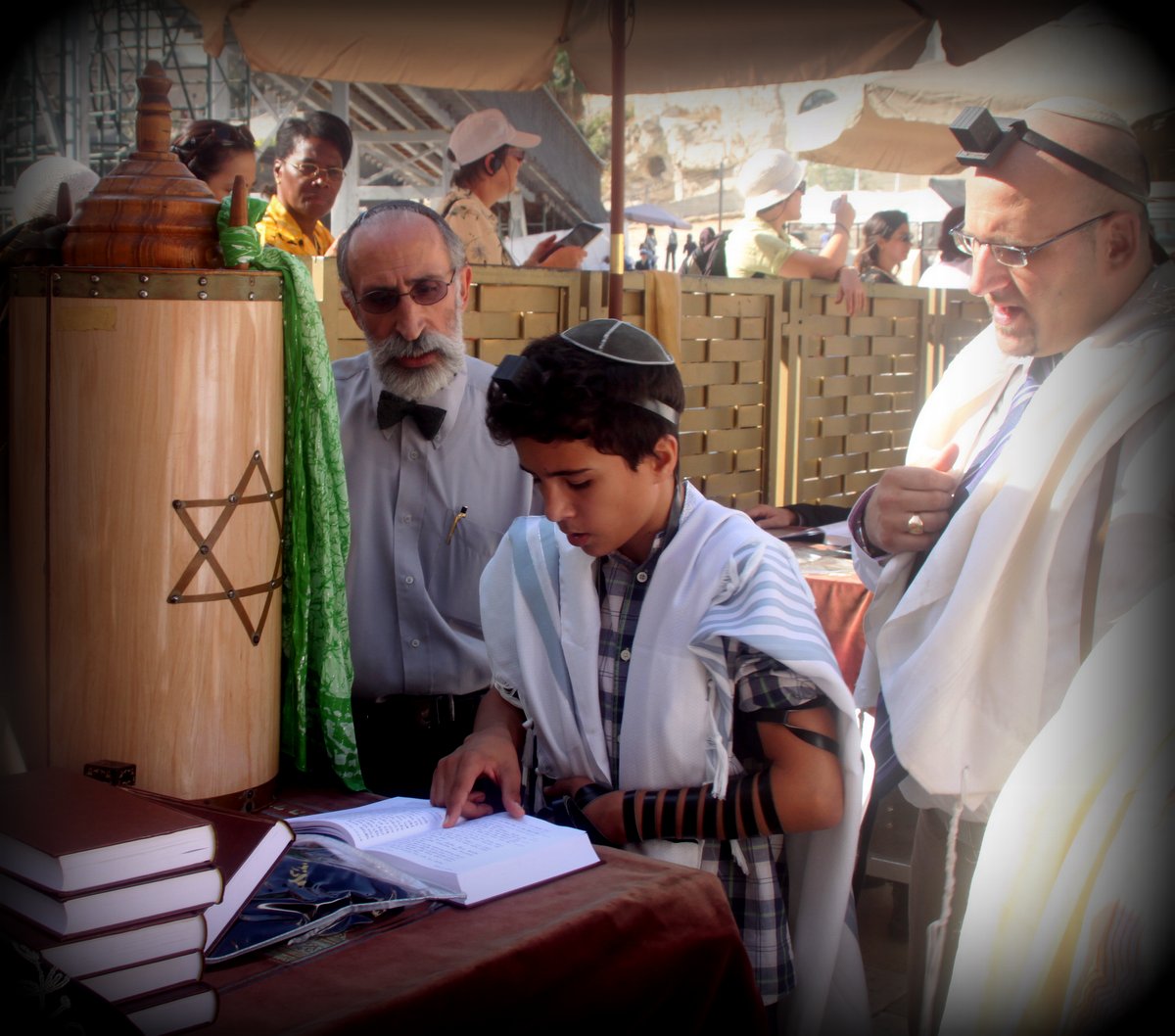
This coming-of-age ritual marks the moment Jewish boys and girls reach adulthood. It happens around age 12 or 13 depending on the community. The child begins following religious laws and can participate fully in synagogue life. Families often host a celebratory meal afterward.
When is Bar and bat mitzvah kept?
Bar and bat mitzvah is kept on the first Sabbath after the child's thirteenth or twelfth birthday.
This ritual marks the transition from childhood to religious adulthood within Judaism. When a youth reaches the designated age, they assume personal accountability for their behavior and begin observing commandments. The event typically occurs during a weekly worship service, followed by a family gathering. It represents a major step toward full participation in communal life.
Meaning of the name
The title combines words from Hebrew and Aramaic. Bar means son or one subject to, while bat means daughter. Mitzvah translates to commandment or law. Together, the phrases denote a person who is now bound by religious duties. Historically, older terms like gadol for adult existed, but this specific phrasing gained traction around the fourteenth century to describe the milestone.
Historical roots
Ancient texts mention the age of thirteen as the point of legal majority, yet festive celebrations did not appear until the medieval period. Early rabbinic writings note that fathers would thank God for no longer bearing punishment for their child's missteps. By the Middle Ages, synagogues began hosting formal gatherings to mark the occasion, sometimes including blessings from elders and special meals.
Age and observance
Orthodox groups generally celebrate boys at thirteen and girls at twelve. Other movements usually honor both genders at thirteen. Reaching this age grants the right to count toward a prayer quorum, read from sacred scrolls, and marry independently under religious law. Preparation often involves months of study with tutors or teachers to master prayers and readings.
Service and celebration
The main event takes place during a Sabbath service. The youth may be called to the bimah to recite blessings over a Torah portion, though practices vary by congregation regarding gender roles. Afterward, families host a seudat mitzvah, a festive meal featuring speeches, gifts, and blessings from rabbis. Some communities limit guest lists or music to maintain modesty, while others hold larger gatherings.
How Bar and bat mitzvah is kept
Youth prepare for months by studying Hebrew texts and practicing cantillation. On the appointed Sabbath, they join the congregation for morning prayers. The celebrant is called to the reading platform to recite blessings over a selected scripture section. Following the service, relatives and friends gather for a banquet where the young adult delivers a learned discourse. Gifts and certificates are presented, and elders offer formal blessings for the journey ahead.
When and where
It falls on the first Sabbath following the child's twelfth or thirteenth birthday, depending on denominational practice. The timing aligns with the weekly worship cycle so the community can witness the transition together.
The practice occurs in synagogues across Jewish communities globally. It holds particular significance in Israel, North America, and European cities with historic Jewish populations. Local customs may adjust the scale of the gathering based on community norms.
What Bar and bat mitzvah means
The ritual signifies a shift from parental guardianship to individual moral responsibility. It marks the moment a young person becomes accountable for their own deeds and gains the right to participate fully in religious life. The father's traditional expression of gratitude highlights the relief from vicarious punishment, while the public reading demonstrates readiness to uphold communal traditions.


Questions people ask about Bar and bat mitzvah
When is Bar and bat mitzvah kept?
Bar and bat mitzvah is kept on the first Sabbath after the child's thirteenth or twelfth birthday.
What does bar mitzvah mean?
The phrase translates to son of commandment or one subject to the law. It denotes a boy who has reached the age of religious accountability. The feminine equivalent is bat mitzvah, meaning daughter of commandment.
At what age does it happen?
Orthodox communities celebrate boys at thirteen and girls at twelve. Most other movements observe both genders at thirteen. The exact date follows the first Sabbath after the child reaches that birthday.
What happens during the ceremony?
The youth joins the congregation for morning prayers and is called to read blessings over a Torah portion. They may also lead parts of the service. Afterward, families host a banquet with speeches, gifts, and blessings from community leaders.
Why do families host a meal?
The gathering, known as a seudat mitzvah, celebrates the new responsibilities the youth assumes. It provides a space for the young adult to share a learned discourse and receive congratulations from relatives and friends.
See also
 Rite of passageA ceremony that marks leaving one group and entering another, with a new status
 Sweet sixteenA North American coming-of-age celebration marking a sixteenth birthday
 ConfirmationA Christian rite of laying on of hands that completes baptism and strengthens faith
 SukkotA seven-day autumn Jewish festival of temporary booths, harvest prayers and hospitality
Good reading and sources
- The First Bat Mitzvah in the United StatesJewish Virtual Library, Article
- The First Bat Mitzvah in the United StatesJewish Virtual Library, Article
- Bar and bat mitzvah on WikipediaEncyclopedia
- More photos on Wikimedia CommonsPhotos and video
- Wikidata recordOpen data
The facts on this page come from the Wikipedia article "Bar and bat mitzvah", written by its contributors and used under the CC BY-SA 4.0 licence, and from its Wikidata record (CC0). EveryParampara rewrote the text in its own words, with AI assistance, and compares every page with the article to make sure no passage is copied. It may be reused under the same CC BY-SA 4.0 licence with a link back.
It may contain mistakes. Traditions differ from one family, village and community to the next, and the people who keep them know them best. If something is wrong, tell us. Last refreshed 2026-10-05.
More from Israel
All the traditions of Israel 🇮🇱 Meron, Israel and 1 moreUpsherinאָפּשערן
A boy's first haircut at three, the day his Jewish learning beginsRite of passage · Sweets given and shared
🇮🇱 Meron, Israel and 1 moreUpsherinאָפּשערן
A boy's first haircut at three, the day his Jewish learning beginsRite of passage · Sweets given and shared
 🇮🇱 Tiberias, Israel and 2 moreYahrzeitיאָרצײַט (yortsayt)
A Jewish death anniversary marked by prayer and a burning candle to honour the departed.Rite of passage
🇮🇱 Tiberias, Israel and 2 moreYahrzeitיאָרצײַט (yortsayt)
A Jewish death anniversary marked by prayer and a burning candle to honour the departed.Rite of passage
 🇰🇪 Kenya and 5 moreBurial
Placing the dead in the ground or a structure to honor them and guide their journey.Rite of passage
🇰🇪 Kenya and 5 moreBurial
Placing the dead in the ground or a structure to honor them and guide their journey.Rite of passage
 🇮🇱 Israel and 5 moreZeved habatזֶבֶד הַבָּת
A Jewish naming ceremony for newborn girls, kept by Sephardi, Mizrahi and Ashkenazi communities.Rite of passage
🇮🇱 Israel and 5 moreZeved habatזֶבֶד הַבָּת
A Jewish naming ceremony for newborn girls, kept by Sephardi, Mizrahi and Ashkenazi communities.Rite of passage
The same idea elsewhere
Coming of age compared 🇦🇺 AustraliaSmoking ceremonyNumbuk Yabbun
An Aboriginal Australian ritual of burning native plants to cleanse, heal and welcomeSpiritual
🇦🇺 AustraliaSmoking ceremonyNumbuk Yabbun
An Aboriginal Australian ritual of burning native plants to cleanse, heal and welcomeSpiritual
 🇮🇳 India and 2 morePujaपूजा (pūjā)
Hindu worship: light, flowers and food offered to a deity or a guestSpiritual
🇮🇳 India and 2 morePujaपूजा (pūjā)
Hindu worship: light, flowers and food offered to a deity or a guestSpiritual
 🇬🇷 GreeceSymposiumσυμπόσιον
An ancient Greek post-meal gathering for diluted wine, debate, music and lively gamesTable custom · Tea, coffee and drinking ceremonies
🇧🇩 Bangladesh and 3 moreAs-salamu alaykumسَلَامٌ عَلَيْكُمْ
A traditional Arabic greeting of peace exchanged in daily life and prayerEtiquette
🇬🇷 GreeceSymposiumσυμπόσιον
An ancient Greek post-meal gathering for diluted wine, debate, music and lively gamesTable custom · Tea, coffee and drinking ceremonies
🇧🇩 Bangladesh and 3 moreAs-salamu alaykumسَلَامٌ عَلَيْكُمْ
A traditional Arabic greeting of peace exchanged in daily life and prayerEtiquette