Life-cycle ritesMiddle EastChristian
Mystery of Crowning
A ritual where crowns are placed on the heads of the bride and groom during marriage in Eastern Christian churches.
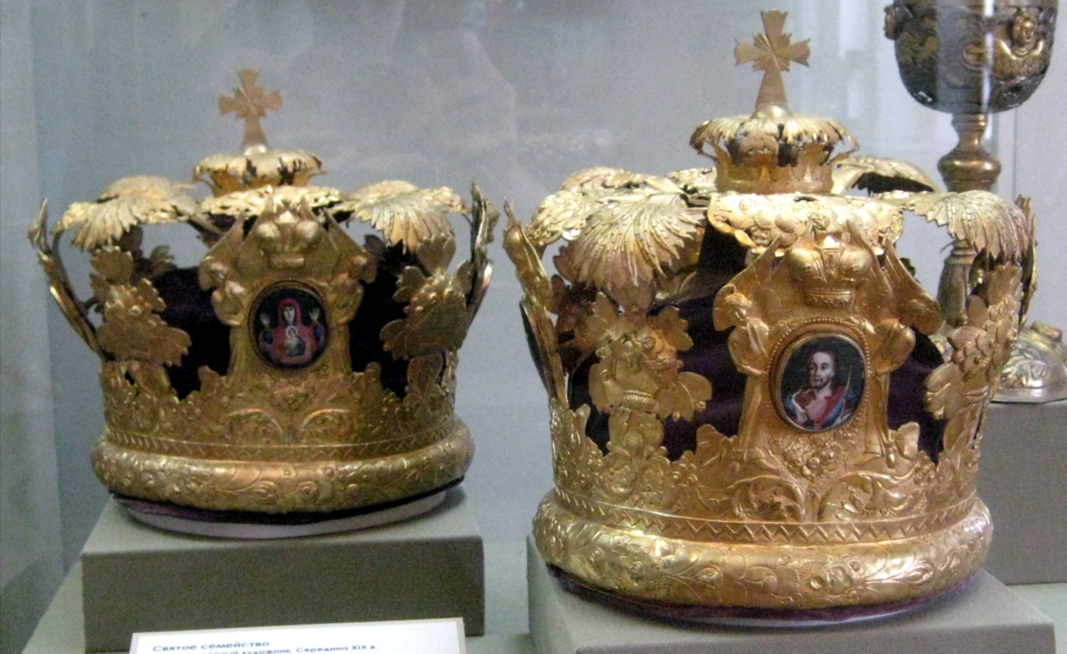
The Mystery of Crowning is a central part of the wedding ceremony in Eastern Christianity. It involves placing crowns on the couple to mark their new status as king and queen of their household. This practice appears in several liturgical traditions across different Christian denominations.
When is Mystery of Crowning kept?
Mystery of Crowning is kept during the marriage ceremony.
This ritual marks the union of two people in Eastern Christian traditions. A priest places crowns on the heads of the bride and groom. This act symbolizes their new roles within the family unit. The ceremony varies slightly among different rites but shares core elements of blessing and unity.
Historical roots
Early Christian writers initially resisted this custom due to its pagan associations. Tertullian opposed the practice. Over time, the church embraced it by linking the crown to spiritual victory. Paul the Apostle described a Crown of Righteousness in his letters. John Chrysostom interpreted the physical crown as a sign of overcoming personal desires. This theological shift helped integrate the ritual into Christian worship.
Byzantine tradition
In the Byzantine Rite, the crowning follows a betrothal service. The priest places the first crown on the groom and then the bride. The couple drinks from a shared cup of blessed wine. They exchange a kiss after drinking. The cup is often broken afterward to represent an unbreakable bond. This rite serves as the model for other Eastern traditions. It is typically forbidden during the Lenten season.
Syriac variations
The West Syriac Rite includes both betrothal and crowning services. Maronite Catholics call this the Rite of Legal Crowning. Prayers and hymns highlight the solemn nature of the event. The Syriac Orthodox Church holds the crown over each partner's head in the shape of a cross. In North America, some communities add the phrase that officially declares them married.
East Syriac customs
The East Syriac Rite treats the crowning separately from the main Eucharist. Participants share a cup containing water, wine, and dust from a martyr's tomb. This mixture represents the unity of the couple. The Assyrian Church of the East maintains this specific form. Chaldean Catholics also perform the ritual, particularly among diaspora communities in the United States and Iraq.
How Mystery of Crowning is kept
A priest leads the ceremony. He places metal or floral crowns on the heads of the bride and groom. The couple shares a drink from a single cup. They kiss each other. In some rites, the cup is broken. The priest may wave the crown in a cross shape. These actions happen during the wedding service to bless the union.
When and where
The ritual occurs during the marriage ceremony. It is not tied to a specific calendar date. It happens whenever a couple marries within these traditions.
The practice is found in Eastern Christian churches worldwide. It originated in Syria and surrounding regions. Communities in the United States, Canada, and Iraq continue the tradition today.
What Mystery of Crowning means
The crowns represent authority and dignity. They mark the couple as the rulers of their new domestic church. The shared cup signifies their unity as one body. Breaking the cup shows the permanence of their bond. The ritual emphasizes spiritual victory and commitment.

Questions people ask about Mystery of Crowning
When is Mystery of Crowning kept?
Mystery of Crowning is kept during the marriage ceremony.
What is the Mystery of Crowning?
It is a ritual in Eastern Christian weddings where crowns are placed on the bride and groom. This act symbolizes their new status as king and queen of their household.
Where is this tradition kept?
It is practiced in Eastern Orthodox, Oriental Orthodox, and Eastern Catholic churches. These communities are found in Syria, the United States, Canada, and Iraq.
Why are crowns used?
The crowns symbolize victory over sin and the authority of the couple in their new family. They reflect early Christian ideas of spiritual reward.
See also
 Islamic marriageThe sacred contract, agreement and wedding celebration forming an Islamic marriage
 MatchmakingThe custom of using a trusted intermediary to introduce partners for marriage
 Rite of passageA ceremony that marks leaving one group and entering another, with a new status
 Marriage proposalA ritual where one partner asks another to marry them, marking the start of engagement.
Good reading and sources
- Mystery of Crowning on WikipediaEncyclopedia
- More photos on Wikimedia CommonsPhotos and video
- Wikidata recordOpen data
The facts on this page come from the Wikipedia article "Mystery of Crowning", written by its contributors and used under the CC BY-SA 4.0 licence, and from its Wikidata record (CC0). EveryParampara rewrote the text in its own words, with AI assistance, and compares every page with the article to make sure no passage is copied. It may be reused under the same CC BY-SA 4.0 licence with a link back.
It may contain mistakes. Traditions differ from one family, village and community to the next, and the people who keep them know them best. If something is wrong, tell us. Last refreshed 2026-10-06.
More from Syria
All the traditions of Syria 🇮🇱 Israel and 5 moreZeved habatזֶבֶד הַבָּת
A Jewish naming ceremony for newborn girls, kept by Sephardi, Mizrahi and Ashkenazi communities.Rite of passage
🇪🇬 Egypt and 3 moreZaffaزفّة
A musical wedding procession common in Arab cultures, featuring music and dancing.Festival
🇮🇱 Israel and 5 moreZeved habatזֶבֶד הַבָּת
A Jewish naming ceremony for newborn girls, kept by Sephardi, Mizrahi and Ashkenazi communities.Rite of passage
🇪🇬 Egypt and 3 moreZaffaزفّة
A musical wedding procession common in Arab cultures, featuring music and dancing.Festival
 🇪🇬 Egypt and 5 moreMizmarمزمار
A traditional double-reed instrument and drum ensemble for weddings and folk dancesPerformance
🇪🇬 Egypt and 5 moreMizmarمزمار
A traditional double-reed instrument and drum ensemble for weddings and folk dancesPerformance
 🇱🇧 Lebanon and 4 moreDabkeدبكة
A Levantine folk dance of linked lines and stomping steps, kept at weddings and community gatherings.Performance
🇱🇧 Lebanon and 4 moreDabkeدبكة
A Levantine folk dance of linked lines and stomping steps, kept at weddings and community gatherings.Performance
The same idea elsewhere
Weddings compared 🇼🇸 Samoa and 1 moreʻIe tōga
Precious woven mats exchanged in Samoan ceremonies to honor family ties and chiefly status.Dress
🇼🇸 Samoa and 1 moreʻIe tōga
Precious woven mats exchanged in Samoan ceremonies to honor family ties and chiefly status.Dress
 🇹🇱 Timor-LesteUma Lulik
Sacred ancestral clan houses and ritual shrines in East TimorSpiritual
🇹🇱 Timor-LesteUma Lulik
Sacred ancestral clan houses and ritual shrines in East TimorSpiritual
 🇮🇩 Indonesia and 2 moreKenduri
A communal prayer meal and gathering shared across Indonesia, Malaysia and BruneiSpiritual · Feasts and festival meals
🇺🇬 UgandaKwanjula
A formal marriage introduction ritual of the Baganda people in Uganda, where families meet to exchange gifts and seek blRite of passage
🇮🇩 Indonesia and 2 moreKenduri
A communal prayer meal and gathering shared across Indonesia, Malaysia and BruneiSpiritual · Feasts and festival meals
🇺🇬 UgandaKwanjula
A formal marriage introduction ritual of the Baganda people in Uganda, where families meet to exchange gifts and seek blRite of passage