Dress and adornmentNorth America
Ceinture fléchée
A fingerwoven woollen sash tied at the waist, worn by Québécois and Métis peoples
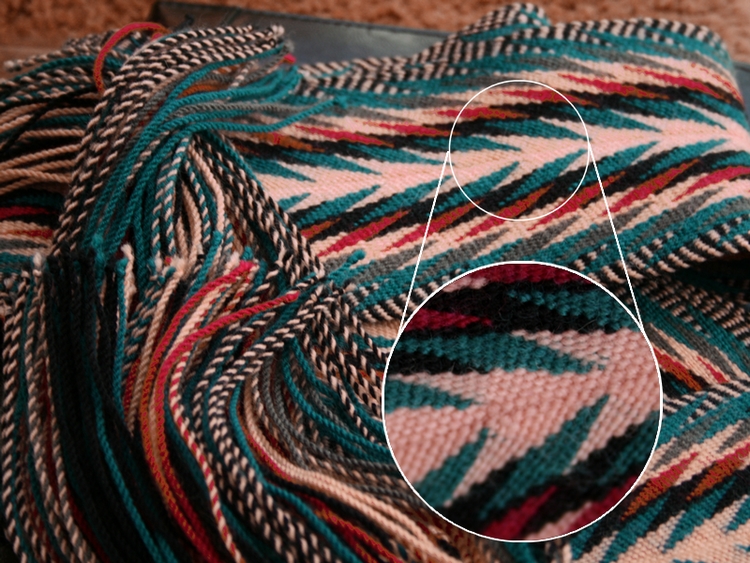
A ceinture fléchée is a wide handwoven sash worn at the waist over a winter coat, patterned with arrows. Québécois people have worn it from at least the 17th century, Métis people adopted it as national regalia, and it still appears at winter festivals across Canada.
When is Ceinture fléchée kept?
Ceinture fléchée is kept on worn in winter, tied over coats, and at winter festivals such as the Quebec Winter Carnival.
Ceinture fléchée is a handwoven woollen sash with a pointed, arrow-like pattern, tied at the waist over a winter coat. Québécois people have worn it since at least the 17th century, and Métis people also make it and wear it as part of their national regalia. Both communities treat it as a marker of who they are.
What it is
A ceinture fléchée is a broad woollen belt, woven by hand and patterned with arrow shapes. Sashes were commonly 15 to 25 centimetres wide and could run past two metres in length. The long fringes at each end were used to tie it. Men wore one in winter, knotted over the coat at the waist to keep the cold out. It was practical and fashionable at the same time, and both wealthier people and habitants wore it. Fur traders relied on the tight wrapping to protect their backs and avoid hernias.
Origins and history
Most accounts call the sash a Québécois invention, though other beginnings have been suggested, among them the fingerwoven crios of Gaelic tradition. Dorothy K. Burnham, who arranged a 1981 textile exhibition at the National Gallery of Canada and wrote its catalogue, argued that settlers in New France learned this kind of finger weaving from Indigenous peoples. Northern French and Indigenous methods came together, and European wool was the material. The arrow pattern is the oldest known design, made by Québécois artisans in the 18th century. The Assomption pattern came later, after 1852. The historian Mason Wade places a settled standard type around 1835, centred on the L'Assomption area.
Resistance and carnival
When Lower Canada's rebels opposed British rule, they stopped buying British goods. Buttons and button-up coats came from Britain, so people sewed their own clothing and held their capotes shut with a sash. That is how the ceinture fléchée became part of the rebel uniform. Today it is a badge of pride for Québécois and for Francophones in the minority across Canada. Franco-Canadian communities bring it out at winter festivals, such as the Festival du Voyageur in Manitoba and the Flying Canoë Volant in Alberta. The Quebec Winter Carnival mascot, Bonhomme Carnaval, wears one, and copies are sold at the carnival.
How it is made
Making a sash begins with the wool. The weaver chooses threads and cuts them long enough to go twice around the wearer's waist, with extra length for the fringes at both ends. The threads are then arranged and woven into shapes: zigzags like lightning, lozenges like flames and arrow heads, usually down the middle. The ends are finished as twists or braids, which also serve to tie the sash. The work leaves a hard callus on the fingertips, known as a needle finger. Families treated it as a rite of passage for young girls, and the matriarchs recognised it.
Today and change
Production slowed after the fur trade declined in 1870. Tancrède Viger, a parish priest, told the weavers to stop, thinking they were paid too little for their work. A few women carried on and passed the craft to later generations. Since 1968 many people have learned to weave by hand, and some of them teach others. Singers, folklore dancers and Bonhomme Carnaval have helped make the sash known to visitors and abroad. Two early researchers, Marius Barbeau and the Montreal archivist and folklorist E.Z. Massicotte, hunted for its origins without settling the question.
How Ceinture fléchée is kept
Weavers pick wool, cut the threads long enough to pass twice around the wearer's waist plus the fringe, then weave the pattern and finish the ends in twists or braids. The sash is tied over a winter coat. Québécois and Métis people wear it at winter festivals, in music and dance performances, and as part of national regalia. Bonhomme Carnaval, the carnival mascot, wears one too.
When and where
The sash belongs to winter. It was worn over coats against the cold, and it appears at winter festivals including the Quebec Winter Carnival, the Festival du Voyageur in Manitoba and the Flying Canoë Volant in Alberta.
Quebec is its home, and Francophone communities across Canada outside Quebec also wear it. Sashes were once woven in Montreal and the surrounding area, and the standard type takes its name from the L'Assomption region.
What Ceinture fléchée means
For Québécois and Métis people the sash stands for identity, history and resistance. It belonged to the habitant costume and to the voyageurs, and it was worn during the Lower Canada Rebellion. Métis people call it an identity symbol and wear it as national regalia. Francophones in minority settings across Canada wear it with pride at winter gatherings.


Questions people ask about Ceinture fléchée
When is Ceinture fléchée kept?
Ceinture fléchée is kept on worn in winter, tied over coats, and at winter festivals such as the Quebec Winter Carnival.
What is a ceinture fléchée?
It is a wide, handwoven woollen sash with an arrow pattern, tied at the waist. The French name means arrowed sash. Québécois men wore it over winter coats from at least the 17th century, and Métis people use it as part of their national regalia.
Who makes them?
Weavers in Quebec and Métis artisans. Sashes were once woven in Montreal and the surrounding area with worsted wool imported from England, and many were later made on looms in England. Handweaving nearly faded, but since 1968 many people have learned the craft.
Is it only Québécois?
No. Métis people also made sashes and call theirs Sayncheur Flayshii. They wear one as national regalia. So the sash is shared by two communities, each with its own history. The traditional view calls it a Québécois invention, though other origins have been put forward.
What does the pattern look like?
The oldest known design is the arrow sash, with arrow heads, zigzag lightning bolts and lozenge-shaped flames. Québécois artisans were making it in the 18th century. A later pattern is named for the L'Assomption area. Copies are often loom-woven rather than handwoven.
See also
 DreamcatcherA hand-woven hoop from Anishinaabe tradition, hung above a cradle to protect a child
 Georgian polyphonic singingSeveral voices at once, sung without instruments at Georgian feasts and weddings
 Jack-o'-lanternA carved pumpkin lantern lit with a candle to brighten and protect Halloween nights
 MimounaA Maghrebi Jewish celebration marking the end of Passover with sweets and open doors
Good reading and sources
- Ceinture fléchée on WikipediaEncyclopedia
- More photos on Wikimedia CommonsPhotos and video
- Wikidata recordOpen data
The facts on this page come from the Wikipedia article "Ceinture fléchée", written by its contributors and used under the CC BY-SA 4.0 licence, and from its Wikidata record (CC0). EveryParampara rewrote the text in its own words, with AI assistance, and compares every page with the article to make sure no passage is copied. It may be reused under the same CC BY-SA 4.0 licence with a link back.
It may contain mistakes. Traditions differ from one family, village and community to the next, and the people who keep them know them best. If something is wrong, tell us. Last refreshed 2026-10-05.
More from Canada
All the traditions of Canada 🇺🇦 Chernivtsi, Ukraine and 5 moreVyshyvanka DayДень вишиванки
An annual day for wearing traditional Ukrainian embroidered shirts across the worldDress
🇺🇦 Chernivtsi, Ukraine and 5 moreVyshyvanka DayДень вишиванки
An annual day for wearing traditional Ukrainian embroidered shirts across the worldDress
 🇷🇺 Russia and 5 moreUshankaушанка
An ear-flapped fur hat from Russia, tied up or under the chin against the coldDress
🇬🇪 Tbilisi, Georgia and 4 moreGeorgian polyphonic singing
Several voices at once, sung without instruments at Georgian feasts and weddingsPerformance
🇮🇪 Ireland and 2 moreJack-o'-lantern
A carved pumpkin lantern lit with a candle to brighten and protect Halloween nightsFolklore
🇷🇺 Russia and 5 moreUshankaушанка
An ear-flapped fur hat from Russia, tied up or under the chin against the coldDress
🇬🇪 Tbilisi, Georgia and 4 moreGeorgian polyphonic singing
Several voices at once, sung without instruments at Georgian feasts and weddingsPerformance
🇮🇪 Ireland and 2 moreJack-o'-lantern
A carved pumpkin lantern lit with a candle to brighten and protect Halloween nightsFolklore
The same idea elsewhere
Healing, luck and protection compared 🇩🇪 Germany and 5 moreChristmas tree
A decorated evergreen or artificial tree placed indoors to mark the Christmas season.Festival
🇩🇪 Germany and 5 moreChristmas tree
A decorated evergreen or artificial tree placed indoors to mark the Christmas season.Festival
 🇫🇷 France and 5 moreCandlemas
A Christian feast of candle blessings marking the end of the Christmas seasonSpiritual
🇫🇷 France and 5 moreCandlemas
A Christian feast of candle blessings marking the end of the Christmas seasonSpiritual
 🇮🇳 India and 4 moreWater lantern
Small lamps floated on water to honour the dead and ask for good fortuneFestival
🇮🇳 India and 4 moreWater lantern
Small lamps floated on water to honour the dead and ask for good fortuneFestival
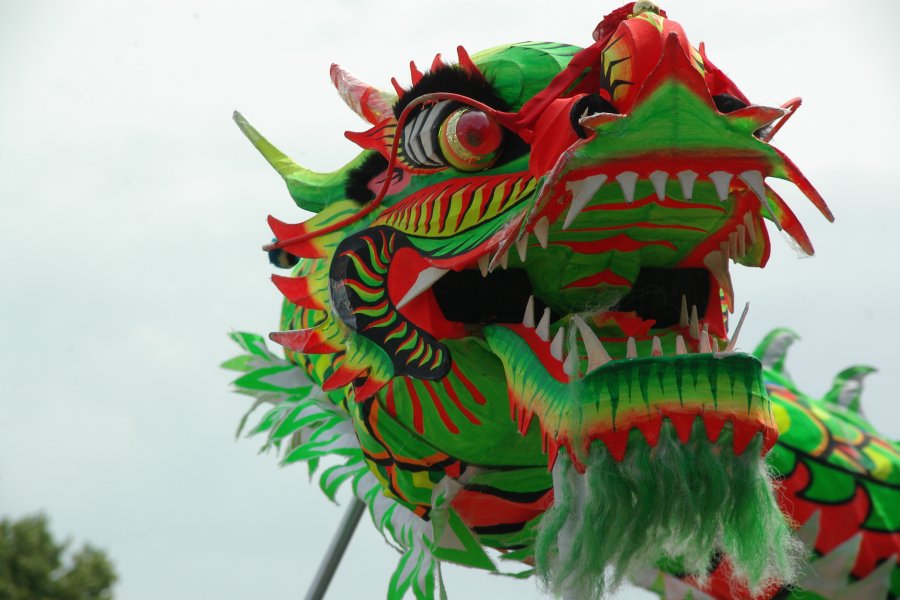 🇨🇳 China and 3 moreDragon dance舞龍 / 舞龙
A long dragon puppet on poles, danced by a team at Chinese New Year and other festivalsPerformance
🇨🇳 China and 3 moreDragon dance舞龍 / 舞龙
A long dragon puppet on poles, danced by a team at Chinese New Year and other festivalsPerformance