Crafts and makingNorth AmericaIndigenous and traditional
Dreamcatcher
In its own language: ᐊᓴᐱᑫᔒᓐᐦ (asabikeshiinh)
A hand-woven hoop from Anishinaabe tradition, hung above a cradle to protect a child

A dreamcatcher is a hoop of willow with a net woven inside, made by hand in Anishinaabe and other Native communities. It began as a charm for infants, hung above a cradle to catch harm, and today many people also keep it as a sign of unity or of hope after loss.
When is Dreamcatcher kept?
Dreamcatcher is kept on no fixed day or season. A charm is hung over a baby's cradle or a bed, and dreamcatchers are also given as gifts, including to students afte.
A dreamcatcher is a small hoop, often of willow, with a net woven inside it. In Anishinaabe and other Native communities it hangs above a baby's cradle as a charm that catches harm before it reaches the child. Others keep one as a sign of Native identity, of unity, or of hope after a loss.
What it is
People bend a thin hoop, usually willow, and weave string, sinew or plant cordage across the middle until it looks like a web. Feathers, beads or other sacred items may be tied on. The Ojibwe name asabikeshiinh comes from their word for spider, in its inanimate form. Other communities use their own terms: asubakacin, meaning net-like, at White Earth Nation, and bwaajige ngwaagan, meaning dream snare, at Curve Lake First Nation. The English name, dream catcher, appeared much later. Traditionally the hoop hangs above a cradle or a bed. It is a protective charm, not a toy or a wall decoration.
Ojibwe origins
An account recorded by the ethnographer Frances Densmore in 1929 traces these charms to Spider Woman, Asibikaashi, who looked after children and the people of the land. When the Ojibwe spread across North America she could not reach every child, so mothers and grandmothers wove webs of sinew or plant cordage on willow hoops, using nettle fibre in the old days. The purpose was protective; the sources do not link it to dreams. Infants were given such charms, two webs hung on a cradle board hoop, and people said they caught harm from the air as a spider's web holds what touches it. Basil Johnston, an elder from Neyaashiinigmiing, told another story in Ojibway Heritage (1976): Spider, asabikeshiinh or little net maker, as a trickster who caught Snake in his web.
Above the cradle
Dreamcatchers are still made and used in the communities they come from. The work usually belongs to women and is passed down in families. A hoop is bent, a web is woven inside it, and feathers, beads or other sacred items are tied on. The smallest ones are fixed to the hoop of a cradle board so a baby sleeps under protection, and larger ones are hung over beds. In these communities the charm is treated as something that catches harm, not as a decorative object. Outside them, dreamcatchers are bought, hung in homes and given as presents, and there they often stand for Native identity or for unity among Native nations.
A wider symbol
In the 1960s and 1970s, during the Pan-Indian movement, dreamcatcher forms were taken up as an emblem of unity among Native American cultures, or as a general way of showing identification with Native American or First Nations life. The English name reached mainstream, non-Native readers in the 1970s, and by the 1980s the object was widely sold as a Native craft item. By the early 1990s it had become one of the best known and most saleable of Native craft items. Many versions now made, shown and sold by New Age groups and individual makers differ a good deal from traditional styles and use materials that would not traditionally be used.
Gifts after loss
The Little Thunderbirds, a drum and dance group at Red Lake in Minnesota, keep one dreamcatcher mounted and framed. It stands for hope and healing shared with others who have known trauma and loss, both at their own school during the Red Lake shootings and among students who survived similar shootings elsewhere. Members have travelled to other schools, met the students there, shared songs and stories, and given them a dreamcatcher. The gift has moved from Red Lake to young people in several towns where school shootings have taken place.
How Dreamcatcher is kept
Anishinaabe and other Native women make the charm. Willow is bent into a circle, and a net of sinew, cordage or string is woven across it. Feathers or beads are added. A small one is tied to the hoop of a cradle board above a baby, and larger ones hang over beds. People who keep the custom understand the web to catch harm out of the air. Elsewhere, dreamcatchers are bought, hung in rooms and given as presents. In one healing use, a framed dreamcatcher travels from Red Lake to schools where shootings have happened, and is handed to students.
When and where
A dreamcatcher is not tied to a season or a date. It is hung when a baby is small, and in one account two webs were fixed to a cradle board. In modern use it is offered as a gift, as at Red Lake, where a framed one is taken to schools after a shooting. Its English name reached a wide public in the 1970s.
The charm belongs to Anishinaabe, or Ojibwe, country and is still kept in Native American and First Nations communities. The accounts name White Earth Nation, Curve Lake First Nation and Neyaashiinigmiing, and Minnesota's Red Lake reservation, where the healing gift began. Outside these places it is made and sold in many forms.
What Dreamcatcher means
Those who keep it see the web as a catcher of harm, in the way a spider's web holds what touches it. The charm is meant for the weakest person in the household, the baby, and its protection is a form of care. Later meanings were added: unity among Native nations, a sign of Native identity, and hope and healing for people who have lived through violence and loss.


Questions people ask about Dreamcatcher
When is Dreamcatcher kept?
Dreamcatcher is kept on no fixed day or season. A charm is hung over a baby's cradle or a bed, and dreamcatchers are also given as gifts, including to students afte.
What is a dreamcatcher?
A hoop, often of willow, with a net woven inside and feathers or beads tied on. In Anishinaabe and other Native communities it hangs above a cradle or a bed as a protective charm, catching harm in the air. Many people outside those communities keep one as a sign of Native identity or of hope.
Where does it come from?
From Anishinaabe, or Ojibwe, culture. The ethnographer Frances Densmore recorded an Ojibwe account of it in 1929, and the names used include asabikeshiinh, asubakacin and bwaajige ngwaagan. It is still kept in Native American and First Nations communities.
Is it really about dreams?
The English name points to dreams, but the early accounts describe a protective charm hung above infants, and the sources say the old purpose was not clearly about dreams. The name reached non-Native readers only in the 1970s.
Do all dreamcatchers look alike?
No. Many now made, shown and sold outside the Ojibwe Nation and outside pan-Indian communities look little like the traditional ones and include materials that would not traditionally be used. New Age groups and individual makers produce them.
See also
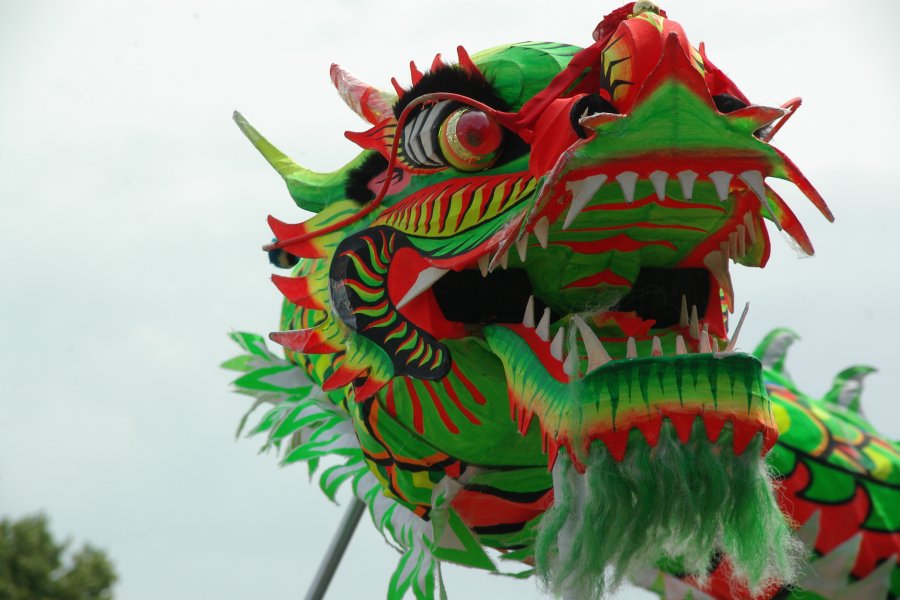 Dragon danceA long dragon puppet on poles, danced by a team at Chinese New Year and other festivals
 Jack-o'-lanternA carved pumpkin lantern lit with a candle to brighten and protect Halloween nights
 Friday the 13thA Western folk superstition regarding the unluckiness of a Friday falling on the 13th.
 Traditional tattooingThe ancient custom of marking the skin for protection, healing, status and sacred rites
Good reading and sources
- Dreamcatcher on WikipediaEncyclopedia
- More photos on Wikimedia CommonsPhotos and video
- Wikidata recordOpen data
The facts on this page come from the Wikipedia article "Dreamcatcher", written by its contributors and used under the CC BY-SA 4.0 licence, and from its Wikidata record (CC0). EveryParampara rewrote the text in its own words, with AI assistance, and compares every page with the article to make sure no passage is copied. It may be reused under the same CC BY-SA 4.0 licence with a link back.
It may contain mistakes. Traditions differ from one family, village and community to the next, and the people who keep them know them best. If something is wrong, tell us. Last refreshed 2026-10-05.
More from the United States
All the traditions of the United States 🇨🇳 China and 1 moreChinese patchwork
A needlework craft joining fabric scraps into protective clothing, quilts and folk artCraft
🇨🇳 China and 1 moreChinese patchwork
A needlework craft joining fabric scraps into protective clothing, quilts and folk artCraft
 🇺🇸 New York, United StatesNavajo weavingdiyogí
Handwoven wool textiles and rugs made on continuous warps by Navajo artisansCraft
🇺🇸 New York, United StatesNavajo weavingdiyogí
Handwoven wool textiles and rugs made on continuous warps by Navajo artisansCraft
 🇺🇸 United States and 1 moreBarn raising
A communal tradition where neighbours assemble to erect a farm barn in a few daysCraft · Lunch
🇺🇸 United States and 1 moreBarn raising
A communal tradition where neighbours assemble to erect a farm barn in a few daysCraft · Lunch
 🇬🇱 Greenland and 3 moreDog sledding
An Arctic tradition of navigating snow and ice behind working dog teamsCraft
🇬🇱 Greenland and 3 moreDog sledding
An Arctic tradition of navigating snow and ice behind working dog teamsCraft
The same idea elsewhere
Healing, luck and protection compared 🇦🇺 AustraliaSmoking ceremonyNumbuk Yabbun
An Aboriginal Australian ritual of burning native plants to cleanse, heal and welcomeSpiritual
🇦🇺 AustraliaSmoking ceremonyNumbuk Yabbun
An Aboriginal Australian ritual of burning native plants to cleanse, heal and welcomeSpiritual
 🇨🇳 China and 5 morePostpartum confinement
A period of rest, nourishment, and seclusion for mothers after giving birth.Rite of passage
🇨🇳 China and 5 morePostpartum confinement
A period of rest, nourishment, and seclusion for mothers after giving birth.Rite of passage
 🇮🇩 IndonesiaSlametan
A short communal meal on Java where neighbours share food, prayer and a wish for peaceSpiritual · Feasts and festival meals
🇮🇩 IndonesiaSlametan
A short communal meal on Java where neighbours share food, prayer and a wish for peaceSpiritual · Feasts and festival meals
 🇮🇩 Yogyakarta, IndonesiaSekatenꦱꦼꦏꦠꦺꦤ꧀
A week-long Javanese royal festival and market honouring the birth of the ProphetFestival
🇮🇩 Yogyakarta, IndonesiaSekatenꦱꦼꦏꦠꦺꦤ꧀
A week-long Javanese royal festival and market honouring the birth of the ProphetFestival