Festivals and celebrationsEurope
Chienbäse
A Swiss carnival night parade of blazing pinewood brooms and carts of fire

Chienbäse is a Fasnacht fire pageant held every year in the Swiss town of Liestal. On the Sunday following Ash Wednesday, participants march through narrow medieval streets hauling ignited pinewood bundles and towering wagons of open flame.
When is Chienbäse marked?
Chienbäse is kept as part of Ash Wednesday, which is on Wednesday, 10 February 2027.
Chienbäse is a fiery carnival tradition observed in Liestal, Switzerland. Celebrated on the first Sunday after Ash Wednesday, the event fills the old town with heat and bright light. Participants carry flaming bundles of pinewood and haul wagons loaded with high bonfires through the streets. Locals and international visitors gather along the narrow route to watch the blaze on the eve of Basel's Morgestraich.
The evening procession
The event gets its name from Alemannic German, where the term refers to a besom or broom crafted from pinewood chips. Bearers ignite these wood bundles and march into the historic center from the southern town gate. In modern times, the route also features wheeled carts stacked with large bonfires, sending flames upward towards the roofs of surrounding buildings. Spectators pack tightly along Rathausstrasse, standing mere feet from the passing fire as the procession travels through the heart of town.
Historic roots and theories
The beginnings of this fire gathering remain uncertain. Many observers suggest links to ancient pagan rites meant to welcome spring, drawn by the archaic atmosphere of open fire in the streets. Historical records offer a clearer timeline for specific practices. Written documentation confirms that pre-Lenten bonfires were lit in the region as far back as the sixteenth century. The first documented mention of participants marching with torches comes from 1869.
Regional carnival calendar
The celebration serves as a vivid prelude to the wider regional Fasnacht festivities. It takes place on the Sunday night immediately preceding Morgestraich, the famous early morning lantern parade in neighbouring Basel. While rooted in the municipal life of Liestal in Basel-Landschaft, the spectacle draws many thousands of onlookers from across Switzerland and foreign countries. Crowds line the medieval corridor shoulder to shoulder, braving the intense warmth as the town center transforms into a glowing pathway.
How Chienbäse is kept
On Sunday evening after Ash Wednesday, marchers gather south of Liestal. They set alight large brooms made of bundled pinewood chips and carry them through the southern city gate. Others pull wagons bearing tall, burning bonfires whose flames rise toward the eaves of medieval houses. The fiery column moves slowly along Rathausstrasse as thousands of closely gathered onlookers watch from both sides of the narrow street.
When and where
Chienbäse occurs once a year on the Sunday evening directly after Ash Wednesday. The festival is timed to take place during Fasnacht, on the night before the Morgestraich celebration begins in nearby Basel.
The parade takes place in Liestal, located in the canton of Basel-Landschaft, Switzerland. It winds along the medieval Rathausstrasse, entering the old quarter through the south city gate.
What Chienbäse means
The exact meaning of the custom is debated. Observers frequently interpret the fire pageant as a pagan spring rite, attributing symbolic meaning to the spectacle of fire dispelling winter. Historical evidence formally ties the lighting of fires in the area to the arrival of Lent.
Days Chienbäse is marked
Questions people ask about Chienbäse
When is Chienbäse marked?
Chienbäse is kept as part of Ash Wednesday, which is on Wednesday, 10 February 2027.
What is Chienbäse?
Chienbäse is a Swiss Fasnacht tradition in Liestal where people carry burning bundles of pinewood chips and pull carts of open bonfires through the historic town center.
Where does the parade route go?
The parade moves through the medieval town center of Liestal in Switzerland, entering through the southern city gate and continuing along Rathausstrasse between rows of onlookers.
What does the word Chienbäse mean?
The name comes from Alemannic German and translates to 'pinewood besom', referring to the broom-like bundles of pinewood chips that participants set ablaze and carry.
See also
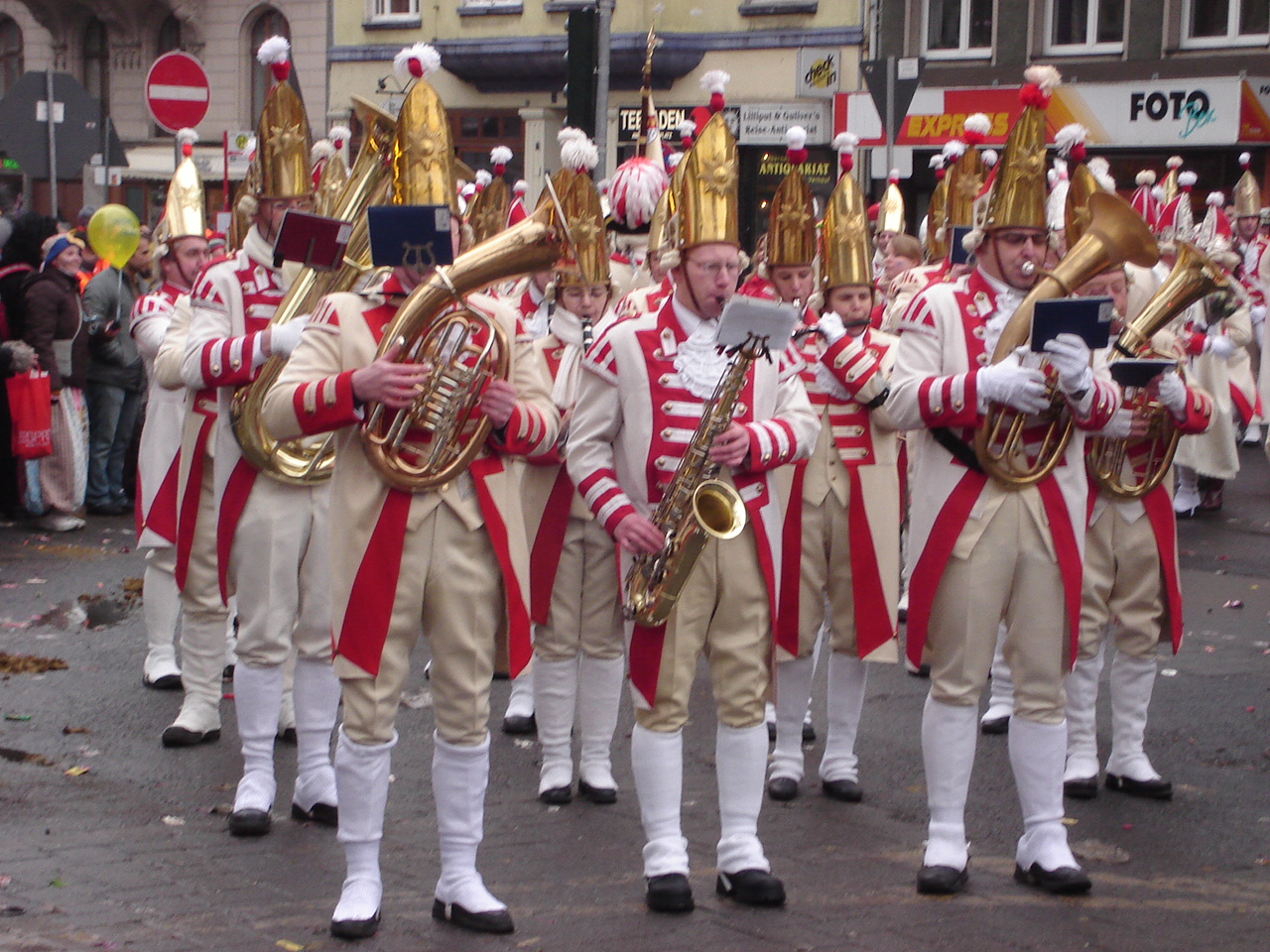 German CarnivalPre-Lenten street parades, costume balls and local revels across German-speaking lands.
 Easter egg treeA German springtime custom of dressing living trees and branches with blown eggs
 SechseläutenZurich's spring festival marked by guild parades and the burning of a snowman effigy
 NowruzThe Iranian new year at the March equinox, kept with fire, greenery and picnics
Good reading and sources
- Chienbäse on WikipediaEncyclopedia
- More photos on Wikimedia CommonsPhotos and video
- Wikidata recordOpen data
The facts on this page come from the Wikipedia article "Chienbäse", written by its contributors and used under the CC BY-SA 4.0 licence, and from its Wikidata record (CC0). EveryParampara rewrote the text in its own words, with AI assistance, and compares every page with the article to make sure no passage is copied. It may be reused under the same CC BY-SA 4.0 licence with a link back.
It may contain mistakes. Traditions differ from one family, village and community to the next, and the people who keep them know them best. If something is wrong, tell us. Last refreshed 2026-10-04.
More from Switzerland
All the traditions of Switzerland
🇩🇪 Saalfeld, Germany and 5 moreEaster egg treeOstereierbaum
A German springtime custom of dressing living trees and branches with blown eggsFestival
 🇩🇪 Germany and 2 moreSwabian-Alemannic FastnachtFastnacht
A late-winter carnival of masks and jesters kept before Lent in the Alemannic landsFestival
🇩🇪 Cologne, Germany and 2 moreGerman CarnivalKarneval
Pre-Lenten street parades, costume balls and local revels across German-speaking lands.Festival · Feasts and festival meals
🇩🇪 Germany and 2 moreSwabian-Alemannic FastnachtFastnacht
A late-winter carnival of masks and jesters kept before Lent in the Alemannic landsFestival
🇩🇪 Cologne, Germany and 2 moreGerman CarnivalKarneval
Pre-Lenten street parades, costume balls and local revels across German-speaking lands.Festival · Feasts and festival meals
 🇩🇪 Nuremberg, Germany and 5 moreChristmas marketWeihnachtsmarkt
A seasonal street market held during Advent in German-speaking regions and beyond, featuring stalls, food, and crafts.Festival · Tea, coffee and drinking ceremonies
🇩🇪 Nuremberg, Germany and 5 moreChristmas marketWeihnachtsmarkt
A seasonal street market held during Advent in German-speaking regions and beyond, featuring stalls, food, and crafts.Festival · Tea, coffee and drinking ceremonies
The same idea elsewhere
Spring and renewal compared 🇺🇸 United States and 5 moreMother's Day
A worldwide annual celebration dedicated to mothers, maternal bonds and family careHome
🇮🇷 Iran and 7 moreNowruzنوروز
The Iranian new year at the March equinox, kept with fire, greenery and picnicsSeasonal
🇺🇸 United States and 5 moreMother's Day
A worldwide annual celebration dedicated to mothers, maternal bonds and family careHome
🇮🇷 Iran and 7 moreNowruzنوروز
The Iranian new year at the March equinox, kept with fire, greenery and picnicsSeasonal
 🇮🇱 Jerusalem, IsraelPassoverפסח
A Jewish spring festival celebrating freedom from slavery with ritual mealsSpiritual · Dinner
🇮🇱 Jerusalem, IsraelPassoverפסח
A Jewish spring festival celebrating freedom from slavery with ritual mealsSpiritual · Dinner
 🇮🇳 Mathura, India and 5 moreHoliहोली (Hindi)
A spring festival of colours and bonfires that marks the end of winter and the triumph of good over evil.Festival
🇮🇳 Mathura, India and 5 moreHoliहोली (Hindi)
A spring festival of colours and bonfires that marks the end of winter and the triumph of good over evil.Festival