Festivals and celebrationsEuropeChristianSecular and civic
Christmas market
In its own language: Weihnachtsmarkt
A seasonal street market held during Advent in German-speaking regions and beyond, featuring stalls, food, and crafts.

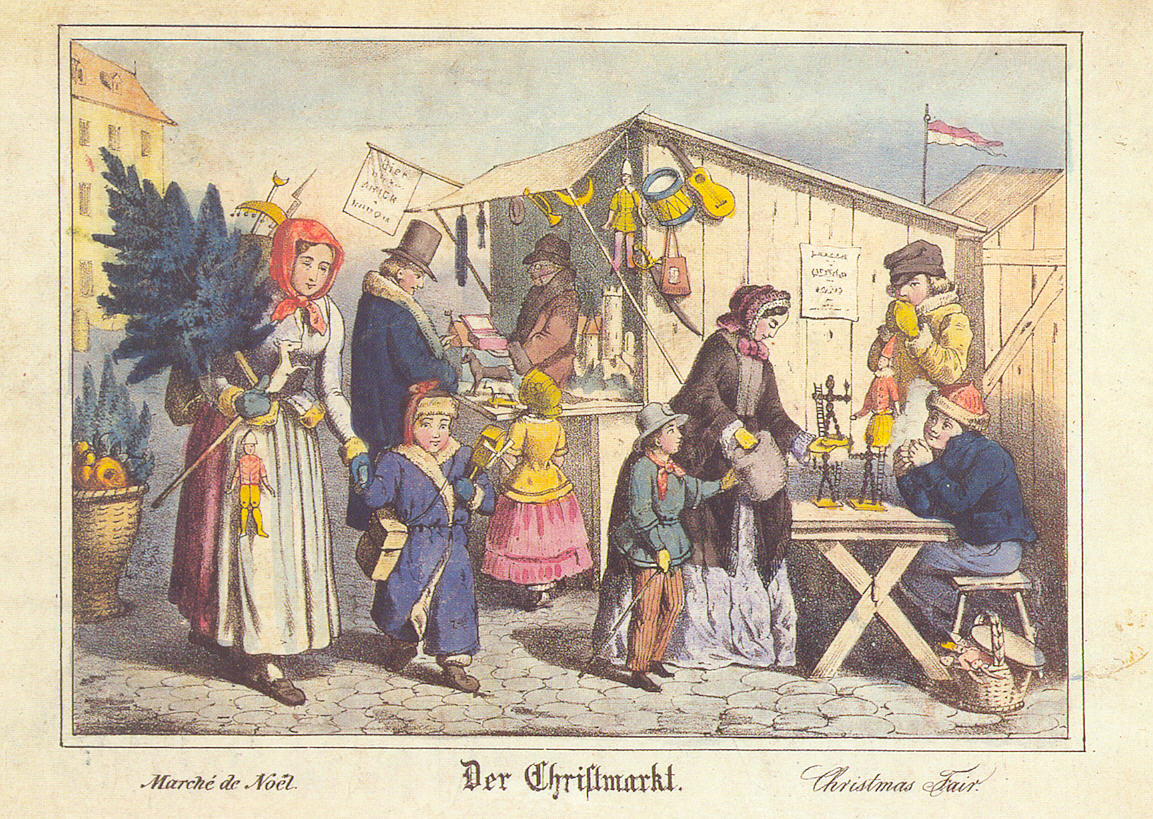
These markets are temporary street fairs that appear in town squares during the four weeks before Christmas. They began in medieval Germany and Austria to help people buy winter supplies and gifts. Today they offer handmade crafts, seasonal foods like mulled wine and gingerbread, and festive decorations across Europe and other parts of the world.
When is Christmas market in 2026?
Christmas market 2026 runs from 26 November to 23 December 2026. The date follows the moon or a local calendar, so it can move by a day. Other years: 2027, 26 November to 23 December 2027; 2028, 26 November to 23 December 2028.
A Christmas market is a seasonal street fair held during the Advent period. These gatherings originated in medieval Germany and Austria as places for citizens to purchase winter necessities and gifts. Today, they serve as community hubs where people enjoy traditional crafts, seasonal foods, and festive decorations while celebrating the holiday season.
Origins and history
The tradition began in the German-speaking regions of Europe during the Late Middle Ages. Early versions were known as December markets, established to help residents stock up on meat and supplies for the cold winter months. The first documented market appeared in Vienna in 1298, followed by others in Munich and Bautzen. Over time, these fairs evolved to include craftsmen selling toys and sweets for children. The Reformation era saw a shift in naming, with some markets adopting the term Christkindlmarkt to honor the Christ child rather than Saint Nicholas. Dresden's Striezelmarkt, starting in 1434, is considered one of the earliest true Christmas markets.
How it is kept
Markets are typically set up in central town squares or near historic landmarks. Open-air stalls line the pathways, offering a variety of goods and refreshments. Visitors browse handmade ornaments, wooden toys, and seasonal treats. Traditional singing and dancing often accompany the atmosphere. In Nuremberg, the opening night features the Christkind, a figure representing the Christ child, who welcomes attendees. Markets usually open in late November and remain active until Christmas Day or early January. Some cities host multiple markets, each with its own theme or focus.
Food and drink
Seasonal foods are a central part of the experience. Glühwein, a hot mulled wine, is widely consumed to ward off the cold. Other popular drinks include Eierpunsch, an egg-based warm beverage, and Kinderpunsch, a non-alcoholic option. Snacks such as Bratwurst sausages, roasted chestnuts, and candied almonds are common. Sweets like Lebkuchen gingerbread, Magenbrot, and Baumstriezel pastries are also staples. Regional specialties vary, with Saxony known for Christstollen bread and Hesse for Frankfurter Bethmännchen cookies.
Global spread
While rooted in German-speaking cultures, Christmas markets have spread globally. In France, Strasbourg hosts one of the oldest markets, dating back to 1570. Italy adopted the tradition more recently, with Bolzano establishing its first modern market in 1991. The United Kingdom saw the rise of large-scale markets in cities like Birmingham and Manchester, often supported by German partners. German immigrants brought the custom to the United States, where cities like Chicago and Denver now host their own versions. Other countries, including Russia, Latvia, and Romania, have also embraced the tradition in recent decades.
Modern developments
In the 20th century, Christmas markets became integral to pre-Christmas customs. A revival in the mid-1990s led to more commercialized versions with attractions like ice rinks and Ferris wheels. Security measures have increased in Western Europe due to past terror attacks, with bollards and police presence becoming standard. Despite these changes, the core appeal remains: a communal space for shopping, eating, and celebrating the season. Many markets continue to emphasize local artisans and traditional crafts, preserving their cultural significance.
How Christmas market is kept
Markets open in town squares during Advent, featuring stalls selling crafts, food, and drinks. Visitors browse items like wooden toys, ornaments, and seasonal treats while enjoying hot beverages and music. In some towns, a Christkind figure opens the market. Events range from small local fairs to large urban celebrations with thousands of visitors.
When and where
Held during the four weeks of Advent, typically from late November through December. Dates vary by city but generally align with the Christian calendar leading up to Christmas.
Strongest in Germany, Austria, and Switzerland, with significant presence in France, Italy, and the UK. Cities like Nuremberg, Vienna, and Strasbourg are renowned for their long-standing traditions.
What Christmas market means
Markets symbolize community gathering and preparation for the holiday season. They reflect historical practices of sharing resources and gifts during winter. The Christkind figure represents generosity and joy, while the exchange of handmade goods honors craftsmanship and local culture.
On the table
- Glühwein
- Eierpunsch
- Bratwurst
- Lebkuchen
- Christstollen
- Roasted chestnuts
- Candied almonds
- Baumstriezel



Days Christmas market is marked
Christmas market dates: 2026, 2027, 2028
| Year | Christmas market date |
|---|---|
| 2026 | 26 November to 23 December 2026 |
| 2027 | 26 November to 23 December 2027 |
| 2028 | 26 November to 23 December 2028 |
This date follows the moon or a local calendar and can move by a day, so check with a local source nearer the time.
Questions people ask about Christmas market
When is Christmas market in 2026?
Christmas market 2026 runs from 26 November to 23 December 2026. The date follows the moon or a local calendar, so it can move by a day. Other years: 2027, 26 November to 23 December 2027; 2028, 26 November to 23 December 2028.
What is a Christmas market?
A Christmas market is a seasonal street fair held during Advent. It features stalls selling handmade crafts, seasonal foods, and decorations. These markets originated in medieval Germany and Austria and are now celebrated worldwide.
Where are Christmas markets most famous?
They are most prominent in German-speaking countries like Germany, Austria, and Switzerland. Notable cities include Nuremberg, Vienna, and Strasbourg. The tradition has also spread to France, Italy, and the UK.
What kind of food is served at these markets?
Common foods include Glühwein (mulled wine), Bratwurst sausages, Lebkuchen gingerbread, and roasted chestnuts. Regional specialties vary, with some areas offering unique pastries and breads like Christstollen.
Why are they called Christkindlmarkt?
The name comes from the Reformation era, when some markets renamed themselves to honor the Christ child instead of Saint Nicholas. This shift reflected religious changes and emphasized the secular aspect of gift-giving.
See also
 ChristmasA festival of Jesus's birth, kept on 25 December with gifts, lights and shared meals
 Christmas treeA decorated evergreen or artificial tree placed indoors to mark the Christmas season.
 Christmas EveThe evening before Christmas, marked by church services, family meals, and gift preparations across Christian cultures.
 ImbolcA Gaelic festival heralding spring and honoring Saint Brigid with woven rush crosses
Good reading and sources
- Germany: 5 arrested for suspected Christmas market plotDeutsche Welle, Article
- Germany: 5 arrested for suspected Christmas market plotDeutsche Welle, Article
- Christmas market on WikipediaEncyclopedia
- More photos on Wikimedia CommonsPhotos and video
- Wikidata recordOpen data
The facts on this page come from the Wikipedia article "Christmas market", written by its contributors and used under the CC BY-SA 4.0 licence, and from its Wikidata record (CC0). EveryParampara rewrote the text in its own words, with AI assistance, and compares every page with the article to make sure no passage is copied. It may be reused under the same CC BY-SA 4.0 licence with a link back.
It may contain mistakes. Traditions differ from one family, village and community to the next, and the people who keep them know them best. If something is wrong, tell us. Last refreshed 2026-10-04.
More from Germany
All the traditions of Germany 🇸🇪 Sweden and 3 moreAdventadventus
A four-week Christian season of waiting and preparation for Christmas and the Second Coming.Festival
🇸🇪 Sweden and 3 moreAdventadventus
A four-week Christian season of waiting and preparation for Christmas and the Second Coming.Festival
 🇬🇧 United Kingdom and 3 moreMumming
A medieval European custom of masked house-to-house visits, performances and seasonal revelry.Festival
🇬🇧 United Kingdom and 3 moreMumming
A medieval European custom of masked house-to-house visits, performances and seasonal revelry.Festival
 🇺🇸 New Orleans, United States and 5 moreMardi Gras
A festive day of parades and rich foods marking the final celebration before the Christian fasting season of Lent beginsFestival
🇺🇸 New Orleans, United States and 5 moreMardi Gras
A festive day of parades and rich foods marking the final celebration before the Christian fasting season of Lent beginsFestival
 🇩🇪 Germany and 5 moreAdvent calendarAdventskalender
A daily countdown to Christmas using doors, images, or small gifts.Festival
🇩🇪 Germany and 5 moreAdvent calendarAdventskalender
A daily countdown to Christmas using doors, images, or small gifts.Festival
The same idea elsewhere
New Year compared 🇨🇳 China and 5 moreLion dance舞獅
A dynamic ritual dance featuring costumed lions, drums and martial acrobaticsPerformance
🇨🇳 China and 5 moreLion dance舞獅
A dynamic ritual dance featuring costumed lions, drums and martial acrobaticsPerformance
 🇲🇳 Mongolia and 2 moreTsagaan SarЦагаан сар
The Mongolian Lunar New Year festival of peace, elders, white foods and renewalSeasonal · Feasts and festival meals
🇲🇳 Mongolia and 2 moreTsagaan SarЦагаан сар
The Mongolian Lunar New Year festival of peace, elders, white foods and renewalSeasonal · Feasts and festival meals
 🇦🇿 AzerbaijanNovruzNovruz Bayramı
The Azerbaijani spring equinox festival of bonfires, sweets and sprouted wheatSeasonal · Feasts and festival meals
🇦🇿 AzerbaijanNovruzNovruz Bayramı
The Azerbaijani spring equinox festival of bonfires, sweets and sprouted wheatSeasonal · Feasts and festival meals
 🇮🇳 Guwahati, IndiaBohag Bihu
A multi-day Assamese New Year festival of cattle rites, music, gifts and feastsSeasonal · Feasts and festival meals
🇮🇳 Guwahati, IndiaBohag Bihu
A multi-day Assamese New Year festival of cattle rites, music, gifts and feastsSeasonal · Feasts and festival meals