Festivals and celebrationsEuropeChristian
German Carnival
In its own language: Karneval
Pre-Lenten street parades, costume balls and local revels across German-speaking lands.
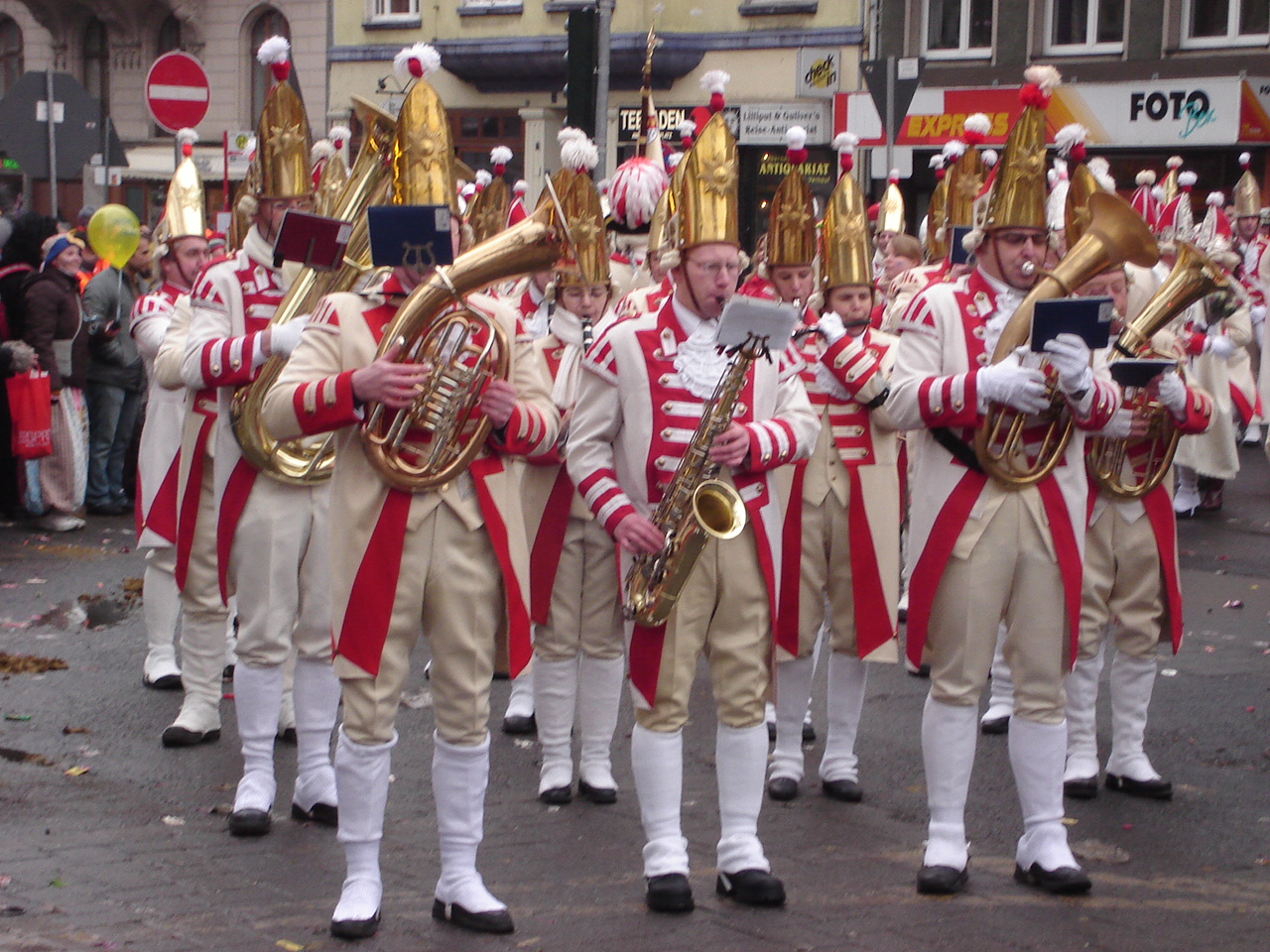
Known variously as Karneval, Fasching or Fastnacht, this pre-Lenten celebration fills German-speaking regions with masquerades, parades and mockery. People take over town halls, march through the streets in elaborate costumes, and feast before the Christian fast of Lent begins.
When is German Carnival marked?
German Carnival is kept as part of Ash Wednesday, which is on Wednesday, 10 February 2027.
Across Germany, Switzerland and Austria, the weeks before Lent bring an explosion of costumed revelry known as the Fifth Season. Rooted in both Roman Catholic and regional folk calendars, the festival takes different shapes from region to region. People gather for satirical stage shows, stormy takeovers of municipal halls, street parades and lively feasts before the solemn fasting period of Lent arrives.
Two major regional styles
Carnival divides broadly into two distinct regional varieties. In western Germany along the Rhine, the Rhenish tradition centres on grand street processions, costume balls and satirical entertainment. Further south, the Swabian-Alemannic Fastnacht takes hold across southwestern Germany, Switzerland, Alsace and western Austria. While Rhenish events developed strong civic parades and stage parodies, Fastnacht retains deeper ties to local winter rituals and dialect traditions. Protestant Basel in Switzerland offers an unusual schedule, launching its famous Fasnacht on the Monday following Ash Wednesday rather than concluding before it.
Rhenish revelry and satire
The modern Rhenish celebration began in Cologne during 1823. Local clubs used mockery and parody to voice subversive feelings against French and Prussian occupation. Today, the festival is guided by an eleven-member committee called the Council of Eleven, named after the French revolutionary ideals of liberty, equality and fraternity. The celebration includes club shows known as Sitzung, featuring songs, comic speeches and dances, frequently accompanied around Mainz by the Narrhallamarsch. The street festivities erupt on the Thursday before Lent, when women storm town halls, cut men's neckties and claim mayoral keys.
Swabian-Alemannic Fastnacht
In Swabia, parts of Bavaria, German Switzerland and western Austria, the festival carries names such as Fastnacht, Fasnet or Fasching. Its main street celebrations begin on Fat Thursday, known locally as Schmutziger Donnerstag. In the Alemannic dialect, the word schmotz refers to lard or rendered fat rather than dirt. Traditionally, households consumed the remaining meat and rendered animal fats from the previous year during these final days of winter before Lent. Festivities build through the weekend toward intense celebrations on Shrove Monday and Fat Tuesday, known in places like Lucerne as Güdisdienstag.
Northern customs and house visits
In northern and Protestant areas of Germany, older traditions went by Low Saxon names such as Fastelavend, Fastelabend or Fastlaam. Historically, young men and farm servants wandered through village streets wearing masks and creating loud noise. They visited households to collect eggs, bacon and sausages, which were then cooked and shared at an evening feast. While this custom disappeared in several districts, other communities adapted under the influence of western German carnival customs, transforming the house calls into organized street processions.
How German Carnival is kept
The season formally opens on 11 November at 11:11 in the morning but pauses during Advent. Festivities resume in January, erupting into street revels on the Thursday before Ash Wednesday. Women symbolically capture town halls and cut men's ties. Weekend parades lead to Rose Monday, the peak day when massive costumed processions take over major cities like Cologne, Düsseldorf and Mainz. Crowd members shout regional cries such as Alaaf or Helau. Celebrations wind down on Shrove Tuesday before Lent begins on Ash Wednesday.
When and where
The season officially starts on 11 November at 11:11 in the morning, running through the winter until Ash Wednesday. Street revels peak during the final week before Lent, especially on Rose Monday.
Celebrated across Germany, Switzerland and Austria. The Rhenish tradition is strongest in Cologne, Düsseldorf and Mainz, while Alemannic Fastnacht thrives in southwestern Germany, German Switzerland and western Austria.
What German Carnival means
The name Fastnacht marks the eve of the fasting period of Lent. Consuming rich lard and meats served as a practical farewell to winter fare. In the Rhineland, parody served as political defiance against occupying powers. The Council of Eleven and the number eleven honour the French revolutionary ideals of liberty, equality and fraternity.
On the table
- Lard
- Sausages
- Eggs
- Bacon


Days German Carnival is marked
Questions people ask about German Carnival
When is German Carnival marked?
German Carnival is kept as part of Ash Wednesday, which is on Wednesday, 10 February 2027.
What is German Carnival?
It is a pre-Lenten festive season celebrated across German-speaking countries under names like Karneval, Fasching and Fastnacht. People dress in costumes, hold satirical stage performances and parade through public streets before the Christian period of Lent begins.
What happens on Women's Carnival Thursday?
On the Thursday before Ash Wednesday, women take charge of celebrations. Originating with washerwomen in 1824, women storm municipal halls, demand town keys from the mayor, cut men's neckties and freely kiss passers-by.
Why is the number eleven important?
In the Rhineland, organizing committees have eleven members, known as the Council of Eleven. The number eleven, elf in German, serves as an acronym for the French revolutionary motto of equality, liberty and fraternity.
See also
 Christmas EveThe evening before Christmas, marked by church services, family meals, and gift preparations across Christian cultures.
 Mardi GrasA festive day of parades and rich foods marking the final celebration before the Christian fasting season of Lent begins
 St. Martin's DayA November feast of lantern walks, bonfires, roast goose and new wine
 RosenmontagThe peak of German carnival, celebrated with satirical street parades and sweets
Good reading and sources
- Carnival in Germany, Switzerland and Austria on WikipediaEncyclopedia
- More photos on Wikimedia CommonsPhotos and video
- Wikidata recordOpen data
The facts on this page come from the Wikipedia article "Carnival in Germany, Switzerland and Austria", written by its contributors and used under the CC BY-SA 4.0 licence, and from its Wikidata record (CC0). EveryParampara rewrote the text in its own words, with AI assistance, and compares every page with the article to make sure no passage is copied. It may be reused under the same CC BY-SA 4.0 licence with a link back.
It may contain mistakes. Traditions differ from one family, village and community to the next, and the people who keep them know them best. If something is wrong, tell us. Last refreshed 2026-10-04.
More from Germany
All the traditions of Germany
🇵🇱 Poland and 5 moreChristmas Eve
The evening before Christmas, marked by church services, family meals, and gift preparations across Christian cultures.Festival · Dinner
 🇸🇪 Sweden and 3 moreAdventadventus
A four-week Christian season of waiting and preparation for Christmas and the Second Coming.Festival
🇩🇪 Germany and 1 moreMaifest
A traditional German celebration marking the arrival of spring with decorated maypolesFestival
🇺🇸 New Orleans, United States and 5 moreMardi Gras
A festive day of parades and rich foods marking the final celebration before the Christian fasting season of Lent beginsFestival
🇸🇪 Sweden and 3 moreAdventadventus
A four-week Christian season of waiting and preparation for Christmas and the Second Coming.Festival
🇩🇪 Germany and 1 moreMaifest
A traditional German celebration marking the arrival of spring with decorated maypolesFestival
🇺🇸 New Orleans, United States and 5 moreMardi Gras
A festive day of parades and rich foods marking the final celebration before the Christian fasting season of Lent beginsFestival
The same idea elsewhere
Fasting and feasting compared 🇺🇸 United States and 1 moreSaint Patrick's Day in the United States
An annual celebration of Irish heritage across America with parades, feasts and green dyeFestival · Dinner
🇺🇸 United States and 1 moreSaint Patrick's Day in the United States
An annual celebration of Irish heritage across America with parades, feasts and green dyeFestival · Dinner
 🇮🇳 Ayodhya, India and 5 moreRama Navamiराम नवमी
A Hindu spring festival marking the birth of Rama with prayer, fasting and processionsFestival
🇮🇳 Ayodhya, India and 5 moreRama Navamiराम नवमी
A Hindu spring festival marking the birth of Rama with prayer, fasting and processionsFestival
 🇨🇴 Barranquilla, ColombiaBarranquilla CarnivalCarnaval de Barranquilla
A four-day street festival of music, masquerade and dance in coastal ColombiaFestival
🇨🇴 Barranquilla, ColombiaBarranquilla CarnivalCarnaval de Barranquilla
A four-day street festival of music, masquerade and dance in coastal ColombiaFestival
 🇮🇳 IndiaMahavir Janma Kalyanak
A Jain festival of temple worship, street processions and acts of charitySpiritual
🇮🇳 IndiaMahavir Janma Kalyanak
A Jain festival of temple worship, street processions and acts of charitySpiritual