Crafts and makingEast AsiaShinto, Taoist and folk Chinese
Chiwen
In its own language: 蚩吻
A dragon figure on Chinese roof ridges, set there to swallow evil and guard against fire

Chiwen is a roof ornament in traditional Chinese building, a fish-like dragon with a short body and a wide mouth that sits along the ridge. Chinese myth counts it among the nine sons of the dragon. People keep it on palaces, temples and homes to swallow evil and to guard against fire.
Chiwen is the fish-like, hornless dragon that sits at the ends of a roof ridge in traditional Chinese building. Craftspeople shaped it in glazed tile, and people kept it there because they believed it swallowed evil influences and turned away fire, floods and storms. It is also one of the nine sons of the dragon in Chinese myth, and it survives on the roofs of old houses today.
Dragon on the roof
Chiwen is a roof ornament in traditional Chinese building and art. It shows a dragon with few horns or none, a short body and a very wide mouth, set along a roof ridge as if swallowing the beams. People often compare these ornaments with Western gargoyles, though the two are not related. The same name belongs to a mythical dragon that carries features of a fish, and Chinese myth counts it among the nine sons of the dragon. Those nine also serve as imperial roof decorations.
Origins and history
The roof figure can be traced back to a Han dynasty ornament called chiwei, whose earliest images survive on ceramic models of buildings, on que-towers, and in tomb murals and stone reliefs. Those early pieces were shaped like wings and were linked to the Zhuque. From the Three Kingdoms through the Northern and Southern dynasties they stood on palaces, temples and official buildings, and in the Tang dynasty the private manors of nobles took them up. Glazed roof tiles came in during the Tang, so the ornaments were often glazed green and blue. A fish-like chiwen then appeared alongside the older wing shape, and by the Song dynasty it had replaced it, more dragon-like but still holding on to wings or a bird's head.
Making and placing
Old building manuals set out how the figure should be formed. The technical treatise Yingzao Fashi lists its proper parts and terminology and fixes its construction and measurements, so workshops worked from a shared pattern even as regional styles and colours differed. In use, one figure sits at each end of the ridgepole, and it can also serve as a waterspout. Builders finished it in glazed tile, often in green or blue. Over the centuries the body and tail curled further inward and the ornament grew more elaborate. By the Ming and Qing dynasties it stood widely on traditional buildings, and it is still placed on the roofs of Chinese homes today.
The nine dragons
Chinese tradition lists the chiwen second or third among the Lóng shēng jiǔzǐ, the nine young that the dragon is said to have fathered. These nine creatures became common decorations in feng shui architecture, and each of them has a protective duty. Their name runs through the map of Hong Kong, where Kowloon means nine dragons in Cantonese, and it also appears in the names of many lakes, rivers and small settlements on the mainland. A Ming dynasty text, the Wuzazu, explains the figure on the ridgepole as one that swallows all evil influences.
Japan and nearby
Japan took the names for these roof tiles into its own language as Sino-Japanese words. There the common term is shibi, an ornamental tile for the ridge, rather than chifun or shifun. Japanese myth has a related roof creature, the Shachihoko, a fish with a carp's arched tail, a tiger's head and dragon scales, which is believed to bring rain and to keep a building safe from fire. The character used for it was invented in Japan and can also be read for orca.
How Chiwen is kept
Chiwen belongs to buildings, not to a calendar. A maker shapes the ornament, glazes it, and a builder sets one at each end of the roof ridge, where it can double as a waterspout. In earlier centuries glazed examples in green and blue sat on imperial palaces, temples, government halls and the manors of nobles. Manuals such as the Yingzao Fashi set out the parts, names and measurements of each piece, so workshops shared a pattern while local shapes and colours varied. Today the figure still crowns traditional Chinese homes, and older versions remain on historic buildings.
When and where
Chiwen does not fall on a day of the year. Its place in history is measured in dynasties: the earliest examples come from the Han dynasty, the wing-shaped chiwei gave way to the fish-like chiwen in the middle of the Tang, and the dragon form was settled by the Song. Ming and Qing builders made the most ornate versions.
The tradition belongs to China and is strongest in traditional Chinese building: palaces, temples, official halls, noble manors and ordinary homes. Early images survive in tomb art and on ceramic models, and glazed pieces appear in the Mogao Grottoes murals. Japan borrowed the names for its own roof-ridge tiles. In Hong Kong the name Kowloon means nine dragons, taken from the group of creatures the chiwen belongs to.
What Chiwen means
For the people who put it on a roof, the chiwen is a guard. It is set at the ends of the ridge as though it were swallowing the building's beams, and with them every evil influence. The Tang book Su Shi Yan Yi tells of a sea creature of the same name placed on Han dynasty roofs to keep them from catching fire. Readers of feng shui give it a wider job still: it is said to hold off floods and typhoons. That protective meaning is why the figure is still kept on traditional homes today.


Questions people ask about Chiwen
What is a chiwen?
A chiwen is a roof ornament in traditional Chinese architecture. It is a fish-like, hornless dragon with a short body and a very wide mouth, set along a roof ridge as though it were swallowing the beams. The name also belongs to one of the nine sons of the dragon in Chinese myth.
Why is it placed on roofs?
People placed it there as a guard. A Ming dynasty text says the figure swallows all evil influences, and a Tang source describes a sea creature of the same name set on Han dynasty roofs to protect buildings from fire. In feng shui it is also said to hold off floods and typhoons.
Where is it found?
It belongs to China, on palaces, temples, official buildings, noble manors and ordinary homes. Early examples survive in tomb art, on ceramic building models and in the murals of the Mogao Grottoes. Japan borrowed the names for its own roof-ridge tiles, and Hong Kong's Kowloon takes its name from the nine dragons.
When did the ornament take shape?
The first ones are Han dynasty pieces, shaped like wings and known as chiwei. A fish-like chiwen appeared in the middle of the Tang dynasty, and by the Song it had replaced the older form and grown more dragon-like. Ming and Qing builders made the most ornate versions.
Is a chiwen the same as a gargoyle?
No. People often compare these roof ornaments and waterspouts with Western gargoyles. The chiwen also belongs to Chinese myth, where it counts as one of the nine sons of the dragon.
See also
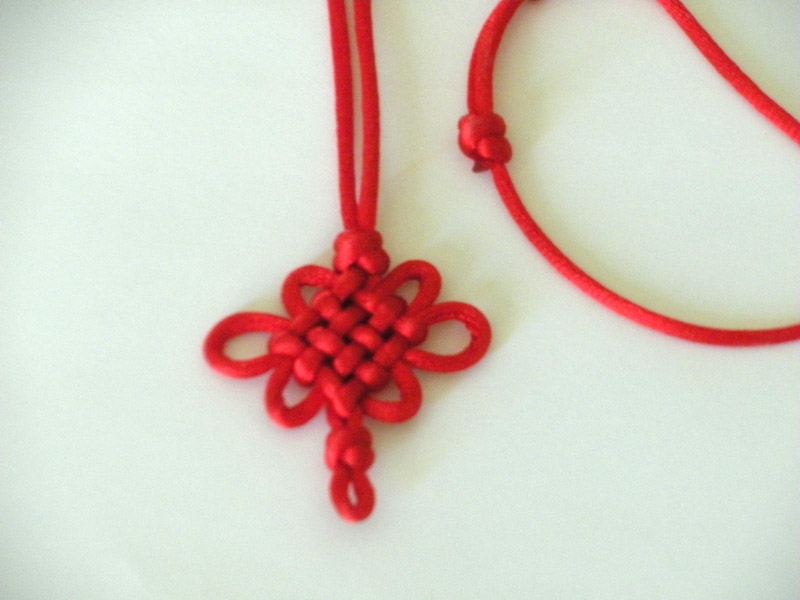 Chinese knottingA folk craft of cord tied into lucky shapes, made in China and given as charms
 Chinese paper cuttingChinese cut paper pictures, pasted on windows and doors for luck at New Year
 Chinese herbologyThe traditional Chinese system of preparing and prescribing herbal and natural remedies
 Chinese patchworkA needlework craft joining fabric scraps into protective clothing, quilts and folk art
Good reading and sources
- Chiwen on WikipediaEncyclopedia
- More photos on Wikimedia CommonsPhotos and video
- Wikidata recordOpen data
The facts on this page come from the Wikipedia article "Chiwen", written by its contributors and used under the CC BY-SA 4.0 licence, and from its Wikidata record (CC0). EveryParampara rewrote the text in its own words, with AI assistance, and compares every page with the article to make sure no passage is copied. It may be reused under the same CC BY-SA 4.0 licence with a link back.
It may contain mistakes. Traditions differ from one family, village and community to the next, and the people who keep them know them best. If something is wrong, tell us. Last refreshed 2026-10-11.
More from China
All the traditions of China
🇨🇳 China and 2 moreChinese knotting中國結 (Zhōngguó jié)
A folk craft of cord tied into lucky shapes, made in China and given as charmsCraft
🇨🇳 ChinaChinese paper cutting剪紙 / 剪纸 (jiǎnzhǐ)
Chinese cut paper pictures, pasted on windows and doors for luck at New YearCraft
🇨🇳 China and 1 moreChinese patchwork
A needlework craft joining fabric scraps into protective clothing, quilts and folk artCraft
🇨🇳 ChinaChinese herbology中藥學
The traditional Chinese system of preparing and prescribing herbal and natural remediesCraft
The same idea elsewhere
Healing, luck and protection compared 🇮🇹 Rome, Italy and 4 moreValentine's Day
A Christian feast day and cultural celebration of love kept on February 14 in many countries.Festival
🇮🇹 Rome, Italy and 4 moreValentine's Day
A Christian feast day and cultural celebration of love kept on February 14 in many countries.Festival
 🇩🇪 Germany and 5 moreChristmas tree
A decorated evergreen or artificial tree placed indoors to mark the Christmas season.Festival
🇩🇪 Germany and 5 moreChristmas tree
A decorated evergreen or artificial tree placed indoors to mark the Christmas season.Festival
 🇫🇷 France and 5 moreCandlemas
A Christian feast of candle blessings marking the end of the Christmas seasonSpiritual
🇫🇷 France and 5 moreCandlemas
A Christian feast of candle blessings marking the end of the Christmas seasonSpiritual
 🇺🇸 United States and 4 moreFriday the 13th
A Western folk superstition regarding the unluckiness of a Friday falling on the 13th.Folklore
🇺🇸 United States and 4 moreFriday the 13th
A Western folk superstition regarding the unluckiness of a Friday falling on the 13th.Folklore