Crafts and makingEast AsiaBuddhistShinto, Taoist and folk Chinese
Chinese knotting
In its own language: 中國結 (Zhōngguó jié)
A folk craft of cord tied into lucky shapes, made in China and given as charms
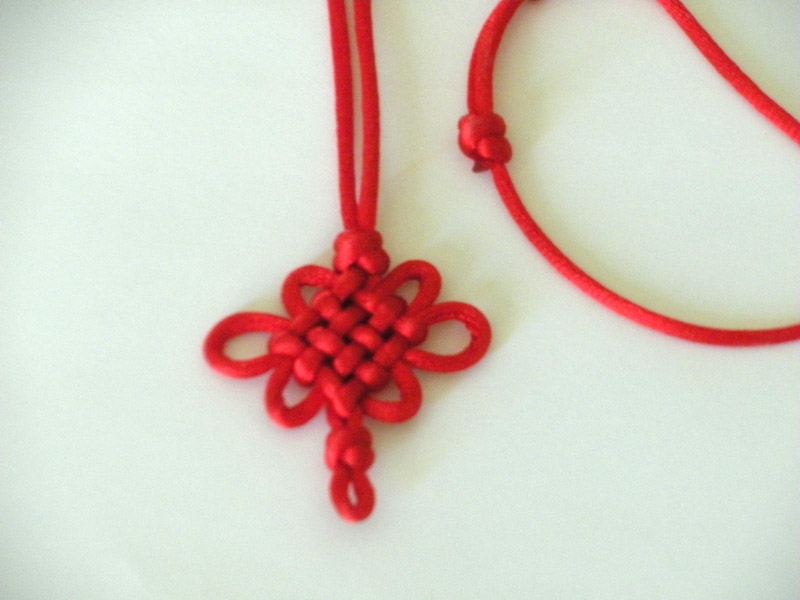
Chinese knotting is a folk craft of China. One length of cord is tied into shapes, and each shape holds a meaning. Linked to Buddhism and Taoism, the craft is kept today in charms, jewellery, clothing and festival decoration, with related knot traditions in Japan and Korea.
When is Chinese knotting kept?
Chinese knotting is kept on no fixed date. Knots are made through the year, hung in homes at festival time, and still appear at wedding ceremonies in Korea..
Chinese knotting is the art of tying one cord into a shape that carries a meaning. It belongs to China, where it is still made, and it has been linked to Buddhism and Taoism. Red cord is used most, since red means luck. Knots serve as charms, as ornaments on clothing and jewellery, and as decorations in the home at festival time.
What it is
Chinese knotting is a folk art of China. A cord is tied into a shape, and the shape is what carries the meaning. Knots vary in size and pattern, and most are worked in two layers and balanced in every direction. Satin cord is the material chosen most often, above all for pieces meant for clothing or jewellery, though cotton and other cords are used too. A tassel is made separately and then joined to the main work. Beads, charms and jade are added now and then, and colour is a free choice.
Origins and history
Long before writing was common, cords were knotted in China to keep records and send messages, in a way that has been compared with the quipu of the Inca. The Tao Te Ching looks back to it, and the Yi Jing says government once ran on knotted cords. Zheng Xuan, a scholar of the Eastern Han, wrote that great matters took many knots and small ones few. Knots also served as emblems. Silk found at the Mawangdui tombs shows two dragons twisted into a double coin knot, below the deities Fuxi and Nüwa. According to Lydia Chen, the oldest ornament knot still known sits on a square pot from the Spring and Autumn period, kept in the Shanxi Museum.
Knots and patterns
A few basic knots do most of the work. Larger designs are built by repeating one basic knot or by combining several. According to Lydia Chen, there are eleven basic kinds of decorative knot. Red is the favourite cord colour, taken to stand for fortune and prosperity, but gold, green, blue and black are all used. Work is done by hand, knot by knot, and the separate knots are then joined into a longer piece. Pan kou, the button loops used on the cheongsam, apply the same idea on a small scale.
What knots mean
A shape is never just a shape. Red cord was kept as a charm against harmful spirits, and a knotted cord was thought to hold good fortune. Because Fuxi and Nüwa are named as the first couple, the double coin knot came to stand for love, and love knots fill poems, novels and paintings of the Tang and Song years. At a wedding of that time, bride and groom each held a concentric knot. Meng Jiao wrote a poem called Bond of Love, and Luo Binwang and Huang Tingjian both wrote of ribbons tied together. Between family and friends a knot could carry a wish.
Today and change
For much of the twentieth century the craft lost ground, and by the 1970s few people were learning it. Lydia Chen then worked to bring it back through the Chinese Knotting Promotion Center. Since then knots have become a familiar emblem and a common souvenir at festivals and in markets, and pan kou on clothing and knotting as a folk craft are still alive in China. In Korea, maedeup is still commonly practised, especially by older people; there the dorae, or double connection knot, opens and closes nearly every piece, and about thirty-three basic knots are counted, varying from region to region.
How Chinese knotting is kept
A knot is worked from one unbroken cord. The maker folds and loops it until the shape appears, then draws it tight, and the pattern is usually the same on both sides. Tassels are made on their own and joined on afterwards. Beads, a charm or a piece of jade may be threaded in. Finished knots are hung in the home at festival time, worn within jade jewellery, sewn onto clothing, or used to hang small items from a belt. In Korea, maedeup work once belonged to religious rites, still appears at weddings, and the bongsul tassel is its best-known piece.
When and where
Chinese knotting has no fixed day or season. Knots are made and given all year, and they are brought out to decorate the home when festivals come. Its history is measured in centuries rather than dates: decorated examples survive from the Warring States period, the Northern dynasties and the Western Han.
The craft belongs to China and is strongest there, where pan kou button loops and folk knotting are still made. Its close relatives sit nearby. Hanamusubi is the Japanese form, and maedeup the Korean one, still commonly practised. A wall painting of 357 CE at Anak, in Hwanghae Province, in what is now North Korea, shows silk cords in use.
What Chinese knotting means
A knot is kept for what it says as much as for how it looks. Red cord, the colour of good fortune, was believed to hold off harmful spirits. The double coin knot, tied by two dragons on an old silk banner, is read as love, since Fuxi and Nüwa began marriage. The concentric knot joined a couple at their wedding. Between relatives and friends, a knot could stand for luck or affection. The shape and the colour together carry the meaning.


Questions people ask about Chinese knotting
When is Chinese knotting kept?
Chinese knotting is kept on no fixed date. Knots are made through the year, hung in homes at festival time, and still appear at wedding ceremonies in Korea..
What is Chinese knotting?
It is a folk craft of China in which a single cord is tied into a shape. Each shape has a meaning. Knots are used as charms, worn in jewellery and on clothing, and hung in homes at festival times. The craft is linked to Buddhism and Taoism.
Where is it kept today?
Mainly in China, where pan kou loops and folk knotting continue. Japan has its own form, hanamusubi, and Korea has maedeup, which is still commonly practised, particularly by older people.
Why is red used so often?
Red stands for luck in Chinese culture, so it is the colour chosen most often, for good fortune and prosperity. Other colours are used as well, including gold, green, blue and black, and the choice is up to the maker.
How old is the craft?
Knots were tied in China in prehistoric times, though few traces survive because cord rots away. Evidence remains on bronze vessels from the Warring States period, on Buddhist carvings of the Northern dynasties, and on Western Han silk paintings.
See also
 BarkclothCloth beaten from tree bark across Africa, Asia and the Pacific
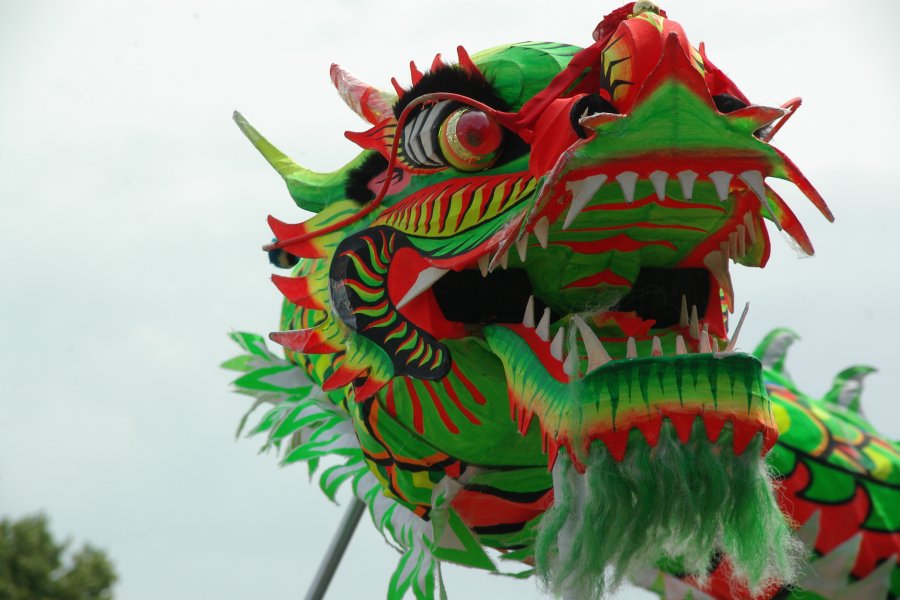 Dragon danceA long dragon puppet on poles, danced by a team at Chinese New Year and other festivals
 Water lanternSmall lamps floated on water to honour the dead and ask for good fortune
 OvooA stone cairn on a peak or pass, circled by travellers and honoured in sky worship
Good reading and sources
- Chinese knotting on WikipediaEncyclopedia
- More photos on Wikimedia CommonsPhotos and video
- Wikidata recordOpen data
The facts on this page come from the Wikipedia article "Chinese knotting", written by its contributors and used under the CC BY-SA 4.0 licence, and from its Wikidata record (CC0). EveryParampara rewrote the text in its own words, with AI assistance, and compares every page with the article to make sure no passage is copied. It may be reused under the same CC BY-SA 4.0 licence with a link back.
It may contain mistakes. Traditions differ from one family, village and community to the next, and the people who keep them know them best. If something is wrong, tell us. Last refreshed 2026-10-05.
More from China
All the traditions of China
🇺🇬 Uganda and 4 moreBarkcloth
Cloth beaten from tree bark across Africa, Asia and the PacificCraft
 🇨🇳 ChinaChinese paper cutting剪紙 / 剪纸 (jiǎnzhǐ)
Chinese cut paper pictures, pasted on windows and doors for luck at New YearCraft
🇨🇳 ChinaChinese paper cutting剪紙 / 剪纸 (jiǎnzhǐ)
Chinese cut paper pictures, pasted on windows and doors for luck at New YearCraft
 🇨🇳 China and 1 moreChinese patchwork
A needlework craft joining fabric scraps into protective clothing, quilts and folk artCraft
🇨🇳 China and 1 moreChinese patchwork
A needlework craft joining fabric scraps into protective clothing, quilts and folk artCraft
 🇨🇳 ChinaChinese herbology中藥學
The traditional Chinese system of preparing and prescribing herbal and natural remediesCraft
🇨🇳 ChinaChinese herbology中藥學
The traditional Chinese system of preparing and prescribing herbal and natural remediesCraft
The same idea elsewhere
Weddings compared 🇲🇦 Tan-Tan, MoroccoTan-Tan Moussem
An annual gathering of Saharan nomadic tribes with music, trading and equestrian artsFestival
🇲🇦 Tan-Tan, MoroccoTan-Tan Moussem
An annual gathering of Saharan nomadic tribes with music, trading and equestrian artsFestival
 🇬🇪 Tbilisi, Georgia and 4 moreGeorgian polyphonic singing
Several voices at once, sung without instruments at Georgian feasts and weddingsPerformance
🇬🇪 Tbilisi, Georgia and 4 moreGeorgian polyphonic singing
Several voices at once, sung without instruments at Georgian feasts and weddingsPerformance
 🇮🇩 IndonesiaSlametan
A short communal meal on Java where neighbours share food, prayer and a wish for peaceSpiritual · Feasts and festival meals
🇮🇩 IndonesiaSlametan
A short communal meal on Java where neighbours share food, prayer and a wish for peaceSpiritual · Feasts and festival meals
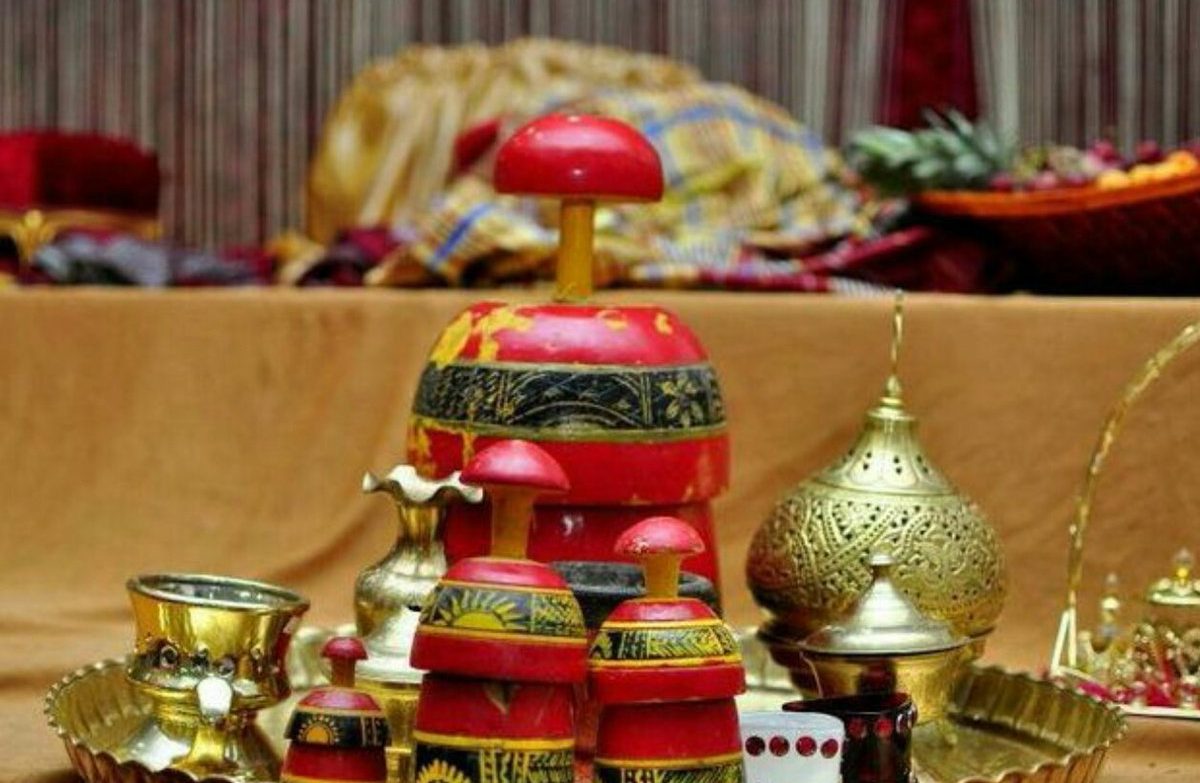 🇸🇩 SudanJirtigالجَرْتِقْ
A Sudanese wedding ritual of regal adornment, protection, and blessings of fertilityRite of passage
🇸🇩 SudanJirtigالجَرْتِقْ
A Sudanese wedding ritual of regal adornment, protection, and blessings of fertilityRite of passage