Chinese herbology
In its own language: 中藥學
The traditional Chinese system of preparing and prescribing herbal and natural remedies

Chinese herbology is the traditional practice of blending plants, minerals and animal substances to restore health and balance. Developed over thousands of years across China, practitioners categorize remedies by flavour, temperature and function before preparing them as simmered decoctions or pills.
Chinese herbology is the long-standing craft of compounding natural substances to treat illness and sustain balance. Forming the core of traditional Chinese medicine, it relies on thousands of plant roots, barks, minerals and other elements. Herbalists evaluate each ingredient by its thermal nature and taste, combining complementary items into warm brews or compact pills designed for a person's specific condition.
Early texts and origins
Written records of remedies reach back over two thousand years. The earliest found prescription manuscript dates to 168 BCE from the Mawangdui tombs. According to tradition, the legendary Shennong sampled hundreds of plants to test their qualities, inspiring the influential classic Shennong Bencao Jing compiled in the Western Han era. This work grouped 365 items into three tiers based on safety and potency: nourishing superior goods, moderate balancing agents and strong inferior substances for acute sickness. Later scholars expanded the craft, including Zhang Zhongjing in the Han dynasty and Li Shizhen during the Ming dynasty.
Qualities and classification
Practitioners organize medicinals through several traditional frameworks. The four natures describe thermal qualities: hot, warm, cool, cold or neutral. Warm and hot remedies counteract cold conditions, while cool or cold substances address heat. Ingredients also carry five distinct flavours linked to specific body organs and bodily actions. Pungent tastes are thought to stimulate sweat and energy, sweet flavours nourish and moisten, sour notes bind, bitter tastes clear excess heat, and salty flavours soften hardness. Additional groupings sort substances by their specific purpose, such as expelling dampness, easing coughs, calming the spirit or clearing heat.
Gathering and compounding
Ancient literature details tens of thousands of formulas drawn from roughly 13,000 recorded substances. While plant materials make up the vast majority, minerals and certain animal parts have also served as ingredients. Skilled makers follow strict seasonal guidelines for harvesting each plant at peak strength. To create a remedy, herbalists assemble a balanced group of nine to eighteen ingredients. The primary substance leads the treatment, supported by secondary materials that assist its action, direct its movement or moderate unwanted strength, before the batch is simmered slowly into a dark decoction.
Forms and trade
Beyond simmered liquids, herbal formulas have long been shaped into portable remedies. Traditional pill makers ground dried ingredients into fine powder and bound them with honey. Modern standard preparations condense simmered extracts into uniform pills or granules, maintaining steady proportions across batches. This herbal tradition also travelled far beyond Chinese borders during the medieval period. Islamic physicians including Rhazes and Avicenna noted items like rhubarb, ginger, nutmeg and cinnamon arriving along the Silk Road, recording uses that shared remarkable similarities with Chinese medical knowledge.
How Chinese herbology is kept
A practitioner first evaluates a patient's overall condition and pattern of symptoms. Using these observations, the herbalist selects a harmonious group of natural substances, usually between nine and eighteen different ingredients. The ingredients are weighed and blended to form a formula with clear primary and supporting elements. The patient then simmers the raw herbs in water to create a concentrated liquid tea, or takes the formula in the form of condensed honey pills, modern herbal tablets or dissolved extract granules.
When and where
Herbal remedies are prepared throughout the year whenever personal care, chronic imbalance or acute illness arises. Specific components are gathered according to traditional agricultural calendars that specify optimal planting and harvest times for each plant species.
This healing art originated in China and remains widespread across the country in pharmacies, clinics and households. Through historic Silk Road trade and modern migration, its formulas and theories have also reached western Asia, Europe and the Americas.
What Chinese herbology means
The system mirrors traditional understandings of balance between yinyang and the five phases. Each remedy reflects an internal hierarchy, where sovereign ingredients address the root illness while minister and assistant elements protect the body, balance the mixture and guide therapeutic energy to specific organ systems.
On the table
Flavours: Cinnamon Ginger Nutmeg and mace


Questions people ask about Chinese herbology
What is Chinese herbology?
It is the traditional Chinese system of using plant, mineral and animal materials to treat illness and promote bodily balance through custom-blended formulas.
Where did this tradition begin?
The practice originated in ancient China, with the earliest written medical prescriptions discovered in tomb sites dating to the second century BCE, later spreading along historic trade routes across Asia and the wider world.
How are the remedies usually prepared?
Herbalists combine multiple complementary substances that are traditionally boiled in water into a strong decoction. Formulas can also be dried, ground and shaped into pills or condensed into granules.
What kinds of ingredients are used?
While plant roots, leaves and barks make up the majority of the thousands of recorded medicinals, classical records also incorporate specific minerals and selected animal products.
See also
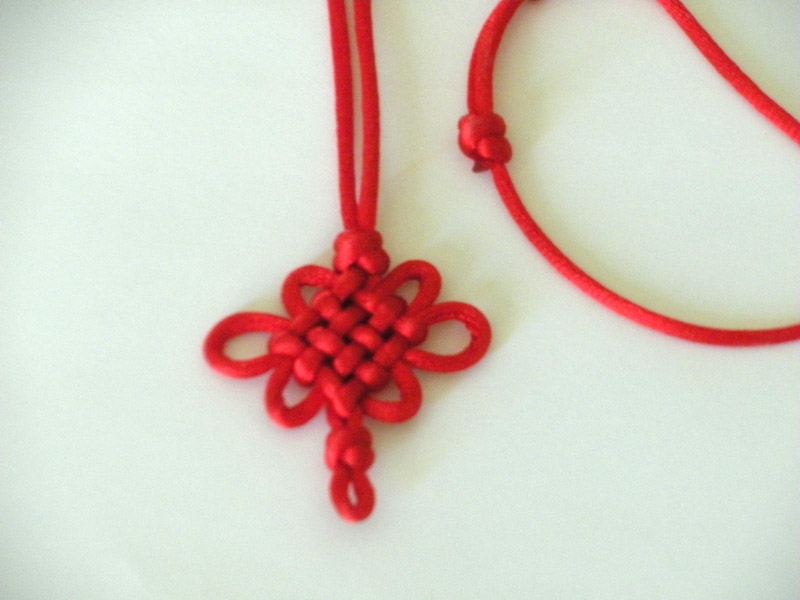 Chinese knottingA folk craft of cord tied into lucky shapes, made in China and given as charms
 Chinese patchworkA needlework craft joining fabric scraps into protective clothing, quilts and folk art
 Chinese paper cuttingChinese cut paper pictures, pasted on windows and doors for luck at New Year
 Water lanternSmall lamps floated on water to honour the dead and ask for good fortune
Good reading and sources
- Chinese herbology on WikipediaEncyclopedia
- More photos on Wikimedia CommonsPhotos and video
- Wikidata recordOpen data
The facts on this page come from the Wikipedia article "Chinese herbology", written by its contributors and used under the CC BY-SA 4.0 licence, and from its Wikidata record (CC0). EveryParampara rewrote the text in its own words, with AI assistance, and compares every page with the article to make sure no passage is copied. It may be reused under the same CC BY-SA 4.0 licence with a link back.
It may contain mistakes. Traditions differ from one family, village and community to the next, and the people who keep them know them best. If something is wrong, tell us. Last refreshed 2026-10-07.
More from China
All the traditions of China
🇨🇳 China and 2 moreChinese knotting中國結 (Zhōngguó jié)
A folk craft of cord tied into lucky shapes, made in China and given as charmsCraft
🇨🇳 ChinaChinese paper cutting剪紙 / 剪纸 (jiǎnzhǐ)
Chinese cut paper pictures, pasted on windows and doors for luck at New YearCraft
🇨🇳 China and 1 moreChinese patchwork
A needlework craft joining fabric scraps into protective clothing, quilts and folk artCraft
 🇺🇬 Uganda and 4 moreBarkcloth
Cloth beaten from tree bark across Africa, Asia and the PacificCraft
🇺🇬 Uganda and 4 moreBarkcloth
Cloth beaten from tree bark across Africa, Asia and the PacificCraft
The same idea elsewhere
Healing, luck and protection compared 🇩🇪 Germany and 5 moreChristmas tree
A decorated evergreen or artificial tree placed indoors to mark the Christmas season.Festival
🇩🇪 Germany and 5 moreChristmas tree
A decorated evergreen or artificial tree placed indoors to mark the Christmas season.Festival
 🇫🇷 France and 5 moreCandlemas
A Christian feast of candle blessings marking the end of the Christmas seasonSpiritual
🇫🇷 France and 5 moreCandlemas
A Christian feast of candle blessings marking the end of the Christmas seasonSpiritual
 🇺🇸 United States and 4 moreFriday the 13th
A Western folk superstition regarding the unluckiness of a Friday falling on the 13th.Folklore
🇺🇸 United States and 4 moreFriday the 13th
A Western folk superstition regarding the unluckiness of a Friday falling on the 13th.Folklore
 🇮🇪 Ireland and 2 moreJack-o'-lantern
A carved pumpkin lantern lit with a candle to brighten and protect Halloween nightsFolklore
🇮🇪 Ireland and 2 moreJack-o'-lantern
A carved pumpkin lantern lit with a candle to brighten and protect Halloween nightsFolklore