Dress and adornmentSouth AsiaMuslim
Clothing of Hyderabad
Traditional attire of Hyderabad, shaped by South Asian and Islamic styles
Traditional attire in Hyderabad brings together South Asian and Muslim design elements across garments for both men and women. Daily and festive wardrobes feature items such as the sherwani and lungi for men, alongside silk sarees, the khada dupatta, and the langa voni for women.
Traditional clothing in the city of Hyderabad reflects a blend of South Asian and Muslim cultural influences. Men and women in the region wear a variety of established garments, ranging from flowing silk sarees and the khada dupatta to tailored sherwanis and kurtas. While conventional attire remains widely worn, modern Western styles have also gained popularity across the city, particularly among the younger generation.
Styles and cultural influences
The clothing traditions of Hyderabad are shaped by both South Asian and Islamic cultural traditions. This blended heritage appears in the variety of pieces worn across different communities in the city. Traditional attire includes both stitched garments and unstitched draped fabrics for daily wear and formal occasions. While older customs and dress codes continue to define Hyderabadi fashion, Western-style apparel has become increasingly common in recent times, especially among younger residents of the urban area.
Traditional attire for men
Men in Hyderabad wear several classic styles of clothing suited to different settings. The sherwani is a formal, long coat-like garment worn over lower pieces. Men also regularly dress in a kurta paired with paijama or fitted churidar trousers, which provide comfort for routine activities and gatherings. In addition to these tailored outfits, the lungi is widely used as a relaxed lower garment wrapped around the waist, reflecting long-standing regional dress practices across the area.
Traditional attire for women
Women's fashion in Hyderabad includes a wide selection of garments. Distinctive local pieces include the khada dupatta, also known as the khara dupatta, as well as the gaagra choli and shalwar kameez. Draped garments include silk sarees, pattu sarees, and the langa voni, which is known as a half-saree. In public spaces, most Muslim women wear a hijab and a burqa as modest outerwear when going out.
How Clothing of Hyderabad is kept
Residents of Hyderabad wear distinct traditional garments based on occasion, gender, and personal background. Men choose between tailored items like the sherwani, kurta with paijama or churidar, and casual lungis. Women dress in silk sarees, pattu sarees, langa voni half-sarees, gaagra cholis, shalwar kameez, or the khada dupatta. Outside the home, many Muslim women also wear hijabs and burqas, while younger people increasingly adopt Western fashion.
When and where
This clothing tradition is centered in the city of Hyderabad, located in India. The distinct styles of dress are maintained by residents across the city's various neighbourhoods and communities.
Questions people ask about Clothing of Hyderabad
What is the traditional clothing of Hyderabad?
The traditional clothing of Hyderabad consists of regional garments for men and women influenced by South Asian and Muslim traditions. Key items include the sherwani, kurta, khada dupatta, silk sarees, and langa voni.
Where are these traditional styles worn?
These clothing styles are worn throughout the city of Hyderabad in India. They represent the distinctive regional dress practices developed and maintained by the local population across the urban area.
What do men and women traditionally wear in Hyderabad?
Men wear sherwanis, lungis, or kurtas paired with paijamas or churidars. Women wear silk sarees, pattu sarees, half-sarees known as langa voni, gaagra cholis, shalwar kameez, and the khada dupatta.
How is modern clothing changing in Hyderabad?
While traditional outfits such as sarees and sherwanis remain widely used, Western-style garments are becoming increasingly common across Hyderabad, especially among younger residents of the city.
See also
 PaithaniA handwoven silk sari from Maharashtra, with a squared border and a peacock pallu
 JambiyaA short curved dagger worn at the waist by Yemeni men, its handle a sign of status
 SherwaniA long buttoned coat for men, worn at weddings and state occasions in South Asia
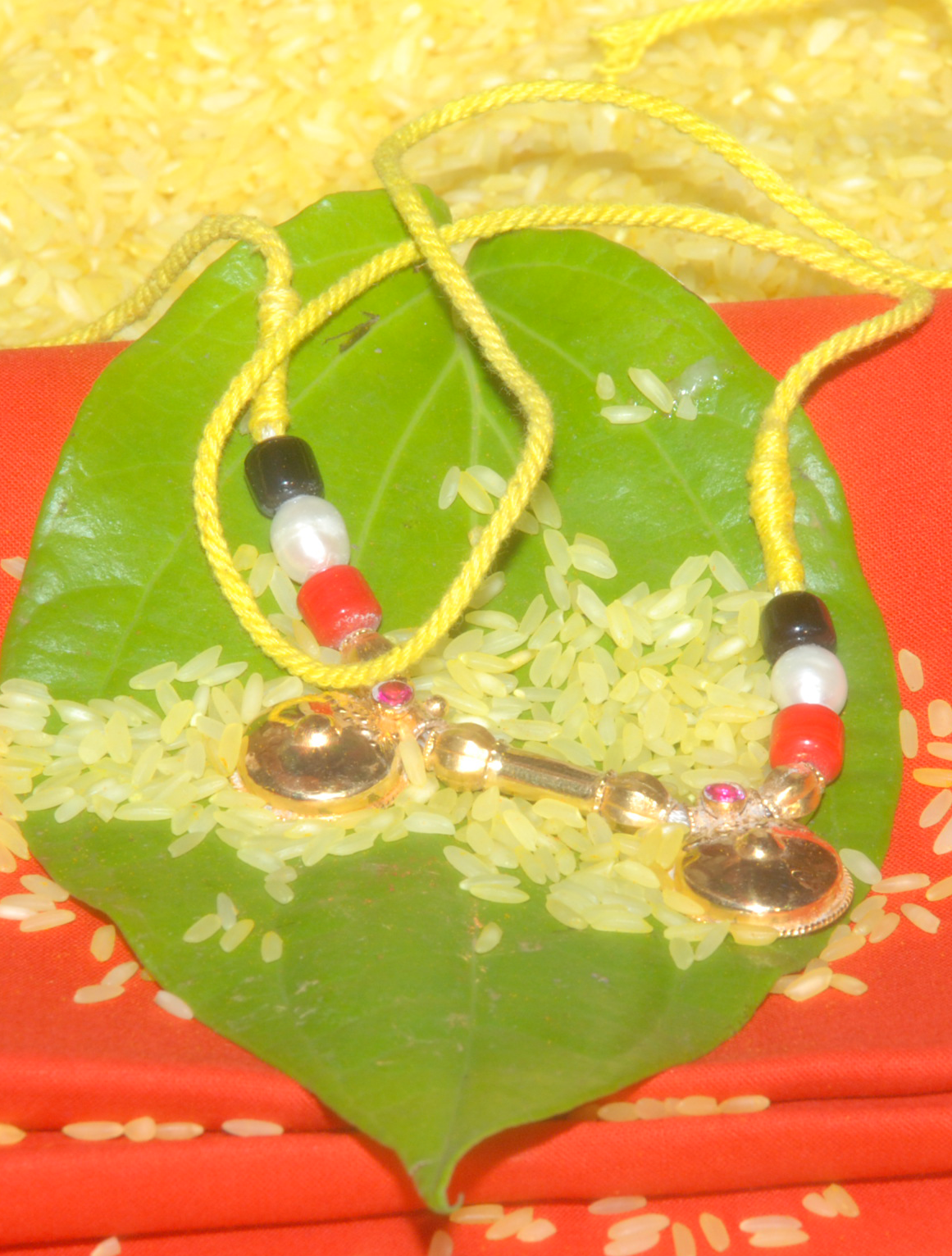 MangalasutraA necklace tied by the groom at a wedding, worn through married life
Good reading and sources
The facts on this page come from the Wikipedia article "Clothing of Hyderabad, India", written by its contributors and used under the CC BY-SA 4.0 licence, and from its Wikidata record (CC0). EveryParampara rewrote the text in its own words, with AI assistance, and compares every page with the article to make sure no passage is copied. It may be reused under the same CC BY-SA 4.0 licence with a link back.
It may contain mistakes. Traditions differ from one family, village and community to the next, and the people who keep them know them best. If something is wrong, tell us. Last refreshed 2026-10-06.
More from India
All the traditions of India
🇮🇳 Paithan, IndiaPaithani
A handwoven silk sari from Maharashtra, with a squared border and a peacock palluDress
🇮🇳 Lucknow, India and 3 moreSherwani
A long buttoned coat for men, worn at weddings and state occasions in South AsiaDress
🇾🇪 Hadhramaut, Yemen and 1 moreJambiyaجنبية
A short curved dagger worn at the waist by Yemeni men, its handle a sign of statusDress
 🇮🇳 Pune, India and 5 moreTurbanدولبند (dolband)
Cloth wound around the head, worn for faith, rank, shade and identityDress
🇮🇳 Pune, India and 5 moreTurbanدولبند (dolband)
Cloth wound around the head, worn for faith, rank, shade and identityDress
The same idea elsewhere
All of this kind 🇳🇴 Norway and 3 moreGákti
A traditional coat worn by the Sámi people across northern Scandinavia and Russia, signaling origin and status through cDress
🇳🇴 Norway and 3 moreGákti
A traditional coat worn by the Sámi people across northern Scandinavia and Russia, signaling origin and status through cDress
 🇮🇱 Israel and 1 moreTzitzitצִיצִית
Knotted ritual fringes worn on a four-cornered garment, a reminder of the commandmentsDress
🇮🇱 Israel and 1 moreTzitzitצִיצִית
Knotted ritual fringes worn on a four-cornered garment, a reminder of the commandmentsDress
 🇼🇸 Samoa and 1 moreʻIe tōga
Precious woven mats exchanged in Samoan ceremonies to honor family ties and chiefly status.Dress
🇼🇸 Samoa and 1 moreʻIe tōga
Precious woven mats exchanged in Samoan ceremonies to honor family ties and chiefly status.Dress
 🇪🇬 Egypt and 5 moreTraditional tattooing
The ancient custom of marking the skin for protection, healing, status and sacred ritesDress
🇪🇬 Egypt and 5 moreTraditional tattooing
The ancient custom of marking the skin for protection, healing, status and sacred ritesDress