Spiritual and religiousEuropeChristian
Conclave
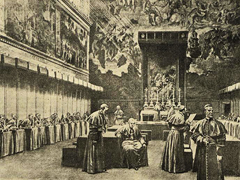
Cardinals sealed in the Sistine Chapel, voting until two thirds agree on a new pope

A conclave is the gathering of the College of Cardinals that elects the pope of the Catholic Church. The cardinals meet in the Sistine Chapel in Vatican City, sealed off from the outside, and vote in secret until one candidate has two thirds of the ballots.
When is Conclave kept?
Conclave is kept on whenever the papacy falls vacant, until the electors agree on a new pope.
A conclave is how the Catholic Church chooses a new pope. The College of Cardinals meets in the Sistine Chapel, sealed off from the outside world, and votes in secret until one candidate wins two thirds of the ballots. Catholics see the pope as the successor of Saint Peter and the head of the Church on earth, so the choice matters to believers far beyond Rome.
What it is
A conclave is a meeting of the College of Cardinals with a single task: to elect the bishop of Rome. Catholics believe the pope is the successor of Saint Peter and leads the Church on earth, so the choice carries weight for believers worldwide. Until a result is reached, the cardinals stay together and cut off from the outside. The name comes from the Latin cum clave, 'with a key', a reminder of the locked doors that gave the gathering its shape.
Origins and history
Early bishops of Rome were chosen by the clergy and the people of the city, often by acclamation, which meant loud agreement rather than a counted vote. Noble families and emperors pressed their interests, and rival claimants sometimes appeared. In 1059 the cardinals were made the only body that could choose a pope. Political meddling and a vacancy lasting from 1268 to 1271 led Pope Gregory X to decree in 1274 that the electors be shut away until they decided. Later councils and popes added rules on majorities.
The voting cardinals
Only cardinals vote. Paul VI fixed an age limit in 1970, keeping cardinals of 80 and above out of the voting, and five years later he set the ceiling of voting cardinals at 120. His successors have briefly passed that figure; the conclave of 2025 had 133 electors, the largest group ever to vote. Sixtus V had earlier fixed the whole College at 70, taking the number of Israel's elders as his model. John XXIII began widening the national spread of the College, and cardinals now come from many countries.
Who can be elected
Belonging to the College is not a requirement for election, though it has been the norm for centuries. Urban VI, chosen in 1378, was the last pope taken from outside the cardinals' ranks. Giovanni di Lorenzo de' Medici, elected as Leo X in 1513, was the last man to become pope without already being a priest or deacon, and Adrian VI in 1522 was the last chosen while absent from Rome. The Church teaches that only Catholics may be elected and that women cannot be ordained, so a woman cannot be pope. An Italian background is not needed.
Rules and changes
Majorities have shifted over time. The Third Council of the Lateran in 1179 asked for unanimity but allowed election by two thirds when agreement failed. Gregory XV's bull of 1621, Aeterni Patris Filius, ruled out self-voting and fixed two thirds as the standard. Pius XII raised the bar, John XXIII lowered it again, and John Paul II's constitution of 1996 permitted a simple majority after a long deadlock. Benedict XVI reversed that in 2007, restoring the two-thirds rule. Current procedures come from John Paul II and were slightly amended in 2007 and 2013.
How Conclave is kept
Cardinals under 80 gather in the Sistine Chapel, in the Apostolic Palace in Vatican City, once the papacy falls vacant. They vote by secret ballot. A candidate needs two thirds of the votes cast. The electors may not leave, and they stay in seclusion until a pope is chosen. Gregory X once allowed each cardinal only two servants and cut their food after the fourth and ninth days of a long conclave. In earlier centuries a cardinal could shift a vote to another candidate, a practice called accessus, which Pius XII ended in 1945.
When and where
A conclave is not fixed to a date. It is called when the pope dies or resigns, and it lasts as long as it takes to choose a successor. Early conclaves sometimes ran for months or years: the cardinals sat from 1268 to 1271, and other long gaps followed in the fourteenth and fifteenth centuries.
The vote is held in the Sistine Chapel, part of the Apostolic Palace in Vatican City. Before that it belonged to Rome, and in the Avignon Papacy a conclave was scattered by mercenaries and could not meet again for nearly two years. Cardinals travel to the gathering from dioceses across the world, so the electors are no longer mostly European.
What Conclave means
Catholics regard the pope as the head of the Church on earth and the successor of Saint Peter, so the choice is a matter of faith and not just administration. The locked doors express a wish that the electors decide without pressure from rulers or crowds. Requiring two thirds of the votes means the winner carries wide consent. Secrecy protects the cardinals themselves. In earlier centuries ballots were signed or initialled, which is why later rules worked to keep each vote private.


Questions people ask about Conclave
When is Conclave kept?
Conclave is kept on whenever the papacy falls vacant, until the electors agree on a new pope.
What is a conclave?
It is the meeting of the College of Cardinals called to elect a new pope. The cardinals gather in the Sistine Chapel in Vatican City and stay in seclusion, voting by secret ballot, until one of them wins the two-thirds majority needed to become bishop of Rome.
Who is allowed to vote?
Only cardinals may vote, and only those below the age of 80 when the conclave opens. Paul VI introduced that age rule in 1970 and later capped the number of voting cardinals at 120. Recent popes have gone a little above that figure for short periods.
Why are the cardinals locked in?
Pope Gregory X required it in 1274, after a vacancy that dragged on for close to three years. Shutting the doors was meant to force a decision and to keep the electors free of outside pressure. The name conclave comes from the Latin for 'with a key'.
Must the new pope be a cardinal?
No, though in practice he has been one for centuries. Urban VI, elected in 1378, was the last pope chosen from outside the College. The Church also holds that only Catholics may be elected, and because women cannot be ordained, a woman cannot become pope.
See also
 Holy WeekThe solemn seven days leading to Easter, recalling the final week and Passion of Jesus
 Stations of the CrossA Christian prayer journey following fourteen moments of the Passion of Jesus
 Camino de SantiagoA Christian walking pilgrimage across Europe to the shrine of Saint James in Spain
 Saint Stephen's DayA Christian feast day celebrating the first martyr with feasts, rides and folk customs.
Good reading and sources
- Conclave on WikipediaEncyclopedia
- More photos on Wikimedia CommonsPhotos and video
- Wikidata recordOpen data
The facts on this page come from the Wikipedia article "Conclave", written by its contributors and used under the CC BY-SA 4.0 licence, and from its Wikidata record (CC0). EveryParampara rewrote the text in its own words, with AI assistance, and compares every page with the article to make sure no passage is copied. It may be reused under the same CC BY-SA 4.0 licence with a link back.
It may contain mistakes. Traditions differ from one family, village and community to the next, and the people who keep them know them best. If something is wrong, tell us. Last refreshed 2026-10-05.
More from Vatican City
All the traditions of Vatican City 🇻🇦 Vatican City and 1 morePontifical Swiss GuardPontificia Cohors Helvetica
The Swiss military corps charged with guarding the Pope and the Apostolic PalaceCeremony
🇻🇦 Vatican City and 1 morePontifical Swiss GuardPontificia Cohors Helvetica
The Swiss military corps charged with guarding the Pope and the Apostolic PalaceCeremony
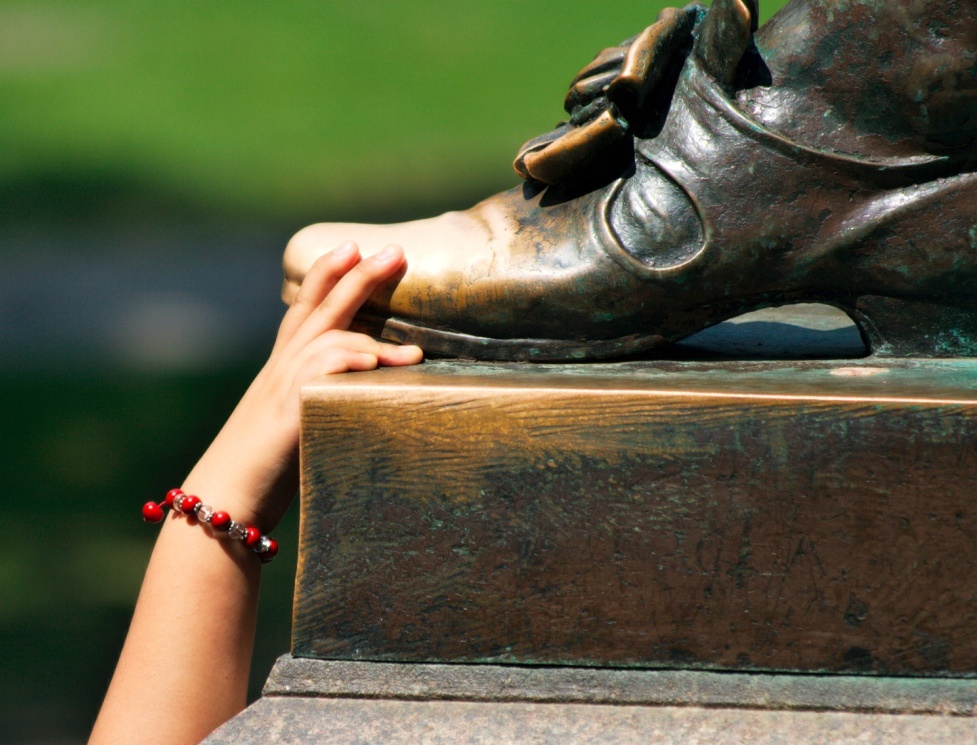 🇺🇸 United States and 5 moreStatue rubbing
A global custom of touching public statues to seek luck, love, or a return to the city.Festival
🇺🇸 United States and 5 moreStatue rubbing
A global custom of touching public statues to seek luck, love, or a return to the city.Festival
The same idea elsewhere
All of this kind 🇦🇺 Australia and 5 moreGood Friday
A solemn Christian holy day commemorating the crucifixion and death of Jesus Christ.Spiritual · Fasting and breaking the fast
🇦🇺 Australia and 5 moreGood Friday
A solemn Christian holy day commemorating the crucifixion and death of Jesus Christ.Spiritual · Fasting and breaking the fast
 🇮🇱 Jerusalem, IsraelPassoverפסח
A Jewish spring festival celebrating freedom from slavery with ritual mealsSpiritual · Dinner
🇵🇭 Philippines and 5 moreHoly WeekἉγία καὶ Μεγάλη Ἑβδομάς
The solemn seven days leading to Easter, recalling the final week and Passion of JesusSpiritual · Fasting and breaking the fast
🇮🇱 Jerusalem, IsraelPassoverפסח
A Jewish spring festival celebrating freedom from slavery with ritual mealsSpiritual · Dinner
🇵🇭 Philippines and 5 moreHoly WeekἉγία καὶ Μεγάλη Ἑβδομάς
The solemn seven days leading to Easter, recalling the final week and Passion of JesusSpiritual · Fasting and breaking the fast
 🇮🇱 Jerusalem, IsraelYom Kippurיוֹם כִּפּוּר
The holiest day in Judaism, dedicated to fasting, prayer and atonementSpiritual · Fasting and breaking the fast
🇮🇱 Jerusalem, IsraelYom Kippurיוֹם כִּפּוּר
The holiest day in Judaism, dedicated to fasting, prayer and atonementSpiritual · Fasting and breaking the fast