Spiritual and religiousEuropeChristianMuslim
Confession
Saying one's wrongs aloud, to God, to a religious figure or before a congregation

Confession is a religious rite in which a person admits sinful thoughts and acts, either privately to God or to an authorized person, or aloud before a congregation. It appears in Christianity, Islam, Judaism and Hinduism, and in secular settings such as Alcoholics Anonymous, always as a step toward forgiveness.
When is Confession marked?
Confession is kept as part of Yom Kippur, which is on Monday, 11 October 2027.
Confession is the naming of wrongs done, spoken aloud to God, to a religious leader or to a gathered community. Many faiths treat it as a step on the way to repentance, making amends and being forgiven. Christians, Muslims, Jews and Hindus all keep some form of it, and each shapes it differently. It is also used outside religion, in the Twelve-Step programme of Alcoholics Anonymous.
What it is
Across many religions, confession means saying out loud what one has done wrong in thought or act. It can be made in private to God, or to a person given religious authority, or in front of a whole congregation. Most traditions place it before penance, the making of amends, and see it as the road to atonement. The aim is not only forgiveness: communities describe it as a way to repair relationships, take moral responsibility and find healing. Christianity, Islam, Judaism and Hinduism all hold some version of the practice, and each gives it its own shape and rules.
In Christianity
Christian practice differs from church to church. In the Roman Catholic Church confession is a formal sacrament, heard by a priest who gives absolution and sets a penance. Eastern Orthodox Christians bring their sins to a chosen spiritual father. Lutherans keep private confession and absolution with a pastor, and Anglicans use both private and shared forms. Reformed and Methodist congregations put the emphasis on confessing together in worship. Despite the differences, each tradition treats the practice as a way back to God and to the community, and most attach a promise of secrecy to what is heard.
Catholic practice
The Catholic Church calls the sacrament penance, reconciliation or confession. Absolution comes from God through the priest, who also names an act of penance. Three acts are asked of the penitent: sorrow, the telling of the sins, and satisfaction. Serious sins must be confessed at least once a year, and everyday faults may be told too. Confession usually happens in a box, booth or reconciliation room, though it was once public. Priests are bound never to repeat what they hear, a rule known as the Seal of Confession.
Eastern Christian practice
Orthodox Christians, Assyrian Church of the East members and Eastern Rite Catholics choose a guide, often their parish priest, sometimes a monastic elder known as a starets, whom they call their spiritual father. Confession normally takes place in the main body of the church, at a lectern near the icon screen, with a Gospel book and a cross on it. The priest stands as a witness; forgiveness is believed to come from Christ. Afterwards he lays his stole over the penitent's head and reads the prayer of absolution.
Beyond Christianity
Islam has no intermediary: sins are brought to God in prayer. Jews confess as a community on holy days, above all Yom Kippur, and also privately to anyone they have wronged. In Hinduism, confession belongs to Prāyaścitta, the wider work of penance and atonement. Outside religion, groups such as Alcoholics Anonymous use confession as a step in recovery. What the traditions share, according to the sources, is a view of confession as a route to spiritual healing, mended relationships and moral accountability.
How Confession is kept
In the Catholic form the penitent greets the priest, tells the sins and their number, and prays an act of contrition; the priest gives absolution and a penance. Orthodox practice begins with the choice of a spiritual father; the penitent bows before the Gospel book and cross, confesses, and receives the prayer of absolution under the priest's stole. A Lutheran confesses to a pastor, who speaks the words of forgiveness. Jewish communal confession is said together on Yom Kippur. At the Sunday of Forgiveness, priest and people bow to one another and ask pardon.
When and where
Catholic teaching asks for confession at least once a year when serious sins are involved, and pastors make it available whenever it is reasonably sought. Orthodox parishes advise it before Holy Communion, or during the four fasting seasons: Great Lent, the Nativity Fast, the Apostles' Fast and the Dormition Fast. Jewish communal confession belongs to Yom Kippur.
Confession is kept wherever these faiths are practised. Catholic confession usually happens in a confessional box or reconciliation room; Orthodox confession is heard in the body of the church, and in an emergency anywhere at all. Monks on Mount Athos confess daily. Old Believers hold the rite of mutual forgiveness before the Divine Liturgy.
What Confession means
Catholic teaching compares confession not to a courtroom but to a wedding hall, where the community rejoices at Easter. The white garment given at baptism is said to be restored. Eastern Christians see the priest as a witness while Christ forgives. The word sub rosa, for secrecy, comes from Greek and Roman myth and passed into Christian use. Across the traditions the meaning is much the same: honesty about failure, a repaired bond, and the beginning of a changed life.


Days Confession is marked
Questions people ask about Confession
When is Confession marked?
Confession is kept as part of Yom Kippur, which is on Monday, 11 October 2027.
What is confession?
It is the act of admitting sinful thoughts and actions out loud, either privately to God, to a person with religious authority, or before a congregation. Traditions treat it as a step of repentance that comes before penance and atonement, and as a path to forgiveness.
Where does it take place?
Catholics normally use a confessional box, booth or reconciliation room. Orthodox confession is usually heard in the main part of the church, before a lectern near the icon screen. In an emergency it may be heard anywhere, according to Orthodox practice.
Is what is said kept secret?
Yes, in the churches described here. Catholic priests are bound by the Seal of Confession, and the same protection covers what is told to an Orthodox spiritual father or guide. Lutheran pastors are also pledged not to repeat what they hear in private confession.
Do all Christians confess the same way?
No. The Catholic Church treats confession as a formal sacrament with a priest. Orthodox Christians go to a chosen spiritual father. Lutherans and Anglicans keep private and shared forms, while Reformed and Methodist churches stress confessing together in worship.
See also
 OvooA stone cairn on a peak or pass, circled by travellers and honoured in sky worship
 Saint Andrew's DayThe feast of Andrew the Apostle, kept on 30 November and Scotland's national day
 Intercession of the TheotokosAn Eastern Christian autumn feast honoring the protective veil of the Virgin Mary
 Kiddush LevanahA Jewish ritual service held after the new moon to bless God for the lunar cycle and seek protection.
Good reading and sources
- Confession (religion) on WikipediaEncyclopedia
- More photos on Wikimedia CommonsPhotos and video
- Wikidata recordOpen data
The facts on this page come from the Wikipedia article "Confession (religion)", written by its contributors and used under the CC BY-SA 4.0 licence, and from its Wikidata record (CC0). EveryParampara rewrote the text in its own words, with AI assistance, and compares every page with the article to make sure no passage is copied. It may be reused under the same CC BY-SA 4.0 licence with a link back.
It may contain mistakes. Traditions differ from one family, village and community to the next, and the people who keep them know them best. If something is wrong, tell us. Last refreshed 2026-10-12.
More from Russia
All the traditions of Russia
🇲🇳 Mongolia and 3 moreOvooовоо (Cyrillic Mongolian); ᠣᠪᠤᠭᠠ (Traditional Mongol)
A stone cairn on a peak or pass, circled by travellers and honoured in sky worshipSpiritual
 🇵🇱 Poland and 5 moreZaduszkiZaduszki, Dzień Zaduszny
A Polish day of prayer for the dead on 2 November, kept with candles at the gravesSpiritual
🇵🇱 Poland and 5 moreZaduszkiZaduszki, Dzień Zaduszny
A Polish day of prayer for the dead on 2 November, kept with candles at the gravesSpiritual
 🇮🇱 Israel and 4 moreTorah readingקריאת התורה
The public reading of the Torah scroll in synagogue, chanted to a special tuneSpiritual
🇮🇱 Israel and 4 moreTorah readingקריאת התורה
The public reading of the Torah scroll in synagogue, chanted to a special tuneSpiritual
 🇦🇲 Armenia and 1 moreTrndezտրնդեզ
An Armenian fire feast forty days after Christmas, kept with bonfires and shared sweetsSpiritual · Feasts and festival meals
🇦🇲 Armenia and 1 moreTrndezտրնդեզ
An Armenian fire feast forty days after Christmas, kept with bonfires and shared sweetsSpiritual · Feasts and festival meals
The same idea elsewhere
Healing, luck and protection compared 🇮🇳 India and 4 moreWater lantern
Small lamps floated on water to honour the dead and ask for good fortuneFestival
🇮🇳 India and 4 moreWater lantern
Small lamps floated on water to honour the dead and ask for good fortuneFestival
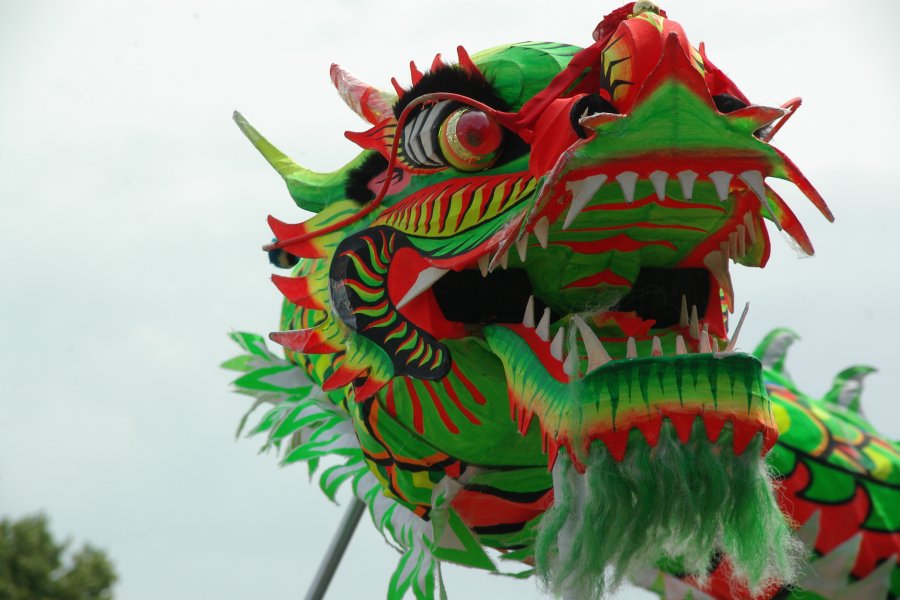 🇨🇳 China and 3 moreDragon dance舞龍 / 舞龙
A long dragon puppet on poles, danced by a team at Chinese New Year and other festivalsPerformance
🇨🇳 China and 3 moreDragon dance舞龍 / 舞龙
A long dragon puppet on poles, danced by a team at Chinese New Year and other festivalsPerformance
 🇺🇸 United States and 4 moreFriday the 13th
A Western folk superstition regarding the unluckiness of a Friday falling on the 13th.Folklore
🇵🇬 Trobriand Islands, Papua New GuineaTrobriand cricket
Cricket as played in the Trobriand Islands, with chants, dances and a feastGame
🇺🇸 United States and 4 moreFriday the 13th
A Western folk superstition regarding the unluckiness of a Friday falling on the 13th.Folklore
🇵🇬 Trobriand Islands, Papua New GuineaTrobriand cricket
Cricket as played in the Trobriand Islands, with chants, dances and a feastGame