Spiritual and religiousEuropeChristian
Intercession of the Theotokos
In its own language: Покровъ
An Eastern Christian autumn feast honoring the protective veil of the Virgin Mary

The Intercession of the Theotokos is a major holy day observed by Eastern Orthodox and Byzantine Catholic Christians on 1 or 14 October. Rooted in a tenth-century vision of Mary spreading her veil over worshippers, it holds deep spiritual and cultural significance across Ukraine, Russia, and Belarus.
When is Intercession of the Theotokos kept?
Intercession of the Theotokos is kept on annually on 1 October or 14 October.
The Intercession of the Theotokos, known as Pokrov or Pokrova, is a major autumn feast kept by Eastern Orthodox and Byzantine Catholic believers. It commemorates a tenth-century vision in Constantinople in which the Virgin Mary appeared in church, praying for the faithful and extending her veil over them in shelter. While remembered across the wider Eastern Church, it is especially cherished among Slavic communities as a season of heavenly guardianship.
The vision in Constantinople
According to sacred tradition, the feast originated during the tenth century at the Blachernae church in Constantinople, a sanctuary housing relics of the Virgin Mary. Early one morning during an all-night service, Saint Andrew the Fool-for-Christ looked up and saw Mary floating in the air, encircled by saints and angels. Weeping, she knelt in prayer for all Christians and asked Christ to receive their petitions. Afterward, she extended her veil across the gathered congregation as a sign of heavenly shelter. Andrew pointed out the apparition to his disciple Epiphanius, who confirmed the miraculous sight with wonder.
Iconography and church rites
Icons of the feast portray the Virgin Mary within a radiant aura, holding out a veil to signify her protection. Around her stand figures such as John the Baptist, Saint Nicholas, and the apostles, while Saint Andrew gestures toward her from below alongside Epiphanius. Saint Romanus the Melodist also appears frequently at the center with an open hymn scroll. In church practice, the holy day is marked by an All-Night Vigil using hymns comparable to the Great Feasts of Mary. However, unlike other major solemnities, this observance does not feature a liturgical afterfeast.
Slavic and Cossack traditions
Veneration of the feast spread into Rus' by the twelfth century and became central to the cultural life of Belarus, Russia, and Ukraine. Ukrainian Cossacks embraced the Theotokos as their military patroness, opening expeditions with a plea for her protective grace. The Ukrainian leader Bohdan Khmelnytsky is even shown sheltered under Mary's cloak in historical religious art. Cossack governing assemblies were scheduled for this holy day alongside Christmas and Easter. In modern times, the date also became associated with Cossack remembrance and Defenders of Ukraine Day.
How Intercession of the Theotokos is kept
Worshippers gather in church for an All-Night Vigil on the eve and day of the feast. Clergy and the congregation chant hymns celebrating the shelter of Mary. Icons showing the Theotokos holding out her protective cloth above saints and worshippers are venerated. Unlike many major Marian celebrations, this holy day has no liturgical afterfeast, concluding once the feast day services end.
When and where
Churches celebrate the feast on 1 October or 14 October, depending on whether their liturgical tradition follows the Revised Julian calendar or the older Julian calendar.
The feast is observed throughout Eastern Orthodox and Byzantine Catholic jurisdictions, with particularly strong and historic veneration in Ukraine, Russia, and Belarus, where numerous prominent cathedrals and fortress churches bear its name.
What Intercession of the Theotokos means
The feast reflects the comforting belief in the Mother of God as an active guardian who intercedes with Christ on behalf of humanity. The veil serves as a visible token of compassion and shelter, assuring believers of spiritual safety and deliverance during times of trial, warfare, and distress.


Questions people ask about Intercession of the Theotokos
When is Intercession of the Theotokos kept?
Intercession of the Theotokos is kept on annually on 1 October or 14 October.
What is the Intercession of the Theotokos?
It is an Eastern Christian holy day celebrating the belief that the Virgin Mary protects the faithful, inspired by a tenth-century vision where she spread her veil over a congregation in Constantinople.
Where is this tradition most popular?
Although observed across Eastern Orthodoxy, devotion is strongest in Ukraine, Russia, and Belarus, where it is one of the most prominent religious solemnities outside the Twelve Great Feasts.
Why is the feast significant in Ukraine?
In Ukraine, the feast has long ties to the Zaporozhian Cossacks, who revered Mary as their patroness. Today it also connects with national observances honoring the defenders of the country.
See also
 OvooA stone cairn on a peak or pass, circled by travellers and honoured in sky worship
 Saint Andrew's DayThe feast of Andrew the Apostle, kept on 30 November and Scotland's national day
 TrndezAn Armenian fire feast forty days after Christmas, kept with bonfires and shared sweets
 Torah readingThe public reading of the Torah scroll in synagogue, chanted to a special tune
Good reading and sources
- Intercession of the Theotokos on WikipediaEncyclopedia
- More photos on Wikimedia CommonsPhotos and video
- Wikidata recordOpen data
The facts on this page come from the Wikipedia article "Intercession of the Theotokos", written by its contributors and used under the CC BY-SA 4.0 licence, and from its Wikidata record (CC0). EveryParampara rewrote the text in its own words, with AI assistance, and compares every page with the article to make sure no passage is copied. It may be reused under the same CC BY-SA 4.0 licence with a link back.
It may contain mistakes. Traditions differ from one family, village and community to the next, and the people who keep them know them best. If something is wrong, tell us. Last refreshed 2026-10-05.
More from Ukraine
All the traditions of Ukraine 🇧🇪 Belgium and 5 moreSaint Nicholas Day
The feast day of Saint Nicholas, kept in Advent with gifts, shoes and church servicesSpiritual
🇧🇪 Belgium and 5 moreSaint Nicholas Day
The feast day of Saint Nicholas, kept in Advent with gifts, shoes and church servicesSpiritual
 🇧🇾 Belarus and 4 moreDziadyДзяды (Belarusian); Діди (Ukrainian); Dziady (Polish)
A Slavic tradition of feeding and welcoming the spirits of ancestors to ensure family fertility and peace.Spiritual
🇧🇾 Belarus and 4 moreDziadyДзяды (Belarusian); Діди (Ukrainian); Dziady (Polish)
A Slavic tradition of feeding and welcoming the spirits of ancestors to ensure family fertility and peace.Spiritual
 🇮🇱 Jerusalem, Israel and 3 moreHanukkah menorah
A nine-branched lamp that gains one more flame on each of Hanukkah's eight nightsSpiritual
🇮🇱 Jerusalem, Israel and 3 moreHanukkah menorah
A nine-branched lamp that gains one more flame on each of Hanukkah's eight nightsSpiritual
 🇷🇺 Russia and 5 moreBeheading of John the Baptist
A Christian holy day of strict fasting that marks the death of John the BaptistSpiritual · Fasting and breaking the fast
🇷🇺 Russia and 5 moreBeheading of John the Baptist
A Christian holy day of strict fasting that marks the death of John the BaptistSpiritual · Fasting and breaking the fast
The same idea elsewhere
Healing, luck and protection compared 🇮🇳 India and 4 moreWater lantern
Small lamps floated on water to honour the dead and ask for good fortuneFestival
🇮🇳 India and 4 moreWater lantern
Small lamps floated on water to honour the dead and ask for good fortuneFestival
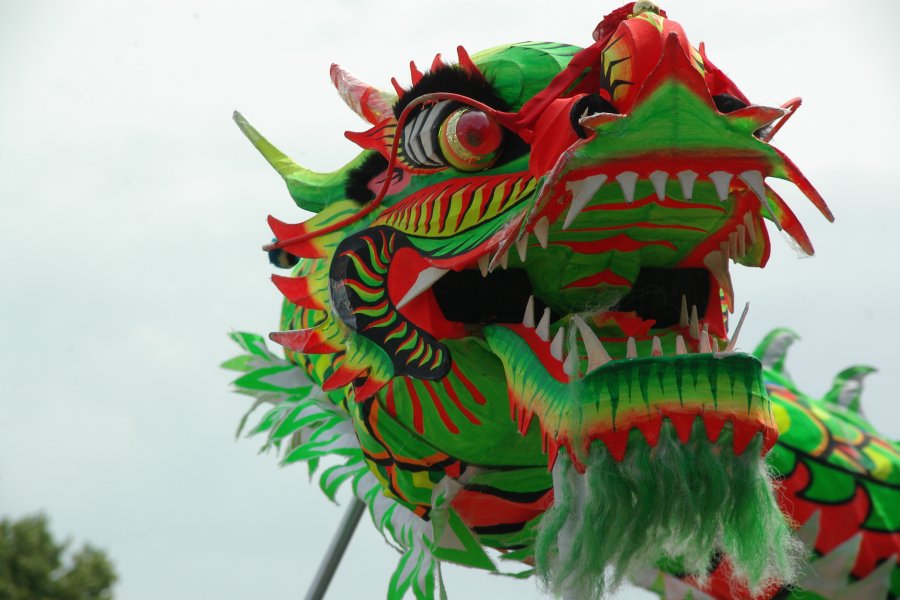 🇨🇳 China and 3 moreDragon dance舞龍 / 舞龙
A long dragon puppet on poles, danced by a team at Chinese New Year and other festivalsPerformance
🇨🇳 China and 3 moreDragon dance舞龍 / 舞龙
A long dragon puppet on poles, danced by a team at Chinese New Year and other festivalsPerformance
 🇺🇸 United States and 4 moreFriday the 13th
A Western folk superstition regarding the unluckiness of a Friday falling on the 13th.Folklore
🇵🇬 Trobriand Islands, Papua New GuineaTrobriand cricket
Cricket as played in the Trobriand Islands, with chants, dances and a feastGame
🇺🇸 United States and 4 moreFriday the 13th
A Western folk superstition regarding the unluckiness of a Friday falling on the 13th.Folklore
🇵🇬 Trobriand Islands, Papua New GuineaTrobriand cricket
Cricket as played in the Trobriand Islands, with chants, dances and a feastGame