Spiritual and religiousEuropeChristianPagan and ancient
Saint Andrew's Day
In its own language: Là Naomh Anndrais
The feast of Andrew the Apostle, kept on 30 November and Scotland's national day

A feast day for Andrew, the disciple who brought his brother Peter to Jesus, kept by Orthodox, Catholic, Anglican and Presbyterian churches on 30 November. Scotland treats it as the national day, with a bank holiday and flag flying, and Romania, Georgia, Serbia and Barbados each give it national meaning.
When is Saint Andrew's Day kept?
Saint Andrew's Day is kept each year on 30 November, and on 12 May in Georgia.
On 30 November each year, Christians keep the feast of Andrew the Apostle, the disciple who led his brother Peter to Jesus. Scotland treats the date as its national day, filled with Scottish music and food, and it opens a winter run of Scottish festivals. Romania, Georgia, Serbia and Barbados each attach the day to their own history too.
What it is
Saint Andrew's Day honours Andrew, the disciple in the New Testament who brought his brother, the Apostle Peter, to Jesus. Orthodox, Catholic, Anglican and Presbyterian churches all keep it, most of them on 30 November, and in the Western church it has long held the rank of a holy day of obligation. The same date opens the Saint Andrew Christmas Novena, an Advent devotion. Andrew is claimed as patron in many places: Cyprus, Greece, Russia, Ukraine, Romania and Scotland, the Ecumenical Patriarchate of Constantinople, San Andres Island in Colombia, Saint Andrew in Barbados, Tenerife in Spain and Chamoson in Switzerland.
Scotland's national day
In Scotland the day is the official national day, though it gained holiday status only recently and stays a normal working day for many. An act passed by the Scottish Parliament in 2006 made it a bank holiday from 2007; if 30 November falls at a weekend, the Monday after is used instead. Schools stay open, employers need not release staff, and banks stay open in practice. The University of St Andrews has long given students the day off. The Saltire, or Saint Andrew's Cross, is flown on Scottish Government buildings. Some politicians object that Edinburgh Castle still flies the Union Flag.
Georgian tradition
The Georgian church teaches that Andrew preached Christianity in the land before anyone else and founded the church there. The claim comes from Byzantine writers, above all Niketas David Paphlagon, who died around 890 and wrote that Andrew taught the Iberians, Sauromatians, Taurians and Scythians and every town along the Black Sea. Georgian clergy took the story up in the tenth and eleventh centuries and wrote it into the Georgian Chronicles. It gave their church an apostolic beginning, which George the Hagiorite used against Antioch's claims over its independence. A monk named Ephraim the Minor later fitted the tale together with Nino's fourth-century conversion of the Georgians. A church council made that reading official in 1103.
The eve and its customs
The night before the feast carries a different weight in central and eastern Europe, where many hold that it is a strong time for magic about marriage. In Poland the night is called Andrzejki, once kept by unmarried girls alone and now joined by young men, who pour hot wax from a candle through the hole of a key into cold water. Romanian girls put a sprig of sweet basil under the pillow, hoping to dream of a future husband, or grow wheat in a dish and read the coming year from it. At Cape Santo André in northern Portugal, fishermen once walked the beach to the chapel with lights in their hands.
National meanings
Romania has marked the day as a national holiday since 2015, and Andrew is patron of both the country and the Romanian Orthodox Church. Barbados keeps it as the national day of independence, and Andrew is remembered in its public symbols: his cross sits inside the coat of arms, and a since-discontinued honours order named its members Knight or Dame of St Andrew. In Serbia the date recalls 1806, when Belgrade was freed from Ottoman rule, and 1830, when a decree read in Belgrade granted the principality autonomy and made Prince Miloš its hereditary ruler. Statehood Restoration Day was kept under the Obrenović dynasty until 1903.
How Saint Andrew's Day is kept
Practice varies by country. In Scotland the Saltire is raised over government buildings, and towns such as St Andrews hold a week of events with Scottish music and food; the feast then begins a winter season that runs through Hogmanay to Burns Night. Romanian families cut branches from apple, pear, cherry and rose bushes, one bunch for each person, and watch which bunch flowers by New Year's Day. Polish young people gather on the eve to pour wax through a key. Georgian Orthodox believers keep 12 May and 13 December as Andrew's feast days.
When and where
The feast falls on 30 November in most churches, Eastern and Western alike. In Scotland, if the date lands on a Saturday or Sunday, the bank holiday shifts to the Monday after. Georgia keeps a public holiday on 12 May, the day tied to Andrew's arrival there, and a second feast on 13 December. Poland's Andrzejki runs through the night of 29 to 30 November.
Scotland is where the day serves as the national holiday, with week-long events in St Andrews; Scottish communities abroad mark it too. Romania and Georgia treat it as a national or public holiday, and Barbados as its national day. Serbia ties it to its statehood, and Poland and Romania to the folk magic of the eve.
What Saint Andrew's Day means
For Christians the day honours a disciple who pointed others towards Jesus and who is held to have carried the faith around the Black Sea. In Scotland the Saltire stands for nationhood, and the feast opens a winter of shared celebration. Romania, Georgia, Serbia and Barbados each carry a memory of a church, a principality or an independence. At Cape Santo André, people believed the saint drew the souls of drowned fishermen up from the deep.

Questions people ask about Saint Andrew's Day
When is Saint Andrew's Day kept?
Saint Andrew's Day is kept each year on 30 November, and on 12 May in Georgia.
What is Saint Andrew's Day?
It is the feast of Andrew the Apostle, the disciple remembered for bringing his brother Peter to Jesus. Orthodox, Catholic, Anglican and Presbyterian churches keep it, most of them on 30 November. Scotland treats the date as its national day, and Romania and Georgia give it public holiday standing.
Where is it celebrated?
Scotland keeps it as the national day, with week-long events in St Andrews and other towns, and Scottish communities abroad mark it as well. It is a national holiday in Romania and a public holiday in Georgia, and the national day of Barbados. Serbia links it to its statehood, and Poland to the eve called Andrzejki.
What happens on the eve?
In Poland and Romania the night before is used for guessing at a future husband. Hot wax is poured from a candle through a key into cold water, basil is placed beneath a pillow, and wheat is grown in a dish. Serbian and Romanian tradition also ties the night to wolves that are said to speak.
Is it a day off work?
In Scotland it is a bank holiday, but banks are not required to close, schools stay open, and employers are not obliged to give staff the day off. Romania has kept it as a national holiday since 2015, and Georgia and Barbados observe it nationally as well.
See also
 Camino de SantiagoA Christian walking pilgrimage across Europe to the shrine of Saint James in Spain
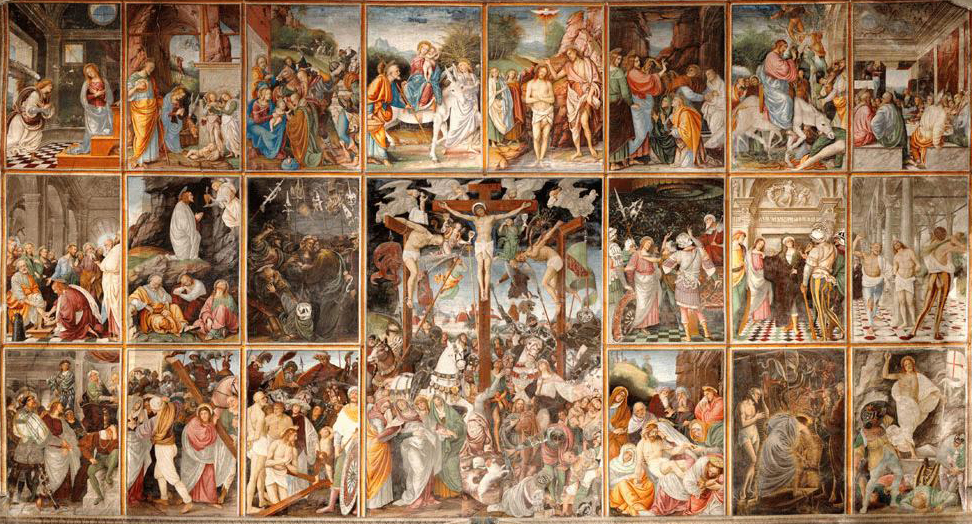 Presentation of Jesus at the TempleA February feast of candles and welcome, kept forty days after Christmas
 St John's EveBonfires, feasting and worship on the short night before John the Baptist's feast
 Saint George's DayA saint's feast on 23 April, kept by churches and patron nations from England to Georgia
Good reading and sources
- Saint Andrew's Day on WikipediaEncyclopedia
- More photos on Wikimedia CommonsPhotos and video
- Wikidata recordOpen data
The facts on this page come from the Wikipedia article "Saint Andrew's Day", written by its contributors and used under the CC BY-SA 4.0 licence, and from its Wikidata record (CC0). EveryParampara rewrote the text in its own words, with AI assistance, and compares every page with the article to make sure no passage is copied. It may be reused under the same CC BY-SA 4.0 licence with a link back.
It may contain mistakes. Traditions differ from one family, village and community to the next, and the people who keep them know them best. If something is wrong, tell us. Last refreshed 2026-10-05.
More from the United Kingdom
All the traditions of the United Kingdom
🇮🇱 Jerusalem, Israel and 5 morePresentation of Jesus at the TempleIn praesentatione Domini
A February feast of candles and welcome, kept forty days after ChristmasSpiritual
🇪🇸 Spain and 5 moreSt John's Eve
Bonfires, feasting and worship on the short night before John the Baptist's feastSpiritual
 🇬🇧 United Kingdom and 5 moreTwelfth Night
The closing evening of the Christmas season, kept with cake, carols and wassailSpiritual · Feasts and festival meals
🇬🇧 United Kingdom and 5 moreTwelfth Night
The closing evening of the Christmas season, kept with cake, carols and wassailSpiritual · Feasts and festival meals
 🇵🇭 Philippines and 5 moreMaundy ThursdayDies Cenae Domini
A Christian feast marking the start of Easter observances with foot washing and communion services.Spiritual
🇵🇭 Philippines and 5 moreMaundy ThursdayDies Cenae Domini
A Christian feast marking the start of Easter observances with foot washing and communion services.Spiritual
The same idea elsewhere
Pilgrimage compared 🇦🇺 AustraliaThe Dreaming
A living spiritual worldview and law connecting Aboriginal Australians to ancestors, land, and community.Spiritual
🇦🇺 AustraliaThe Dreaming
A living spiritual worldview and law connecting Aboriginal Australians to ancestors, land, and community.Spiritual
 🇮🇳 India and 5 moreThaipusam
A Tamil Hindu festival honoring Murugan through devotional burdens and pilgrimageSpiritual
🇮🇳 India and 5 moreThaipusam
A Tamil Hindu festival honoring Murugan through devotional burdens and pilgrimageSpiritual
 🇵🇭 Cebu City, Philippines and 4 moreSinulog Festival
An annual Philippine dance festival and Catholic devotion honouring the Santo NiñoFestival
🇵🇭 Cebu City, Philippines and 4 moreSinulog Festival
An annual Philippine dance festival and Catholic devotion honouring the Santo NiñoFestival
 🇵🇪 Cusco, PeruQoyllur Rit'iQuyllurit'i
An Andean mountain pilgrimage uniting indigenous star lore and Catholic devotionSpiritual
🇵🇪 Cusco, PeruQoyllur Rit'iQuyllurit'i
An Andean mountain pilgrimage uniting indigenous star lore and Catholic devotionSpiritual